
Choosing the right bed table for your work-from-bed routine depends entirely on whether you prioritize ergonomic customization or quick, flat storage. An adjustable bed table offers telescopic legs and tilting surfaces to align your screen with your eyes, making it ideal for long working sessions. Conversely, a foldable bed table prioritizes rapid deployment and a flat profile, perfect for quick tasks and effortless storage when not in use.
Working from bed has transitioned from a casual luxury to a legitimate remote work setup. However, typing on a laptop resting directly on your lap can quickly lead to poor posture, neck strain, and overheating devices. Selecting the correct table design ensures you maintain productivity without sacrificing your physical well-being.
To make the right choice, you must evaluate how often you work from bed, the physical characteristics of your mattress, and your bedroom’s storage capacity. By comparing the structural integrity, ergonomic range, and portability of adjustable and foldable models, you can select a setup that seamlessly integrates into your daily routine.
Products mentioned in this guide
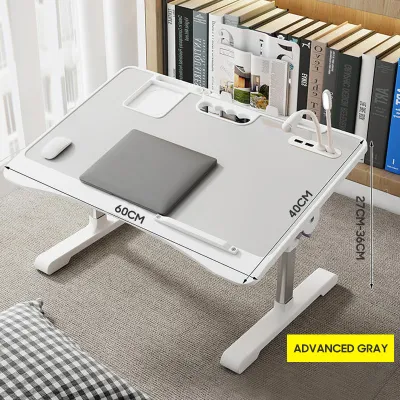
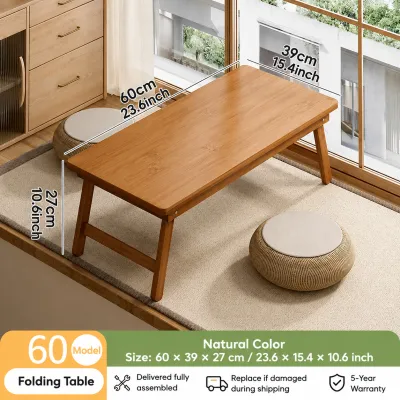
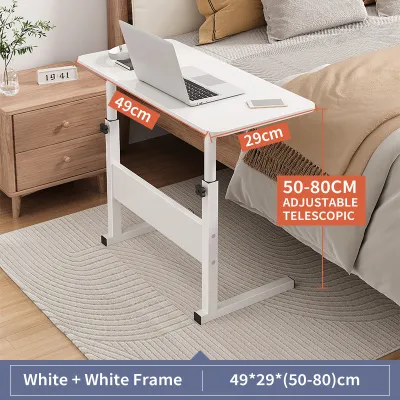
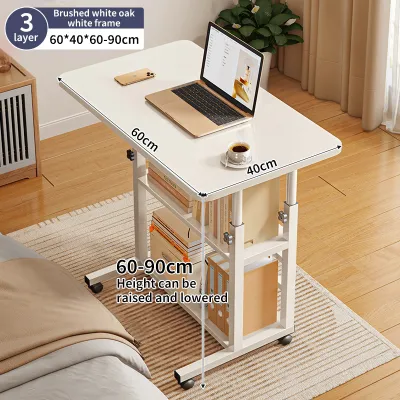
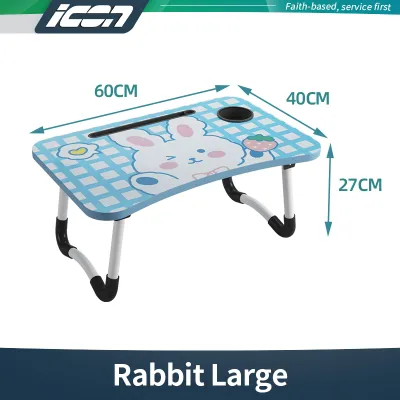

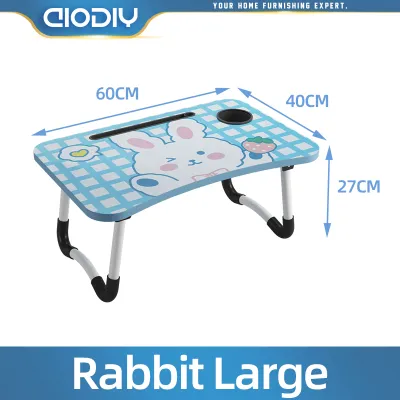
Prices are valid at publication and may change. Please refer to the product page for the latest price.
Understanding Adjustable vs. Foldable Bed Table Mechanisms
The primary difference between these two popular designs lies in their mechanical complexity and intended utility. Adjustable bed tables are engineered with customization in mind, featuring telescopic legs that slide vertically to alter the table’s height. They often include tilting desktop panels controlled by manual friction joints or spring-loaded locking pins, allowing you to angle your laptop keyboard and screen precisely.
These adjustable mechanisms are highly beneficial for posture alignment, but they require a sturdier frame to support the moving parts. The legs are typically constructed from hollow metal tubes or reinforced plastics that slide into one another. To secure the height, you must tighten screw knobs or engage locking pins, which requires a small amount of manual effort during setup.
Foldable bed tables, on the other hand, rely on simple, robust hinges that allow the legs to fold flat against the underside of the tabletop. This design prioritizes speed and simplicity, utilizing a basic latch or tension system to keep the legs locked in either the fully open or fully closed position. There are fewer moving parts, which generally translates to a lighter overall weight and a lower risk of mechanical failure over time.
In tropical environments like the Philippines, high humidity can affect these mechanisms differently. Metal hinges and telescopic joints on budget models may rust or stiffen if they lack proper anti-corrosion coatings. Meanwhile, wooden or medium-density fiberboard (MDF) surfaces on foldable tables can swell if exposed to moisture, making a thorough check of the materials and joint coatings essential before purchase.
Evaluating Stability and Ergonomic Range for Bed Working
A bed is a dynamic, uneven surface that compresses and shifts whenever you move. Consequently, stability is the most critical factor when choosing a table to support your expensive laptop and a warm cup of coffee. Adjustable tables often feature a wider, heavier base or a continuous sled-style leg design to distribute weight evenly across the mattress.

When evaluating stability, look closely at the leg thickness and the connection points where the legs meet the tabletop. Thin, wire-like legs on basic foldable tables tend to wobble significantly when you type quickly, which can cause screen shake and eye strain. A wider base width prevents the table from tipping sideways when you shift your legs under the covers.
Ergonomic range is where adjustable models hold a clear advantage. They allow you to raise the tabletop to eye level, preventing you from hunching your shoulders and bending your neck downward. Many adjustable models also feature a split-top design, where one section tilts for your laptop while a smaller section remains flat for a mouse or a drink.
Foldable tables typically offer a fixed height and a flat surface, which limits their ergonomic flexibility. If the fixed height does not align with your torso, you may find yourself slouching or raising your shoulders uncomfortably. However, foldable tables are significantly lighter and easier to maneuver, making them highly convenient if you frequently change your sitting position.
Matching the Design to Your Work-from-Bed Frequency
Your daily usage patterns should dictate which table mechanism you choose. If you are a daily remote worker who spends four or more hours working from bed, the ergonomic benefits of an adjustable model are indispensable. The ability to alter the height and tilt angle throughout the day helps prevent repetitive strain injuries and muscle fatigue.
For occasional users who only use a bed table for short tasks—such as checking morning emails, writing a quick journal entry, or watching a movie in the evening—a foldable table is often the superior choice. It provides immediate utility without the physical or visual clutter of a bulkier adjustable desk. You can set it up in seconds and put it away just as quickly.
Transition scenarios also play a role in your decision. If you like to move your workspace from the bed to the living room sofa or even the floor, a lightweight foldable table is incredibly easy to carry around. However, if your sofa has deep, soft cushions, an adjustable table with customizable leg heights might be necessary to level the surface properly.
Navigating Space, Storage, and Portability
Bedroom space is a premium commodity, and how a bed table stores away when not in use is a major practical consideration. Foldable tables excel in this category because they collapse into a completely flat profile, often measuring less than five centimeters in thickness. This ultra-thin profile allows you to slide the table under the bed, behind a nightstand, or inside a wardrobe easily.
Adjustable tables are inherently bulkier, even when fully collapsed. The telescopic leg sleeves, adjustment knobs, and tilting brackets add physical depth, meaning they require more storage clearance. If your bed frame sits low to the floor, an adjustable table might not fit underneath, forcing you to lean it against a wall where it remains visible.
Weight is another factor that directly impacts daily portability. Lifting a heavy, rigid table off your lap while trying not to spill a drink or drop your laptop requires physical effort. Foldable tables are generally lightweight and easy to lift with one hand, whereas adjustable models, particularly those with heavy steel frames or solid wood tops, require a two-handed lift.
When planning your storage, consider the local climate. In humid regions, storing furniture in tight, unventilated spaces like the narrow gap under a bed can encourage dust accumulation and mold growth. Choosing a table with a smooth, easy-to-wipe surface and storing it in a well-ventilated area will help prolong its lifespan.
Pre-Purchase Verification Checklist for Build Quality
Because you cannot always test a bed table in person before buying, you must rely on specific product specifications and observable design details to verify its quality. Whether you are budgeting around ₱1,000 or ₱3,000, performing these quality checks will ensure you receive a durable and safe product.
First, inspect the joints and hinges in the product photos and descriptions. Look for tight tolerances and robust locking mechanisms, such as spring-loaded pins or heavy-duty clamp levers. Avoid models that rely solely on friction-based plastic knobs, as these can slip over time under the weight of your hands and laptop.
Second, examine the tabletop surface and edges. A high-quality bed table should feature a non-slip surface texture or a secure stopper ledge to prevent your laptop from sliding off when tilted. The edges should be smooth and rounded; sharp plastic or metal edges will press uncomfortably into your forearms while typing.
Third, verify the manufacturer’s weight capacity rating. A reliable bed table should easily support at least 10 kilograms, which safely covers a laptop, tablet, phone, and a beverage. If a product listing does not state a weight capacity, or if the rating is exceptionally low, it may indicate weak joints that will wobble under daily use.
Finally, consider your mattress type. If you sleep on a soft memory foam or pillow-top mattress, look for a bed table with a continuous, sled-style base rather than four individual legs. Sled bases distribute the weight across a larger surface area, preventing the table legs from sinking unevenly into the soft fabric.
Frequently Asked Questions (FAQ)
Can I use a bed table on a soft mattress without it tipping over?
Yes, but you must take precautions to manage the table’s center of gravity. Soft mattresses compress unevenly when you shift your weight, which can cause a narrow-legged table to tip. To mitigate this risk, choose a bed table with a wide leg span or a continuous sled-style base that distributes weight evenly. Alternatively, you can place a firm, flat board or a stiff tray underneath the table legs to create a stable foundation on top of your soft bedding.
How do I clean and maintain the hinges and adjustable joints?
Regular maintenance keeps the moving parts of your bed table functioning smoothly. Use a dry microfiber cloth or a soft brush to remove dust and fibers from the telescopic tracks and folding hinges. Avoid using wet cloths on metal joints, as trapped moisture can lead to rust, especially in humid climates. Check the manufacturer’s instructions to see if the joints require occasional lubrication; if so, apply a tiny drop of silicone-based dry lubricant, wiping away any excess to prevent attracting dust.

Community discussion
Share your experience or ask a question. Comments are reviewed before publication.