
Investing in home furniture in the Philippines requires a realistic strategy for managing extreme humidity, heavy rainfall, and persistent pests. For decades, wooden wardrobes have been the standard choice, but they frequently fall victim to swelling, mold, and destructive termite infestations. An aluminum wardrobe cabinet offers a highly durable, modern alternative that addresses these tropical challenges directly. While the initial investment may be higher than traditional options, its immunity to rot and pests makes it an exceptionally practical choice for long-term home organization. However, to ensure you get the best value, you must know how to evaluate structural quality, surface finishes, and installation requirements before making a purchase.
How Humidity and Termites Affect Wardrobe Materials
Living in a tropical climate means your home is constantly exposed to high relative humidity, which often spikes during the monsoon season. This moisture-laden air penetrates indoor spaces, settling on furniture surfaces and soaking into porous materials. Over time, you may notice your wooden wardrobe doors sticking, drawers becoming difficult to slide, or a persistent musty odor clinging to your clothes. These are classic signs of moisture absorption, which causes wood fibers to expand and warp.
The impact varies significantly across different material categories. Solid wood is beautiful but naturally dynamic; it constantly breathes, expanding and contracting with seasonal weather shifts. This movement can stress joints, crack finishes, and cause structural misalignment. Engineered woods, such as medium-density fiberboard (MDF) and particle board, fare much worse. They rely on synthetic glues to hold wood fibers together. When exposed to high humidity or minor leaks, these boards absorb water like a sponge, causing the binders to dissolve and the panels to swell, sag, and eventually crumble.
Products mentioned in this guide
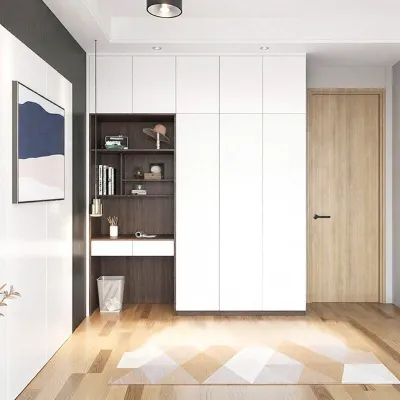
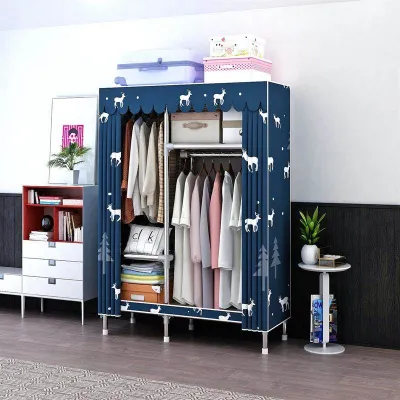
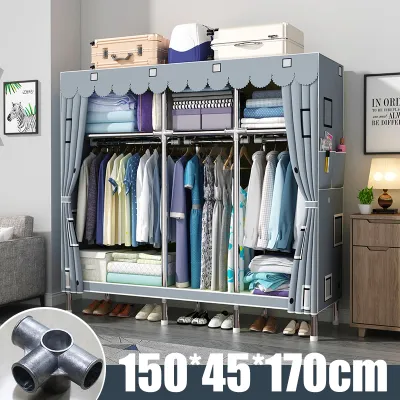
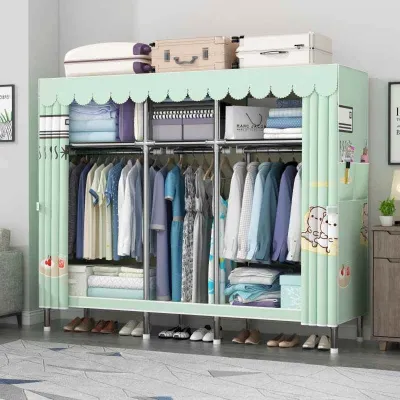
Prices are valid at publication and may change. Please refer to the product page for the latest price.
Beyond moisture, subterranean termites, locally known as anay, present a severe threat to Philippine households. These pests thrive in warm, damp environments and feed on cellulose, the primary structural component of wood. A traditional wooden wardrobe, especially one placed against an external concrete wall where moisture accumulates, becomes an ideal target. Once termites gain entry, they can hollow out a wooden cabinet from the inside out, often leaving the damage unnoticed until the structure structurally fails.
To withstand these harsh environmental conditions, a wardrobe must possess high structural resilience. It needs to resist moisture absorption entirely, prevent the growth of mold and mildew, and offer zero nutritional value to wood-boring insects. Understanding these baseline requirements helps you see why alternative materials like aluminum have gained rapid popularity in local home design.
Aluminum vs. Traditional Wood: Core Performance Checks
When comparing an aluminum wardrobe cabinet to traditional wood, it is essential to look beyond marketing claims and evaluate specific technical details. While aluminum is naturally rust-resistant, its performance in a humid bedroom depends heavily on its surface treatment. You should inspect the quality of the powder coating or anodized finish. A high-quality powder-coated surface creates a non-porous barrier that prevents moisture, salt air, and oils from contacting the metal. Check the edges, corners, and joints of the cabinet frames; these areas should be completely sealed without any exposed raw metal, which could otherwise oxidize or peel over time.

Termite resistance is another area where aluminum holds a clear advantage, but only if the entire unit is constructed correctly. Some budget-friendly cabinets feature an aluminum outer frame but utilize thin plywood, hardboard, or MDF for the back panels, drawer bottoms, or internal shelves. Termites can easily find and destroy these hidden wooden components. When shopping, verify that every single part of the wardrobe—including the backing, shelving cores, drawer boxes, and joining hardware—is made of non-cellulosic materials like aluminum or high-grade aluminum composite panels.
Load-bearing capacity is a common concern for those transitioning from solid wood to metal. Solid wood is naturally rigid and can support heavy loads over wide spans without bending. Aluminum, while incredibly strong for its weight, can flex if the metal sheets or profiles are too thin. You should ask the manufacturer about the thickness of the aluminum profiles (the gauge) and the design of the internal support ribs. Check the specified shelf deflection limits to ensure the wardrobe can support heavy stacks of folded jeans, thick bedsheets, or storage boxes without sagging in the middle.
Finally, consider dent and scratch resistance. High-quality solid wood can handle minor impacts, and scratches can often be sanded down and refinished. Aluminum wardrobes feature a hard surface, but they are susceptible to scratching if struck by sharp metal objects like belt buckles or heavy hangers. Look for textured powder coatings, which hide minor scratches and fingerprints much better than smooth, high-gloss finishes. Additionally, keep in mind that while aluminum will not crack or warp like wood, a heavy impact can cause a permanent dent that is difficult to pop out without professional tools.
Structural and Installation Requirements for Aluminum Cabinets
Before purchasing an aluminum wardrobe cabinet, you must carefully plan for its physical integration into your bedroom. Start by taking precise measurements of the available floor space and ceiling height. Unlike modular wooden furniture that can sometimes be trimmed or adjusted on-site, aluminum frames are manufactured to exact specifications and cannot be altered during installation. You must also measure the clearance of your doorways, hallways, stairwells, and, if you live in a high-rise condominium, the dimensions of the service elevator. Many aluminum wardrobes are delivered as large, pre-assembled modules to ensure structural integrity, making tight corners a potential delivery obstacle.
The physical characteristics of aluminum also dictate specific wall and floor requirements. Because aluminum is lightweight compared to solid wood, a tall wardrobe can become top-heavy once you fill the upper shelves and hanging rods with clothing. To prevent tipping hazards, the cabinet must be securely anchored to the wall. This requires a flat, level floor; if the floor slopes, the lightweight frame can twist slightly, causing the sliding doors to misalign or stick in their tracks.
In the Philippines, residential walls are commonly constructed from concrete or concrete hollow blocks finished with plaster. Securing a wardrobe to these walls requires the correct anchoring hardware. Verify that your installer uses heavy-duty masonry wall plugs and high-tensile concrete screws. Standard drywall anchors or simple nails will not hold securely in hollow concrete blocks and can pull out under the weight of a fully loaded cabinet. If you are installing the wardrobe against a lightweight gypsum partition wall, ensure the anchors are fastened directly into the metal studs behind the plasterboard.
Evaluating the Internal Storage System and Hardware
The longevity of an aluminum wardrobe depends not just on the frame, but on the moving parts and internal fittings that you interact with daily. While the main structure of the cabinet is immune to rust, the hardware often uses different metals. You must inspect the material grade of the hinges, drawer slides, and hanging rods. Prioritize hardware made from 304-grade stainless steel or alloys specifically treated with anti-rust coatings. Standard steel hardware will quickly corrode in humid tropical air, leading to stiff drawers, squeaking hinges, and rust stains transferring onto your clean clothes.
The internal layout should offer high adjustability and modularity. Look for systems that use adjustable shelf pegs or modular tracks, allowing you to customize the height of compartments as your storage needs change. This adaptability is particularly useful in a humid climate, as it allows you to space out your belongings. Crowding too many clothes into a tight space restricts airflow, which is a primary driver of mold growth and musty odors on fabrics.
Ventilation is a critical design feature that is often overlooked. A completely sealed aluminum cabinet can trap humid air inside, creating a microclimate that encourages mold to grow on organic materials like leather bags, cotton shirts, and wooden shoe trees. To prevent this, look for wardrobes that incorporate active or passive ventilation designs. This can include louvered door panels, small ventilation grilles integrated into the back or sides of the cabinet, or a slight gap designed into the top and bottom of the sliding door tracks to facilitate continuous air circulation.
Cost, Maintenance, and Long-Term Value
When evaluating the financial aspect of an aluminum wardrobe cabinet, you must compare the initial purchase price against its projected lifespan. Aluminum wardrobes generally command a premium price in ₱ compared to mass-produced engineered wood cabinets. However, a low-cost MDF wardrobe often needs to be replaced within three to five years due to moisture swelling, sagging shelves, or termite damage. In contrast, a well-constructed aluminum wardrobe can easily last for decades without structural degradation. When you calculate the cost over ten or fifteen years, the aluminum option consistently emerges as the more economical and hassle-free investment. Be sure to review the manufacturer’s warranty terms, looking for specific coverage on frame structural integrity, joint welds, and surface finish adhesion.
Maintaining an aluminum wardrobe is remarkably simple, but it requires the right approach to protect the surface finish. For routine cleaning, use a soft microfiber cloth dampened with warm water and a few drops of mild, non-abrasive dishwashing liquid. Wipe down the surfaces gently to remove dust, fingerprints, and oils. Never use abrasive scrubbing pads, steel wool, or harsh chemical solvents like acetone, bleach, or ammonia. These harsh agents can strip or dull the protective powder coating, leaving the underlying metal vulnerable to environmental exposure and voiding your warranty.
While basic cleaning is a straightforward DIY task, certain structural issues require professional attention. If you notice that the sliding doors are dragging, the frame has shifted out of alignment, or a welded joint shows signs of separation, do not attempt to force or hammer the metal back into place. Aluminum extrusions are engineered to precise tolerances, and improper force can bend the profiles permanently. Instead, contact the manufacturer or a qualified technician who possesses the specialized tools and replacement hardware needed to service aluminum furniture safely.
Frequently Asked Questions (FAQ)
Do aluminum wardrobes make clothes smell like metal?
High-quality aluminum wardrobes do not transfer any metallic or chemical odors to your clothing. The aluminum alloy used in furniture construction is chemically inert, and the powder-coated or anodized finish is fully cured during the manufacturing process, meaning it does not off-gas. If you notice a faint metallic or chemical smell immediately after installation, it is typically due to protective plastic packaging, silicone sealants, or adhesives used during assembly. This odor is temporary and will dissipate completely within a few days if you leave the wardrobe doors open and keep the room well-ventilated.
Can I repaint or refinish an aluminum wardrobe if it gets scratched?
Repainting an aluminum wardrobe at home is highly challenging and generally not recommended as a DIY project. The factory finish on aluminum is typically a powder coating, which is electrostatically applied and baked in an industrial oven to achieve its extreme hardness and durability. Standard household paints and brushes will not adhere properly to the smooth metal surface, leading to peeling, bubbling, and an uneven texture. If your wardrobe suffers a minor scratch, contact the manufacturer to ask for a matching touch-up paint pen designed specifically for their finish. For extensive damage, it is best to consult a professional metal refinishing service that can properly prep, prime, and spray the aluminum to restore its original appearance and protective barrier.

Community discussion
Share your experience or ask a question. Comments are reviewed before publication.