
Finding the right table with mirror for a small bedroom in the Philippines requires balancing grooming needs with limited floor space. In modern condominiums and suburban homes, bedrooms often double as workspaces. A bulky traditional dresser can quickly overwhelm a tight layout, disrupting the room’s flow. The ideal solution is a compact setup that maximizes vertical storage, incorporates smart mirror designs, and features materials capable of withstanding high relative humidity. To make an informed decision, you must evaluate your specific room dimensions, choose a space-saving silhouette, and verify that the build quality matches local environmental conditions.
How to Measure Your Space for a Compact Table
Before browsing local furniture shops or online marketplaces, taking precise measurements of your bedroom is the most critical step to avoid layout mistakes. Start by identifying the exact floor footprint where the table will stand. Use a steel measuring tape to record the width, depth, and height of the available wall space. When measuring, do not rely solely on wall-to-wall distances; you must account for baseboards or skirting boards, which can push furniture forward by one to two centimeters and prevent a flush fit against the wall.
Next, analyze the surrounding clearance zones. A compact table with mirror must not obstruct the natural paths of movement within the room. Check the swing radius of nearby doors, including your main bedroom door, wardrobe doors, and cabinet drawers. Maintain a minimum walking clearance of 60 to 90 centimeters in front of and around the furniture to ensure you can pass by comfortably without bumping into edges.
Products mentioned in this guide
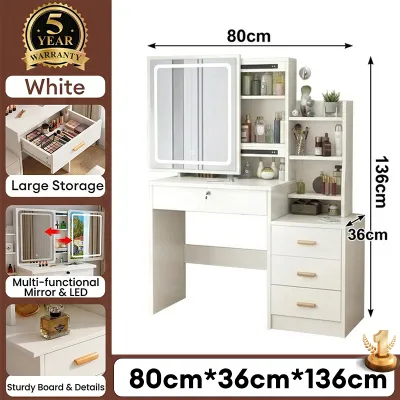
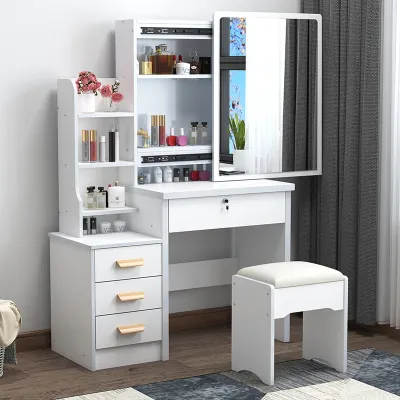
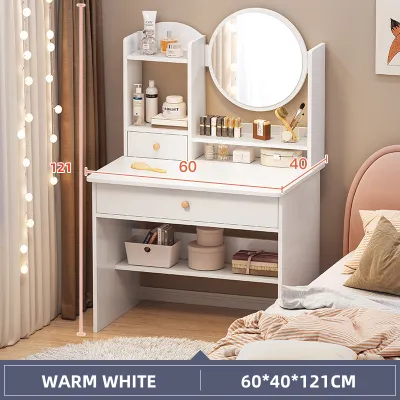
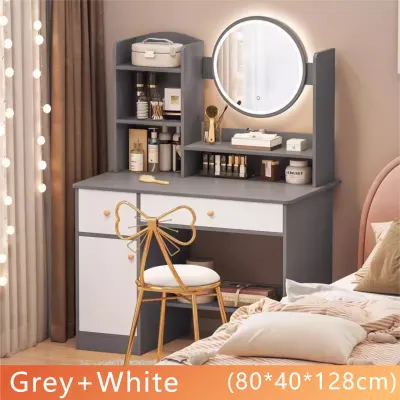
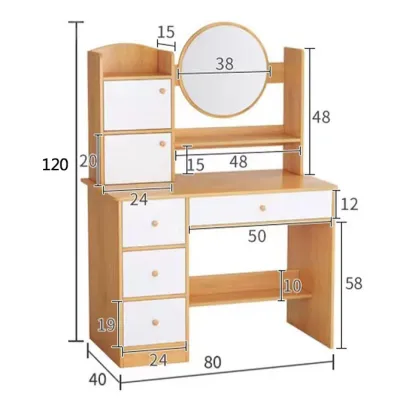
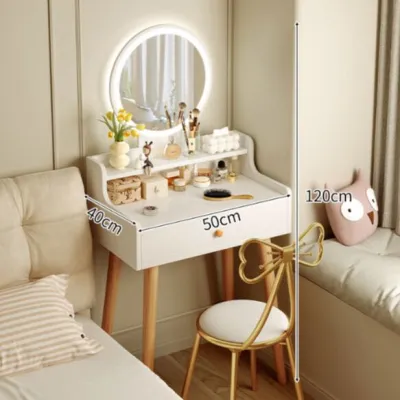
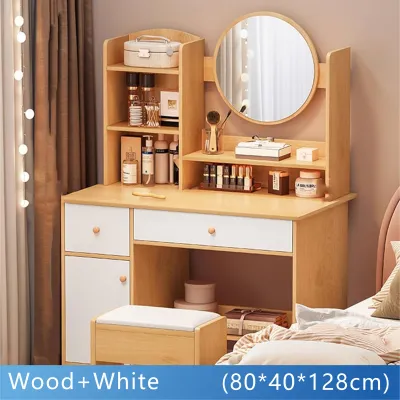
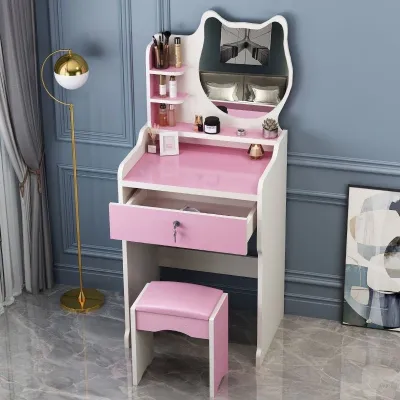
Prices are valid at publication and may change. Please refer to the product page for the latest price.
You must also factor in the physical footprint of the seating. Measure the pull-out space required, which typically demands an additional 50 to 60 centimeters of floor depth behind the table when you are seated. If space is exceptionally tight, look for designs that allow the seating to slide completely underneath the table frame when not in use.
Additionally, locate the nearest electrical outlets. If you plan to use hair dryers, straighteners, or a table with mirror that features built-in LED lighting, having an accessible power source nearby is essential to avoid running hazardous extension cords across the floor.
Finally, remember that getting the furniture into your room is as important as how it fits once inside. Measure the width and height of all doorways, tight hallway turns, stairwells, and elevator doors in your building to ensure safe delivery and assembly.
Choosing a Space-Saving Table with Mirror for Small Bedrooms
Selecting the right silhouette is key to maintaining an open, airy feeling in a small bedroom. Traditional vanity sets often feature wide, heavy drawers that dominate floor space, but modern space-saving configurations utilize vertical height and clever physical mechanisms to minimize their footprint. By choosing a design tailored to your specific room layout—whether you are a renter who cannot drill into walls or a homeowner looking to maximize every square centimeter—you can create a highly functional grooming corner without sacrificing valuable walking space.

Wall-Mounted and Fold-Down Options
Wall-mounted or floating tables are excellent choices for ultra-compact bedrooms because they completely eliminate the need for floor legs. By freeing up the ground space underneath, these designs make a small room feel visually larger and significantly ease daily floor cleaning, preventing the accumulation of dust and moisture in hard-to-reach corners.
However, wall-mounted setups require careful structural verification before installation. In the Philippines, residential walls are commonly constructed from either solid concrete, concrete hollow blocks, or lightweight drywall. You must check your wall type and consult the manufacturer’s instructions to ensure you use the correct mounting hardware and wall anchors. Solid concrete walls offer excellent load-bearing capacity but require a masonry drill, whereas drywall installations must be anchored directly into vertical wooden or metal studs to prevent the table from pulling away. Always verify the maximum weight capacity specified by the manufacturer before placing heavy items on a floating shelf.
For multi-functional spaces, fold-down desk and vanity combinations offer a dual-purpose solution. These units feature a hinged tabletop that can be folded flat against the wall when not in use, instantly restoring floor space. Many of these designs incorporate a concealed mirror on the inside of the fold-down panel, keeping your grooming essentials hidden and protected from dust when closed.
Compact Freestanding and Corner Designs
If you are renting an apartment or prefer not to drill into your walls, freestanding compact tables offer a flexible and non-permanent alternative. To keep the room looking light and spacious, prioritize tables with slim-profile legs and open-bottom designs. An open frame allows you to tuck a small stool or decorative storage baskets underneath, keeping the floor clutter-free.
Corner vanity tables are highly effective for utilizing “dead space” that otherwise goes unused. Because they sit flush against intersecting walls, they make excellent use of tight corners beside wardrobes or windows. When choosing a corner model, measure the depth along both walls carefully, ensuring the angle of your walls is a true 90-degree corner, as older buildings or uneven plastering can prevent a flush installation.
To maximize storage without expanding the physical width of the table, look for freestanding models that feature built-in vertical drawers or tall, narrow shelving units on one side. This chest-of-drawers style vanity configuration allows you to store taller bottles, hair tools, and makeup organizers vertically, preserving the limited surface area of the tabletop for your daily essentials.
Essential Features for Humid Climates and Tight Layouts
The tropical climate of the Philippines introduces specific challenges for furniture durability and maintenance. High relative humidity, seasonal rains, and intense sunlight can rapidly degrade poorly constructed furniture. Therefore, when choosing a table with mirror, you must inspect the materials and functional features to ensure long-term usability.
First, evaluate the mirror configuration. A single, large, fixed mirror is excellent for small bedrooms because it reflects natural light, making the entire room appear brighter and more spacious. However, if your bedroom receives direct, unfiltered sunlight, a fixed mirror can create uncomfortable glare and accelerate the degradation of sensitive cosmetics stored nearby. In contrast, tri-fold mirrors or cabinet-door mirrors allow you to close the panels when not in use. This protects the glass surface from dust and humidity while concealing your personal items from view.
Second, consider lighting integration. Built-in LED mirrors are highly practical for small bedrooms, as they eliminate the need for bulky tabletop lamps or wall-mounted sconces. When selecting an LED-equipped table, check whether the lighting system is battery-operated, rechargeable via USB, or requires a direct mains connection. Ensure the wiring is neatly integrated and sealed to prevent moisture from triggering electrical short circuits during humid weather.
Third, perform rigorous material and moisture checks. Do not assume that a material name alone guarantees performance. While engineered wood, medium-density fiberboard (MDF), and particleboard are commonly used in compact furniture, they are highly susceptible to swelling, warping, and mold if exposed to humidity. Before purchasing, verify the manufacturer’s product label for explicit moisture-resistant ratings, high-quality melamine finishes, or sealed polyurethane (PU) coatings. Pay close attention to the edge banding; ensure that all edges are completely sealed with thick PVC or ABS banding to prevent moisture from penetrating the inner core of the wood panels. If you prefer solid wood, check that the timber has been properly kiln-dried and treated with anti-termite and moisture-resistant sealants.
Finally, optimize your storage efficiency. Look for tables that feature adjustable interior shelves, deep but narrow drawers, and integrated acrylic organizers. Keeping your cosmetics, skincare bottles, and jewelry organized vertically prevents clutter from accumulating on the limited tabletop surface, making it easier to keep the vanity area clean and dry.
Common Sizing and Placement Mistakes to Avoid
Creating a comfortable vanity corner in a tight bedroom is as much about placement as it is about the furniture piece itself. Avoiding a few common mistakes can prevent your room from feeling cramped and ensure your daily routine remains stress-free.
One frequent error is ignoring the visual weight of the furniture. A table with a bulky, solid-block wooden base or a heavy, dark-colored frame can visually dominate a small room, making it feel smaller than it actually is. Instead, opt for designs with slender metal or light wood legs, light neutral colors (such as white, cream, or light oak), and clean, minimalist lines that allow light to pass through and around the piece.
Another mistake is buying a standard-depth desk and trying to use it as a vanity table. Standard office desks are typically 60 centimeters deep or more, which can severely restrict walking paths in a narrow bedroom. A dedicated compact vanity table should ideally have a depth of only 35 to 45 centimeters. This shallower profile provides ample space for a mirror and cosmetics while preserving precious floor clearance.
Poor lighting placement can also ruin the functionality of your vanity. Avoid placing your table with mirror directly opposite a bright window, as this causes severe backlighting, making it difficult to see your reflection clearly. Similarly, placing the table in direct, harsh tropical sunlight can overheat your skincare products and cosmetics, causing them to spoil prematurely. Position the table perpendicular to a window, or rely on integrated LED lighting to provide even, forward-facing illumination.
Lastly, do not forget the physical footprint of your seating. A large, upholstered chair with wide armrests will negate the space-saving benefits of a compact table. Avoid bulky seating and instead opt for a simple, armless stool that can slide completely underneath the table frame when not in use. Alternatively, a transparent acrylic stool is an excellent design choice, as it visually disappears into the room, maintaining an uncluttered aesthetic.
Frequently Asked Questions (FAQ)
Can I use a regular compact desk as a vanity table?
Yes, you can repurpose a regular compact desk, but you must consider the ergonomic differences. Standard office desks are typically designed to be taller (around 75 to 80 centimeters) than dedicated vanity tables, which are often lower (around 70 to 75 centimeters) to accommodate comfortable seated grooming. If you use a standard desk, check its height against your seating to ensure your arms can rest comfortably while applying makeup. You may also need to add a standalone tabletop mirror or adjust your stool height to maintain a comfortable, ergonomic sightline.
How high should a wall-mounted mirror be placed above a compact table?
The general rule of thumb is to align the vertical center of the mirror with your eye level when you are seated at the table. This ensures you do not have to strain your neck or slouch while using it. Additionally, it is recommended to leave a gap of approximately 10 to 15 centimeters between the table surface and the bottom edge of the mirror. This small clearance prevents tall cosmetic bottles, skincare containers, or decorative items placed on the tabletop from blocking your reflection, keeping your view clear and unobstructed.

Community discussion
Share your experience or ask a question. Comments are reviewed before publication.