
Finding the right desktop bookshelf for a compact study space in the Philippines requires balancing storage capacity with a minimal physical footprint. In many Filipino households, study areas are carved out of shared bedrooms, living rooms, or cozy condominium units where desk space is at a premium. A well-chosen desktop organizer keeps essential textbooks, reference materials, and stationery within arm’s reach while preserving valuable surface area for writing, typing, and computer work. To make an informed decision, you must evaluate how a shelf interacts with your existing desk setup, local environmental factors like high humidity, and the structural limits of your furniture.
Selecting the ideal organizer goes beyond simply picking an attractive design. It involves understanding how weight is distributed across your desk, how different materials hold up under tropical conditions, and how to verify product specifications when shopping online. By focusing on practical measurements, structural stability, and smart design choices, you can transform a cluttered workspace into an organized, highly productive environment.
What Makes a Desktop Bookshelf Ideal for Compact Setups
An ideal desktop bookshelf must strike a delicate balance between maximizing vertical storage and minimizing its physical footprint on your desk. In a small study space, every square centimeter of surface area is valuable. A shelf with a bulky base defeats the purpose of organization by consuming the very space you need for your keyboard, mouse, and notebooks. Look for designs with narrow, stable bases or elevated frames that allow you to slide items underneath the lowest shelf.
Products mentioned in this guide
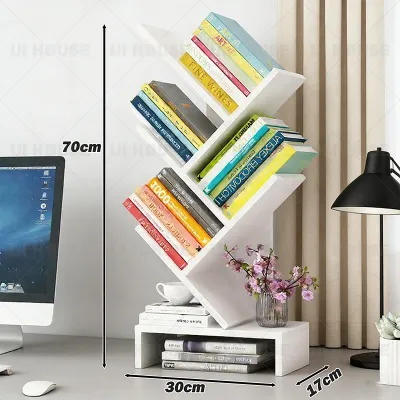
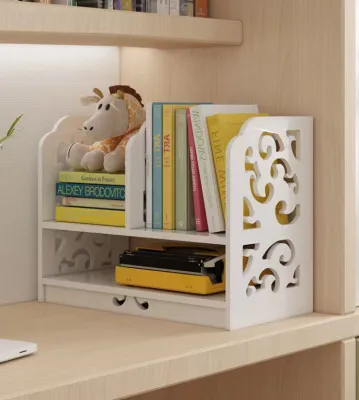
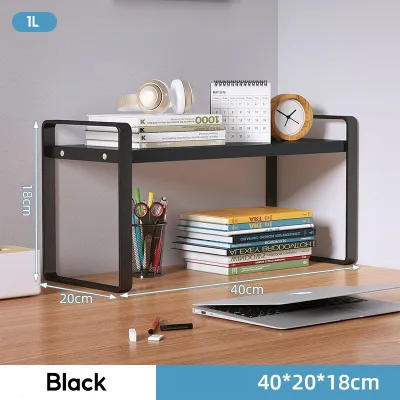
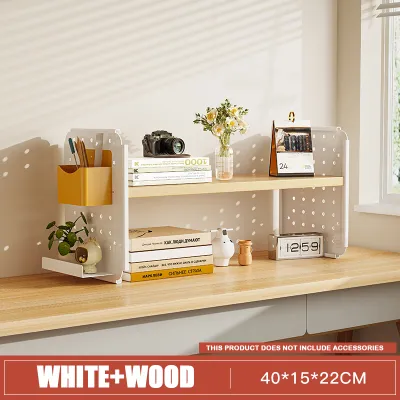
Prices are valid at publication and may change. Please refer to the product page for the latest price.
Stability and weight distribution are critical factors when placing any organizer on a standard home office desk. Many budget-friendly desks are constructed from thin engineered wood or lightweight metal frames, which can bow or wobble under uneven loads. A high-quality desktop bookshelf should distribute its weight evenly across its contact points. Units with wide, flat base plates or continuous bottom frames prevent concentrated pressure points that could damage your desk surface over time.
Ergonomic considerations are equally important when arranging your workspace. A desktop bookshelf should keep your daily essentials within easy reach without blocking your line of sight to your computer monitor. It should also be positioned so that it does not cast shadows over your main writing area or block natural light from nearby windows. Keeping frequently used reference books at eye level or slightly below can reduce neck strain and make your study sessions much more comfortable.
Space-Saving Designs to Maximize Your Desk Area
When dealing with limited desk depth, vertical space is your greatest asset. Monitor stand combos with integrated lower shelves are highly effective for dual-purpose use. These designs elevate your screen to a more ergonomic viewing height while utilizing the space directly beneath the monitor for slim books, calculators, or keyboard storage. This integration ensures that the footprint of your monitor and your bookshelf overlap, saving a significant amount of desk space.

Multi-tiered vertical risers and corner-fitting units are excellent for utilizing awkward desk edges and corners that otherwise go unused. Corner bookshelves are specifically shaped to fit snugly into 90-degree angles, turning dead space into a functional storage hub for taller binders and textbooks. Vertical risers, on the other hand, stack shelves upward rather than outward, allowing you to store multiple layers of books and office supplies in a footprint no larger than a single standard textbook.
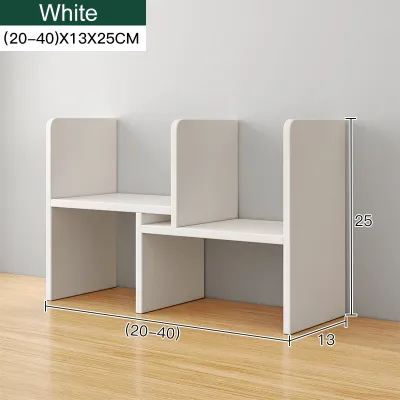
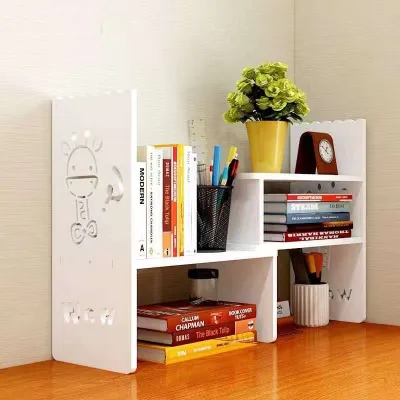
Adjustable or foldable designs offer exceptional flexibility for dynamic workspaces. Some desktop bookshelves feature sliding or interlocking pieces that allow you to expand or contract the width of the unit based on your current storage needs. This adaptability is particularly useful if you occasionally need to clear your desk entirely for large-scale projects, drawing, or crafting. When your workload decreases, you can slide the shelves together to reclaim your desk surface.
Choosing between open shelving and enclosed compartments involves a trade-off between accessibility and visual clutter. Open shelves provide immediate access to your books and allow for better airflow, which is beneficial in preventing moisture buildup. However, they also expose your items to dust, which can accumulate quickly in urban areas. Enclosed compartments or small drawers offer a cleaner visual aesthetic by hiding messy cables and small stationery items, but they add physical bulk and can make a small desk feel more cramped.
Essential Measurements and Safety Checks Before Buying
Before purchasing a desktop bookshelf, taking precise measurements of your current workspace is essential to avoid compatibility issues. Begin by measuring the total depth and width of your desk, noting the exact footprint of your monitor, keyboard, and desk lamp. You must ensure that the bookshelf’s depth leaves enough clearance for you to work comfortably without your hands or elbows hitting the frame. Additionally, measure the vertical clearance between your desktop and any overhead fixtures, such as wall-mounted shelves or air conditioning units.
It is equally important to check your desk’s own weight capacity before adding a heavy organizer filled with books. Standard study desks, especially those made of particle board or tempered glass, have strict load limits. Overloading the desk can lead to structural failure, sagging, or tipping. If your desk is lightweight or features a clamp-on monitor arm, you must factor in the combined weight of the monitor, the bookshelf, and all the books you plan to store.
Always verify the bookshelf’s load-bearing limits per tier directly from the manufacturer’s specifications. Do not assume a shelf is sturdy simply because it looks thick in product photos. Look for explicit weight ratings, usually detailed in kilograms, for each individual shelf level. Heavy textbooks, reference manuals, and binders can quickly exceed the limits of flimsy plastic or thin composite boards, leading to bowing or sudden collapse.
Assess the assembly requirements, joint types, and hardware quality to ensure long-term structural stability. Look for bookshelves that utilize metal-to-metal connections, such as cam locks or machine screws, rather than simple wood screws that can strip the material during assembly. Reinforced joints, back panels, or cross-bracing support frames significantly reduce lateral wobble, ensuring the shelf remains rigid even when fully loaded with heavy academic materials.
How to Filter and Verify Options on Online Marketplaces
Shopping for furniture on e-commerce platforms requires a strategic approach to filter out low-quality products. Start by using specific dimension filters to narrow down your search to units that match your desk measurements. When browsing listings, ignore promotional stock photos and head straight to the user review section. Look for customer-uploaded photos and videos that show the bookshelf in real-world settings, paying close attention to comments regarding stability, ease of assembly, and the actual finish of the materials.
In the humid tropical climate of the Philippines, material selection is crucial for durability. Standard particle board can absorb moisture from the air, leading to swelling, warping, and mold growth if the edges are not properly sealed. When filtering options, look for materials known to withstand humidity, such as powder-coated steel frames, solid bamboo, or medium-density fiberboard (MDF) with a complete water-resistant laminate finish. Compare the seller’s material descriptions against these requirements to ensure your shelf will last through the wet season.
Factor in shipping dimensions and packaging details before finalizing your purchase. Desktop bookshelves are typically shipped flat-packed to reduce shipping costs, which means you will need to assemble them yourself. Check the package weight and dimensions in the product details to ensure you can easily receive the delivery and transport it to your study area. A well-packaged item should include protective foam padding around the corners to prevent damage during transit.
Finally, set a realistic budget in ₱ based on material quality, structural complexity, and verified seller ratings. While basic plastic or thin composite organizers are highly affordable, investing slightly more in a unit with a metal frame or solid wood components offers much better longevity and safety. Compare prices across multiple verified sellers, and look for shops that offer local warranties or clear return policies in case the product arrives with missing hardware or damaged panels.
Frequently Asked Questions (FAQ)
How can I prevent a tall desktop bookshelf from tipping over?
To prevent a tall desktop bookshelf from tipping, start by checking the product specifications for included safety features such as anti-tip brackets, weighted bases, or non-slip base pads. If your shelf does not come with these, you can apply heavy-duty, double-sided mounting tape or non-slip silicone pads to the bottom contact points to secure the unit to your desk surface without causing permanent damage.
Proper weight distribution is also essential for maintaining a low center of gravity. Always place your heaviest items, such as thick textbooks, multi-subject binders, and heavy organizers, on the lowest shelf tier. Lighter items like notebooks, stationery holders, and small decorative pieces should go on the upper shelves. If you notice the bookshelf visibly leaning, the joints loosening, or the boards warping under the load, remove the heavy items immediately and inspect the structure for damage.
Are desktop bookshelves suitable for heavy textbooks and equipment?
Desktop bookshelves can support heavy textbooks and equipment, but only if they are specifically designed for heavy-duty storage rather than purely decorative use. Standard decorative organizers made of thin plastic or unreinforced composite wood are prone to bending and should only be used for light notebooks and stationery. For heavy academic materials, look for units featuring reinforced joints, metal support brackets, or thicker board specifications.
Always verify the exact weight limit per shelf as provided by the manufacturer, rather than relying on general material names or visual thickness. A shelf constructed with a powder-coated steel frame and thick MDF or solid wood panels will offer the necessary structural integrity to hold multiple heavy volumes safely. If the manufacturer does not specify a weight limit, it is best to treat the unit as light-duty and avoid overloading it with heavy reference books.

Community discussion
Share your experience or ask a question. Comments are reviewed before publication.