
Hosting large family gatherings is a cornerstone of Filipino household culture, where Sunday lunches, birthday celebrations, and holiday feasts bring multiple generations together. Finding a dining table set with chair configurations that can comfortably host 6 to 10 people without permanently overtaking your living space is a common challenge. An extendable dining table set offers a highly practical solution, allowing you to maintain an intimate setting for daily family dinners while easily scaling up for larger gatherings.
Selecting the right set requires balancing spatial constraints, mechanical durability, and material resilience against the tropical climate. High humidity and temperature fluctuations in the Philippines can affect wood expansion, metal glides, and structural joints over time. By focusing on robust construction, smart seating configurations, and precise space planning, you can invest in a dining set that serves your family reliably for years to come.
Key Criteria for Choosing a 6-10 Seater Extendable Table Set
When evaluating an extendable dining table set with chair options, the first step is understanding the difference between your daily seating needs and your maximum hosting capacity. A table that is permanently configured for 10 people can make a standard dining room feel cramped and disrupt household traffic. An extendable set allows you to keep the table in its collapsed state for daily meals, preserving floor space, and only extending it when the occasion demands. This flexibility is particularly valuable in modern townhouses and condominiums where space must be used efficiently.
Products mentioned in this guide
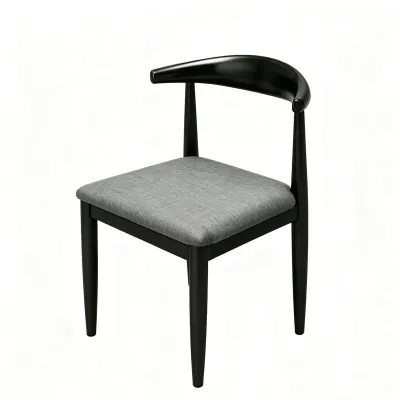
Prices are valid at publication and may change. Please refer to the product page for the latest price.
The structural integrity of an extendable table depends heavily on its base design. When a table is fully extended, the center of gravity shifts, placing additional stress on the frame. You must evaluate how the legs or pedestal support the extra length. Trestle and pedestal bases are excellent because they keep the support structure centralized, preventing guests from having to straddle table legs awkwardly. If the table uses a traditional four-leg design, ensure that the legs slide outward to the corners during extension. This maximizes knee clearance and prevents the table from tipping if someone leans heavily on the extended ends.
Large family gatherings often involve heavy serving platters, clay pots, and multiple dishes laid out simultaneously. Before purchasing, verify the manufacturer’s specified weight capacity on the product label. Look for heavy-duty metal slide tracks and reinforced corner blocks that can withstand the weight of heavy meals. In high-humidity environments, wood can expand and contract, which puts extra stress on joints. Opt for sets with robust joinery, such as mortise-and-tenon joints or reinforced steel brackets, to ensure the table remains stable over years of repeated extensions.
Never rely on visual estimates when shopping for furniture. Measure the exact dimensions of the table in both its collapsed and fully extended states. A standard 6-seater table usually measures around 150 to 180 centimeters in length, while a fully extended 10-seater configuration typically requires a length of 220 to 240 centimeters or more. Ensure your dining room can accommodate these dimensions while still leaving adequate space for chairs and walkways.
Recommended Extension Mechanisms for Large Gatherings
Butterfly Leaf and Self-Storing Mechanisms
The butterfly leaf is one of the most popular and user-friendly extension systems available. In this design, the extension leaf is split down the center and hinged. When the table ends are pulled apart, the leaf folds out from its hidden storage compartment beneath the tabletop, opening up like the wings of a butterfly. This mechanism is ideal for homeowners who prioritize convenience, as it allows a single person to extend the table in less than a minute.

Because the leaf is stored permanently inside the table frame, you do not need to worry about finding dedicated storage space in your closets or under the bed. However, butterfly leaf systems do have limitations. They typically only accommodate a single leaf, which limits the maximum extension length. Additionally, because the leaf is stored inside the table, dust and food crumbs can accumulate in the internal compartment and along the center seams. Regular vacuuming of the internal track and wiping down the hinges are necessary to keep the mechanism operating smoothly.
Removable Center Leaves
The traditional removable center leaf mechanism requires you to pull the two halves of the table apart, exposing the internal wooden or metal sliding tracks, and manually insert one or more separate leaves into the gap. This system is highly recommended for families who require maximum flexibility and length, as some tables allow you to insert multiple leaves to expand the seating capacity from 6 all the way to 10 or 12 people.
The primary drawback of this design is the requirement for external storage. You must have a safe, dry closet, utility room, or under-bed storage space to keep the extra leaves when they are not in use. In a humid tropical climate, storing wooden leaves improperly can lead to warping or moisture damage. If the leaf warps, it will no longer align flat with the rest of the tabletop when installed. To prevent this, store the leaves flat in a climate-controlled area and ensure they are finished with the same protective sealant as the main table.
Drop-Leaf and Gate-Leg Designs
Drop-leaf and gate-leg tables feature hinged side panels that hang vertically against the sides of the table frame when collapsed. To extend the table, you lift these side leaves into a horizontal position and support them by swinging out a hinged leg (a gate-leg) or sliding out a wooden support bracket from beneath the main tabletop. This configuration is exceptionally well-suited for very tight dining spaces, such as condominiums or townhouses in busy urban areas, where floor space is at a premium.
When the leaves are dropped, the table can function as a slim console table against a wall. However, there are significant trade-offs to consider. Drop-leaf designs generally offer lower edge stability compared to center-leaf or butterfly systems. Placing heavy serving dishes or leaning heavily on the outer edges can put immense stress on the hinges. Furthermore, the swinging gate-legs can severely restrict legroom and limit where guests can comfortably place their feet, making it more challenging to arrange chairs without interference.
Best Table Shapes and Configurations for Your Dining Space
Rectangular Extendable Sets
Rectangular tables are the traditional choice for large families and are best suited for long, narrow dining rooms or modern open-plan living-dining areas. The linear design of a rectangular table maximizes seating efficiency along the sides, allowing you to place multiple chairs side-by-side. When collapsed, a rectangular table can be pushed against a wall to free up floor space for daily activities.
When choosing a rectangular extendable dining table set with chair configurations, pay close attention to the leg placement. A trestle base—where the table top is supported by a central horizontal beam connected to two wide feet—is highly advantageous for rectangular tables. This design eliminates corner legs entirely, allowing you to place chairs anywhere along the perimeter without guests bumping their knees against the table frame when the table is fully extended to its 10-seat capacity.
Oval Extendable Sets
Oval extendable tables offer a beautiful blend of formal elegance and practical functionality. They are highly recommended for homes with young children, active pets, or tight, high-traffic walkways, as the absence of sharp corners significantly reduces the risk of painful bumps and bruises. The curved ends of an oval table also improve the overall traffic flow in the dining room, making it easier for family members to navigate around the table during busy gatherings.
From a seating perspective, the rounded ends of an oval table make it much easier to slide in an extra chair or two at the head of the table. Guests seated at the corners do not feel cut off from the rest of the group, creating a more inclusive and conversational dining experience during large family gatherings. This shape helps soften the visual lines of a room, making the dining area feel more inviting.
Round to Oval Expandable Sets
If your home features a square dining room, a round table that expands into an oval shape is often the most space-efficient and aesthetically pleasing option. In its collapsed state, a round table (typically 120 to 140 centimeters in diameter) is highly conversational, allowing all family members to face one another during daily breakfasts and dinners. It fits perfectly into square spaces without leaving awkward, unused corners.
When hosting a larger gathering, inserting a center leaf transforms the round table into a spacious oval. This allows you to gain the necessary linear length to accommodate up to 10 guests while preserving the conversational benefits of the rounded ends. When shopping for a round-to-oval set, look for a robust central pedestal base that splits in half when extended, providing balanced support under both ends of the newly formed oval.
Best Chair Configurations for Extendable Dining Sets
One of the most common mistakes homeowners make when purchasing a 10-seater extendable dining table set with chair packages is buying 10 identical, bulky dining chairs all at once. Having 10 large chairs permanently placed around a table that is collapsed down to a 6-seater size creates visual clutter and restricts movement. Instead, adopt a flexible seating strategy. Purchase a core set of 6 high-quality, comfortable dining chairs that match the table’s design for daily use. These 6 chairs will remain around the table permanently, providing comfortable seating for your immediate family.
To accommodate extra guests without crowding the room, consider integrating a matching dining bench on one side of the table. Benches are incredibly versatile and practical for large families. A single bench can easily seat three or four children or young adults, whereas individual chairs would take up significantly more lateral space. When the table is collapsed for daily use, the bench can often be slid completely underneath the table, keeping the surrounding walkways clear and open.
For the remaining 2 to 4 seats needed when the table is fully extended, invest in premium stackable or high-quality folding chairs. These auxiliary chairs can be stored away in a utility closet, laundry area, or under a bed when not in use. When selecting auxiliary chairs, look for models made from durable materials like molded resin, powder-coated metal, or lightweight hardwoods that can handle occasional heavy use.
Before finalizing your chair selection, perform critical clearance measurements. Measure the distance from the floor to the underside of the table apron (the wooden panel directly beneath the tabletop). Ensure that the seat height of your chosen chairs (typically 45 centimeters) leaves at least 25 to 30 centimeters of vertical clearance to the underside of the table to allow for comfortable legroom. If you are choosing chairs with armrests, verify that the armrest height is low enough to slide completely under the table apron. If the armrests hit the apron, the chairs cannot be pushed in when not in use, which will permanently block your dining room walkways.
Space Planning and Clearance Guide for 10-Seater Setups
To ensure your dining room remains functional and comfortable when the table is fully extended to host 10 people, you must apply precise space planning formulas. The golden rule of dining room design is to measure the fully extended dimensions of the table and add a minimum of 90 centimeters—ideally 120 centimeters—of clearance on all sides. For example, if your fully extended 10-seater table measures 240 centimeters in length and 100 centimeters in width, your minimum required room length would be 420 centimeters (240 cm + 90 cm on each end), and the minimum required room width would be 280 centimeters (100 cm + 90 cm on each side).
Understanding how people move around a dining table is key to preventing a cramped environment. A seated guest requires between 60 and 75 centimeters of space from the edge of the table to comfortably pull out their chair, sit down, and rise from the table. If you want family members to be able to walk behind a seated guest to serve food or access the kitchen, you must add an additional 45 to 60 centimeters of clearance. This brings the total recommended distance from the table edge to the wall or nearest large furniture piece (like a sideboard or buffet cabinet) to 105 to 135 centimeters.
If you plan to place an area rug under your dining table set, the rug must be sized to accommodate the table in its fully extended state. A common design mistake is choosing a rug that fits the collapsed 6-seater table but is too small when extended. When guests slide their chairs back to stand up, the back legs of the chairs should remain on the rug. If the back legs slide off the edge of the rug, it creates an annoying height imbalance, makes the chair unstable, and poses a serious tripping hazard. Therefore, choose a rug that extends at least 60 to 75 centimeters beyond the perimeter of the fully extended table on all sides. For a 240 cm x 100 cm extended table, your rug should measure at least 360 cm x 220 cm.
Before finalizing your purchase, you must verify that the furniture can actually be delivered into your home. This is especially critical for condominium residents in major cities, where tight service elevators, narrow corridors, and sharp stairwell turns are common. Measure the height, width, and diagonal clearance of all entry doors, hallway corners, stairwell landings, and elevator doors. While extendable tables often arrive flat-packed and require on-site assembly, the main tabletop panel is a single, solid piece that cannot be bent or disassembled. Ensure that this large panel, along with any pre-assembled chairs or benches, can safely navigate the journey from the delivery truck to your dining room.
Frequently Asked Questions (FAQ)
How many chairs should I buy for an extendable table?
For a 6-to-10 seater extendable table, it is highly recommended to purchase a total of 10 chairs but manage them strategically to avoid daily clutter. Buy a core set of 6 comfortable, matching dining chairs for daily use around the collapsed table. For the remaining 4 seats, opt for space-saving alternatives such as high-quality stackable chairs, premium folding chairs, or a matching dining bench that can be tucked away in a closet or placed in another room when the table is not extended. This keeps your dining area open and easy to clean on a daily basis.
Can I add an extension leaf to a standard non-extendable table?
No, standard non-extendable tables cannot be retrofitted with extension leaves. Extendable tables are specifically engineered from the ground up with complex internal mechanisms, including sliding wooden or metal tracks, alignment pins, and locking latches, to support the weight and movement of additional leaves. Attempting to modify a standard table by cutting it or adding external brackets will compromise its structural integrity, ruin the finish, and likely cause the table to collapse under weight. If you need extension capabilities, you must purchase a dedicated extendable dining table set.
What is the best table material for hot dishes and heavy pots?
When hosting large family gatherings with hot serving dishes and heavy pots, the durability of the tabletop surface is paramount. Rather than relying solely on generic material names, always check the manufacturer’s specific care labels and surface treatments. Materials like high-quality sintered stone and tempered glass offer excellent inherent heat and scratch resistance, making them highly durable for busy households. If you prefer the warmth of solid wood, ensure it has been treated with a high-grade, moisture-resistant polyurethane or lacquer finish. Regardless of the material, always use protective trivets, heat pads, and coasters to preserve the table’s finish and prevent thermal shock or scratching over time.

Community discussion
Share your experience or ask a question. Comments are reviewed before publication.