
Quick Answer: The Ideal Floating Shelf Setup for a Home Study
To organize a home study room in the Philippines effectively, the best floating shelves are heavy-duty models featuring concealed steel bracket systems and moisture-resistant surface treatments. While online search queries often use the term “floated shelves,” the standard industry designation is floating shelves. Choosing the right setup requires matching the shelf’s weight capacity to your specific book load and verifying your wall type. Rather than relying solely on generic material names like wood or metal, your top priority must be verifying the manufacturer’s rated weight limits and the specific surface treatments applied to the product. This ensures the shelves can withstand both the heavy load of academic books and the challenging tropical climate.
Key Dimensions and Climate Considerations for Study Rooms
Organizing a functional study room requires a careful look at the physical dimensions of your reading materials. Standard academic textbooks, professional reference manuals, and A4-sized binders require a shelf depth of at least 10 to 12 inches (25 to 30 centimeters). If you select a shelf that is too shallow, your books and binders will overhang the front edge. This overhang shifts the center of gravity forward, placing excessive downward leverage on the mounting brackets and increasing the risk of shelf failure.

The tropical climate of the Philippines introduces unique environmental challenges that directly affect home office storage. High relative humidity, which frequently exceeds 80 percent during the rainy season, creates a high-risk environment for paper documents and book bindings. Stagnant air behind or above wall-mounted furniture accelerates mold and mildew growth. To combat this, you should install your floating shelves with at least a 2-inch clearance from adjacent walls and a 3- to 4-inch clearance from the ceiling to promote continuous airflow.
Products mentioned in this guide
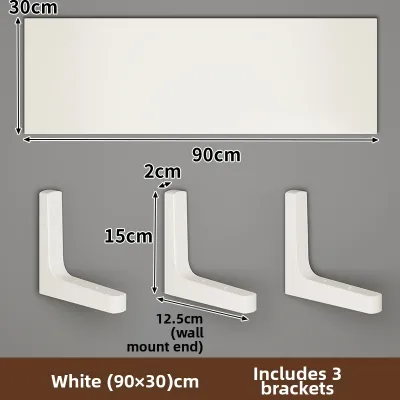
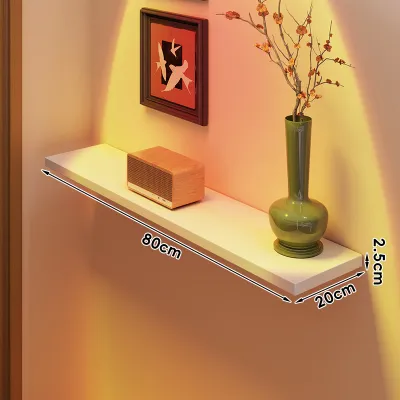
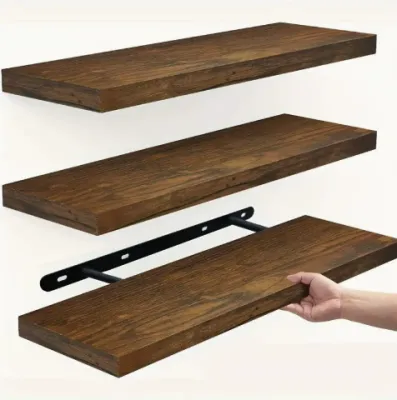
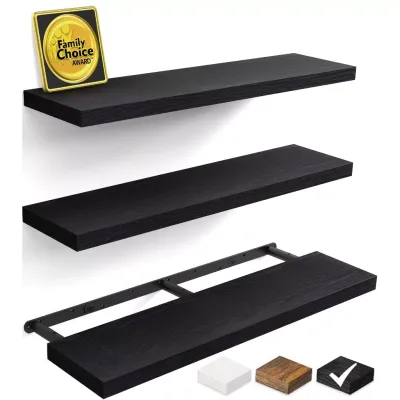
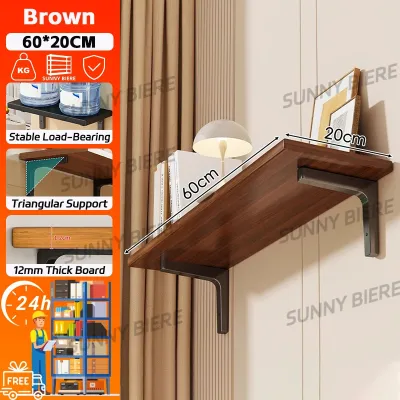
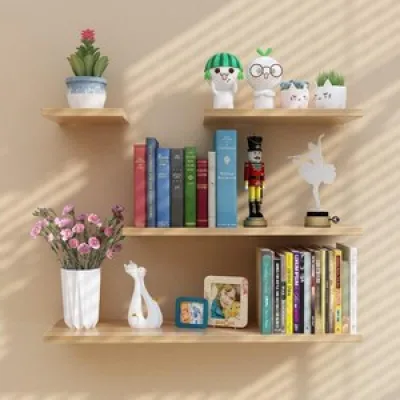
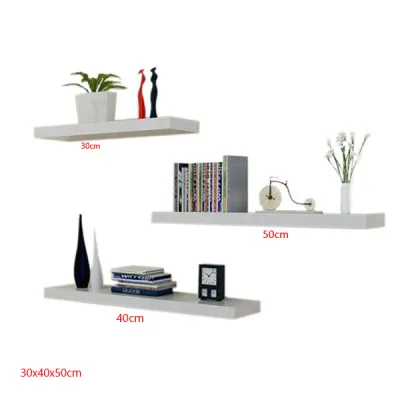
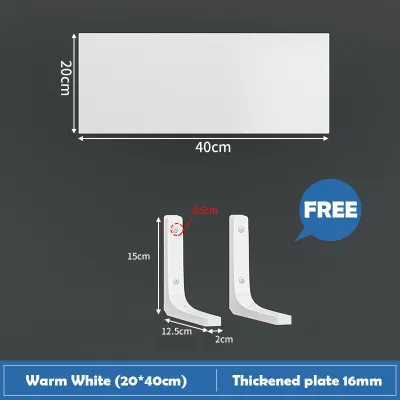
Prices are valid at publication and may change. Please refer to the product page for the latest price.
Before purchasing any floating shelf, you must verify its surface specifications rather than assuming a material is naturally resilient. Look for explicit manufacturer details indicating sealed edges, moisture-resistant coatings, or polyurethane protective layers. These surface treatments act as a barrier against ambient humidity, preventing moisture from penetrating the core material and causing structural warping over time.
Evaluating Shelf Materials for Tropical Humidity
Selecting the right material for your floating shelves involves balancing structural strength with environmental resistance. In a Philippine home study, the choice of material determines whether your shelves will remain straight and secure or sag and warp under the combined weight of books and seasonal humidity.
Solid Wood and Metal Options
Solid wood is a traditional choice that offers exceptional natural strength and structural rigidity, making it highly suitable for holding heavy volumes. However, wood is a hygroscopic material, meaning it naturally absorbs and releases moisture from the surrounding air. To prevent warping, twisting, or cupping during the humid monsoon months, you must verify that the solid wood has been properly kiln-dried and fully sealed. Check the product specifications to ensure all six sides of the shelf—including the back edge that sits flush against the wall—are finished with a protective varnish, lacquer, or polyurethane coating.
Metal floating shelves, typically constructed from steel or aluminum, provide outstanding load-bearing capacity and a clean, modern aesthetic. While metal does not warp or swell like wood, it is highly susceptible to corrosion when exposed to humid tropical air, especially in coastal areas or rooms without continuous air conditioning. When choosing metal shelves, verify that they feature a high-quality, electrostatically applied powder-coated finish or are made of anodized aluminum. Inspect the joints and edges for any chips or exposed metal, as these areas are where rust typically begins.
Engineered Wood and Moisture Ratings
Engineered wood products, such as Medium-Density Fibreboard (MDF) and particleboard, are widely available and highly budget-friendly options for home office shelving. However, standard engineered wood is highly vulnerable to moisture absorption. If humid air penetrates the outer laminate or veneer, the internal wood fibers will swell, causing the shelf to sag, blister, and permanently lose its structural integrity.
If you opt for engineered wood, you must specifically look for Moisture Resistant (MR) MDF or high-pressure laminate (HPL) finishes. Carefully inspect the product details to confirm that the shelf features fully sealed edge banding on all sides. Avoid using unsealed or poorly banded engineered wood shelves in study rooms that lack mechanical ventilation or air conditioning, as the constant exposure to ambient humidity will inevitably cause the material to degrade.
Matching Shelf Styles to Your Study Supplies
A well-organized study room requires different types of shelving to accommodate various categories of office supplies, books, and decorative items. Matching the shelf design to the specific physical characteristics of your items ensures both visual order and structural safety.
Heavy-Duty Shelves for Textbooks and Binders
For storing heavy reference books, legal binders, and thick academic textbooks, you should select thick-profile floating shelves that are at least 2 inches (5 centimeters) thick. These robust shelves are designed with a hollow core that slides over a heavy-duty, concealed steel bracket system. The bracket features long, welded steel prongs that insert deep into the shelf body, distributing the weight backward toward the wall.
When organizing heavy books, choose shelves with a flat, solid surface that lacks a front lip or decorative raised edges. A completely flush surface allows you to slide heavy binders and books laterally on and off the shelf with minimal effort. This design minimizes the need to lift heavy items repeatedly, reducing the physical strain on both you and the shelf’s mounting points.
Slim Ledges and Box Styles for Accessories
For lighter study accessories, stationery, and personal items, alternative shelf styles offer excellent organizational utility without the bulk of heavy-duty units. Slim ledges, which typically feature a thickness of 1 inch or less, are ideal for displaying thin notebooks, tablets, or framed certificates. These ledges often come with a raised front lip, which acts as a safety barrier to prevent pens, rulers, and other small items from rolling off the edge.
Floating box or cubby-style shelves provide a combination of open display space and semi-enclosed storage. These modular units are excellent for organizing small electronics, charging cables, and loose documents that can make a study desk look cluttered. By housing these smaller items within the defined boundaries of a cubby, you keep the visual landscape of your study room clean and focused, which helps improve concentration during long working hours.
Safe Installation and Wall Compatibility Checks
The safety and longevity of your floating shelves depend heavily on how they are anchored to your study room walls. Before purchasing any shelving unit, you must identify the structural composition of your walls to select the appropriate mounting hardware and installation method.
In the Philippines, residential walls are most commonly constructed from solid concrete or concrete hollow blocks (CHB) finished with cement plaster. However, modern condominium units and partition walls in newer homes often utilize drywall sheets mounted over light-gauge steel studs. Each wall type requires a specific approach to drilling and anchoring:
- Concrete and Hollow Block Walls: These surfaces require heavy-duty masonry wall plugs or sleeve expansion anchors. You must use a rotary hammer drill equipped with a masonry drill bit that matches the exact diameter specified by the anchor manufacturer. Standard plastic wall plugs are often insufficient for heavy book loads; high-quality nylon or metal expansion anchors are highly recommended.
- Drywall Partitions: Drywall cannot support the weight of heavy floating shelves on its own. You must use a stud finder to locate the vertical steel or wooden studs behind the drywall and screw the mounting bracket directly into them. If you must mount a shelf between studs for lightweight items, use heavy-duty toggle bolts, but strictly limit the weight placed on the shelf.
Proper weight distribution is another critical factor in preventing installation failures. Always place your heaviest books and binders closest to the wall, which represents the strongest point of the shelf’s leverage. Distribute the remaining weight evenly across the span of the shelf rather than stacking heavy items near the outer front edge.
If you observe any signs of wall degradation, such as crumbling plaster, dampness, or structural cracks, do not attempt to install the shelves. If you are uncertain about your wall’s internal structure or if the weight of your study materials exceeds the manufacturer’s rated capacity, stop the installation immediately. Consult a qualified local carpenter or structural contractor to ensure the installation is safe and secure.
Frequently Asked Questions (FAQ)
How do I prevent floating shelves from sagging under heavy books?
To prevent sagging, you must choose shelves with thick profiles (at least 2 inches) and robust internal steel brackets. Always secure the brackets directly into wall studs or solid concrete, and strictly adhere to the manufacturer’s maximum weight limits.
Can I use floating shelves for A4-sized folders and binders?
Yes, but you must ensure the shelves have a minimum depth of 10 to 12 inches. This depth fully supports the footprint of standard A4 binders, preventing them from overhanging the edge and tipping forward.

Community discussion
Share your experience or ask a question. Comments are reviewed before publication.