
Finding the right computer desk table for a compact studio condo or a shared bedroom requires balancing a small footprint with structural rigidity. A great space-saving desk must collapse flat enough to slide behind a wardrobe or under a bed, yet remain stable enough to support a laptop, monitor, and peripherals without shaking during intense typing sessions. By focusing on precise measurements, locking mechanisms, and material finishes, you can establish a highly productive work-from-home setup that disappears when your workday ends.
Assessing Your Space: Measurements and Clearance for Compact Rooms
Selecting a compact desk begins with mapping out the physical boundaries of your room. You must measure the exact floor area where the desk will stand when fully extended. Laptop users generally require a tabletop depth of at least 40 to 50 centimeters, while those using external monitors should look for a depth of 50 to 60 centimeters to maintain a safe, comfortable viewing distance. The width of the desk should not only accommodate your computer setup but also leave enough lateral clearance for your desk chair, which typically requires a minimum width of 60 to 70 centimeters.
Beyond the desk’s immediate footprint, you must account for dynamic clearances within the room. Consider how the open desk interacts with door swings, wardrobe doors, and high-traffic walkways. In shared bedrooms, a desk that blocks the path to the bathroom or balcony when unfolded will quickly become a daily frustration. Ensure there is at least 80 centimeters of open space behind the desk so you can push your chair back and stand up without bumping into a bed frame or wall.
Products mentioned in this guide

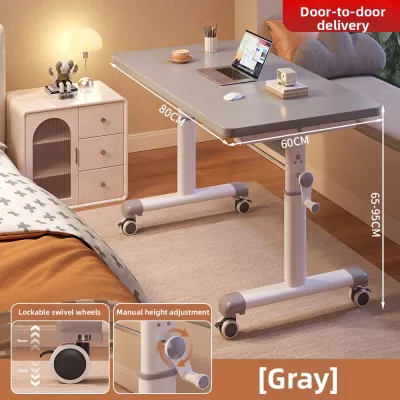
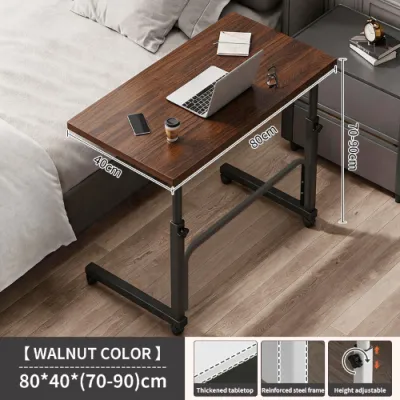
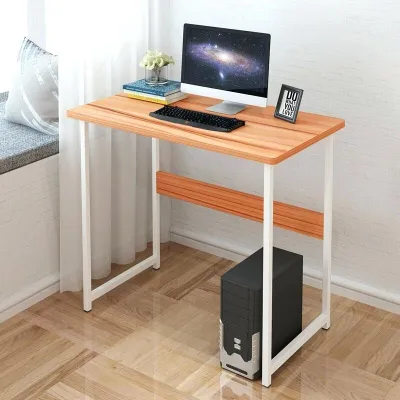
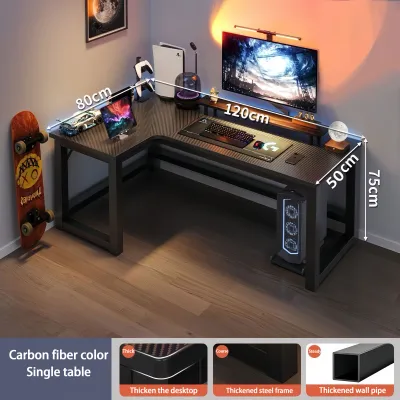
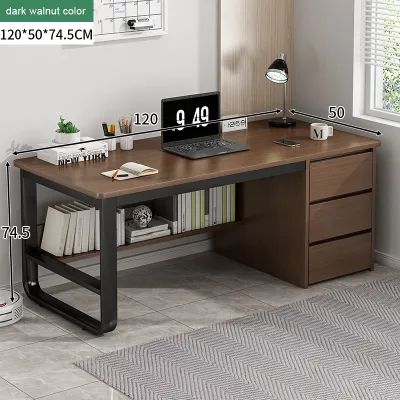
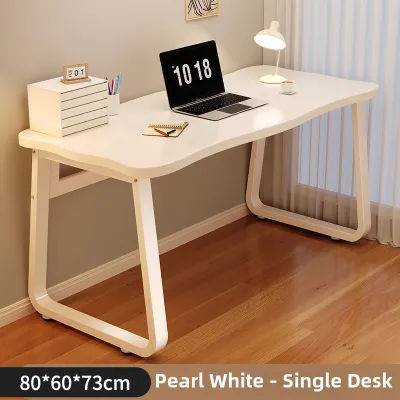
Prices are valid at publication and may change. Please refer to the product page for the latest price.
Living in high-rise developments also requires planning for the delivery and assembly process. Before placing an order, measure the height and width of your condo building’s passenger elevators, narrow corridors, and entryway door frames. A pre-assembled folding desk or a large flat-pack box must be able to navigate these tight spaces without damaging the walls or the furniture itself.
Finally, distinguish clearly between the desk’s active footprint and its stored footprint. The active footprint is the total space occupied when the table is fully set up for work. The stored footprint refers to the dimensions of the desk once it is completely collapsed. Measure the specific storage gaps in your home—such as the 10-centimeter space between a wardrobe and the wall, or the clearance under your bed frame—to ensure the folded unit will slide away seamlessly.
Key Features to Look for in a Foldable Computer Desk Table
While standard stationary tables only need to support static weight, a foldable computer desk table must withstand repeated folding and unfolding cycles. Prioritizing structural integrity and smart hardware design over simple aesthetics ensures your expensive electronic equipment remains safe and secure throughout years of daily use.

Folding Mechanisms and Storage Footprint
The choice of folding mechanism directly dictates how easily you can set up and store your workspace each day. Some desks feature legs that tuck flat directly underneath the tabletop, which is highly portable but requires you to clear the surface completely before folding. Drop-leaf hinges allow the sides of the tabletop to fold downward while the central frame remains stationary, offering a dual-purpose setup that can function as a narrow console table when partially closed. Bi-fold designs allow the tabletop to fold in half like a suitcase, which is excellent for deep storage but often introduces a seam in the middle of your writing surface.
When evaluating these mechanisms, check the manufacturer’s specifications for the collapsed thickness of the desk. A unit that collapses to under 8 to 10 centimeters can easily slide into tight closets, behind doors, or flat against a wall. If you plan to store the desk under a bed, measure the vertical clearance of your bed frame to ensure the folded desk will slide underneath without scraping the floor.
Stability and Weight Capacity for Computer Setups
Computer work involves continuous typing, mouse movement, and sometimes the weight of multiple monitors, all of which amplify any structural weakness in a desk. To prevent distracting monitor shake, look for desks constructed with steel frames, reinforced triangular joints, and cross-bracing, such as X-shaped metal bars on the back. Locking hinges or safety pins that click into place when the desk is fully opened are essential to prevent accidental collapsing.
Always verify the manufacturer’s stated weight capacity rather than relying on generic product titles. A standard laptop, external monitor, and keyboard setup typically weigh between 5 and 12 kilograms. However, you must also account for the localized pressure applied when you lean your forearms on the front edge of the desk. A reliable foldable desk should have a verified weight capacity of at least 20 to 30 kilograms to ensure it remains completely stable under daily working conditions.
Surface Material and Edge Finishing
In tropical environments with high relative humidity, low-grade engineered wood can absorb moisture from the air, leading to swelling, warping, and structural failure. Do not assume a tabletop is durable or water-resistant simply because the product listing mentions “wood” or “fiberboard.” Instead, look for specific product details confirming the use of high-pressure laminate (HPL) or melamine face plates, which provide a protective barrier against moisture and scratches.
Pay close attention to the edge finishing of the tabletop. Look for fully sealed PVC or ABS edge banding that is securely bonded to the core material. Poorly sealed edges are highly vulnerable to peeling, especially in humid conditions or when exposed to spilled drinks and sweat from your wrists. Smooth, rounded edge profiles also prevent the desk from cutting into your forearms during long typing sessions.
Types of Foldable Desks for Small Living Spaces
Understanding the structural differences between movable freestanding desks and fixed wall-mounted solutions allows you to select a design that aligns with your room layout, mobility needs, and residential lease terms.
Freestanding Foldable and Collapsible Desks
Freestanding foldable desks require no permanent installation, making them highly versatile options for shared rooms or rental properties where drilling into walls is prohibited. These units can be set up anywhere in your condo, allowing you to position your workspace near a window for natural light during the day and move it out of the way in the evening. This mobility makes them ideal for multi-purpose rooms where space must be reclaimed after working hours.
However, freestanding portable desks carry certain structural trade-offs. Because they rely on moving joints and folding legs, they may exhibit slightly more lateral movement or wobble compared to heavy, solid-frame desks. Additionally, you must manually clear your computer gear, monitor, and cables from the tabletop every time you want to fold and store the desk. To make this daily transition easier, look for models equipped with built-in carrying handles, lightweight aluminum or steel frames, and locking caster wheels that allow you to roll the desk into a closet without lifting it.
Wall-Mounted and Drop-Leaf Desks
Wall-mounted folding desks are permanently anchored to a wall and feature a tabletop that folds down flat when not in use. This design completely eliminates the need for floor legs, preserving precious floor space and creating a highly streamlined look in studio apartments. Because they are anchored directly to the building’s structure, wall-mounted desks can offer exceptional stability and a dedicated, consistent workspace that requires minimal daily setup.
Despite these benefits, wall-mounted desks require careful planning and permanent installation. In high-rise condo units, walls are typically constructed from solid concrete, pre-cast concrete panels, or hollow concrete blocks. Mounting a desk to these surfaces requires a masonry drill bit, heavy-duty concrete expansion anchors, and precise leveling. Furthermore, because the desk’s location is permanent, you must ensure that when folded flat, it does not block light switches, electrical outlets, or narrow walkways. You also lose that specific wall space for other furniture or decor.
Common Sizing and Placement Mistakes to Avoid
Avoiding common spatial and ergonomic errors during the planning stage will save you from purchasing a desk that is uncomfortable to use or structurally incompatible with your room.
- Ignoring chair clearance: Many people measure the desk footprint but forget to account for the space required by the office chair. A standard ergonomic chair requires at least 60 to 80 centimeters of depth behind the desk to allow you to sit down, adjust your posture, and stand up comfortably. Failing to account for this can leave you trapped between your desk and your bed.
- Overlooking monitor depth: Choosing an ultra-shallow desk (under 40 centimeters) to save space often backfires. A shallow surface forces your external monitor or laptop screen too close to your eyes, causing severe eye strain. It also leaves very little room for a separate keyboard and mouse, forcing your wrists into an unnatural, cramped position.
- Assuming all foldable desks are lightweight: Some heavy-duty folding desks constructed with thick steel frames and solid wood tops can weigh upwards of 15 to 20 kilograms. If your daily routine requires you to fold and store the desk every evening, a heavy unit can quickly become a physically exhausting chore. Always check the net weight of the desk before purchasing.
- Blocking utilities and airflow: Placing your desk directly under an air conditioning unit can expose your expensive computer equipment to condensation or water drips. Similarly, blocking wall outlets, fiber-optic internet ports, or ventilation shafts with your desk setup can disrupt your home's utility access and reduce the efficiency of your cooling systems.
Where to Buy and What to Verify Before Checkout
When browsing local furniture showrooms or popular online marketplaces, never rely solely on promotional images, stylized room renders, or generic listing titles. Always locate and download the manufacturer’s official specification sheet or assembly manual to verify the exact unfolded and folded dimensions down to the millimeter.
Before finalizing your purchase, carefully review the seller’s return and replacement policies. Because foldable furniture relies heavily on moving metal joints and hinges, inspect the package immediately upon delivery for any bent frames, misaligned pre-drilled holes, or cracked tabletop edges. If you live in a high-rise condo, coordinate with your building’s property management office regarding delivery guidelines, as many properties require prior gate passes, deposit fees, or reservations for the freight elevator when moving large furniture packages.
Frequently Asked Questions (FAQ)
Can I use a wall-mounted foldable desk on a hollow drywall partition?
Standard hollow drywall partitions cannot support the dynamic weight of a wall-mounted computer desk, especially when you lean your forearms on the edge. If you must install a desk on a drywall partition, you must locate the internal vertical wood or metal studs using a stud finder and anchor the mounting brackets directly into them. For maximum safety and load capacity, wall-mounted desks should always be anchored into solid concrete, brick, or structural masonry walls using appropriate heavy-duty expansion anchors.
How do I prevent a freestanding foldable desk from wobbling while typing?
To minimize wobble, first ensure that all leg hinges, support braces, and locking pins are fully extended and clicked into their designated locked positions. Avoid placing the desk on thick rugs or uneven tile grout lines, which can destabilize the legs. If your condo floor is slightly uneven, select a foldable desk that features adjustable screw-in leveling feet, which allow you to fine-tune the height of each leg individually to compensate for floor imperfections.

Community discussion
Share your experience or ask a question. Comments are reviewed before publication.