
Finding a versatile dining solution that balances daily living space with the capacity to host large gatherings is a common challenge for homeowners. In the Philippines, where family life centers around shared meals and festive gatherings, choosing a high-quality foldable wooden table is one of the most effective ways to maximize your home’s layout. A well-designed expandable table provides a compact footprint for daily family meals, yet easily transforms to accommodate 6 to 10 diners when relatives and friends visit.
Selecting the right table requires looking beyond aesthetics. To find a piece that will endure years of use, you must evaluate the underlying folding mechanisms, calculate precise room clearances, select wood species capable of withstanding tropical humidity, and verify structural stability. This guide breaks down these essential factors to help you make an informed investment for your dining room.
Recommended Folding Mechanisms for Large Families
Extendable Tables with Center Leaves
Extendable dining tables utilizing center leaves are the most reliable option for seating 8 to 10 people without compromising structural integrity. This design features a split tabletop mounted on a sliding track system. When you pull the two halves of the table apart, a gap opens in the center to accommodate one or two additional wooden panels, known as leaves.
Products mentioned in this guide
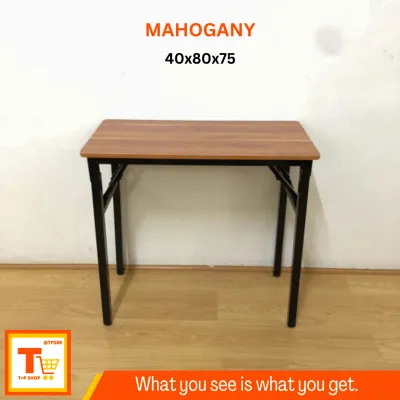
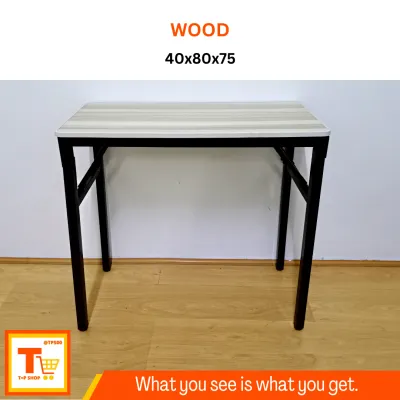
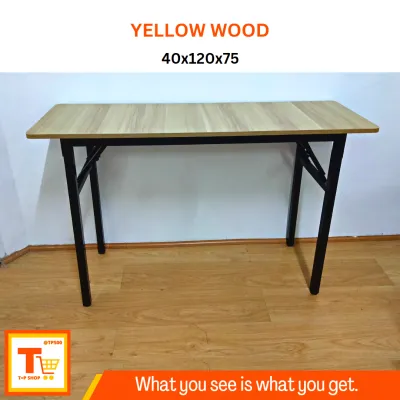
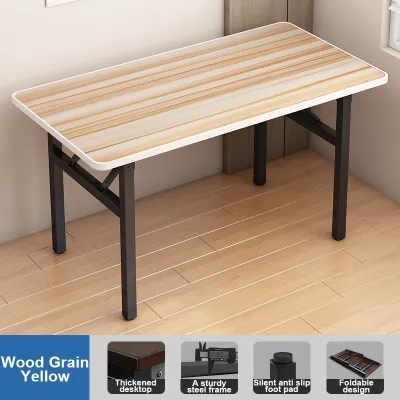
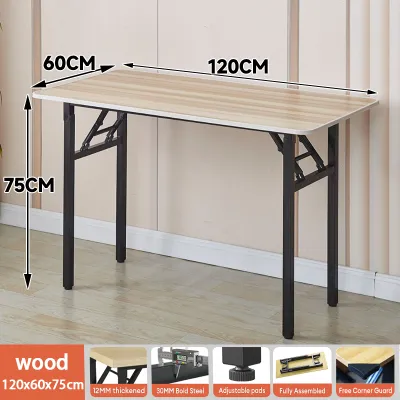
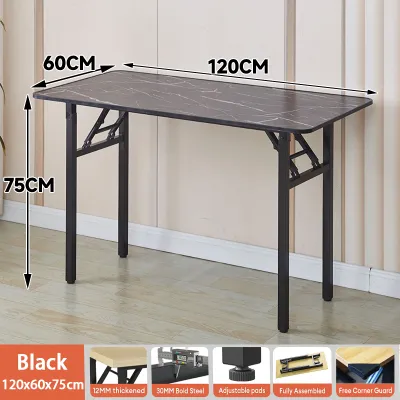
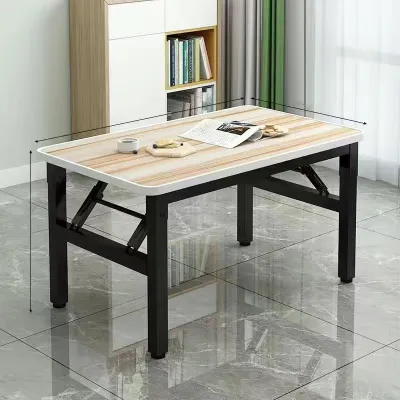
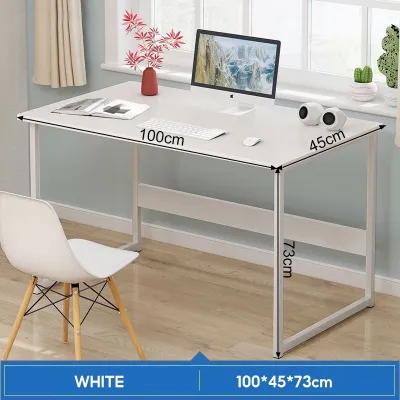
Prices are valid at publication and may change. Please refer to the product page for the latest price.
These panels can be completely separate pieces that you store in a closet, or they can use a butterfly mechanism. A butterfly leaf is permanently hinged and folded beneath the tabletop, pivoting upward and unfolding seamlessly into place when the table is opened. Because the structural frame and legs of the table slide outward or remain firmly anchored at the outer corners, center-leaf tables distribute weight evenly, preventing the sagging or tipping common in other folding styles.
Drop-Leaf and Gateleg Tables
Drop-leaf and gateleg tables offer excellent space-saving benefits for daily use, but they have distinct limitations when hosting large groups. These tables feature hinged side panels that hang vertically when folded. To extend the table, you lift the side leaves and swing out support legs (in gateleg designs) or slide out wooden brackets (in standard drop-leaf designs) from beneath the main frame.
While highly convenient for transforming a narrow console into a dining surface, these tables rarely seat more than 6 to 8 people comfortably. The swing-out gatelegs often obstruct the legroom of guests sitting along the sides, forcing them to straddle the wooden supports. Additionally, because the extended leaves rely entirely on hinges and pivoting legs, they are structurally less stable than center-leaf systems and can wobble under the weight of heavy serving platters.
Wall-Mounted or Fold-Down Tables
Wall-mounted fold-down tables are designed to fold completely flat against the wall when not in use, making them popular in micro-apartments and small condominiums. However, they are generally unsuitable for heavy, 10-person family dining.
Seating 10 people requires a massive tabletop surface that places immense shear stress on wall anchors and studs. Standard residential walls, especially lightweight drywall partitions or concrete hollow block walls common in local construction, are rarely engineered to support the cantilevered weight of a large wooden table loaded with dinnerware and the leaning weight of multiple diners. For large-scale hosting, a freestanding extendable table is a far safer and more practical choice.
Decision Framework
To choose the right mechanism, evaluate how often you host large gatherings versus your daily space constraints. If you host weekly Sunday lunches or large family dinners, an extendable table with built-in butterfly leaves offers the best balance of convenience and structural durability. If you only host large groups a few times a year for major holidays, a high-quality drop-leaf table can save valuable floor space daily, provided you are comfortable capping your guest list at 8 people to ensure everyone has adequate legroom.
Space Planning and Dimensions for 6 to 10 Diners
Minimum Table Dimensions
To ensure your guests can dine comfortably without clashing elbows, you must select a table with appropriate physical dimensions. A standard adult requires approximately 60 centimeters of tabletop width to eat comfortably. For a rectangular table, seating 6 people requires a minimum length of 150 centimeters. To expand that capacity to 8 people, the table length must increase to 180 or 200 centimeters.

To comfortably accommodate 10 adults—typically seated with four people along each long side and one person at each end—the fully extended table must measure at least 240 centimeters in length, though 270 to 300 centimeters is highly recommended to provide breathing room. The width of the table should ideally fall between 90 and 100 centimeters. Anything narrower will leave insufficient space for center serving dishes, while anything wider makes it difficult for guests to reach across the table.
Clearance and Traffic Flow
When planning your dining room layout, you must account for the space required around the table when it is fully extended. Measure your room and ensure there is a minimum clearance of 75 to 90 centimeters between the edge of the extended table and the nearest wall, sideboard, or doorway. This clearance allows guests to pull their chairs back and stand up without difficulty.
If the dining area sits adjacent to a main hallway or a high-traffic pathway to the kitchen, increase the clearance along that side to 100 to 120 centimeters. This extra space ensures that family members can walk past carrying hot dishes without bumping into seated guests. If your dining room cannot accommodate these clearances when the table is fully open, you may need to consider a slightly smaller table or reconfigure your adjacent furniture during hosting events.
Shape Considerations
The shape of your extendable table plays a significant role in both seating capacity and room traffic flow. Rectangular tables are the traditional choice, maximizing surface area and aligning perfectly with square or rectangular rooms. However, their sharp corners can restrict movement in tight dining spaces.
Oval extendable tables offer a practical alternative for tight rooms. The curved ends of an oval table soften the traffic paths around the room, making it easier for guests to navigate tight corners. Furthermore, the lack of sharp corners allows you to squeeze an extra chair or two around the table ends more easily during large gatherings, though you sacrifice a small amount of corner surface area for serving platters.
Doorway and Staircase Checks
Before purchasing a large extendable table, you must verify that the piece can actually be delivered into your dining room. Measure the width and height of your front door, interior hallways, and any tight staircase turns. If you live in a high-rise condominium, check the interior dimensions and diagonal clearance of the building’s service elevator.
Many high-quality wooden tables are delivered partially assembled or flat-packed, which simplifies transport. However, the main tabletop frame is often a single, solid piece that cannot be bent or disassembled. Ensure you compare these packaged dimensions against your home’s entry points to avoid delivery failures.
Evaluating Wood Types and Finishes for a Foldable Wooden Table in Humid Climates
Solid Wood vs. Engineered Wood
When shopping for a durable foldable wooden table, understanding the material composition is critical. Solid hardwoods, such as teak, acacia, and mahogany, are highly recommended for large extendable tables. These woods possess dense grain structures that can support heavy loads and securely hold the screws and brackets of mechanical folding hardware over decades of use.
Engineered wood products, such as medium-density fiberboard (MDF) or high-quality plywood topped with natural wood veneers, are lighter and more budget-friendly. However, cheap engineered wood is highly vulnerable to moisture. If humidity or spilled liquids penetrate the outer veneer layer, the underlying fibers can swell, warp, and crumble, eventually causing the mechanical hinges and tracks to pull free from their mountings.
Moisture and Humidity Resistance
The tropical climate of the Philippines presents unique challenges for wooden furniture. High relative humidity during the wet season causes wood fibers to absorb moisture and swell, while the dry season causes them to shrink. This continuous cycle can lead to warping, bowing, and joint separation if the wood is not properly prepared.
To prevent these issues, look for tables made from kiln-dried timber. Kiln-drying is a controlled thermal process that reduces the wood’s internal moisture content to a stable level (typically between 8% and 12%) before manufacturing. Always check product labels or ask the manufacturer to verify that the timber has been kiln-dried, as this process significantly reduces the wood’s natural tendency to warp in tropical climates.
Surface Finishes
The type of finish applied to the wood determines its resistance to daily wear, spills, and humidity. Polyurethane and lacquer finishes form a hard, synthetic, impermeable barrier over the wood surface. These finishes are excellent for dining tables because they resist water rings from sweating cold glasses and prevent hot soup spills from staining the wood.
Oil and wax finishes penetrate the wood fibers to highlight the natural grain and texture, offering a beautiful, organic aesthetic. However, they provide minimal protection against moisture and heat. An oiled table requires regular maintenance, including reapplication of protective oils every 6 to 12 months, to prevent the wood from drying out or absorbing liquids.
Weight and Mobility
A solid wood extendable table designed to seat 10 people is exceptionally heavy, often weighing upwards of 60 to 80 kilograms. Moving such a heavy piece of furniture to extend the leaves can scratch delicate flooring, such as hardwood planks or vinyl tiles.
When evaluating a table, check if the legs are equipped with high-density felt glides or non-marking rubber feet. For exceptionally heavy designs, look for tables that incorporate heavy-duty, locking casters integrated discreetly into the base. These wheels allow you to slide the table easily when extending it and lock it securely in place once positioned.
Structural Stability and Safety Checks for Extended Tables
Base and Leg Configuration
The design of the table’s base directly impacts both its structural stability when extended and the comfort of your guests. Central pedestal bases are highly popular because they eliminate corner legs, allowing you to maximize seating configurations without guests bumping their knees. However, when a pedestal table is extended to 240 centimeters or more, a single central support can become unstable, causing the table ends to sag or tip if a guest leans heavily on them.
For large 10-seat tables, a four-legged design or a double-trestle base is structurally superior. In these configurations, the legs slide outward along with the tabletop halves when extended, keeping the support points at the far ends of the table. This ensures the table remains perfectly level and stable, even when loaded with heavy serving dishes.
Hardware and Locking Mechanisms
The longevity of any foldable table is determined by the quality of its mechanical hardware. Inspect the extension tracks mounted beneath the tabletop. High-quality tables utilize heavy-gauge steel or brass tracks equipped with ball bearings, which glide smoothly even under the weight of heavy solid wood.
Avoid tables that rely on simple wooden runners, as wood-on-wood friction increases dramatically in humid weather when the wood swells, causing the mechanism to stick or jam. Additionally, ensure the table features robust under-table latches or locking pins. These locks hold the extended halves tightly together, preventing the leaves from shifting or separating during a meal.
Weight Capacity and Edge Support
Extended table leaves are supported by cantilevered metal rails or sliding wooden supports. Because they lack direct vertical leg support underneath, these extended sections have lower weight limits than the center of the table.
Before purchasing, check the manufacturer’s specified weight capacity for both the main table and the extended leaves. Remind family members and guests to avoid leaning heavily on the extended ends of the table, and avoid placing exceptionally heavy items, such as heavy stone centerpieces or large ceramic serving pots, directly on the joints of the extension leaves.
Pre-Purchase Verification
If you are shopping in a physical furniture showroom, take the time to personally operate the extension mechanism. It should slide open smoothly without requiring excessive physical exertion, and the leaves should align perfectly level with the main tabletop.
If you are purchasing online from an e-commerce platform, read customer reviews specifically looking for feedback on structural wobble, alignment issues, and delivery damage. Verify the retailer’s return policy and warranty coverage, ensuring that the warranty explicitly covers the structural joints and mechanical hardware for at least one to two years.
Daily Maintenance and Hardware Care
Hardware Lubrication
To keep the metal tracks, gears, and hinges of your extendable table operating smoothly, perform basic mechanical maintenance once or twice a year. Apply a light coat of silicone-based lubricant or dry Teflon spray to the moving parts.
Avoid using heavy oils, grease, or standard multi-purpose lubricants like WD-40 on furniture hardware. These wet lubricants attract household dust, pet hair, and fine wood fibers, which can accumulate over time and form a sticky grime that clogs the tracks. Always wipe away any overspray with a clean microfiber cloth to prevent the lubricant from staining the surrounding wood.
Surface Protection
Protecting the wood’s surface finish is essential to preserving its appearance and structural integrity. Always use insulated trivets, hot pads, or placemats under serving dishes straight from the stove to prevent heat marks, which can permanently cloud polyurethane or lacquer finishes.
In tropical environments where cold drinks sweat rapidly, always use coasters under glasses and pitchers. If water spills or condensation puddles on the tabletop, wipe it up immediately with a soft, dry microfiber cloth. Avoid using harsh chemical cleaners, bleach, or abrasive scrubbing pads, which can strip away the protective finish and expose the raw wood to moisture.
Seasonal Adjustments
Because natural wood continuously reacts to seasonal shifts in humidity, the structural fasteners of your table will naturally experience minor stress. Over time, this natural expansion and contraction can cause screws and bolts to loosen slightly, leading to a subtle wobble in the legs or frame.
Make it a habit to inspect the underside of your table every six months. Use a screwdriver or hex key to gently tighten any visible screws, corner brackets, and mounting bolts. Be careful not to overtighten them, as excessive force can strip the threads out of the wooden frame.
Safety Boundary
If the extension mechanism becomes difficult to slide, jams, or feels misaligned, do not attempt to force it open or closed. Forcing a stuck mechanism can bend the metal tracks, strip the mounting screws out of the wood, or crack the tabletop frame, leading to costly or irreversible damage.
Instead, stop immediately and inspect the tracks from underneath using a flashlight to check for obstructions, loose screws, or accumulated debris. Clean the tracks gently with a dry brush. If the jam persists, consult the manufacturer’s troubleshooting guide or contact a professional furniture repair technician to resolve the issue safely.
Frequently Asked Questions (FAQ)
Can a standard drop-leaf table comfortably seat 10 people?
Standard drop-leaf tables are generally not designed to seat 10 people comfortably. When fully extended, their support systems—such as gatelegs or pull-out wooden brackets—often block the legroom along the sides, making it difficult for guests to sit without discomfort. Additionally, the hinges on drop-leaf tables are not engineered to support the heavy weight of a 10-person dinner setup. For a reliable 10-seat capacity, an extendable table with center or butterfly leaves is a much safer and more comfortable choice.
How do I prevent the wood from warping in a humid environment?
To minimize wood warping in a humid tropical climate, position your table away from direct sunlight, which can dry out and warp wood unevenly. Avoid placing the table directly under or adjacent to air conditioning units, as rapid temperature and humidity fluctuations stress the timber. Before purchasing, verify that the manufacturer used kiln-dried wood and sealed all sides of the table—including the unfinished underside—with a moisture-resistant protective coating.
Are extendable tables with butterfly leaves more durable than stored leaves?
Butterfly leaf mechanisms offer exceptional convenience because the leaves are permanently attached to an internal folding hinge, preventing them from being dropped, scratched, or lost during storage. However, their long-term durability depends entirely on the quality of the metal hinges and tracks. Separate stored leaves (which you must keep in a closet or under a bed) are structurally simpler and have fewer moving parts to break, but they are more vulnerable to physical damage during handling and storage.

Community discussion
Share your experience or ask a question. Comments are reviewed before publication.