
For high-density urban living in the Philippines, maximizing every square meter of a condominium is a daily priority. Studio and one-bedroom units in major metropolitan areas demand furniture that works twice as hard, adapting to changing needs between morning remote work and nighttime rest. A folding bamboo bed offers an elegant, highly functional solution to this spatial puzzle. By transitioning from a full-sized sleeping surface to a compact, storable unit, it frees up valuable floor space during the day. However, finding the right model requires looking beyond simple aesthetics to evaluate mechanical durability, structural support, and climate suitability.
Choosing the ideal folding bamboo bed involves matching the frame’s style and folding mechanism to your specific room layout and daily routine. Because bamboo is naturally lightweight yet structurally resilient, it serves as an excellent material for mobile, space-saving furniture. However, its performance in a high-rise home depends heavily on the quality of its hinges, its weight capacity, and how well its protective finish handles tropical humidity. Understanding these variables ensures you select a bed that is not only easy to store but also safe, comfortable, and durable for years to come.
Why a Folding Bamboo Bed Works for Compact Condos
Condo bedrooms in cities like Manila, Cebu, and Davao often double as home offices, study areas, or exercise spaces. Standard stationary beds permanently claim a massive portion of the room’s footprint, leaving little space for daytime activities. A folding bamboo bed solves this issue by allowing you to reclaim that square footage when you are awake. The ability to fold the bed frame and slide it into a closet, push it against a wall, or convert it into seating transforms a cramped sleeping quarter into a flexible, multi-purpose living area.
Products mentioned in this guide
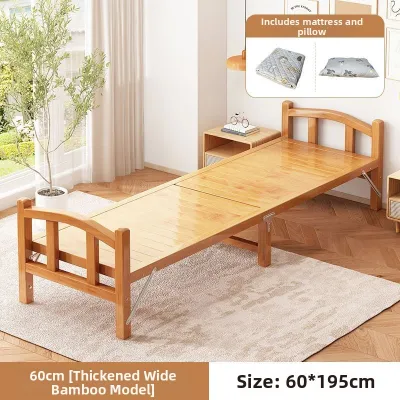
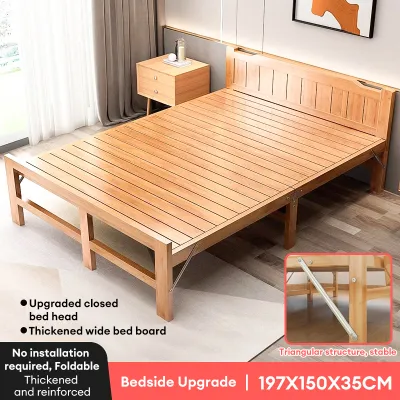
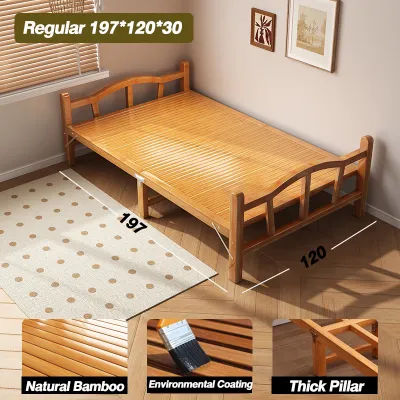
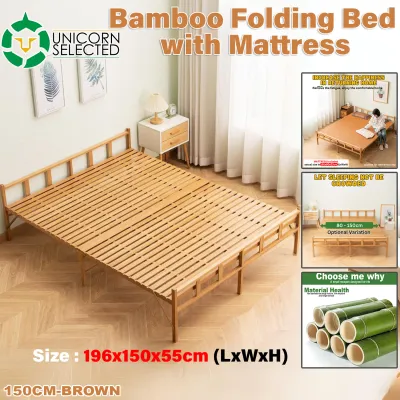
Prices are valid at publication and may change. Please refer to the product page for the latest price.
The inherent material properties of bamboo make it uniquely suited for this type of mobile furniture. While solid hardwood frames are exceptionally heavy and difficult to move, and metal frames can feel cold and industrial, bamboo strikes a perfect balance. It is a naturally lightweight material, which makes folding, lifting, and rolling the bed frame a manageable task for a single person. This ease of movement is particularly beneficial if you frequently rearrange your room layout or need to clear the floor for daily chores.
From a design perspective, bamboo brings a warm, organic texture that complements popular tropical and minimalist interior styles. Its light, natural tones help brighten small rooms, creating an airy and open atmosphere that makes compact spaces feel larger. Whether your condo features a modern Scandinavian aesthetic, a warm rustic look, or a traditional Filipino design, the clean lines and natural grain of a bamboo frame integrate seamlessly without visually cluttering the space.
However, consumers must understand that while raw bamboo is a remarkably strong grass, its long-term durability and resistance to environmental wear are not automatic. The material’s longevity in a home environment is entirely dependent on the manufacturer’s specific treatment, curing process, and protective finish. When browsing options on online marketplaces, it is essential to look for verified product specifications regarding sealants rather than assuming the raw material alone will prevent wear, warping, or moisture damage.
Key Features to Evaluate Before Buying
Before purchasing a folding bamboo bed from an online retailer or local showroom, several technical specifications require close inspection. Because you will be deploying and collapsing the bed regularly, the quality of the moving parts is paramount. Focus on the following key areas to ensure your chosen frame is safe, reliable, and comfortable.

Folding Mechanism & Hardware The hinges, locking pins, and joints are the most critical components of any folding bed. Look for frames that utilize heavy-duty steel hardware with secure locking mechanisms to prevent accidental collapse. When reviewing product descriptions, check for features like safety pins or latch locks that hold the frame securely in both its open and closed positions. Smoothly finished joints are also vital to prevent pinch hazards during setup and pack-away routines.
Structural Support & Weight Capacity Never assume that all bamboo frames support the same amount of weight. You must locate the manufacturer’s stated weight limit, which should ideally accommodate both the mattress and the sleepers. Pay close attention to the thickness of the main support beams and the spacing of the slats. Slat spacing of less than three inches generally provides superior support and prevents mattress sagging, while thicker frame legs ensure lateral stability when you roll over during the night.
Mattress Compatibility A folding frame’s utility is directly tied to the type of mattress it can support. Some folding beds are designed only for thin, flexible foam mats, while others can accommodate thicker memory foam or lightweight innerspring mattresses. Verify the maximum recommended mattress thickness and weight specified by the manufacturer. Using a mattress that is too thick or heavy can strain the hinges, warp the bamboo slats, and make the folding mechanism difficult or dangerous to operate.
Surface Finish & Treatment In a tropical climate, raw bamboo is highly susceptible to moisture absorption, mold growth, and pest infestations. Therefore, you must verify that the bed frame has undergone proper kiln-drying and has been sealed with a high-quality protective coating. Look for product listings that explicitly mention water-resistant polyurethane sealants, anti-pest treatments, and non-toxic varnish finishes. A well-sealed surface not only blocks moisture but also makes cleaning and dusting much easier.
Top Styles of Space-Saving Bamboo Beds
Folding bamboo beds come in several distinct designs, each catering to different spatial limitations and lifestyle preferences. To choose the right style, you must evaluate how often you plan to fold the bed and where you intend to store it when it is not in use. Measuring both the fully deployed footprint and the folded storage dimensions is essential to find a style that fits your condo’s layout.
Rollaway and Trundle Designs
Rollaway bamboo beds typically feature a bi-fold frame mounted on heavy-duty caster wheels, allowing you to roll the entire unit into a closet, utility room, or deep alcove when it is folded. This design is highly convenient for guest rooms or studio apartments where the bed needs to be completely hidden from view during the day.
When considering a rollaway design, ensure your condo has smooth flooring transitions, as raised thresholds or thick rugs can make rolling the frame difficult. It is equally important to verify that the casters feature reliable locking mechanisms. Without locks, the bed can shift or slide on polished tile or laminate flooring when you get in and out of bed, posing a safety risk.
Bi-Fold and Tri-Fold Floor Frames
Bi-fold and tri-fold floor frames are low-profile, mat-style structures that sit directly on the floor or on a very low-clearance base. These frames fold flat into a neat stack, making them exceptionally easy to slide under a sofa, tuck behind a wardrobe, or store upright in a narrow closet. They are particularly popular in loft-style condos with low ceilings where vertical space is limited.
While these low-profile frames are highly space-efficient, they require careful moisture management. Sitting directly on the floor limits airflow beneath the mattress, which can trap body heat and humidity. If you choose a floor-level tri-fold frame, you must commit to regularly lifting the mattress and airing out both the mattress and the bamboo slats to prevent dampness from accumulating underneath.
Daybed and Multi-Functional Hybrids
For studio condos where the living room and bedroom occupy the same space, daybed and hybrid folding frames offer excellent dual-purpose utility. These designs function as a comfortable sofa or daybed during the day and expand into a larger sleeping surface at night, often using a slide-out trundle or a fold-out extension.
When evaluating hybrid designs, pay close attention to the stability of the extended sections. The pull-out mechanism should slide smoothly without scraping your floors, and the legs of the extended portion must align perfectly with the main frame to ensure a level sleeping surface. Additionally, check the comfort and angle of the backrest when the unit is configured as seating to ensure it serves both functions well.
Condo Logistics: Measuring, Delivery, and Assembly
Purchasing furniture for a high-rise condo involves unique logistical challenges that do not apply to landed homes. Failing to plan for delivery routes or building administration rules can lead to costly return fees and structural damage. Taking precise measurements and understanding your building’s policies before ordering will save you significant time and frustration.
Space & Clearance Mapping Before placing an order, map out the exact footprint of the bed in your room using painter’s tape on the floor. You must measure not only the length and width of the bed when fully open, but also the swing radius of the folding mechanism as it transitions from folded to flat. Ensure there is a clear walking path of at least two feet around the bed when it is deployed so you can navigate the room safely at night without bumping into other furniture.
Delivery & Access Constraints Even though a folding bed is designed to be compact, the packaged box during delivery can be surprisingly bulky and heavy. You must measure the clearance of your condo building’s elevator doors, the interior height of the elevator cab, the width of the hallway corners, and the entry doorway of your unit. Confirming these dimensions ensures the delivery team can physically transport the packaged bed to your floor and into your room without getting stuck.
Floor Protection Most condo units in the Philippines feature laminate, vinyl, or engineered wood flooring, which can easily scratch under the weight of shifting furniture. Check whether the folding bamboo bed comes equipped with non-scratch felt pads, rubber caps, or soft polyurethane wheels. If the product does not include these protective elements, purchase heavy-duty adhesive felt pads separately and apply them to all contact points and legs before assembling or moving the bed.
Assembly Requirements Determine whether the bed is delivered pre-assembled or as a flat-pack unit requiring self-assembly. If assembly is required, verify what tools are included and whether you need to provide your own screwdriver or wrench. Crucially, check that the bed’s design is entirely self-supporting and does not require drilling or anchoring into the walls. Many condo administrations strictly prohibit drilling into structural walls, so a freestanding folding frame is almost always the safest choice for high-rise residents.
Maintaining Bamboo in a Humid Climate
The tropical climate of the Philippines, characterized by high humidity and seasonal temperature shifts, presents specific challenges for natural wood and grass furniture. Because bamboo is a fibrous, organic material, it responds directly to its environment. Implementing a simple, consistent maintenance routine will preserve the structural integrity and beautiful appearance of your folding bed for years.
Humidity & Airflow Management Excessive humidity can cause bamboo to absorb moisture, leading to swelling, warping, or mold growth, while extreme dryness can cause it to crack. To maintain a stable environment, utilize air conditioning or dehumidifiers to keep indoor humidity levels consistent, especially during the rainy season. Additionally, avoid placing your folding bed in direct, harsh sunlight near windows, as prolonged exposure to UV rays can dry out the bamboo fibers, fade the finish, and cause structural splitting.
Routine Cleaning Keep your bamboo bed frame clean by dusting it regularly with a soft, dry microfiber cloth to remove dust and debris from the slats and joints. If the frame requires a deeper clean, first check the manufacturer’s care instructions for your specific bed model. If the instructions permit, use a soft cloth lightly dampened with water and a mild, pH-neutral soap approved by the manufacturer. Never soak the bamboo, wash it with running water, or use harsh chemical solvents like bleach or ammonia, as these can strip away the protective sealant and damage the underlying fibers. If care instructions conflict or are unavailable, consult a furniture care professional before proceeding.
Hardware & Joint Inspection The seasonal expansion and contraction of natural bamboo, combined with the mechanical stress of folding and unfolding, can cause hardware to loosen over time. Every few months, perform a quick inspection of all screws, bolts, and metal hinges. Use a screwdriver or wrench to gently tighten any loose fasteners, taking care not to over-tighten and crack the wood. If the folding joints begin to squeak or feel stiff, apply a small amount of manufacturer-approved silicone lubricant to the metal hardware to maintain smooth operation. Always refer to the product’s user manual before applying any lubricants or performing structural adjustments.
Mold & Pest Monitoring Regularly inspect the joints, underside, and slat connections of your bed frame for early signs of mold or pest activity, such as dark spots, fuzzy patches, or fine powdery residue. If you detect mold, immediately wipe the area down with a damp cloth and a mild vinegar solution, then dry the surface completely with a clean towel and improve room ventilation. For persistent issues or suspected pest infestations, consult the manufacturer’s care guide or contact a professional furniture restoration service for safe remediation steps.
Frequently Asked Questions (FAQ)
Can a folding bamboo bed support a standard spring mattress?
Whether a folding bamboo bed can support a standard spring mattress depends entirely on the frame’s specific slat design and the manufacturer’s stated weight capacity. Heavy innerspring mattresses can place excessive strain on the folding hinges and cause the bamboo slats to sag or crack over time. If you plan to use a traditional spring mattress, verify that the frame is rated for heavier loads, or consider switching to a lighter, more flexible high-density foam mattress that folds easily without damaging the frame.
How do I prevent mold on bamboo furniture in a humid condo?
To prevent mold on your bamboo bed frame, maintain good air circulation by keeping a small gap between the bed and the wall, and run a dehumidifier or air conditioner during highly humid weather. Ensure the bed frame is completely dry after cleaning, and avoid placing damp laundry or wet towels on the bamboo. Additionally, check the product label before buying to ensure the frame has a factory-applied, moisture-resistant protective sealant.
Are folding bamboo beds noisy when moving or sleeping?
Squeaking or creaking noises in a folding bamboo bed are rarely caused by the bamboo itself; instead, they usually stem from loose hardware or friction in the metal folding joints. You can easily prevent and eliminate these noises by periodically checking and tightening all bolts and screws. If the hinges continue to squeak during use, applying a small amount of manufacturer-approved silicone or dry-teflon lubricant to the metal joints will restore quiet operation.

Community discussion
Share your experience or ask a question. Comments are reviewed before publication.