
Finding the right folding rectangular table for hosting large gatherings in the Philippines requires balancing space efficiency, durability under tropical conditions, and ease of setup. Whether you are accommodating a family dinner of six or a larger festive gathering of ten, the ideal table must provide stable support without crowding your living space. Selecting the perfect model involves evaluating precise dimensions, robust materials that resist high humidity, and secure locking mechanisms. By focusing on these key factors, you can invest in a versatile piece of furniture that transitions seamlessly from daily storage to active hosting.
Dimensions and Space Planning for 6 to 10 Seats
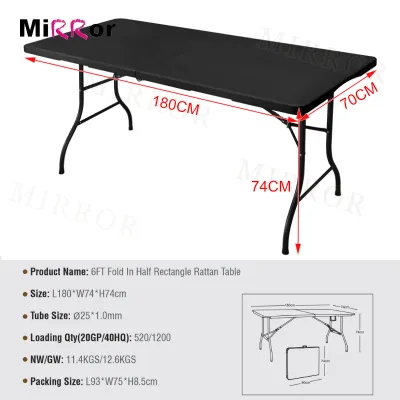
To ensure a comfortable dining experience, understanding the relationship between table dimensions and seating capacity is essential. For a group of six adults, a rectangular table should measure at least 150 to 180 centimeters in length. This allows for two diners on each long side and one at each head of the table, offering approximately 60 centimeters of personal elbow room per person. When expanding the guest list to eight people, a length of 180 to 210 centimeters is necessary to prevent place settings from overlapping. For a full gathering of ten adults, you will require a table length of at least 240 centimeters (approximately 8 feet) to ensure everyone can sit comfortably without their knees knocking against the table legs.
Table width is equally critical, particularly during traditional Filipino family feasts where multiple large serving platters, rice cookers, and beverage pitchers occupy the center of the table. A width of 70 to 75 centimeters is the absolute minimum for basic place settings, but a width of 76 to 90 centimeters is highly recommended. This extra width provides a dedicated central zone for shared dishes while leaving ample room for individual plates, glassware, and utensils. Selecting a table that is too narrow forces guests to crowd their personal items or requires you to set up auxiliary serving carts nearby.
Products mentioned in this guide

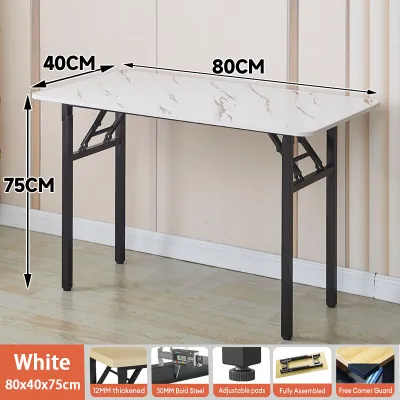
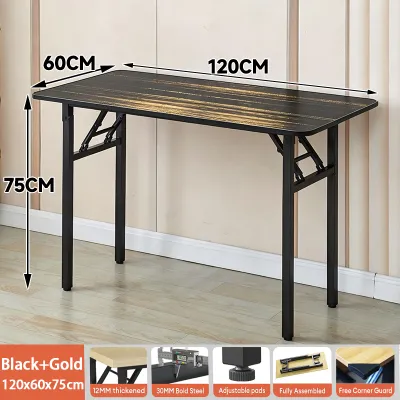
Prices are valid at publication and may change. Please refer to the product page for the latest price.
Clearance space around the perimeter of the table is a frequently overlooked factor that directly impacts room flow and comfort. To allow guests to pull out their chairs, sit down, and stand up without difficulty, you must maintain a minimum clearance of 90 centimeters between the table edge and any walls, columns, or adjacent furniture. If the dining area also serves as a primary walkway through your home, increase this clearance to 120 centimeters. This ensures that family members can walk behind seated guests without forcing them to lean forward or adjust their chairs.
Before making a purchase, it is highly beneficial to run through a quick measurement checklist to guarantee the table fits your home’s physical layout. First, measure the maximum floor area of your designated dining space when the table is fully extended. Second, measure the width and height of all doorways, narrow hallways, and elevator doors the folded table must pass through during transport. Third, measure the exact dimensions of your intended storage area, whether it is a vertical closet, a utility room, or a tight space behind a wardrobe.
Finally, always verify the manufacturer’s specified folded dimensions and total weight before committing to a specific model. While a table might seem manageable when open, its folded footprint can be surprisingly bulky or heavy. Checking these specifications beforehand ensures you can comfortably carry, lift, and store the table without straining your back or damaging your walls.
Material Selection for Humid Climates and Frequent Use
The tropical climate of the Philippines, with its intense heat, high relative humidity, and heavy rainy seasons, presents unique challenges for furniture preservation. High-density polyethylene (HDPE) is widely regarded as one of the most practical tabletop materials for folding tables. This heavy-duty plastic is completely non-porous, meaning it will not absorb ambient moisture, swell, or rot when exposed to humid air. HDPE is also highly resistant to stains, impact scratches, and food spills, making it incredibly easy to clean with a simple wipe of soapy water after a busy gathering.

For those who prefer a more traditional or elegant aesthetic, treated solid wood remains a popular choice, though it demands careful inspection and upkeep. If you choose a wooden folding rectangular table, verify that the timber has been thoroughly kiln-dried and treated with a high-quality water-resistant sealant, such as polyurethane or marine varnish. Unsealed or poorly finished solid wood absorbs moisture from the air during the wet season and dries out during the hot season, leading to severe warping, splitting, and joint misalignment.
Moisture-resistant engineered wood, such as high-density fiberboard (HDF) finished with a melamine or laminate veneer, offers a smooth, flat surface at a more accessible price point. While HDF is more stable than standard particleboard, its vulnerability lies in the edges. If the protective edge banding is chipped or poorly sealed, humidity and spilled liquids will penetrate the core, causing the fibers to swell, bubble, and permanently deform. Therefore, closely inspect the quality of the edge seams before purchasing any engineered wood table.
The structural integrity of a folding table relies heavily on its metal frame, which must be protected against rust and corrosion. Powder-coated steel frames are the industry standard, offering excellent load-bearing capacity and a tough, baked-on finish that shields the underlying metal from moisture. Aluminum frames are an excellent alternative; they are naturally rust-resistant and significantly lighter than steel, though they can be more expensive and may flex slightly more under heavy loads.
If you plan to use your folding table on an open veranda, a covered patio, or near large windows where sunlight streams in, check the product label for UV protection and water resistance. Exposure to direct sunlight can degrade untreated plastics, causing them to turn yellow, become brittle, and eventually crack under pressure. UV-stabilized materials ensure that the tabletop retains its strength and color even after years of exposure to bright tropical sunlight.
Conversely, you should actively avoid tables constructed from untreated particleboard or cheap, non-coated iron frames. In humid environments without continuous air conditioning, raw iron components will rapidly develop rust, which can seize the folding joints and render the table unusable. Porous, untreated wood products will quickly become a breeding ground for mold and mildew, creating unpleasant odors and potential health hazards in your dining space.
Folding Mechanisms and Stability Features to Verify
Understanding the mechanical design of your folding rectangular table is key to ensuring both user safety and long-term convenience. The most common style for seating large groups is the center bi-fold table, which folds down the middle to reduce its storage length by half. This style is highly portable and often features a built-in handle, making it ideal for temporary setups. Alternatively, extendable tables utilize slide-out panels or removable leaves that store inside the frame, offering a seamless, high-end look for semi-permanent spaces. Drop-leaf tables feature hinged side panels that fold down vertically, allowing the table to function as a slim console against the wall when not fully expanded.
When a table is loaded with heavy serving bowls, hot dishes, and glassware, structural stability is paramount to prevent catastrophic collapses. Always look for models equipped with secure locking mechanisms, such as slide-ring gravity locks or spring-loaded automatic locking pins. These safety features automatically slide over the leg joints when the table is opened, locking the legs firmly in place and preventing them from folding inward if the table is accidentally kicked or bumped.
The undercarriage of the table should feature robust cross-bracing and reinforced hinges. Cross-bracing refers to the metal bars that connect the legs to the main frame, forming a triangular support system that minimizes side-to-side wobble. For center bi-fold tables, pay close attention to the center hinge; it must be constructed from thick, heavy-gauge steel and feature a manual locking slider to keep the two halves of the tabletop perfectly aligned and prevent bowing under heavy loads.
Before hosting your next gathering, consult the manufacturer’s user manual to verify the maximum weight capacity of the table. Keep in mind that static weight capacity (the weight the table can hold when completely still) is different from dynamic weight capacity (the force applied when placing items down or leaning on the edge). To prevent bowing or structural failure, always distribute weight evenly across the entire surface, and avoid placing exceptionally heavy items, like large lechon platters or heavy beverage dispensers, directly over the center seam of a bi-fold table.
Safe handling during setup and teardown is essential to prevent painful finger pinches or accidental drops. When setting up a large folding table, lay it flat on its side or top on a clean surface, unfold the legs completely until you hear the locking mechanisms click, and then lift the table upright with the help of another person. When folding the table back down, ensure all locking rings and pins are fully disengaged before applying pressure; forcing a locked hinge can bend the metal frame and permanently ruin the folding mechanism.
Aligning Table Choice With Your Space and Usage
To select the right folding rectangular table, you must align its physical characteristics with your specific lifestyle, hosting habits, and storage limitations. If you host large family gatherings, holiday feasts, or community events multiple times a month, your priority should be a lightweight, highly portable table that is easy to carry, set up, and clean. For these scenarios, an HDPE bi-fold table with a built-in handle is often the most practical choice. On the other hand, if you require a primary daily dining table that only needs to expand occasionally for guests, a heavier, more formal extendable wooden table is a superior investment.
This choice involves a clear trade-off between portability, weight, and aesthetic appeal. Lightweight plastic and aluminum tables offer unmatched convenience, allowing a single person to move them effortlessly, but they may feel less solid and lack the formal elegance desired for upscale dinner parties. Conversely, heavy solid wood or steel-framed tables provide exceptional stability, a premium tactile feel, and a sophisticated look, but they require significant effort and often two people to fold, move, and store.
Storing a large folded table in a typical home requires a thoughtful approach to maximize space and protect the furniture. If you store your table in a utility room, garage, or semi-outdoor area, invest in a breathable protective cover to shield the surface and metal joints from dust, moisture, and insects. For homes with limited floor space, consider low-profile folding designs that can slide flat under a bed or sofa. Alternatively, you can mount heavy-duty brackets on a wall to store the table vertically, securing it with safety straps to prevent it from tipping over.
Finally, do not forget to plan for the seating that will accompany your new table. A large table is only useful if you have enough chairs to accommodate your guests. When purchasing your folding rectangular table, look for compatible folding chairs that can be stored alongside or stacked neatly in the same storage area. Choosing chairs with a similar folding profile and material composition ensures a cohesive look during your gatherings and keeps your storage space highly organized when the furniture is put away.
Frequently Asked Questions (FAQ)
How much weight can a standard large folding table safely hold?
Weight capacity varies significantly depending on the frame design, leg thickness, and tabletop material. A heavy-duty steel-framed HDPE table may support up to 150 to 300 kilograms of evenly distributed weight, whereas lightweight or budget models may only support 50 to 100 kilograms. Always locate and follow the specific weight limit printed on the manufacturer’s label or product manual. To maintain structural integrity, distribute weight evenly across the tabletop and avoid placing concentrated heavy loads directly in the center of bi-fold models.
Can a folding table be used as a permanent daily dining table?
A folding table can serve as a daily dining table, but its lifespan depends on its build quality and materials. Daily exposure to spills, cleaning, and constant weight can accelerate wear on hinges, locking mechanisms, and surface finishes. If you plan to keep the table set up permanently, prioritize models with premium, easy-to-clean finishes and robust, locking legs. Avoid budget event tables designed strictly for occasional use, as their surfaces and joints may degrade quickly under the daily wear and tear of family meals.
What is the best way to maintain the hinges and locking joints?
Keeping the folding mechanisms functioning smoothly requires regular, simple maintenance. Conduct visual inspections periodically to check for rust, loose screws, or accumulated dust and debris within the hinges. If a joint becomes stiff, apply a small amount of a manufacturer-approved lubricant, taking care to avoid harsh chemical sprays that could degrade plastic components or strip protective paint. Tighten any loose hardware with hand tools, and immediately stop using the table if any locking mechanism fails to engage securely.

Community discussion
Share your experience or ask a question. Comments are reviewed before publication.