
Supporting a dense collection of heavy books on invisible shelves requires a deep understanding of structural mechanics, material limits, and wall construction. To achieve a clean, floating aesthetic without compromising safety, you must bypass standard decorative hardware and select heavy-duty blind shelf supports or concealed French cleats. These specialized brackets must feature solid steel construction, high-penetration weld joints, and thick mounting plates designed to withstand continuous rotational force.
In the Philippines, achieving a secure installation introduces unique variables, such as anchoring into concrete hollow blocks (CHB) and protecting hidden metal components from high tropical humidity. This guide outlines the essential engineering requirements, material choices, and installation practices necessary to build a safe, invisible shelving system for your home library or study.
Quick Answer: What Makes an Invisible Bracket "Heavy-Duty"?
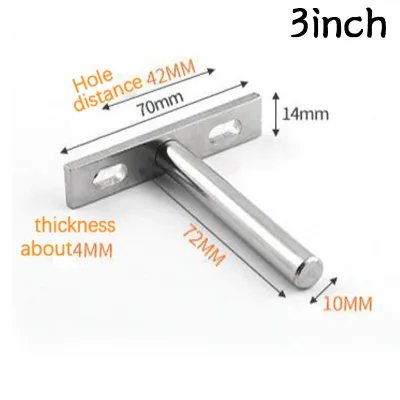
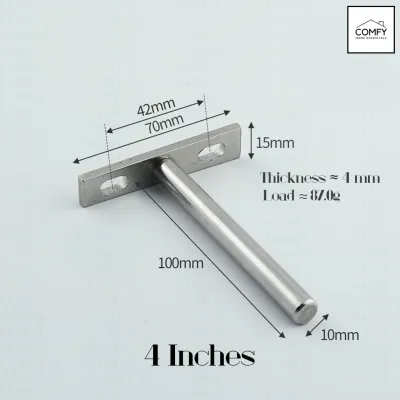
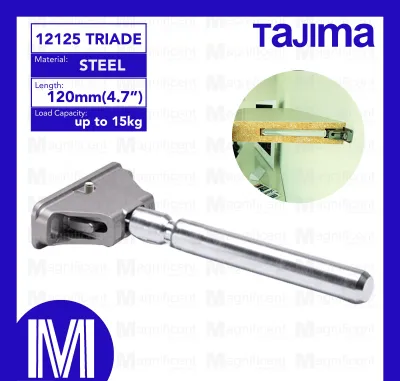
To safely support heavy books, an invisible shelf bracket must be engineered to resist bending, shearing, and pulling away from the wall. A true heavy-duty blind bracket features a solid steel rod with a minimum diameter of 12mm to 16mm, welded to a backplate that is at least 4mm to 6mm thick. Standard brackets often use hollow tubes or thin sheet metal, which will deform rapidly under the weight of a fully loaded bookshelf.
Products mentioned in this guide
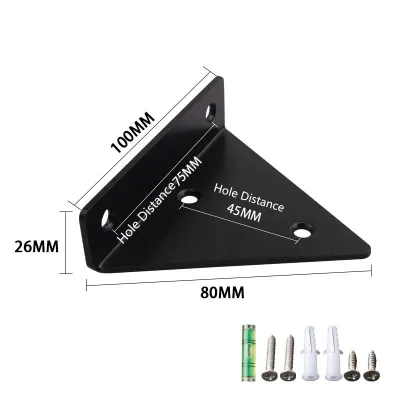
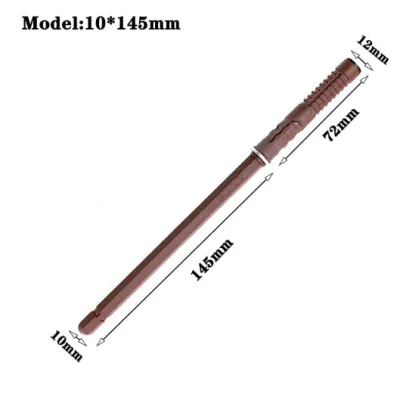
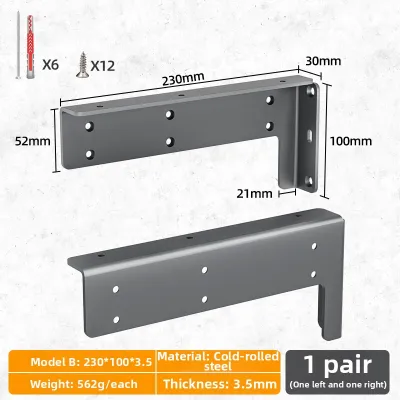
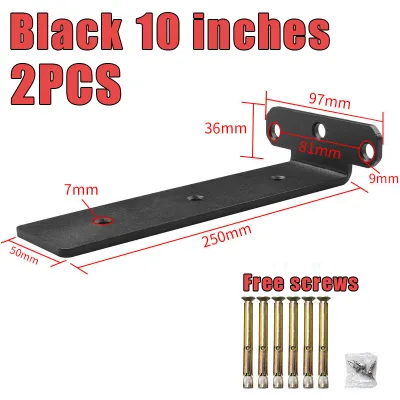
Prices are valid at publication and may change. Please refer to the product page for the latest price.
The load rating of the bracket must align directly with the projected weight of your collection. A single meter of tightly packed hardcover books can easily weigh between 20 and 40 kilograms. When you add the weight of a solid hardwood shelf—which can easily range from 5 to 10 kilograms depending on the timber species—the total load on a single pair of brackets can exceed 50 kilograms.
Achieving true invisibility while maintaining structural integrity requires precise routing on the rear edge of the shelf and deep, secure wall anchoring. The shelf must be bored with absolute accuracy so that the internal rods fit snugly without any internal play. Any gap or misalignment between the rod and the wood will cause the shelf to tilt downward at the front edge, multiplying the stress on the wall anchors and compromising the entire installation.
Why Standard Floating Brackets Fail Under Heavy Loads
The primary reason standard floating brackets fail under heavy book loads is the leverage effect, also known as rotational torque. When books are placed on a shelf, their weight acts as a downward force. Because the shelf projects outward from the wall, this downward force creates a powerful bending moment that attempts to pull the top of the bracket out of the wall while pushing the bottom of the bracket plate into the wall.

As shelf depth increases, this rotational force multiplies exponentially. For example, a shelf with a depth of 25 centimeters experiences significantly more rotational torque at the wall joint than a shelf with a depth of 15 centimeters, even if they hold the exact same weight. Standard brackets designed for light decorative items simply cannot handle this leverage, leading to several common failure modes:
- Rod Bending: The protruding rods, especially those made of low-grade steel or hollow tubing, gradually bend downward under sustained load, causing the books to slide forward.
- Shelf Sagging: Over time, the concentrated point loads from thin rods compress the internal wood fibers of the shelf, creating play that allows the shelf to droop.
- Wall Anchor Pull-Out: The tension force at the top of the mounting plate exceeds the holding capacity of standard plastic wall plugs, causing the anchors to slowly slide out of the wall.
- Weld Shear: Poorly manufactured brackets with superficial welds can fail catastrophically at the joint where the rod meets the backplate, dropping the entire shelf without warning.
To prevent these issues in a dedicated home office or study, you must avoid lightweight decorative hardware. Instead, prioritize structural steel brackets that distribute these forces efficiently across a larger surface area and deep into the wall structure.
Recommended Bracket Structures for Heavy Book Collections
When planning an invisible shelving system, “invisible” does not have to mean a single style of hardware. Depending on your shelf material, wall type, and tools, different structural designs can provide the necessary load capacity while remaining hidden from view.
Choosing the right bracket structure involves balancing the thickness of your shelves, the tools available for routing, and the total weight of your book collection. The three primary structural approaches detailed below offer distinct engineering advantages for heavy-duty applications.
Solid Steel Rod Brackets (Blind Shelf Supports)
Solid steel rod brackets represent the classic approach to invisible shelving. These brackets consist of a flat steel backplate with one or more solid steel rods welded perpendicular to the surface. The backplate is screwed directly into the wall, and the shelf—which has been drilled and routed along its back edge—slides completely over the assembly, hiding both the plate and the rods.
For heavy book collections, the rods must be exceptionally rigid. Look for brackets where the rods are made of cold-rolled steel with a diameter of at least 12mm for shallow shelves, or 14mm to 16mm for deeper shelves. The connection between the rod and the backplate must feature a continuous, high-penetration weld, preferably recessed into the backplate to ensure the bracket sits completely flush against the wall.
Because the shelf must be drilled deeply to accommodate these rods, the shelf material itself must be highly robust. Solid local hardwoods such as Acacia, Mahogany, or Gmelina, or high-density engineered woods like high-grade birch plywood, are excellent choices. Avoid particleboard or low-density medium-density fiberboard (MDF) for this application; these materials lack the shear strength to hold the concentrated point loads of the steel rods and will eventually crumble or split internally.
Concealed French Cleat Systems
For continuous runs of heavy books or exceptionally long shelves, a concealed French cleat system offers superior structural stability. A French cleat consists of two interlocking, wedge-shaped profiles—one mounted to the wall sloping upward, and the other integrated into the back of the shelf sloping downward. When the shelf is lowered onto the wall cleat, the two wedges lock together, using gravity to pull the shelf tight against the wall.
To make this system invisible, the shelf must be constructed with a recessed back panel or routed deeply along its rear perimeter so that the interlocking cleats sit entirely within the outer dimensions of the shelf. Metal French cleats made of heavy-gauge extruded aluminum or steel provide incredible load capacity because they distribute the weight continuously along the entire length of the wall, rather than concentrating it on isolated points.
This continuous weight distribution makes French cleats highly forgiving on walls where studs or solid concrete anchors are spaced unevenly. By anchoring the wall-side cleat at multiple points along its length, you can achieve a load capacity that easily supports heavy encyclopedias, reference manuals, and dense academic texts without risking localized wall failure.
Minimalist Scaffolding Brackets (Semi-Concealed Alternative)
If your shelf material cannot be routed—such as tempered glass, thin steel sheets, or reclaimed wood planks that are too thin to drill—true invisible rod brackets are not a safe option. In these scenarios, minimalist scaffolding brackets, or ultra-slim L-brackets, serve as an excellent semi-concealed alternative.
These brackets feature a very thin profile, often made of heavy-duty matte-black or brushed steel, with a mounting leg that attaches to the wall and a support leg that runs underneath the shelf. To minimize their visual footprint, you can mount the brackets so that the vertical leg is hidden behind the books themselves, or choose low-profile designs that are barely visible from standing height.
While not 100% invisible, these brackets prioritize absolute safety and maximum load capacity. They eliminate the risk of wood splitting and do not require specialized routing tools, making them a highly practical choice for heavy-duty storage in high-traffic areas or when working with unconventional shelf materials.
Wall Compatibility: Anchoring in Concrete and Hollow Blocks
In the Philippines, residential and office walls are typically constructed from reinforced concrete or concrete hollow blocks (CHB). Installing heavy-duty invisible shelves on these surfaces requires a completely different approach than installing them on wood studs or drywall.
Understanding the distinction between solid concrete and CHB is critical for choosing the correct anchoring hardware:
- Solid Reinforced Concrete: Typically found in high-rise condominiums, structural columns, and newer shear-wall residential builds. This material offers the highest possible load capacity. To anchor heavy-duty brackets here, use steel expansion wedge anchors or sleeve anchors. These anchors expand against the solid concrete walls of the drilled hole, creating a mechanical lock that can support hundreds of kilograms.
- Concrete Hollow Blocks (CHB): The most common wall material for residential homes in the Philippines. CHB walls consist of a thin outer concrete shell (often only 2 to 3 centimeters thick) and hollow inner cores. If you drill into a CHB wall and hit a hollow cavity, a standard expansion anchor will fail because it has no solid material to expand against. For hollow sections, you must use heavy-duty toggle bolts, screen tubes with chemical anchoring adhesive, or specialized sleeve anchors designed to deform and lock behind the thin outer shell.
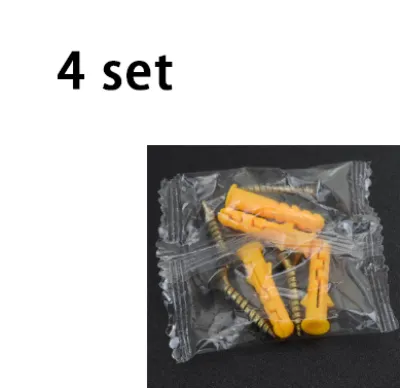
Under no circumstances should you use standard plastic wall plugs (often locally referred to as “tox” plugs) for heavy book loads. These plastic sleeves are designed for light frames and decorative items; under the constant, heavy rotational stress of a book collection, the plastic will deform, lose its grip, and slide out of the masonry.
Before drilling, always verify your wall type by performing a test drill with a small masonry bit. If the drill meets continuous resistance and produces fine grey dust, you are dealing with solid concrete. If the drill suddenly drops forward after penetrating a few centimeters and produces a mix of grey dust and sand, you have hit a hollow core in a CHB wall. If you are unsure of the wall’s structural integrity or composition, consult a local contractor or structural engineer to prevent a catastrophic wall failure.
Material and Finish: Preventing Rust in Humid Climates
When installing invisible brackets in the Philippines, the tropical climate introduces a silent threat: high humidity. Because invisible brackets are completely enclosed inside the wooden shelf, they are surrounded by a microclimate that traps moisture. Over time, untreated or poorly finished steel brackets will rust from the inside out, weakening the metal and potentially staining or splitting the surrounding wood.
To ensure long-term structural integrity, you must carefully evaluate the material and finish of the brackets before purchase:
- Powder-Coated Steel: This is one of the most common and effective finishes for heavy-duty brackets. The powder coating creates a thick, durable, non-porous barrier that prevents moisture and oxygen from reaching the underlying steel. Ensure the coating is uniform and free of chips, especially around the weld joints and screw holes where rust often starts.
- Galvanized Steel: Brackets that have been hot-dip galvanized or zinc-plated offer excellent sacrificial protection against rust. While they may not have a highly polished aesthetic, this is irrelevant for fully concealed brackets where the hardware is completely hidden inside the shelf.
- Stainless Steel (Grade 304 or 316): For coastal areas or non-airconditioned rooms exposed to salty air and high humidity, stainless steel is the gold standard. It inherently resists corrosion without relying on an external coating that could scratch or degrade over time.
When preparing your shelves, ensure the wood is thoroughly dried and sealed. Freshly cut or improperly seasoned local timber can release moisture inside the routed cavity, accelerating the corrosion of the metal rods. Applying a wood sealer or polyurethane finish to the inside of the drilled holes can create an additional barrier, protecting both the wood and the bracket from moisture exchange.
Pre-Purchase Checklist: Verifying Load Capacity and Dimensions
Before purchasing invisible brackets on online marketplaces or from local hardware suppliers, complete this verification checklist to ensure the hardware matches your physical shelves and load expectations.
- Verify True Load Ratings: Ignore generic marketing terms like "ultra-strong" or "heavy-duty." Look for manufacturers that provide explicit weight limits per bracket or per pair, specify the testing conditions, and state the maximum recommended shelf depth. If a bracket does not list a clear weight capacity, do not use it for books.
- Calculate Total Weight: Estimate the weight of your books (approximately 25 to 30 kilograms per meter for standard books, and up to 40 kilograms for heavy textbooks or magazines) and add the weight of the shelf itself. Ensure the combined weight is well within the safe working load of the brackets, leaving a safety margin of at least 20%.
- Check Shelf Thickness vs. Rod Diameter: To prevent the wood from splitting, your shelf must be thick enough to leave ample material above and below the drilled hole. As a rule of thumb, the shelf thickness should be at least 2.5 to 3 times the diameter of the bracket rod. For a 12mm rod, your shelf should be at least 30mm to 36mm thick.
- Match Rod Length to Shelf Depth: The internal rods should extend through at least 65% to 75% of the shelf's total depth to prevent the front of the shelf from sagging or shearing. For a 25cm deep shelf, the bracket rods should be at least 16cm to 18cm long.
- Confirm Mounting Plate Dimensions: Ensure the mounting plate is tall and wide enough to cover a sufficient surface area on your wall. Larger plates distribute the rotational force better, reducing the stress on individual wall anchors.
Frequently Asked Questions (FAQ)
Can I use invisible brackets on drywall or gypsum board?
No, you cannot install heavy-duty invisible brackets directly into drywall or gypsum board to support heavy books. Drywall lacks the shear and tensile strength to handle the intense rotational force exerted by floating book shelves; the anchors will quickly tear through the gypsum under load.
If you must install shelves on a drywall partition, the brackets must be screwed directly into the internal wood or metal studs behind the drywall. Use a stud finder to locate the exact center of the studs, and ensure your bracket’s mounting holes align perfectly with them. For extreme loads, you may need to open the wall and install solid wood blocking between the studs to provide a secure anchoring foundation.
How thick does the wood shelf need to be for hidden rod brackets?
For hidden rod brackets, the wood shelf should ideally be at least 30mm to 40mm thick. This thickness ensures that after drilling a hole to accommodate a heavy-duty 12mm or 14mm rod, there is still enough solid wood remaining on the top and bottom of the rod to prevent the shelf from splitting under load.
Always check the bracket manufacturer’s specifications and routing templates before preparing your timber. Using high-density hardwoods like Narra, Mahogany, or Acacia will provide the necessary structural strength at these dimensions, whereas softer woods may require even greater thickness to prevent the fibers from compressing under the weight of your book collection.

Community discussion
Share your experience or ask a question. Comments are reviewed before publication.