
Selecting the right kitchen storage cabinet to protect your dishes and utensils from dust requires balancing accessibility with structural sealing. While fully enclosed cabinets with tight-fitting doors generally provide the highest level of dust protection, sealed drawers and covered carts offer practical alternatives depending on how often you use your kitchenware and the specific layout of your cooking space. In tropical environments where high humidity can combine with airborne dust to form a stubborn, sticky residue, choosing the correct cabinet design becomes even more critical to maintaining a hygienic kitchen.
This guide breaks down the structural differences between these storage styles, helping you match the right cabinet design to your specific kitchen routines, space constraints, and protection needs. By focusing on observable construction details, hardware quality, and practical maintenance, you can keep your dinnerware clean and ready for use without constant washing.
How to Evaluate Dust Protection in Kitchen Cabinets
To assess a cabinet’s actual dust-blocking capability, you must look closely at its construction rather than relying solely on the material name or style. The most critical factor is the gap tolerance between the doors or drawer fronts and the main cabinet frame. When inspecting a cabinet, check the margins around all closed openings; gaps wider than two millimeters allow airborne dust, pet dander, and cooking grease to drift inside easily. High-quality cabinetry features tight, uniform margins that physically block these particles from entering.
Products mentioned in this guide
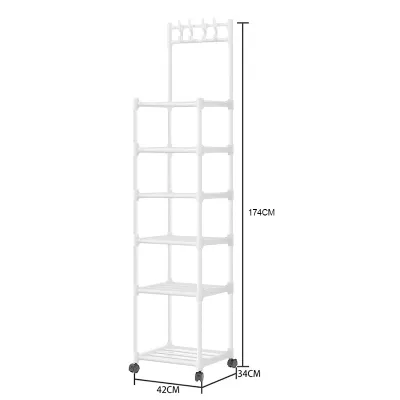
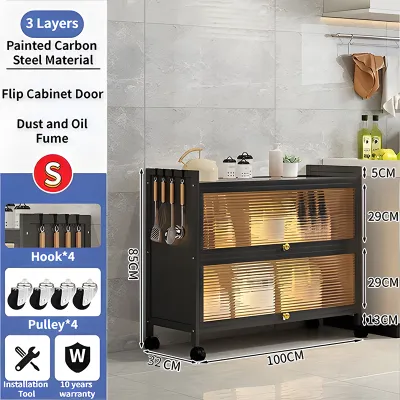
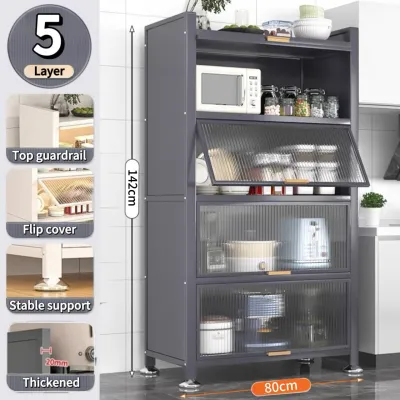
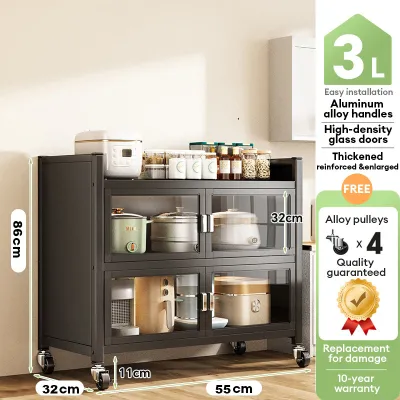
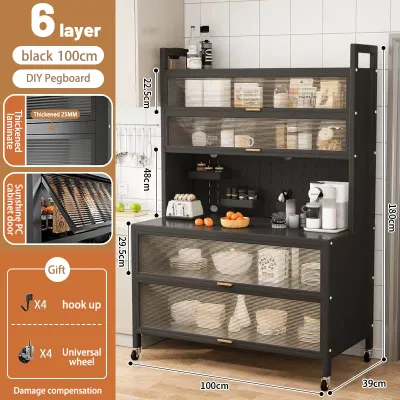
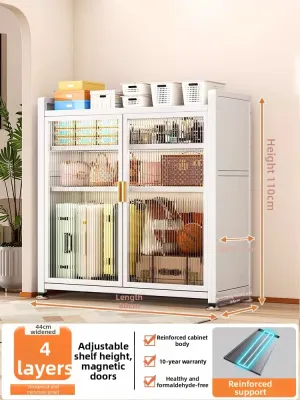
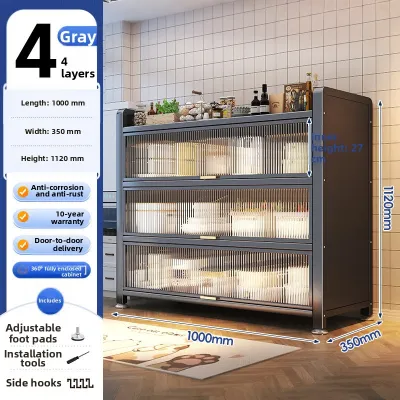
Prices are valid at publication and may change. Please refer to the product page for the latest price.
Another key element is the closure mechanism. Look for cabinets equipped with magnetic catches, self-closing hinges, or overlapping door lips that pull the doors firmly against the frame. These features ensure that doors do not rest slightly ajar, which is a common entry point for dust. If you are evaluating a premium unit, check if it includes integrated silicone or rubber gaskets along the inner frame, as these create a physical seal when the door is closed.
Surface finishes also play a major role in overall dust management. Matte, highly textured, or unfinished wood surfaces tend to trap dust and grease, making them difficult to clean thoroughly. Instead, look for smooth, non-porous exterior finishes such as high-pressure laminates, sealed hardwoods, or powder-coated metals. These surfaces allow you to wipe away accumulated dust quickly with a damp microfiber cloth before it has a chance to migrate inside when you open the doors.
Finally, you must balance dust prevention with proper internal ventilation, especially in warm, humid climates. Completely airtight cabinets can trap ambient moisture, creating a breeding ground for mold, mildew, and musty odors on wooden shelves and ceramic dishes. To prevent this, look for cabinets that feature small, mesh-covered ventilation holes at the rear. These vents allow minimal air circulation to control humidity while the fine mesh keeps dust and small insects from entering.
Enclosed Door Cabinets: Maximum Dust Defense
Traditional enclosed door cabinets are highly effective for long-term, delicate, or seasonal item storage. Because they completely isolate the interior shelving from the surrounding room, they are the ideal choice for protecting fine china, seasonal bakeware, crystal glassware, and small kitchen appliances that you only use occasionally. By keeping these items behind solid doors, you ensure they remain clean and ready for special occasions without requiring a pre-wash.

When choosing an enclosed door cabinet, pay close attention to the hinge design and door alignment. European-style concealed hinges are highly recommended because they are fully adjustable in three dimensions. This adjustability allows you to fine-tune the doors vertically, horizontally, and in depth to eliminate uneven gaps that develop over time. Additionally, overlay door designs—where the doors overlap the front edge of the cabinet frame—provide a more effective dust barrier than inset doors, which sit flush inside the frame and rely on highly precise, narrow gaps.
Despite their excellent dust defense, enclosed door cabinets have a few trade-offs. The primary limitation is visibility; solid doors completely hide your items, which can make it easy to forget what you have stored inside or lead to unorganized clutter. Furthermore, in humid regions like the Philippines, closed wooden cabinets can trap stagnant, warm air. To manage this, you must ensure that all dishes are completely dry before storing them, and you may need to place moisture-absorbing silica packets on the shelves to prevent mold growth.
Sealed Drawer Systems: Accessible and Protected
Deep drawer systems offer an excellent balance between high-frequency access and reliable dust protection. They are particularly well-suited for storing everyday plates, heavy cookware, bowls, and daily-use utensils. Because drawers pull out fully, they provide ergonomic, top-down retrieval, allowing you to access items at the back of the cabinet without bending down or reaching into dark, deep shelves.
To evaluate the dust protection of a drawer system, inspect the flush fit of the drawer fronts against the main cabinet carcass. When closed, the drawer front should sit tightly against the frame with minimal clearance. High-quality drawer units often feature side seals or integrated dust-blocking lips along the top edge of each drawer box. Additionally, look for heavy-duty, full-extension drawer slides rated for high weight capacities; sagging drawers caused by overloaded ceramic plates will create wide gaps at the top, compromising the dust seal.
However, drawer systems have specific limitations regarding dust ingress. Every time you pull a drawer open, the entire top surface of the drawer box is exposed to the room’s air currents, allowing floating dust to settle directly onto your clean dishes. If a drawer is left open for extended periods during meal preparation, dust accumulation increases. Furthermore, you must verify that the cabinet frame itself is fully enclosed between the drawer tiers; if there are no solid horizontal dividers inside the cabinet, dust entering from a loose top drawer can fall down onto the items stored in the drawers below.
Covered Carts and Utility Stations: Flexible but Limited
Mobile kitchen carts and utility stations provide excellent flexibility in small kitchens, serving as temporary staging areas, extra prep space, or mobile coffee bars. However, their mobility and open design mean they offer limited dust protection compared to permanent, built-in cabinetry. They are best used for high-turnover items that are washed and used daily, such as frequently used mixing bowls, cutting boards, or everyday mugs.
If you want to maximize dust protection on a mobile cart, compare the available cover types carefully. Carts with solid wood or stainless steel drop-leaf tops provide a sturdy barrier that blocks dust from falling directly onto the shelves below, though the sides remain exposed. Roll-top shutters or tambour doors offer a more complete enclosure, but their sliding tracks can easily collect crumbs and dust, requiring regular vacuuming. Fabric covers are highly flexible and can cover the entire cart, but they tend to trap airborne grease and dust, meaning they must be removed and machine-washed regularly to maintain cleanliness.
Maintenance is the most critical factor when using mobile utility stations. Because these carts roll across the kitchen floor, their wheels, casters, and lower sliding tracks are constantly exposed to floor-level dust, pet hair, and debris. You must commit to cleaning and lubricating the wheels regularly to prevent them from seizing. Additionally, any open shelving tiers on the cart will require daily wiping, as they are fully exposed to the grease and steam generated during active cooking.
Decision Matrix: Matching Cabinet Style to Your Kitchen Routine
To choose the right cabinet style, you must map your household’s daily cooking habits and spatial constraints against the structural features of each design. If your routine involves cooking daily with a large set of dinnerware, a combination of deep, sealed drawers for everyday plates and enclosed door cabinets for less frequent items is highly practical. This setup keeps your daily items easily accessible while protecting your delicate glassware from cooking grease and dust.
Space and clearance checks are essential before making any furniture purchase. Enclosed door cabinets require a clear swing radius in front of them, which can block narrow walkways or collide with nearby appliances in compact kitchens. In contrast, deep drawers require significant pull-out clearance, meaning you must measure the distance from the cabinet face to the opposite wall or island to ensure you can stand comfortably in front of the fully extended drawer. Additionally, always measure your home’s doorways, hallway corners, and elevator doors to ensure the fully assembled cabinet can be delivered safely into your kitchen.
Budgeting for these structural features in the Philippines typically ranges from ₱3,000 to ₱8,000 for basic utility carts or simple, self-assembled door cabinets. More robust, fully sealed drawer systems or solid wood cabinets equipped with adjustable European hinges and soft-close hardware generally range from ₱12,000 to over ₱25,000. When planning your budget, prioritize investing in high-quality, rust-resistant hardware, as cheap hinges and drawer slides will degrade quickly in humid coastal climates, leading to misalignment and wide gaps.
Finally, consider the assembly and installation conditions of your kitchen floor. Heavy drawer units and tall door cabinets require a perfectly level surface to function correctly. If your kitchen floor is uneven, the cabinet frame can twist slightly over time, causing the doors and drawers to misalign and create gaps that invite dust. Look for cabinets equipped with adjustable leveling feet to compensate for uneven floors, and always anchor tall, heavy units to the wall to prevent tip-over hazards when multiple drawers are pulled open.
Frequently Asked Questions (FAQ)
Do glass door cabinets protect against dust as well as solid doors?
Glass door cabinets can protect your dishes from dust just as effectively as solid doors, provided they share the same high-quality construction. Because glass itself is completely non-porous and impermeable, it acts as an excellent physical barrier against airborne particles. However, the overall dust-sealing performance depends entirely on how the glass panel is integrated into the door frame. Look for glass doors that feature silicone seals or rubber gaskets along the inner frame to prevent dust from slipping through the seams where the glass meets the wood or metal.
While glass doors offer the benefit of high visibility—allowing you to display your dinnerware without exposing it to the air—they do have practical trade-offs. Glass panels add significant weight to the doors, which puts extra strain on the hinges and requires a highly stable, well-anchored cabinet frame to prevent sagging. They also require more frequent cleaning, as grease, steam, and fingerprints show up easily on glass surfaces, and they carry a risk of breakage compared to solid wood or composite panels.
How can I improve the dust seal on my existing kitchen cabinets?
If you want to upgrade your current kitchen storage without purchasing new furniture, you can easily retrofit your existing cabinets to improve their dust resistance. The most effective method is to apply self-adhesive foam weatherstripping or thin silicone D-profile seals along the inside edges of the cabinet frame where the doors meet. Before applying the adhesive, thoroughly clean the cabinet frame with rubbing alcohol to remove any grease and dust, ensuring a strong, long-lasting bond.
Another simple step is to inspect and adjust your cabinet hinges. Over time, daily use can cause doors to sag or pull away from the frame, creating wide gaps. Using a screwdriver, you can adjust the alignment screws on concealed hinges to pull the doors back into a flush, square position. Adding magnetic catches or spring-loaded latches to the top and bottom of the doors will also ensure they stay tightly closed. However, if you notice structural warping, severe water damage, or wood rot—which are common in humid environments—retrofitting may not be effective, and you should consult a professional carpenter to repair or replace the unit.

Community discussion
Share your experience or ask a question. Comments are reviewed before publication.