
Maximizing limited floor area is a constant challenge for urban dwellers in the Philippines. Whether you live in a compact studio condo in Metro Manila or a cozy apartment in Cebu, carving out a dedicated workspace without crowding your living area requires smart furniture choices. Choosing a compact l table (L-shaped desk) can be a spatial revelation, turning an overlooked corner into a highly functional home office. By wrapping around a 90-degree angle, this layout provides ample surface area while keeping the center of your room open and free of clutter.
Unlike traditional straight desks that require a long, uninterrupted stretch of wall, an L-shaped setup makes efficient use of corner space that would otherwise go to waste. This configuration is particularly beneficial for remote workers, freelancers, and students who need to balance multiple devices, physical documents, and daily tasks within a limited footprint. Understanding how to select, measure, and configure this style of desk ensures you can maintain a productive work-from-home routine without compromising your home’s traffic flow.
Why an L-Shaped Table Works for Compact Philippine Homes
Urban residential developments in the Philippines, particularly high-rise condominiums and studio apartments, often feature compact floor plans ranging from 18 to 35 square meters. In these tight layouts, traditional furniture arrangements can quickly make a room feel cramped and restrict natural movement. An l table addresses this challenge by utilizing the corner “dead space” that standard rectangular desks leave behind, allowing you to maximize every square meter of your home.
Products mentioned in this guide
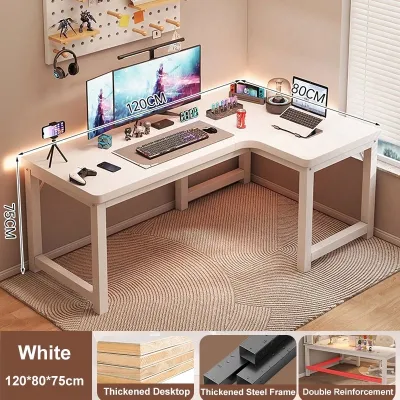
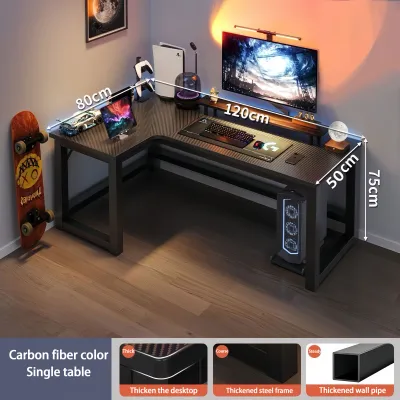
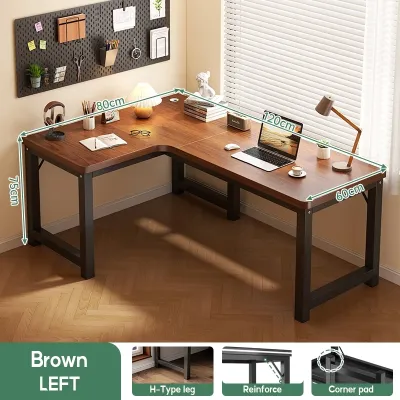
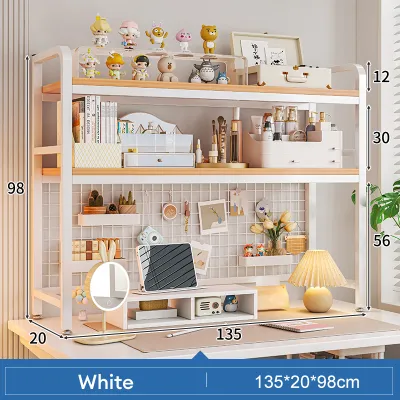
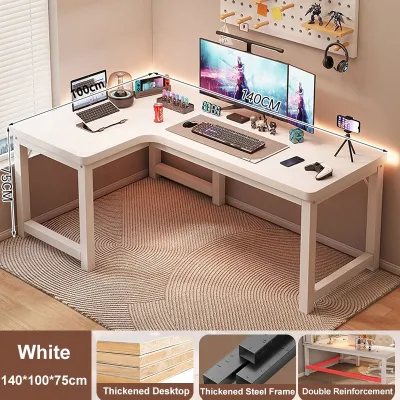
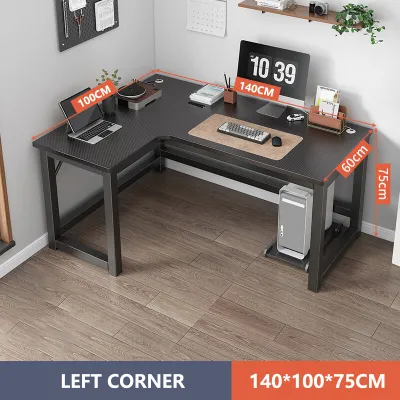
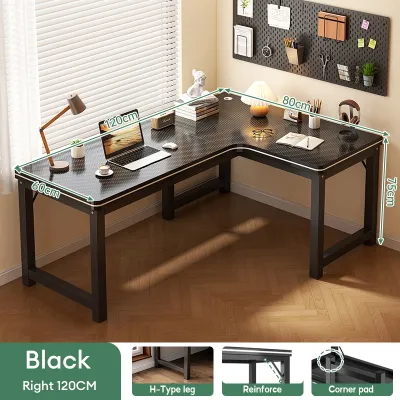
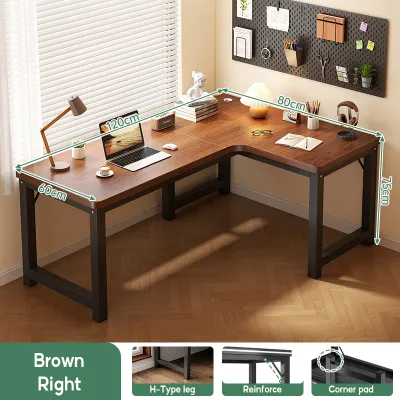
Prices are valid at publication and may change. Please refer to the product page for the latest price.
One of the primary advantages of an L-shaped design is the creation of distinct, dual work zones without expanding the desk’s physical footprint. You can dedicate the primary, longer side of the desk to your computer monitor, laptop, and keyboard, while reserving the shorter return side for writing, reviewing physical documents, or placing secondary devices. This physical separation helps keep your digital and analog tasks organized, reducing visual clutter and boosting mental focus during long working hours.
From an ergonomic perspective, an L-shaped layout keeps your essential work tools within arm’s reach. Instead of sliding your chair across the room or constantly stretching to reach a printer or reference book, you simply pivot 90 degrees in your office chair. This minimizes repetitive strain and keeps your workflow seamless, which is especially helpful when your workspace is situated in a multi-functional room where rolling around is restricted by nearby dining tables or sofa edges.
Furthermore, straight desks often leave awkward, unusable gaps when placed near corners, or they force you to position your back directly to the room’s entrance, which can feel visually disruptive. An L-shaped configuration allows you to face outward or tuck neatly into a corner, maintaining a clean line of sight across your apartment. This structural adaptability makes it an incredibly versatile piece of furniture for anyone looking to establish a professional workspace in a limited residential area.
Key Dimensions and Space-Saving Features of an L Table to Check Before Buying
Before purchasing an l table, accurate measurements are essential to ensure the piece fits your room’s physical dimensions and layout. Do not rely solely on floor-level measurements; instead, measure the wall clearance at multiple heights. Take note of protruding baseboards, skirting boards, low-hanging window sills, electrical outlets, and wall-mounted split-type air conditioning units. In many Philippine condos, the placement of aircon drainage pipes or electrical conduits can restrict how flush a desk can sit against the wall, so accounting for these minor obstructions beforehand prevents installation headaches.

Pay close attention to the depth and width proportions of both the main desk surface and the return. While standard executive L-desks feature depths of 60 to 80 centimeters, compact homes require much shallower profiles. Look for models with a main desktop depth of 50 centimeters and a return depth of 40 to 50 centimeters. These narrower dimensions ensure the desk does not block vital walkways, interfere with balcony sliding doors, or prevent you from fully opening wardrobe doors and drawers.
When evaluating storage options, you must weigh the benefits of built-in drawers against minimalist open frames. Desks with integrated under-desk drawers or shelving units provide excellent vertical storage for office supplies and documents, which is highly beneficial in small rooms lacking closet space. However, these solid structures can restrict your legroom and limit your ability to tuck your office chair completely under the desk when you finish working. Conversely, an open-frame design with slim steel legs offers a lighter visual weight, making a small room feel more spacious while allowing maximum clearance for your chair and legs.
Visual weight is an important interior design consideration for compact spaces. Heavy, dark wood panels or bulky solid-wood desks can dominate a small room, making it feel dark and enclosed. Opting for lighter finishes—such as natural oak, white, or light gray laminates—paired with slim, powder-coated metal frames can visually open up the space. Additionally, because the humid tropical climate of the Philippines can affect certain materials, ensure that any engineered wood or particleboard desk features high-quality, moisture-resistant edge banding to prevent swelling or peeling over time.
Ideal L-Desk Configurations for Different Small-Space Scenarios
The Corner Tuck: Maximizing Dead Space in Studio Condos
In a typical studio condo where the living room, bedroom, and kitchen occupy a single open area, finding a dedicated spot for a desk can be difficult. The corner tuck configuration is designed to solve this by fitting an equal-length or reversible L-desk directly into an unused 90-degree corner. Reversible models are particularly valuable because they allow you to assemble the return on either the left or right side, giving you the flexibility to rearrange your layout if you move to a different apartment in the future.
When planning a corner setup, carefully verify the door swing clearances of nearby closets, entryways, and bathroom doors. The desk should not extend into the swing path of any door, nor should it block the primary walkway leading to your balcony or kitchen. To maximize comfort in an extremely tight corner, look for a desk with a contoured or curved inner corner edge. This subtle design feature allows you to sit closer to the center pivot of the desk, providing better forearm support and preventing your chair from bumping into the adjacent walls.
The Room Divider: Creating a WFH Zone in Open-Plan Apartments
For open-plan apartments where the living and dining areas flow together, an L-shaped desk can serve as an elegant room divider. By positioning the longer side of the desk against a wall and letting the shorter return extend outward into the room, you create a clear physical and psychological boundary between your professional workspace and your personal living area. This layout helps you mentally “leave” work at the end of the day, even when your office is located in the middle of your home.
Because the back of the return will be highly visible from the rest of the room, it is crucial to choose a desk with finished edges on all sides. Many budget-friendly desks leave the back panels unfinished, exposing bare particleboard, staples, or metal brackets. Ensure the manufacturer’s specifications explicitly state that the back is fully finished. To enhance this divider effect, you can place a low, open-backed shelving unit against the back of the return, providing storage for both office items and decorative living room pieces without blocking natural light.
The Convertible or Foldable L-Desk: For Multi-Purpose Guest Rooms
If your workspace must share a room with a guest bedroom, nursery, or exercise area, a convertible or foldable L-desk offers the ultimate space-saving flexibility. These designs often feature a main wall-mounted desk with a hinged return leaf that can be folded down flat against the wall or tucked underneath the main surface when not in use. This allows you to reclaim valuable floor space when you are not working, keeping the room open for other activities.
Because foldable mechanisms are subject to constant movement and friction, you must verify the manufacturer’s load capacity and hinge durability specifications before buying. Low-quality hinges can sag over time, leading to an uneven and unstable typing surface. Furthermore, proper installation is critical for safety. Wall-mounted foldable units must be anchored securely into solid concrete or masonry walls, which are standard in most Philippine residential buildings. Avoid mounting these heavy, load-bearing fixtures directly onto thin, hollow gypsum or drywall partitions without locating and securing them to the underlying metal or wooden studs.
Practical Setup and Cable Management for Tight Corners
Managing power strips, charger cables, and monitor cords in a tight corner can quickly become chaotic, creating both a visual mess and a safety hazard. To maintain a clean and safe environment, utilize under-desk cable management trays or J-channels that screw directly into the underside of the desktop. Keeping your power strips off the floor prevents tripping hazards in narrow walkways and makes it much easier to sweep or vacuum away dust, which accumulates quickly in tropical climates.
Standard monitor stands often feature bulky bases that occupy significant desk depth, leaving little room for your keyboard and mouse. Utilizing a clamp-on single or dual monitor arm is an excellent way to reclaim this valuable surface area. By elevating your screens, you free up the desktop space directly beneath them for notebooks, a keyboard, or a docking station. Before purchasing a monitor arm, check that your desk’s top panel is sturdy enough to handle the concentrated clamping force and that there is sufficient clearance behind the desk frame for the clamp to attach.
Positioning your desk relative to windows is key to avoiding uncomfortable screen glare, especially during the bright afternoon hours common in the Philippines. Avoid placing your desk directly opposite a window; instead, position it perpendicular to the light source. Utilizing sheer curtains, roller blinds, or anti-glare screen protectors can help diffuse harsh sunlight. To save precious desk space, replace bulky table lamps with a slim, USB-powered monitor light bar that clips directly onto the top of your screen, providing focused task lighting without taking up a single square centimeter of desk space.
A wobbling desk can be incredibly distracting and may cause damage to your equipment over time. Uneven floors—whether due to minor tiling imperfections or settling foundations—are common in many apartments. Ensure the desk you select features adjustable leveling feet on the bottom of the legs. These threaded feet allow you to compensate for uneven surfaces by raising or lowering individual corners. If your desk does not have adjustable feet, use sturdy, non-slip rubber shims to stabilize the frame, and always verify that the total weight of your equipment does not exceed the manufacturer’s specified load limits.
Frequently Asked Questions (FAQ)
Can I use an L-shaped desk if my condo walls are not perfectly square?
Yes, you can still use an L-shaped desk even if your walls are not perfectly aligned at a 90-degree angle. Before purchasing, check the squareness of your corner by using a carpenter’s square or by measuring a three-four-five triangle along the walls. If the corner is slightly off-square, pushing a rigid desk completely into the corner will leave an uneven gap along one wall.
To resolve this, avoid forcing the desk flush against both walls. Instead, align the primary desk surface with the main wall and allow a small, uniform gap along the return wall. You can bridge this gap visually and prevent items from falling behind the desk by installing flexible desk-edge trim, adhesive cable-management strips, or a slim backing board. Additionally, choosing a desk with independent leveling feet will help you adjust the desk’s balance if the uneven walls are accompanied by a slightly sloped floor.
Are L-shaped desks hard to move through narrow condo hallways and elevators?
They can be highly challenging to transport if they are purchased fully assembled, as their awkward shape does not easily navigate tight turns. To avoid delivery issues, it is highly recommended to purchase flat-pack (knock-down) furniture that you assemble inside your unit. Flat-pack boxes are designed to be compact, making them easy to transport in standard passenger elevators, through narrow condo hallways, and around tight entryway corners.
Before placing your order, always check the packaged box dimensions provided by the retailer and compare them with the dimensions of your building’s elevator doors, stairwells, and your unit’s front door. Ensure that the longest single panel—which is typically the main desktop piece—can be safely carried into your space. Once the boxes are inside your room, follow the step-by-step assembly instructions carefully, and ensure you have sufficient floor space cleared to put the desk together safely.

Community discussion
Share your experience or ask a question. Comments are reviewed before publication.