
Selecting the ideal bedside furniture in the Philippines requires balancing physical storage with modern connectivity. A nightstand featuring a functional side drawer keeps daily essentials organized and out of sight, while built-in charging ports eliminate the clutter of tangled cables and adapters. However, finding a unit that withstands tropical humidity, fits tight bedroom layouts, and safely supports local electrical standards involves evaluating several critical structural and technical details.
To make a practical choice, you must consider how the furniture is constructed, how the electrical components are integrated, and how the entire unit fits into your existing space. This guide outlines the essential evaluation criteria, configuration options, electrical safety guidelines, and spatial measurements needed to select the best charging nightstand for your home.
Key Features to Evaluate in a Charging Nightstand
When evaluating a nightstand with an integrated side drawer, the physical construction of the storage compartment determines its long-term durability. Examine the drawer glide mechanisms carefully. Ball-bearing metal drawer slides offer smoother operation and greater longevity than simple wooden runners, which can stick or warp when exposed to high seasonal humidity in the Philippines. Check the joint construction of the drawer box; dovetail or dowel joints provide superior structural integrity compared to basic butt joints held together solely by staples or nails. Additionally, verify the manufacturer’s stated weight capacity for both the drawer and the tabletop to ensure the unit can safely support heavy books, lamps, and personal electronics without sagging.
Products mentioned in this guide
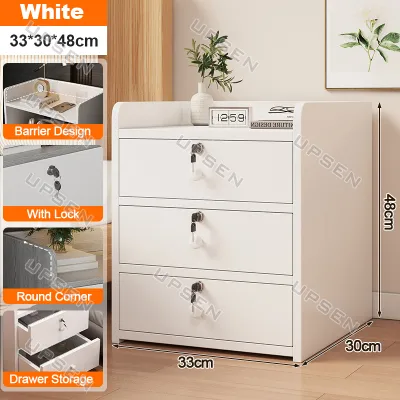
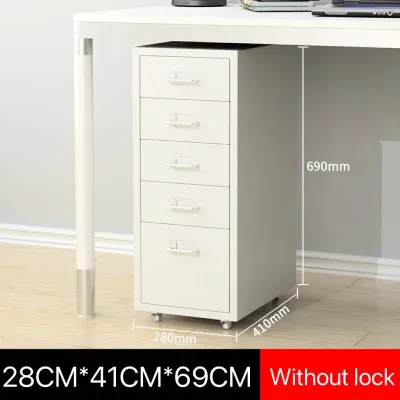
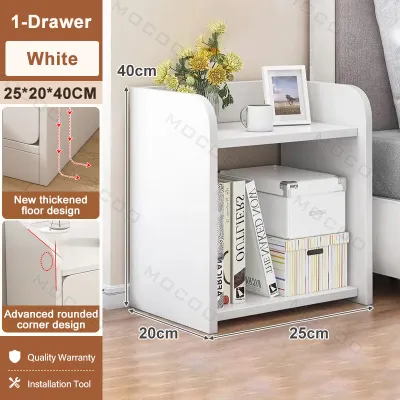
![[On Hand] Bamboo Bedside Table with drawer side table bedroom Storage Cabinet](https://img.lazcdn.com/g/p/3dc049f64c8ef21e9b6614f04e563ce4.jpg_400x400q80.jpg_.webp)
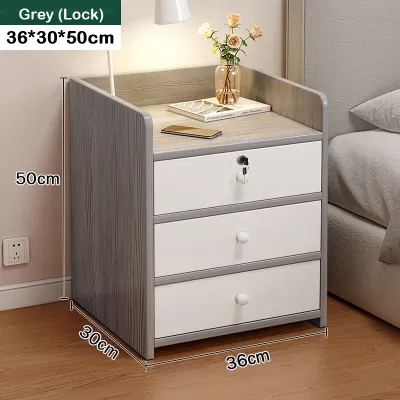
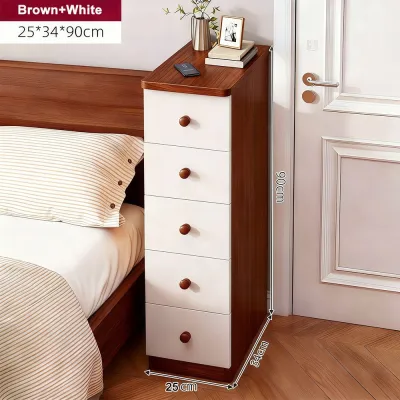
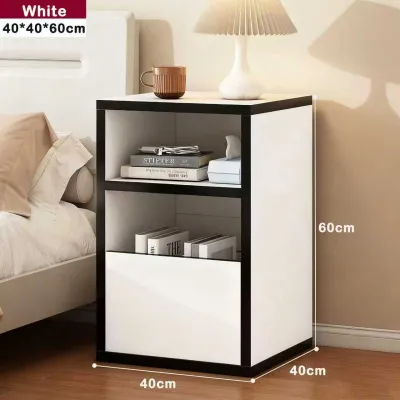
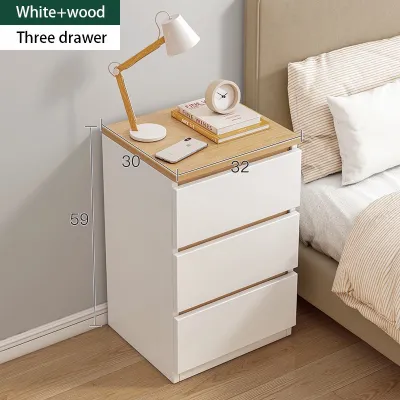
Prices are valid at publication and may change. Please refer to the product page for the latest price.
The material composition of the nightstand also requires close inspection, particularly regarding moisture resistance. Solid hardwoods like mahogany, acacia, or gmelina offer excellent stability when properly sealed, while engineered woods like medium-density fiberboard (MDF) or particle board must feature high-quality edge banding and water-resistant laminates to prevent swelling in humid coastal or tropical environments. Look for a protective polyurethane or lacquer finish on the tabletop to guard against water rings from condensation on drinking glasses and heat generated by charging devices.
Evaluating the built-in charging module requires looking beyond the mere presence of ports to analyze their technical specifications. Compare the available port types, ensuring the unit includes a mix of traditional USB-A ports for older accessories and high-output USB-C ports to accommodate modern smartphones, tablets, and smartwatches. Check the power output ratings, usually measured in watts (W) or amperes (A); a standard 5W (1A) port charges devices slowly overnight, whereas a port supporting Power Delivery (PD) or Quick Charge (QC) standards at 18W or higher can rapidly power up compatible devices. If the nightstand features a wireless charging pad, verify its wattage rating, as budget models often top out at 5W, while faster pads offer 10W to 15W of power transfer.
Electrical compatibility with the Philippine power grid is a vital safety check that must be performed before purchase. Verify that the nightstand’s power module natively supports 220V voltage at 60Hz, which is the national standard. Many imported furniture pieces are wired for 110V systems and will fail or pose a severe fire hazard if plugged directly into a local outlet without a step-down transformer. Additionally, check the power cord length to ensure it can reach your wall outlet without stretching, and confirm that the plug type matches the standard Type A or Type B outlets commonly installed in Philippine homes.
Top Nightstand Configurations for Your Bedroom Layout
Bedroom configurations in the Philippines vary widely, ranging from compact studio condominiums in dense urban centers like Metro Manila to spacious suburban residences. The right nightstand configuration should optimize your available floor space while providing the exact balance of storage and power accessibility you require. Selecting a configuration that matches your specific spatial constraints ensures both functional utility and aesthetic harmony.

Space-Saving Designs for Compact Bedrooms
For compact bedrooms, studio apartments, or shared rooms where space alongside the bed is limited, a narrow-profile nightstand is highly effective. These units typically feature a slim footprint, often measuring 30 to 40 centimeters in width, allowing them to slip easily into tight gaps between the bed frame and the wall. To maximize vertical space, these designs frequently pair a single, compact side drawer at the top with an open shelf or cubby below, providing easily accessible storage without adding visual bulk to the room.
The charging integration in space-saving models is generally streamlined, focusing on essential connectivity. A basic power strip containing two USB-A ports and a single standard AC outlet is common, allowing you to charge a smartphone and power a bedside reading lamp simultaneously. Because these units are lightweight, it is important to check their stability when the drawer is fully extended, ensuring the nightstand does not tip forward when loaded with items.
High-Capacity Storage for Organized Essentials
Users who prefer to keep their bedside completely organized and free of clutter benefit from high-capacity configurations. These nightstands feature multi-drawer setups, often utilizing two or three deep side drawers to store books, tablets, medications, and personal items completely out of sight. Because these units hold a significant volume of items, they require reinforced metal drawer slides and robust frame construction to handle the heavier physical load without binding or failing over time.
To match the high storage capacity, these models are typically equipped with advanced power delivery systems. They often feature multiple high-wattage USB-C and USB-A ports, alongside multiple AC outlets, allowing you to charge a laptop, tablet, phone, and smartwatch all at once. When selecting a high-capacity nightstand, prioritize models with built-in cable routing channels inside or behind the drawers, which allow you to charge devices privately while they remain safely stored inside the drawer.
Premium Minimalist with Wireless Charging
Premium minimalist nightstands prioritize clean lines, hidden technology, and high-end materials to create a sleek, modern aesthetic. These designs often feature flush-mounted wireless charging pads seamlessly integrated directly into the tabletop surface, eliminating the need for exposed charging cables altogether. The physical drawer is often handle-free, utilizing push-to-open mechanisms or concealed finger pulls to maintain a smooth, uninterrupted exterior profile.
Cable management is a primary focus of premium minimalist designs, which often incorporate hidden vertical channels, false backs, or dedicated rear compartments to route the main power cord discreetly to the wall outlet. Tabletop surfaces on these models are frequently constructed from premium, durable materials such as tempered glass, sintered stone, or highly treated solid timber. These materials are chosen specifically for their ability to resist wear, scratches, and the localized heat dissipation associated with continuous inductive wireless charging.
Electrical Safety and Cable Management Best Practices
Combining wooden or engineered furniture with active electrical components introduces specific safety considerations that must be managed to protect your home and electronics. First, inspect the nightstand’s integrated power module for safety certifications. Look for official certification marks such as the Philippine Standard (PS) mark, the Import Commodity Clearance (ICC) sticker, or reputable international safety standards like UL, CE, or FCC. These marks indicate that the electrical components have undergone rigorous testing for insulation, heat resistance, and short-circuit protection.
To prevent electrical hazards, avoid overloading the nightstand’s built-in power supply. These integrated strips are designed primarily for low-draw consumer electronics like phones, tablets, and lamps; they are not rated for high-wattage appliances. Never plug high-draw household items such as hair dryers, hair straighteners, space heaters, or portable air conditioners into the nightstand’s outlets. Additionally, avoid daisy-chaining by plugging the nightstand’s main power cord into an overloaded extension cord or another power strip; always connect the nightstand directly to a grounded wall outlet.
Proper cable management inside and behind the nightstand prevents physical damage to cords and reduces fire risks. Ensure that power cords are not pinched behind the nightstand or compressed against the baseboard, as bent or crushed wires can degrade over time and cause short circuits. If your nightstand has a drawer-based charging station, verify that the internal cable has sufficient slack and a protective track so that it does not pull, stretch, or catch in the drawer slides during opening and closing.
Routine maintenance of the electronic components is essential to ensure long-term safety and performance. Dust and lint can accumulate inside USB ports and AC outlets over time, creating a potential fire hazard and interfering with electrical contact; periodically clean these ports using a can of compressed air or a dry, non-conductive microfiber cloth while the nightstand is unplugged. Regularly feel the charging ports and wireless charging pad during use to monitor temperature. While mild warmth is normal during rapid charging, any signs of excessive heat, plastic deformation, discoloration, or a burning odor indicate a component malfunction, requiring you to immediately unplug the unit and discontinue use until it is inspected by a qualified professional.
Measuring Bedside Clearance for Side Drawer Operation
Before purchasing a nightstand, taking precise physical measurements of your bedroom layout is necessary to ensure the furniture fits the space and functions correctly. A common mistake is measuring only the footprint of the nightstand while neglecting the space required to fully open and access the storage compartments. Follow these systematic steps to verify that your bedroom layout can comfortably accommodate your chosen model.
- Measure the Available Width: Use a tape measure to determine the exact distance between the edge of your mattress or bed frame and the adjacent wall, wardrobe, or door frame. Ensure you measure from the widest point of your bed, taking into account any protruding decorative headboards or mattress overhangs that might reduce the actual clearance.
- Account for Architectural Obstacles: Check the wall area behind and beside the proposed nightstand location. Measure the position of wall outlets to ensure the nightstand will not completely block access to them, and account for the thickness of baseboards, which can prevent the furniture from sitting completely flush against the wall. Also, verify that the nightstand will not interfere with light switches, window curtains, or the swing path of bedroom and closet doors.
- Calculate Drawer Extension Clearance: Obtain the depth of the nightstand and the full extension length of its side drawer from the manufacturer's specifications. Add these two measurements together to find the total depth required when the drawer is fully open. For example, if a nightstand is 45 centimeters deep and the drawer pulls out an additional 30 centimeters, you require a minimum of 75 centimeters of clear, unobstructed space in front of the unit to open the drawer completely.
- Assess Walkway and Access Space: Ensure that when the side drawer is fully extended, there is still sufficient clearance for you to stand or kneel comfortably next to the bed to access your items. If the open drawer completely blocks the walkway between the bed and the wall, it can create a tripping hazard and make daily use highly inconvenient. If space is exceptionally tight, consider a model with a shallower drawer profile or one that combines a small drawer with open shelving.
- Verify Delivery Access: Measure the width and height of your home's entryways, hallways, stairwells, and elevator doors to ensure the packaged nightstand can be safely delivered to your bedroom. This is particularly important for fully assembled solid wood units, which cannot be flat-packed or disassembled to navigate tight corners.
Frequently Asked Questions (FAQ)
Can I replace the built-in charging ports if they stop working?
Whether you can replace the built-in charging ports depends entirely on how the nightstand’s electrical system is constructed. Many budget and mid-range nightstands use modular, plug-and-play USB hubs or standard power strips that are simply mounted into a pre-cut wooden recess; these can easily be unscrewed, unplugged from the internal source, and replaced with an identical or compatible aftermarket unit. However, premium or minimalist models often feature custom, hardwired electronic modules or proprietary wireless charging pads integrated directly into the tabletop structure. Replacing these hardwired components is highly complex and requires professional electrical repair, manufacturer-authorized replacement parts, or assistance from a qualified technician to avoid compromising the safety and warranty of the furniture.
Do wireless charging nightstands work through thick phone cases?
Integrated wireless charging pads operate using magnetic induction, which requires close physical proximity between the transmitter coil inside the tabletop and the receiver coil inside your mobile device. Standard built-in wireless chargers typically have an effective transmission distance limit of 3 to 8 millimeters. Thick protective phone cases, especially those constructed from heavy-duty plastics, rugged rubber, or genuine leather, can easily exceed this distance threshold and prevent charging. Furthermore, cases containing metal plates, kickstands, ring holders, or magnetic mounts will completely block the electromagnetic field, preventing power transfer entirely and potentially causing the charging pad to overheat dangerously due to foreign object detection errors. For reliable wireless charging, you must use a slim, non-metallic case or remove the case entirely before placing your device on the nightstand’s charging surface.

Community discussion
Share your experience or ask a question. Comments are reviewed before publication.