
Finding the perfect oval dining table set 6 for your home in the Philippines means balancing elegant aesthetics with daily functionality. Oval tables are highly favored in local households because their curved profiles soften the lines of modern open-plan layouts while maximizing seating capacity. Unlike rectangular tables, the absence of sharp corners makes it easier to squeeze in an extra guest during family reunions or Sunday lunches. However, selecting the right set requires looking beyond visual appeal to evaluate dimensions, tropical climate durability, and space constraints.
In Philippine homes, where dining is often the focal point of family life, the dining table serves multiple purposes. It is a place for shared meals, remote work, and children’s homework. Choosing an oval shape provides a natural flow that encourages conversation, as everyone sits at a slight angle to one another. To make an investment that lasts for years, you must carefully assess how the table’s design, materials, and construction align with your household’s specific needs.
How to Choose the Right 6-Seater Oval Dining Set
When shopping for an oval dining table set 6, understanding the relationship between table dimensions and seating comfort is your first step. A standard 6-seater oval table typically requires a length of 150 cm to 180 cm (approximately 59 to 71 inches) and a width of 90 cm to 100 cm (35 to 39 inches). This provides a perimeter of roughly 400 cm to 470 cm, which is essential for ensuring that six adult diners have sufficient elbow room. Each person requires about 60 cm of lateral space to dine comfortably without bumping arms.
Products mentioned in this guide
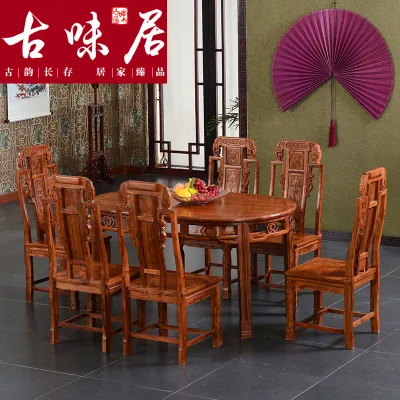

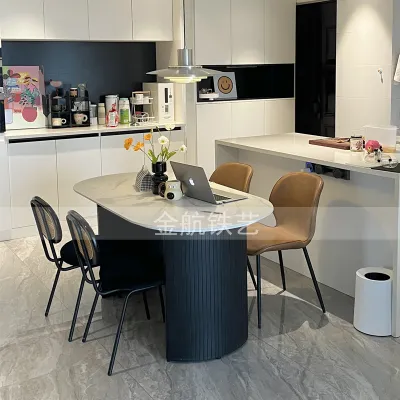
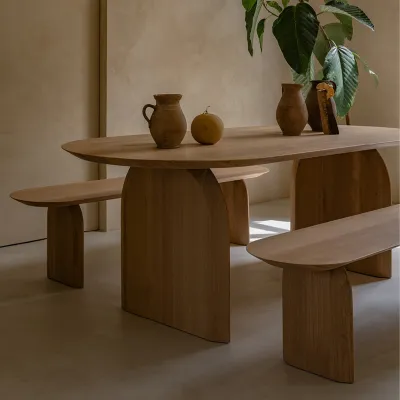
Prices are valid at publication and may change. Please refer to the product page for the latest price.
Beyond length, the width of the table dictates how much room you have for serving platters down the center. If you choose a table on the narrower side, such as 90 cm, you may find it tight when serving family-style meals with multiple large bowls. A width of 100 cm offers a more generous central zone for food presentation while still keeping diners close enough for intimate conversation. If your dining space is tight, opting for slim-profile chairs without armrests will help ensure that all six chairs can slide neatly under the table when not in use.
The tropical climate of the Philippines, characterized by high humidity and seasonal temperature shifts, demands careful material selection. While solid hardwoods like acacia, mahogany, and tanguile are highly prized for their natural beauty, they are prone to warping or cracking if not properly seasoned and sealed. Look for tables with multi-layered polyurethane or lacquer finishes that seal the wood pores against moisture absorption. For engineered wood options like MDF or marine plywood, inspect the edge banding closely. Unsealed edges allow moisture to penetrate, causing the fibers to swell and the laminate to peel.
Oval tables, particularly those featuring a central pedestal base, must be evaluated for structural stability. A single pedestal offers excellent legroom but can suffer from tipping risks if the base is not sufficiently weighted or if the tabletop extends too far past the support. Check the manufacturer’s specified weight capacity, aiming for a minimum load limit of 75 kg to 100 kg for everyday dining use. Ensure the mounting plate connecting the pedestal to the tabletop is made of heavy-duty steel or solid wood with secure, reinforced bolt paths rather than simple wood screws.
Recommended Oval Dining Table Styles for Local Homes
Extendable Oval Sets for Flexible Gatherings
For Filipino families who frequently host extended relatives, an extendable oval dining table set 6 offers the ultimate flexibility. These tables typically function as a standard 6-seater for daily family meals but can expand to accommodate 8 or 10 guests when needed. This adaptability is highly practical for holiday feasts or weekend gatherings where seating requirements change rapidly.

When shopping, compare the primary extension mechanisms available. Butterfly leaf systems feature a hinged leaf stored beneath the tabletop that flips open when the table is pulled apart. Drop-leaf designs have hinged sections on the ends that hang down when not in use, while pull-out track systems require separate leaf panels to be inserted manually. Each system has its own space and handling requirements.
Prioritize metal gear tracks over wooden slides, as metal operates more smoothly in high-humidity environments where wood slides tend to swell and stick. Always check the alignment of the tabletop seams when closed; a high-quality table should have flush, tight joints with no visible gaps. Remember to account for the extra floor clearance required when the table is fully extended, ensuring that your dining room can accommodate the temporary increase in length without blocking doorways.
Solid Wood and Engineered Wood Sets for Everyday Durability
Selecting between solid wood and engineered wood involves balancing budget, maintenance, and aesthetic preferences. Solid wood sets offer unmatched longevity and can be sanded down and refinished if they sustain scratches or water rings over years of use. This makes them an excellent heirloom-quality investment for a family home.
However, solid wood undergoes natural expansion and contraction in response to seasonal humidity shifts. To prevent joint separation, ensure the table features mortise-and-tenon joints or reinforced corner blocks. Ask the retailer about the kiln-drying process used for the timber, as properly dried wood is far less likely to warp or split under changing indoor temperatures.
Engineered wood sets, such as those made from high-density fiberboard (HDF) with wood veneers, are more dimensionally stable in humid conditions and are generally lighter and easier to move. If you choose engineered wood, verify that the surface features a water-resistant veneer or melamine coating. Daily care for both materials involves using coasters under hot or wet dishes, wiping spills immediately with a dry microfiber cloth, and avoiding harsh chemical cleaners that can strip the protective topcoat.
Space-Optimized Oval Sets for Compact Dining Areas
In compact townhouses or condominiums, optimizing floor space is essential. The design of the table base plays a critical role in how much physical and visual space the dining set occupies. Choosing the wrong base can lead to a cramped dining experience and restricted movement around the room.
Pedestal bases are highly recommended for tight spaces because they eliminate corner legs, allowing chairs to be tucked in completely and providing diners with unobstructed legroom. This makes it much easier to slide around the table when getting up. It also allows for more flexible chair placement when you need to squeeze in an extra guest.
Four-legged bases, while highly stable, restrict where chairs can be placed and can make the dining area feel cluttered. If you prefer a four-legged design, look for tapered or splayed legs that sit flush with the table edge to maximize the clearance between the legs. Before purchasing a pedestal table, check the base footprint; a base that is too wide can become a tripping hazard, while one that is too narrow compromises stability.
Space Planning and Clearance Requirements
To ensure your oval dining table set 6 fits comfortably, accurate space planning is vital. The general rule of thumb for dining room clearance is to maintain a distance of 36 to 48 inches (approximately 90 cm to 120 cm) from the edge of the table to the nearest wall, cabinet, or doorway. This clearance allows guests to pull out their chairs and sit down comfortably, while still leaving enough room for another person to walk behind them.
Calculating the total footprint of an oval set requires accounting for both the table dimensions and the depth of the chairs when occupied. For a 160 cm by 90 cm table, adding 90 cm of clearance on all sides results in an ideal room footprint of roughly 340 cm by 270 cm. Because of the curved ends of an oval table, you gain a bit of extra corner space compared to a rectangular table of the same dimensions. This curved profile makes oval tables highly compatible with angled walls or open-concept layouts where traffic paths cut across the dining area.
To avoid spatial miscalculations, never rely on visual estimation alone. Use painter’s tape or lay down large sheets of cardboard cut to the exact dimensions of the table and chairs on your dining room floor. Leave this mockup in place for a day or two to physically experience how the set will affect traffic flow, cabinet door clearance, and the general movement of your household. This simple check can prevent the frustration of purchasing a set that is too large for your room.
Delivery, Assembly, and Building Access Checks
Purchasing a large furniture set involves navigating specific logistical challenges, particularly if you reside in a high-rise condominium or a gated subdivision with strict delivery guidelines. Before finalizing your order, measure every point of entry that the delivery team must navigate. This includes the width and height of elevator doors, the clearance inside the elevator cab, the turning radius of stairwells, and the width of your main entrance door. Large, non-detachable oval tabletops can be notoriously difficult to maneuver through tight corridors.
Inquire with the retailer about assembly requirements. Heavy solid wood or marble-topped oval tables often require professional installation due to their weight and the precision needed to align the tabletop with the base. If the set features a complex extendable mechanism, professional assembly ensures the tracks are aligned correctly and operate smoothly without binding. Additionally, verify if the table requires anchoring or if the base includes adjustable levelers to compensate for uneven flooring, which is common in older residential buildings.
When your dining set is delivered, perform a thorough inspection before signing the delivery receipt. Use this checklist to verify the quality of your purchase:
- Surface Finish: Check the entire tabletop under good lighting for scratches, dents, or uneven application of the protective sealant.
- Joint Tightness: Examine the connections between the legs or pedestal and the tabletop. There should be no wobbling or play when gentle pressure is applied.
- Base Stability: Ensure all feet rest flat on the floor and that the adjustable levelers, if present, function correctly.
- Extension Mechanism: If you purchased an extendable model, operate the mechanism multiple times to confirm it opens, locks, and closes smoothly without scraping.
Frequently Asked Questions (FAQ)
How many chairs can comfortably fit around a standard 6-seater oval table?
While a table may be marketed as a 6-seater, actual comfort depends on the table’s perimeter and the width of your chairs. A standard 160 cm oval table comfortably accommodates six chairs with a width of 45 cm to 50 cm each. If you use wider chairs with armrests or thick upholstery, you may find that only four chairs can be tucked in fully, forcing the end chairs to sit far out. Always check the manufacturer’s recommended chair layout and measure your existing chairs to prevent crowding.
Is a pedestal base better than four legs for an oval dining table?
A pedestal base is generally superior for oval tables because it maximizes legroom and allows you to place chairs anywhere along the curved edge without hitting a table leg. This is particularly beneficial for accommodating extra guests. However, four-legged bases offer superior stability for exceptionally heavy materials like solid marble or very long extendable wooden tables. If choosing a pedestal design, ensure the base is heavily weighted and check for anti-tip features or manufacturer stability guarantees.

Community discussion
Share your experience or ask a question. Comments are reviewed before publication.