
Footwear collections in the Philippines face unique environmental challenges. High relative humidity, seasonal heavy rains, and ambient dust can quickly degrade shoes left on open floors or in standard cardboard boxes. Finding a way to maximize vertical space inside a wardrobe while protecting shoes from mold, dust, and pests is essential for preserving your investment.
A dedicated shoe box storage organizer offers a practical, space-saving solution. By transitioning from loose piles to structured, stackable systems, you can keep your closet orderly and your footwear protected. This guide outlines how to evaluate your space, identify critical material features for tropical climates, and choose the right organizer type for your specific closet configuration.
How to Measure Your Closet for Shoe Storage
Before purchasing any storage system, taking precise measurements of your closet interior is the most critical step to avoid fit issues. Start by measuring the depth, width, and height of the specific shelves or floor space where you plan to stack the boxes. Write these dimensions down and compare them against the external dimensions of the organizers you are considering.
Products mentioned in this guide
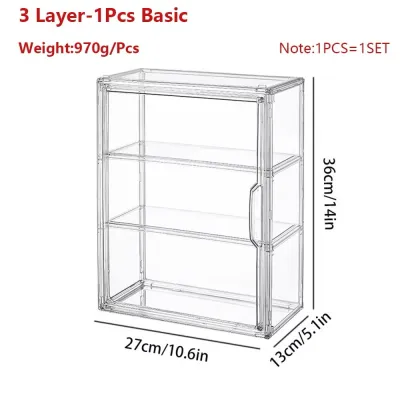
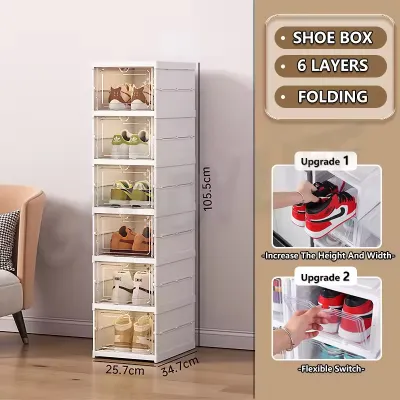
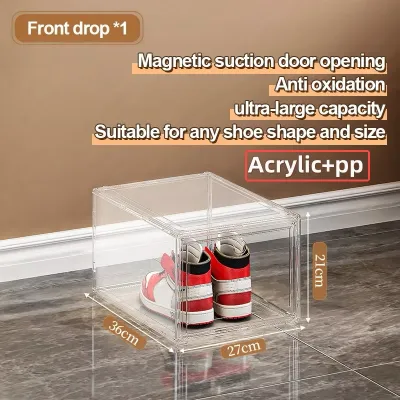
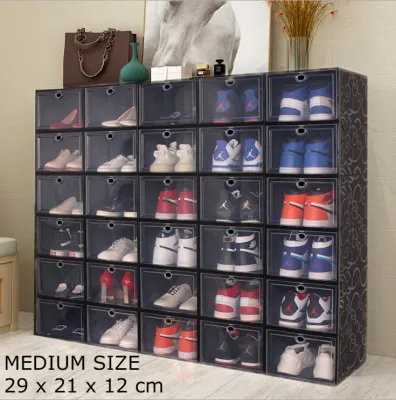
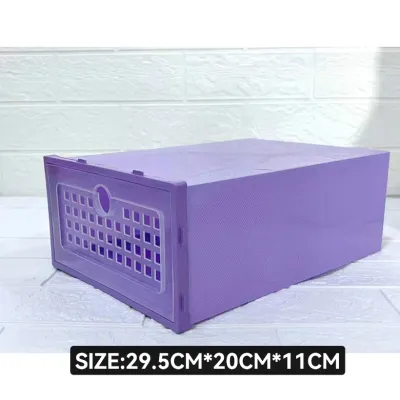
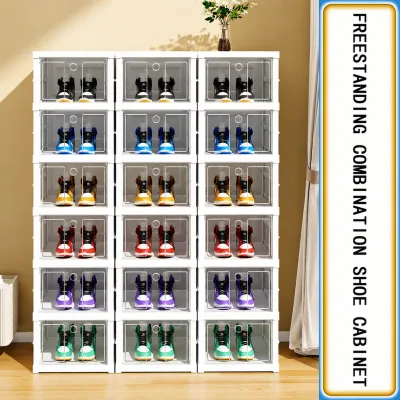
Prices are valid at publication and may change. Please refer to the product page for the latest price.
Pay close attention to closet door clearance. If your wardrobe has sliding doors, one side of the closet will always be partially blocked, which can restrict your ability to pull out drawers or open front-drop boxes. For hinged doors, ensure the door frame or the hinges themselves do not protrude into the storage path. A box that fits perfectly on an open shelf might be blocked by a door frame when you try to open its front panel.
Identify any internal obstructions that could limit usable space. Built-in drawers, hanging clothes that drape down onto shelves, or low-hanging rods can significantly reduce the vertical clearance available for stacking. Measure the distance from the shelf surface to the bottom of hanging garments to determine exactly how many boxes can safely fit underneath without crushing your clothes.
Finally, consider the required aisle or reach space. You need comfortable physical clearance to stand in front of the closet, open the organizer doors, and slide shoes in and out. If your closet is in a narrow hallway or a tight bedroom corner, front-opening boxes require sufficient clearance to swing open without hitting nearby furniture or walls.
Key Features to Look for in Closet Shoe Boxes
Selecting the right shoe box organizer requires looking beyond aesthetics to evaluate how the materials and design perform under local environmental conditions. In the Philippines, high humidity levels create a breeding ground for mold and mildew, which can ruin leather, canvas, and suede shoes. Look for organizers that offer a balance of dust protection and ventilation. Boxes with built-in ventilation slots or breathable fabric panels allow air to circulate, reducing the risk of moisture entrapment.

Stackability and structural stability are vital when you want to utilize vertical closet space. Not all plastic or fabric boxes are designed to support weight when stacked several units high. Check the manufacturer’s specifications for weight limits and stacking recommendations. Look for boxes with interlocking mechanisms, such as tabs, grooves, or magnetic alignment points, which prevent the stack from shifting or tipping over when you open a single compartment.
The access mechanism determines how easily you can retrieve your shoes on a daily basis. Traditional lid-opening boxes require you to unstack the entire pile to reach the shoes at the bottom, which quickly becomes tedious. Front-drop, side-open, or magnetic door closures are highly recommended for closet interiors because they allow you to access any pair without disturbing the stack. Magnetic closures are particularly durable and provide a secure seal against dust.
Visibility is another key factor. Clear acrylic or transparent plastic boxes allow you to identify your shoes instantly, saving time during busy mornings. If you prefer a cleaner, more uniform look that hides visual clutter, semi-opaque or solid-colored boxes with clear front windows offer a practical compromise.
Recommended Shoe Box Organizer Types for Different Closets
Different closet layouts and shoe collections require distinct storage strategies. Matching the organizer profile to your closet’s depth, shelf strength, and your specific access needs ensures long-term usability. Below are the primary categories of shoe box organizers, along with their advantages, limitations, and ideal use cases.
Clear Stackable Hard Plastic or Acrylic Boxes
Rigid, transparent boxes made from hard plastic or acrylic are excellent for deep closet shelves and collectors who want high visibility. These boxes act as individual display cases, allowing you to see the exact color and style of your shoes at a glance. Their rigid structure makes them highly stable, meaning you can often stack them higher than fabric alternatives without worrying about warping or collapsing.
When choosing hard plastic boxes, always verify the weight-bearing capacity and look for interlocking channels on the top and bottom panels. Because these boxes are completely enclosed, prioritize models that feature ventilation holes on the rear or side panels. Without these air vents, trapped humidity can cause the soles of your shoes to degrade or develop mold over time, especially during the rainy season.
Fabric Drop-Front or Zippered Boxes
Fabric organizers, often made from non-woven polyester or canvas with reinforced cardboard or plastic internal frames, offer a lightweight and soft-sided alternative. These are highly suitable for shallow shelves, hanging closet organizers, or upper wardrobe shelves where heavy plastic boxes might be difficult to lift safely. Many fabric models feature a clear plastic front window and a drop-front opening secured by zippers or hook-and-loop fasteners.
The primary benefit of fabric boxes is their collapsibility; when not in use, they can be folded flat to save space. However, they have distinct limitations regarding heavy footwear, such as thick-soled boots or heavy leather shoes. Because their structural support relies on internal frames, stacking them too high can cause the lower boxes to bow or sag. Limit fabric stacks to two or three units, or use them on individual shelf compartments.
Adjustable or Modular Shoe Storage Systems
For irregular closet spaces, walk-in wardrobes, or diverse shoe collections that include everything from flat sandals to high heels, modular storage systems offer the greatest flexibility. These systems often consist of interlocking plastic panels, wire grids, or expandable racks that can be configured to fit the exact dimensions of your closet floor or large shelves.
Modular cubbies allow you to adjust the height of individual compartments to accommodate different shoe profiles. When using these open or semi-open systems, you can pair them with individual dust covers or fabric inserts to protect delicate materials. Before assembly, check the manufacturer’s instructions regarding floor or shelf weight capacity, and ensure the base is completely level to maintain structural integrity.
Maintenance and Care for Stored Shoes
Even the best storage organizer requires proper maintenance to protect your footwear from the tropical climate. Moisture is the primary enemy of stored shoes in the Philippines. To combat humidity, place silica gel packets, activated charcoal sachets, or small commercial moisture absorbers inside each enclosed shoe box. These desiccants help absorb excess moisture and prevent the growth of mold and mildew.
Regular cleaning of both the shoes and the organizers is essential for longevity. Before placing any shoes back into their boxes, wipe them down to remove dirt, sweat, and street grime, which can attract pests and foster bacterial growth. For the organizers themselves, clean plastic or acrylic boxes periodically by wiping them with a damp microfiber cloth and a mild, non-abrasive soap. For fabric boxes, spot-clean with a damp cloth and allow them to air dry completely in a well-ventilated area before restocking.
Establish a routine rotation and airing-out schedule. At least once every few months, open your shoe boxes and let your footwear air out in an air-conditioned or well-ventilated room away from direct sunlight. This practice is especially important for leather shoes, which need to breathe to prevent the material from cracking or peeling.
Frequently Asked Questions (FAQ)
How many shoe boxes can I safely stack in a standard closet?
The safe stacking height of shoe boxes depends entirely on the structural integrity of the boxes themselves and the load capacity of your closet shelf. For heavy-duty, interlocking hard plastic boxes, a stack of five to eight units is generally stable on a solid closet floor or a reinforced shelf. For fabric or lightweight plastic boxes, limit the stack to three units to prevent the bottom boxes from buckling. Always place your heaviest shoes, such as boots or heavy sneakers, in the bottom boxes to lower the center of gravity and improve overall stability.
Are cardboard shoe boxes good for long-term closet storage?
Original cardboard shoe boxes are not recommended for long-term storage in humid environments. Cardboard is highly porous, meaning it readily absorbs moisture from the air, creating an ideal environment for mold growth and structural weakening. Additionally, the organic fibers in cardboard can attract common household pests like silverfish and cockroaches. Transitioning to purpose-built plastic or breathable fabric organizers provides superior protection, better visibility, and a much cleaner, more hygienic closet environment.

Community discussion
Share your experience or ask a question. Comments are reviewed before publication.