
Organizing a closet in the Philippines presents unique spatial and environmental challenges. Standard built-in wardrobes often feature deep, wide shelves that lack built-in division, leading to towering piles of folded clothes, tangled accessories, and misplaced documents. When these items are left loose, they quickly succumb to clutter, dust, and the country’s characteristic high humidity. Utilizing shoebox-sized storage containers offers a highly effective, modular solution to reclaim this underutilized vertical space.
These compact bins act as drawers on open shelves, allowing you to categorize small items and retrieve them without disturbing the surrounding organization. By standardizing your storage with shoebox-sized dimensions, you create a uniform, visually clean system that fits neatly onto most standard closet shelves. This guide provides a comprehensive framework to help you measure your wardrobe, evaluate design features, compare materials for tropical climates, and select the ideal containers to optimize your home storage.
Measuring Your Closet Space for Shoebox-Sized Bins
Before purchasing any storage containers, taking precise measurements of your closet interior is essential to avoid costly returns or unusable bins. Start by using a metal measuring tape to record the depth, width, and vertical clearance of each shelf. Measure from the very back wall of the closet to the inside edge of the door frame, ensuring that any container you choose will allow the closet doors to close completely. For wardrobes with sliding doors, pay close attention to the overlap area where the doors meet, as containers placed near this junction can easily block the sliding mechanism.
Products mentioned in this guide
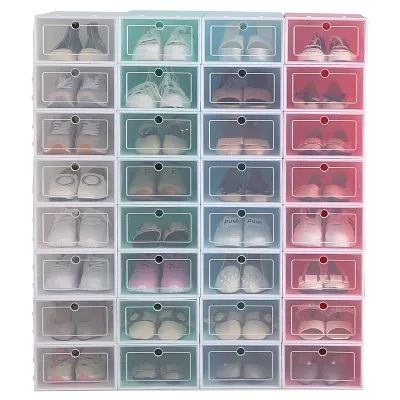
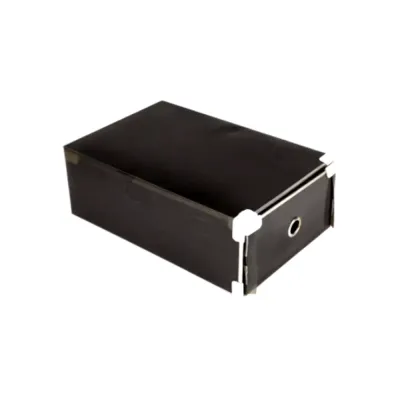
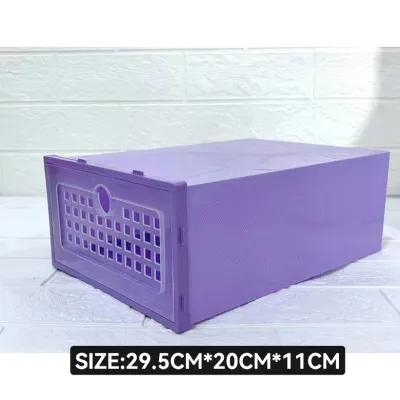
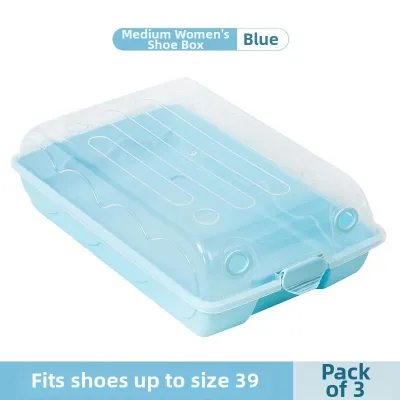
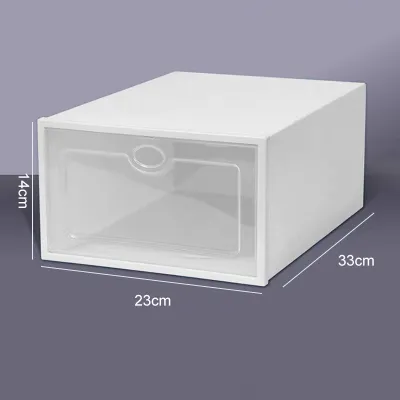
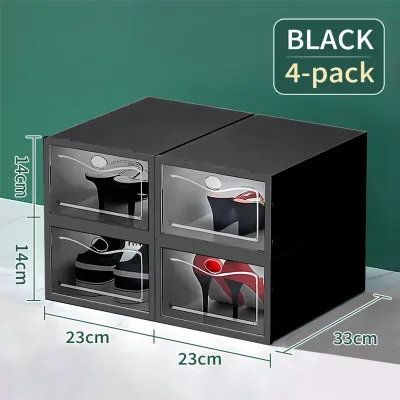
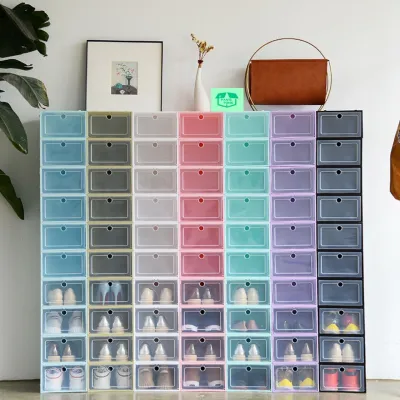
Prices are valid at publication and may change. Please refer to the product page for the latest price.
Next, evaluate the vertical clearance between your shelves. If you plan to stack multiple shoebox-sized bins, calculate the combined height of the stacked containers and compare it to the available vertical space. It is crucial to leave at least three to five centimeters of open space at the top of the stack. This clearance ensures you can easily slide your hand in to retrieve a container or lift a lid without scraping your knuckles against the shelf above.
Finally, account for hidden physical obstructions within the closet structure. Many built-in closets feature decorative front lips, protruding hinges, magnetic door catches, or internal light fixtures that can snag on containers. Measure the narrowest point of entry rather than the wider interior shelf space, as a bin must be able to pass through the door opening smoothly. Additionally, leave a small amount of horizontal finger space—about one to two centimeters on either side of each container—so you can easily grasp and pull the bins forward without friction.
Key Design Features for Small Item Organization
Selecting the right design features for your shoebox storage depends heavily on where the containers will sit and how often you need to access their contents. Open-top bins are highly efficient for frequently used items located on eye-level shelves, as they allow you to drop items in and pull them out instantly. However, for shelves located above shoulder height or near the floor, lidded containers are far more practical because they protect contents from dust and can be stacked securely to maximize vertical space.

For stacked configurations, front-opening drawers or drop-front bins are exceptionally convenient. Traditional lidded boxes require you to unstack the entire pile just to access the bottom container, which quickly discourages consistent organization. Front-opening designs feature a hinged door or a pull-out drawer that allows you to retrieve items from the bottom of the stack without moving the bins on top. This feature is particularly useful for daily-use accessories, undergarments, or small electronics.
Visual identification is another critical factor in maintaining an organized closet. Clear, transparent plastic containers offer immediate visibility, allowing you to see exactly what is inside from any angle without opening the box. If you prefer a more uniform, minimalist aesthetic that hides visual clutter, opaque bins with built-in label holders or clear front windows offer an excellent compromise. These features allow you to categorize items clearly while keeping the overall look of your closet clean and cohesive.
Lastly, pay close attention to the design of the handles or pull tabs. Look for containers with reinforced, integrated handle cutouts or sturdy fabric pull tabs on the front panel. A secure grip is essential when pulling a fully loaded bin down from a high shelf, preventing accidental drops and spills. Avoid containers with flimsy, glued-on handles that can easily tear away under tension, especially when storing heavier items.
Comparing Materials for Indoor Closet Use
The tropical climate of the Philippines requires careful consideration of container materials, as high humidity and seasonal moisture can significantly impact both the storage bins and the items inside. Fabric containers, typically made from canvas, linen, or non-woven polypropylene, are highly popular for their soft texture, lightweight handling, and aesthetic warmth. These breathable materials allow air to circulate, which can help prevent musty odors from developing in folded textiles. However, fabric bins are susceptible to absorbing ambient moisture during the rainy season, which can lead to mold or mildew if the closet lacks proper ventilation.
To mitigate moisture risks with fabric bins, look for options that feature removable, wipeable fabric covers or those treated with moisture-resistant coatings. It is also vital to verify the structural integrity of fabric containers when they are empty. Many low-cost fabric bins rely on thin cardboard inserts for structure, which can sag, warp, or collapse entirely in humid conditions. Opt for fabric bins reinforced with thick plastic internal panels or sturdy metal wire frames that maintain their shape regardless of the humidity levels.
Rigid plastic containers, such as those made from polypropylene or polystyrene, offer superior dust protection, structural rigidity, and stackability. Plastic is completely impervious to moisture, making it an excellent choice for protecting sensitive items like documents, leather goods, or electronics from humid air. They are also incredibly easy to clean; a simple wipe with a damp cloth or a mild sanitizing solution is all that is needed to keep them free of dust and grime.
The primary drawback of rigid plastic is its lack of breathability, which can trap residual moisture inside the container if items are packed when damp. To prevent this, ensure that all items are completely dry before storing them in plastic bins, and consider placing a small silica gel packet or a moisture absorber inside the container. When choosing plastic, inspect the thickness of the walls and the reinforcement along the rims and corners, as thin, brittle plastics can crack easily under pressure or when dropped.
Matching Container Styles to Specific Closet Items
To build an effective closet organization system, you must match the specific style and material of your shoebox-sized containers to the unique requirements of the items you plan to store. Accessories and small parts, such as jewelry, belts, watches, hair accessories, or small electronics, can easily become a jumbled mess in a large, open bin. For these items, select shallow containers equipped with internal dividers or modular compartments. These dividers keep small pieces separated, visible, and easily accessible, preventing them from burying each other at the bottom of the box.
Folded clothes and lightweight textiles, including t-shirts, activewear, socks, and scarves, benefit most from breathable fabric bins or open-top baskets. Because these items are accessed daily, an open-top design allows you to use the vertical folding method (where clothes are stood upright rather than stacked flat), making it easy to pull out a single garment without disrupting the rest. The soft sides of fabric bins are also gentle on delicate textiles, preventing snags or creases that can occur against rough plastic edges.
Documents, paper goods, and sentimental items like photos or letters require maximum protection from environmental factors. For these categories, rigid, lidded plastic containers are the standard choice. Paper is highly sensitive to moisture damage, yellowing, and silverfish, which are common in tropical households. A tightly sealing plastic shoebox protects documents from dust, pests, and humidity, keeping them flat and dry. Ensure these containers are stacked on a stable, middle-to-lower shelf to prevent any risk of falling and cracking.
Ordering Online: What to Verify Before Checkout
Purchasing shoebox storage containers from online marketplaces is highly convenient, but it requires a diligent verification process to avoid common quality and sizing pitfalls. One of the most frequent mistakes is relying solely on the product images, which can often be digitally altered to make the containers appear larger or sturdier than they actually are. Always scroll down to the product specifications and verify the exact external and internal dimensions. Keep in mind that thick-walled plastic bins or fabric containers with thick internal frames can have internal dimensions that are several centimeters smaller than their external measurements, significantly reducing your usable storage space.
Next, spend time reading through user reviews, paying close attention to photos and videos uploaded by previous buyers. Look for specific feedback regarding structural stability, handle durability, and whether the lids fit securely. If multiple reviews mention that the plastic is brittle, the fabric smells strongly of chemicals, or the bins collapse when stacked, it is best to look for alternative options. Additionally, check the seller’s return and refund policies, particularly for multi-packs, to ensure you can easily return the items if they arrive damaged or do not fit your shelves.
Frequently Asked Questions (FAQ)
Can I stack shoebox storage containers on top of each other?
Yes, but safe stacking depends entirely on the container’s design and material. Rigid plastic containers with interlocking lids or reinforced rims are specifically designed for stacking, as the weight is distributed evenly along the outer walls. Avoid stacking soft-sided fabric bins that lack internal wire frames or plastic reinforcements, as the weight of the upper bins will cause the lower ones to sag, potentially crushing the contents inside. Always place the heaviest items in the bottom container of the stack to maintain a low center of gravity and prevent tipping.
How do I keep fabric storage bins from losing their shape?
To maintain the structural integrity of fabric bins, always utilize the rigid base inserts provided by the manufacturer, which distribute weight evenly across the bottom panel. Avoid overstuffing the containers beyond their physical capacity, as bulging items will stretch the fabric seams and warp the side panels permanently. If your fabric bins lack built-in support, you can cut custom-sized pieces of thick corrugated cardboard or plastic sheets and place them along the inner walls to provide extra rigidity and prevent sagging.
Are shoebox-sized containers suitable for heavy items like books?
Standard fabric or thin plastic shoebox-sized containers are generally not suitable for heavy, dense items like books, tools, or heavy metal accessories. The concentrated weight of these items can cause the bottom of a fabric bin to sag and tear, or cause a thin plastic bin to crack when lifted by its handles. If you need to store heavier items, look for heavy-duty, reinforced plastic bins or containers with metal-reinforced frames and verified load capacities on the product label, and avoid stacking them too high to ensure safety.

Community discussion
Share your experience or ask a question. Comments are reviewed before publication.