
Finding a dining table that accommodates a large family while respecting the spatial limits of a modern home is a common challenge. In many households, daily life requires a compact, space-saving furniture piece, while weekend gatherings and family celebrations demand a generous surface that can seat up to ten people. A square foldable table offers an elegant solution to this dilemma, providing a compact footprint for day-to-day activities and expanding into a large dining surface when guests arrive.
To choose the right model, you must understand how these tables expand, how their structural mechanisms support heavy meals, and how to plan your dining room layout to ensure everyone sits comfortably. By focusing on mechanical durability, material resilience against tropical climates, and precise space measurements, you can select an extendable table that serves your family safely and beautifully for years.
The Geometry of Seating 6-10 People at a Square Table
To understand how a square foldable table accommodates a large group, you must first look at the physical mathematics of seating. A true, fixed square table that seats eight people comfortably requires minimum dimensions of 150 by 150 centimeters. To seat ten people, the table must measure at least 180 by 180 centimeters. In most residential layouts, a permanent table of this size is highly impractical. It consumes an enormous amount of floor space and creates a massive, unreachable empty zone in the center of the tabletop, making it difficult to pass dishes during a meal.
Products mentioned in this guide
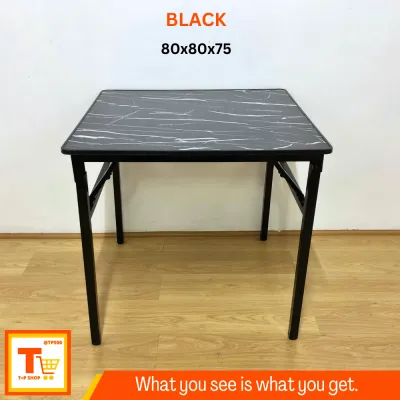
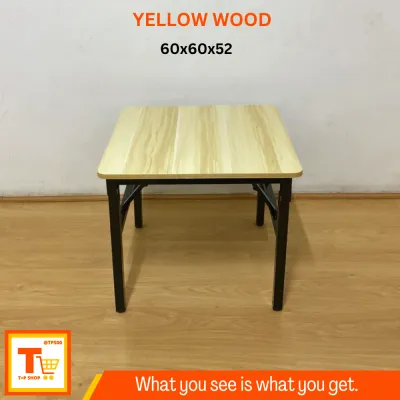
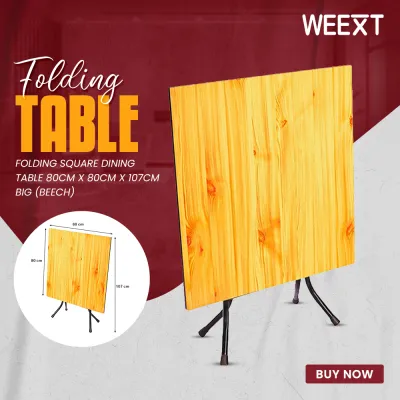
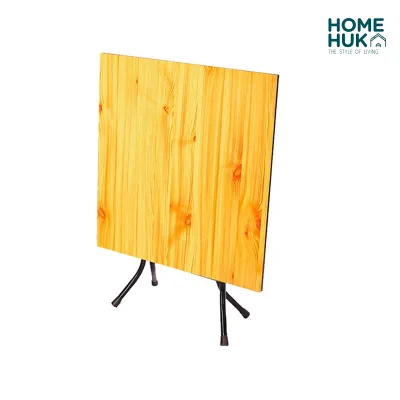
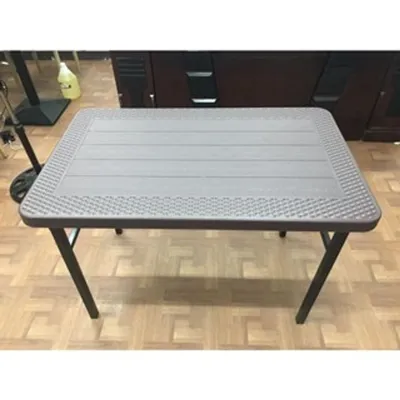
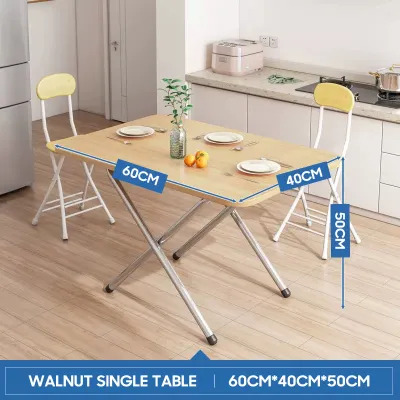
Prices are valid at publication and may change. Please refer to the product page for the latest price.
For large families, a practical “square foldable table” is actually a hybrid furniture piece. It is designed to sit in your dining area as a compact square—typically 90 by 90 centimeters or 100 by 100 centimeters—to serve four people during regular daily meals. When you need to host a larger gathering, the table utilizes built-in folding, sliding, or pivoting mechanisms to expand into a spacious rectangle or an oversized square. This hybrid design delivers the space-saving benefits of a small square table alongside the high-capacity utility of a large banquet table.
When calculating how many people can sit around an expanded table, you must factor in the personal space required for comfortable dining. Each seated individual needs a minimum of 60 centimeters of tabletop width and 40 centimeters of depth to eat without bumping elbows with their neighbors. Furthermore, a large family meal requires a central shared zone of at least 20 to 30 centimeters running down the middle of the table. This central space is essential for holding large serving platters, rice cookers, water pitchers, and tabletop cooking appliances. If your expanded table does not provide this central clearance, your guests will find the surface cramped and disorganized.
Key Structural Features for Heavy Family Meals
When a foldable table is fully extended to seat eight or ten people, the physical strain on its frame and joints increases dramatically. The weight of heavy ceramic serving bowls, large rice cookers, and tabletop grills, combined with the downward pressure of guests leaning on the table edges, can cause inferior tables to sag, wobble, or even collapse. Therefore, evaluating the mechanical integrity of the expansion system is your most important step before purchasing.

Begin by evaluating the expansion mechanisms, which typically consist of center rails, butterfly leaves, or heavy-duty hinges. High-quality tables use telescoping steel or aluminum slide rails that allow the two halves of the table to pull apart smoothly. When inspecting a table, test the sliding mechanism yourself. It should glide easily without sticking or binding, and it should ideally be manageable by a single person. Look for heavy-duty metal hinges on drop-leaf models, ensuring they are recessed flat into the wood to prevent plates from tilting and to avoid scratching your guests’ arms.
Base stability is another critical safety factor, especially when the table is fully extended. As a table grows longer, the risk of tipping increases if weight is concentrated on the outer edges. To prevent accidents, check the manufacturer’s specified weight capacity, which should ideally be at least 80 to 100 kilograms of static load. Look for frames that feature robust joint reinforcements, such as heavy-duty steel corner brackets, mortise-and-tenon joinery, or thick wooden apron supports. If you are looking at a model with a central pedestal base, ensure the base plate is heavily weighted and wide enough to counteract the leverage of the extended tabletop.
Finally, consider the overall robustness of the frame. Large family gatherings often involve placing multiple heavy items on the table at once. A flimsy frame will bow under this weight, which can cause liquids to pool or slide rails to warp permanently. Before buying, perform a simple physical check: fully extend the table and apply firm downward pressure on the center and the outer edges. If you detect significant flexing, wobbling, or creaking, the table’s structural frame may not be strong enough to handle the daily realities of a large, active household.
Best Foldable Designs to Maximize Seating Capacity
Different folding designs solve the space-to-capacity problem in unique ways. Choosing the right design depends on your daily space constraints, where you plan to store the table’s extension components, and how often you host large groups.
Center-Expandable Square-to-Rectangle Tables
Center-expandable tables are the most popular and elegant option for transitioning from daily family life to large weekend gatherings. These tables feature a tabletop that splits down the middle, pulling apart on under-table slide tracks to create an opening for one or more extension leaves. This design allows you to maintain a neat, symmetrical square shape for four people during the week, and then transform the table into a long, formal rectangle that can easily seat eight to ten people.
When choosing a center-expandable model, pay close attention to how the extension leaves are stored. Some premium models feature “butterfly” leaves, which are hinged panels stored permanently inside the table frame. When you pull the table open, these leaves unfold and swing into place automatically. Other models require you to store the loose extension leaves separately in a closet or under a bed. While separate leaves often allow for a thinner, more streamlined table profile, they can be inconvenient to retrieve and are susceptible to damage or warping if stored in a humid closet.
Another detail to inspect is the visual seam where the table halves and leaves meet. When the table is fully expanded and locked, these seams must sit perfectly flush. If one panel sits even slightly higher than the adjacent one, glasses can tip over, and dust or food crumbs will collect in the gap. Look for tables equipped with heavy-duty under-table toggle latches. These latches pull the tabletop sections tightly together and lock them in place, ensuring a flat, stable, and seamless dining surface.
Drop-Leaf and Gateleg Square Tables
Drop-leaf and gateleg tables offer exceptional space-saving flexibility, making them ideal for homes where the dining area must serve multiple purposes. These tables feature a fixed central section with one or two hinged side panels (leaves) that hang vertically when not in use. To expand the table, you simply lift the hinged leaves and secure them by swinging out support legs (gatelegs) or sliding out wooden support brackets from beneath the main frame.
One of the greatest advantages of a gateleg table is its highly compact folded footprint. When both leaves are dropped, some models fold down to a width of just 20 to 30 centimeters, allowing you to push the table against a wall to serve as a console or hallway table. When both leaves are raised, the table opens up into a large square or rectangular surface that can accommodate six to eight diners. This makes them incredibly useful for small apartments, open-plan townhouses, or multi-purpose family rooms.
However, drop-leaf and gateleg designs have distinct structural limitations. The primary drawback is the placement of the support legs. When the gatelegs are swung out to support the extended leaves, they often sit directly where a guest would naturally place their chair or legs. This can make sitting at the corners or sides of the table uncomfortable, requiring guests to straddle the table legs. Additionally, you must carefully inspect the support brackets or gateleg hinges. If these supports are flimsy, the extended leaves will sag over time under the weight of heavy serving platters, creating an uneven and unsafe dining surface.
Modular and Nesting Square Tables
For families who require maximum versatility, using modular or nesting square tables is a highly practical alternative to a single large expanding table. This approach involves purchasing two or three identical, smaller square foldable tables (such as 80 by 80 centimeters or 90 by 90 centimeters) that can be used independently for daily activities and then pushed together to form a single, long banquet table when hosting large gatherings.
This modular setup offers unmatched flexibility for irregular room layouts, outdoor verandas, or varying guest counts. If you are hosting a casual party, you can separate the tables to create dedicated zones—such as an adult dining table, a separate kids’ table, and a buffet station. When the gathering is over, these lightweight tables can be folded completely flat and stacked against a wall or stored in a utility closet, freeing up valuable floor space in your living area.
Despite their versatility, modular tables present unique setup challenges. The most common issue is keeping the tables perfectly aligned and level. If your dining room floor is slightly uneven, or if the tables have slightly different leg heights, you will experience annoying lips and gaps where the tables meet. To prevent this, look for modular tables that feature adjustable leveling feet. Additionally, choosing tables with flat, non-beveled edges will minimize the size of the gaps between the joined surfaces, preventing spilled liquids and food crumbs from falling through to the floor.
Space Planning and Clearance for Your Dining Area
Before purchasing any large foldable table, you must accurately measure your dining space to ensure that the fully expanded table, the seated guests, and the surrounding walkways can coexist comfortably. A common mistake is buying a table that fits the room when closed, only to find that when it is fully extended, guests are pinned against the walls and the flow of the household is completely blocked.
To avoid this, use a simple formula to calculate the total footprint required for your dining area. Take the dimensions of the table when it is fully expanded to its maximum length (for example, 100 by 240 centimeters to seat ten people). You must add a minimum of 90 to 100 centimeters of clearance on all four sides of the table. This clearance is calculated based on two spatial needs: first, a diner requires approximately 50 to 60 centimeters of depth to slide their chair back comfortably when sitting down or standing up; second, you need an additional 30 to 40 centimeters of clear space behind the seated guests to allow someone to walk past, serve food, or navigate the room.
Applying this formula to a 100 by 240-centimeter expanded table reveals that you need a clear, unobstructed floor area of at least 300 by 440 centimeters (3.0 by 4.4 meters). When measuring your room, be sure to account for common permanent or semi-permanent obstacles that can restrict this clearance. In many homes, these obstacles include:
- Standing Electric Fans: Ensure the oscillation path of your stand fans is not blocked by the backs of dining chairs.
- Water Dispensers and Food Trolleys: Keep high-traffic pathways to water stations and kitchens completely clear.
- Sliding Glass Doors and Cabinets: Verify that dining chairs do not block the opening of sliding doors leading to a dirty kitchen, balcony, or veranda, and that buffet cabinet doors can still open fully.
Finally, do not forget to plan for the delivery and movement of the table. Foldable tables designed to seat ten people are often incredibly heavy and bulky, even when folded flat. Measure your home’s entryways, narrow hallways, staircase turns, and condominium lift doors to ensure the delivery team can safely transport the packaged table into your dining room. If your home has tight architectural corners, a model that delivers in multiple smaller boxes or requires on-site assembly may be a much safer choice.
Choosing Materials That Withstand Humidity and Heavy Use
In tropical environments, furniture is subjected to extreme shifts in relative humidity and temperature. During the wet season, high humidity can cause wood fibers to swell and metal components to rust, while the dry season can cause wood to contract and crack. Because a foldable table relies on moving parts to function, selecting materials that can withstand these environmental pressures is essential for long-term durability.
When evaluating tabletop materials, compare how different options perform under heavy daily use and tropical conditions:
- Solid Wood: Hardwoods such as teak, acacia, and mahogany are highly durable and offer beautiful natural grain patterns. However, solid wood is naturally reactive to humidity. To prevent warping, splitting, or joint separation, ensure the wood has been thoroughly kiln-dried by the manufacturer. It must also be sealed with a high-quality, moisture-resistant finish, such as polyurethane or a specialized outdoor lacquer.
- Engineered Wood with High-Pressure Laminate (HPL): Medium-density fiberboard (MDF) or particleboard topped with HPL is highly stable and resistant to humidity-induced warping. HPL surfaces are also incredibly easy to clean and resist scratches from daily family use. However, engineered wood is highly vulnerable to moisture if water penetrates the core. You must carefully inspect the edge banding around the tabletop; if the protective banding is thin or poorly glued, condensation from cold drink pitchers or wet cleaning cloths will seep into the seams, causing the engineered wood to swell and ruin the table.
- Sintered Stone and Ceramic: These modern materials are completely waterproof, scratch-proof, and impervious to heat. You can place hot pots and serving dishes directly onto a sintered stone surface without using a trivet, making it an incredibly practical choice for busy family meals. The primary trade-offs are that these materials are exceptionally heavy, cold to the touch, and can create a loud clattering sound when plates and cutlery are set down.
- Tempered Glass: Glass tabletops are easy to wipe clean, do not stain, and help a small dining room feel visually larger. However, glass surfaces show fingerprints, dust, and grease smears very easily, requiring frequent cleaning. They also require careful handling to prevent chipping along the edges, especially in households with active children.
Beyond the tabletop, the longevity of a foldable table depends heavily on its metal hardware. The steel hinges, sliding tracks, and locking latches are highly susceptible to rust in humid environments, which can cause the expansion mechanism to become stiff, squeaky, or completely seized. When purchasing, check the manufacturer’s care instructions regarding hardware maintenance. To keep the table operating smoothly, plan to inspect the tracks periodically, wipe away dust and food debris, and apply a light coat of manufacturer-approved dry silicone lubricant or light machine oil to the moving joints. Always avoid using harsh chemical cleaners or excessive water near these mechanical components.
Ultimately, remember that a material name alone does not guarantee performance or durability. A table labeled “solid oak” or “premium marble-look” can still fail if the construction is poor or the protective finishes are inadequate. Always verify the specific surface treatments, joint construction methods, and recommended care guidelines on the product label or manufacturer’s documentation before making your final decision.
Frequently Asked Questions (FAQ)
Can a true square table comfortably seat 10 people?
No, a true, non-expanding square table cannot comfortably seat ten people in a standard residential setting. To accommodate ten diners, a square table must measure at least 180 by 180 centimeters. A table of this size requires an immense amount of floor space and creates a massive, unreachable empty zone in the center of the tabletop. This makes passing dishes highly impractical and isolates diners from conversation across the table. For comfortable ten-person seating, a rectangular table or an extendable square-to-rectangle design is far more ergonomic and space-efficient.
How do I maintain the sliding tracks and hinges of a foldable table?
To maintain the moving parts of your foldable table, keep the sliding tracks and hinges free of dust, hair, and food crumbs by vacuuming them regularly. Wipe the metal hardware down with a dry or slightly damp microfibre cloth, and avoid using excessive water or harsh, acidic chemical cleaners that can strip away protective coatings. If the expansion mechanism begins to feel stiff or squeaky, apply a small amount of manufacturer-approved dry silicone lubricant or light machine oil to the joints and tracks, wiping away any excess oil immediately to prevent it from attracting dust.
Are pedestal bases better than four-leg bases for large expandable tables?
This is a trade-off between legroom and structural stability. A central pedestal base eliminates corner legs, allowing you to squeeze in extra chairs and guests without anyone having to sit uncomfortably straddling a table leg. However, for large expandable tables, a pedestal base must be exceptionally heavy and wide at the bottom to prevent the table from tipping when fully extended. A traditional four-leg base offers superior weight distribution and structural stability across the entire length of an expanded table, but it limits where you can place chairs at the corners.

Community discussion
Share your experience or ask a question. Comments are reviewed before publication.