
Finding the right divider shelves for a home office bookcase depends entirely on your specific storage needs, bookcase dimensions, and the weight of your items. Since there is no single universal fit, selecting the right divider involves evaluating structural designs—such as freestanding, adjustable, or stackable units—and matching their material properties to your storage needs while verifying stability and installation requirements. In humid tropical climates like the Philippines, choosing materials that resist moisture-related warping or surface degradation is just as critical as finding the right physical fit. This guide breaks down the most effective divider shelf types, materials, and measurement strategies to help you curate a shortlist of options that will safely and efficiently organize your books, files, and office supplies.
Divider Shelf Designs for Home Office Organization
Selecting the right structural design for your divider shelves is the first step toward an organized and functional home office. The three primary designs available are freestanding, adjustable, and stackable dividers, each offering distinct advantages depending on your daily workflow.
Freestanding dividers sit independently on your bookcase shelves without requiring permanent attachment. These units are highly mobile, allowing you to slide them left or right to accommodate changing book volumes or new office supplies. Because they rely on their own base for stability, they are best suited for lightweight items, folders, or a small number of books rather than a dense row of heavy manuals.
Products mentioned in this guide
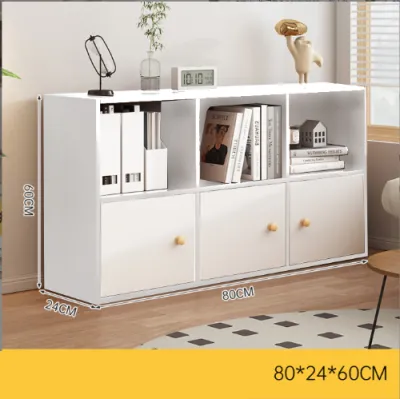
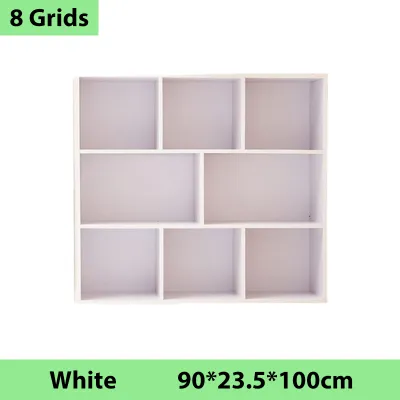
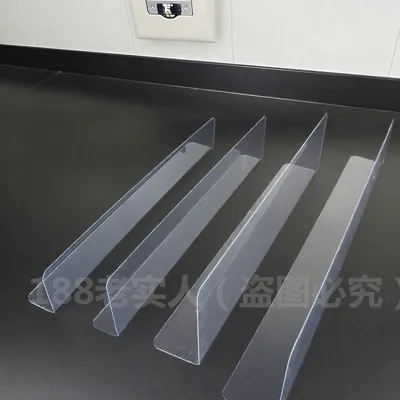

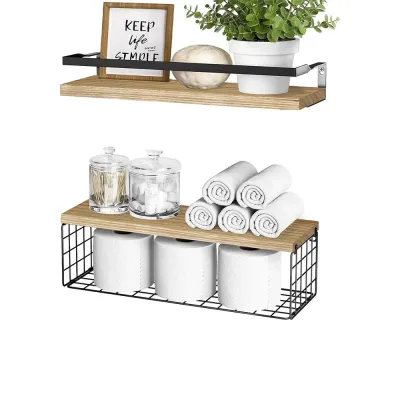
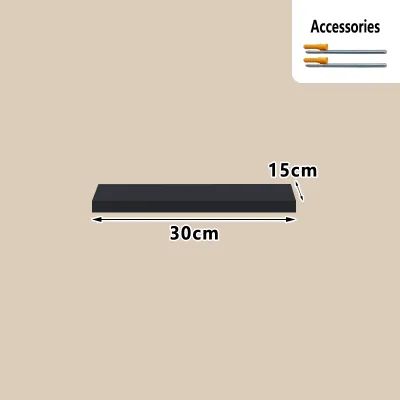
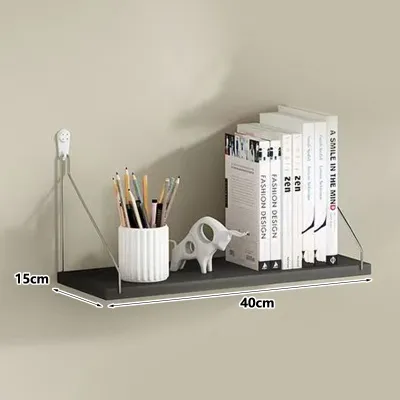
Prices are valid at publication and may change. Please refer to the product page for the latest price.
Adjustable dividers often feature tension mechanisms, clamp-on designs, or peg-insertion systems that lock securely onto the shelf. These dividers provide excellent lateral support, making them ideal for holding heavy textbooks, reference manuals, or thick binders upright. However, their spatial limitation is that they require specific shelf thicknesses or clear vertical clearance to clamp or lock securely, so you must verify your shelf dimensions before purchasing.
Stackable divider shelves create mini-levels within a single bookcase shelf, essentially doubling your usable vertical space. They are perfect for flat items, stationery boxes, laptop docks, or small office supplies that would otherwise create clutter. The main limitation is vertical clearance; you must ensure your bookcase shelf has enough height to accommodate both the stackable unit and the items placed on top of it.
When mapping these designs to your specific use cases, consider the weight and volume of your items. For heavy textbooks, look for sturdy, wide-base freestanding metal dividers or adjustable clamp dividers. For lightweight stationery, cables, and notebooks, stackable acrylic or lightweight wood dividers work best.
Measuring Your Bookcase for a Secure Fit
To ensure your new divider shelves fit securely without damaging your existing bookcase, you must take precise measurements of your storage space. Relying on visual estimates often leads to compatibility issues, especially with older or custom-built furniture.

Begin by using a reliable tape measure to record three critical dimensions: internal width, usable depth, and vertical height clearance. Measure the internal width from the inside of the left side panel to the inside of the right side panel. For the usable depth, measure from the back panel to the front edge of the shelf, ensuring the divider will not overhang.
Many bookcases feature a front lip, decorative molding, or sliding glass doors that reduce the actual entry clearance. Measure this entry height separately, as a divider might fit inside the shelf but be too tall to slide past the front lip during installation. Additionally, check if your bookcase sits flush against the wall or if baseboards push the bottom forward, which can cause slight tilting.
If your bookcase has adjustable shelves supported by pins, verify if the shelves are perfectly level. An uneven shelf can cause freestanding dividers to slide or wobble, compromising the stability of your organized items.
Finally, always cross-reference the weight capacity labels on both your main bookcase and the proposed divider shelf. The combined weight of the divider and the items stored on it must not exceed the bookcase shelf’s rated capacity. If you plan to spend around ₱500 to ₱1,500 on organizing accessories, investing a few minutes in precise measurements prevents costly return shipping fees.
Matching Shelf Materials to Your Storage Needs
The materials you choose for your divider shelves directly impact their durability, load capacity, and how well they protect your stored items. Matching the material to the weight and volume of your office supplies ensures long-term organization without shelf sagging.
For heavy-duty storage, such as thick reference manuals, legal binders, or heavy textbooks, solid wood and metal are the most reliable materials. Metal dividers, particularly those made of steel or heavy aluminum, offer high structural rigidity with a thin profile, maximizing shelf space. Solid wood provides excellent stability and a classic aesthetic, though it tends to be bulkier and heavier.
For lighter office supplies, stationery, USB cables, and notebooks, acrylic or engineered wood is highly suitable. Acrylic offers a clean, minimalist look that keeps items visible, which is helpful for finding small supplies quickly. Engineered wood is cost-effective and lightweight, but it must be monitored in high-humidity environments.
In the Philippines, high relative humidity can affect certain materials over time. Unsealed engineered wood can absorb moisture, leading to swelling, warping, or structural weakening. If choosing wood or engineered wood dividers, verify that they have a high-quality, moisture-resistant sealant, laminate finish, or paint coating to protect against humidity.
Before finalizing your purchase, perform a surface finish check on the dividers. Rough metal edges, exposed wood splinters, or sharp acrylic corners can scratch delicate book covers, tear important documents, or damage the finish of your bookcase. Look for rounded corners, smooth powder-coated finishes, or protective felt padding on the contact points.
Stability and Installation Checks for Bookcases
Safe installation is crucial when adding divider shelves to your home office bookcase. Improperly installed dividers can slide, tip over, or cause the entire bookcase to become unstable, risking damage to your equipment and documents.
To prevent dividers from sliding when you pull a book out, check if they come with anti-slip silicone pads or foam backing. For tension-based or clamp-on dividers, ensure the clamping mechanism does not apply excessive pressure that could crack or dent the bookcase shelves.
Adding heavy dividers and books to the upper shelves of a tall bookcase significantly raises its center of gravity, increasing the risk of tipping. Always place your heaviest items and sturdiest dividers on the bottom shelves to maintain a low center of gravity. If your bookcase is tall or top-heavy, ensure it is securely anchored to the wall using appropriate tip-over restraint hardware.
If a divider shelf requires drilling, screws, or permanent mounting hardware, stop and consult your bookcase manufacturer’s warranty and structural guidelines. Drilling into hollow-core shelves or thin engineered wood panels can permanently compromise their structural integrity, leading to sagging or sudden collapse.
Evaluating Divider Shelves on E-Commerce Platforms
Shopping for divider shelves on online marketplaces requires a careful approach to ensure you receive a product that matches your expectations. Because you cannot physically handle the items before buying, you must rely on specific verification strategies.
When browsing online marketplaces, do not rely solely on the main product images, which can often be digitally altered or misleading in scale. Always locate the detailed dimension diagram in the product description. Verify the exact width, depth, and height measurements, and compare them directly with the measurements you took of your bookcase.
Because a precise fit is crucial for divider shelves, check the seller’s return policy before purchasing. Look for platforms or shops that offer straightforward returns or exchanges in case the divider does not fit your shelf thickness or vertical clearance as expected.
Read through customer reviews, specifically filtering for keywords like “bookcase,” “home office,” “sturdy,” or “warping.” Pay close attention to reviews from buyers in tropical regions who comment on how the materials hold up over time under humid conditions. Look for user-uploaded photos to verify the actual color, finish quality, and real-world scale of the dividers.
Frequently Asked Questions (FAQ)
Can I use divider shelves in a bookcase with adjustable shelf pins?
Yes, you can use freestanding divider shelves on adjustable shelves, but you must take specific precautions. Ensure the weight of the divider and the items it holds does not exceed the load capacity of the shelf pins.
When inserting or removing dividers, avoid dragging them against the inner side panels of the bookcase to prevent scratching the surface or damaging the pre-drilled pin holes. If using clamp-on dividers, verify that the clamp does not block or put pressure on the pin holes, which could cause the shelf support system to fail.
How do I prevent acrylic divider shelves from yellowing or scratching?
To keep acrylic divider shelves clear and free of scratches, avoid using abrasive cleaners, paper towels, or rough sponges. Instead, use a soft microfiber cloth slightly dampened with water or a mild, non-abrasive soap solution.
Acrylic is highly susceptible to micro-scratches from dust particles, so wipe gently without applying heavy pressure. To prevent yellowing, keep the dividers out of direct sunlight, as prolonged exposure to ultraviolet (UV) rays can degrade the plastic over time.
Are tension rod dividers a safe alternative to solid divider shelves?
Tension rod dividers can be a practical, lightweight alternative, but they are not suitable for all storage needs. They work well for organizing lightweight items like empty folders, softcover notebooks, or lightweight cables.
However, they lack the structural stability and surface area of solid divider shelves. If you attempt to use tension rods to support heavy textbooks or dense file binders, the lateral pressure can cause the rods to slip, potentially damaging your books or causing the entire row to collapse. For heavy office materials, always opt for solid wood or metal divider shelves.

Community discussion
Share your experience or ask a question. Comments are reviewed before publication.