
When shopping for a durable plastic table, Uratex offers several options designed to withstand the rigors of daily family dining in the Philippines. For households with large families or those who frequently host gatherings of 6 to 10 people, selecting the right table size and configuration is essential to ensure everyone can dine comfortably without feeling cramped. A table that is too small leads to crowded elbows and limited space for serving dishes, while one that is too large can overwhelm your dining room and disrupt the flow of foot traffic.
To make an informed decision, you must consider how table shapes, structural reinforcements, and spatial clearances interact within your specific home layout. Plastic tables are highly favored for their lightweight nature, ease of cleaning, and resistance to moisture, but not all models are built to support the weight of a feast for ten. By understanding the key physical dimensions and structural requirements of large-capacity seating, you can choose a table that provides a safe, stable, and enjoyable dining experience for your entire household.
How to Evaluate Plastic Tables for 6 to 10 Seats
Selecting a plastic table for a large group requires a clear understanding of the relationship between seating capacity and physical dimensions. For comfortable dining, each person requires a minimum of 60 centimeters (24 inches) of horizontal table width. This spacing allows individuals to move their arms freely without bumping into their neighbors. If your family style involves placing multiple large serving platters, rice cookers, and soup bowls in the center of the table, you should also look for a table width of at least 90 to 100 centimeters (35 to 39 inches) to provide adequate clearance down the middle.
Products mentioned in this guide

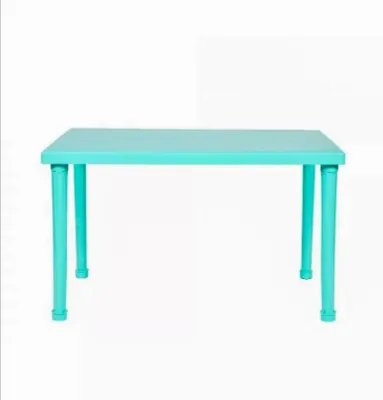
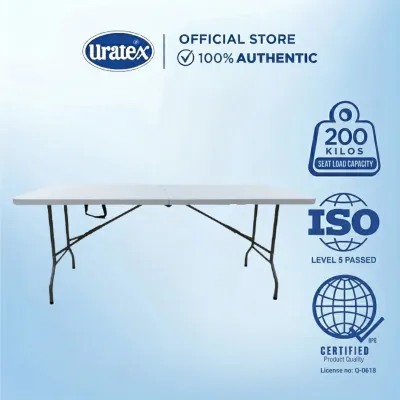

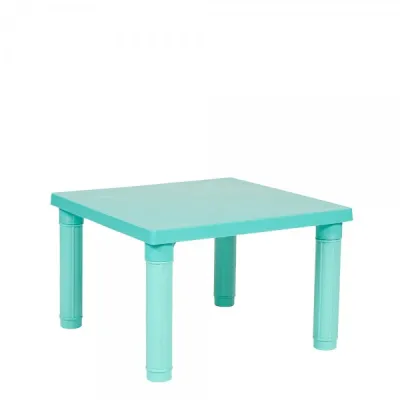
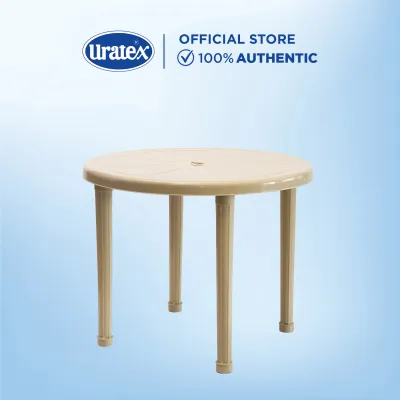
Prices are valid at publication and may change. Please refer to the product page for the latest price.
Structural stability is another critical factor when evaluating large plastic tables. Because plastic is inherently flexible, longer tables require robust support structures to prevent bowing or sagging under heavy loads. Look for models featuring thick, tubular steel legs with a high-quality powder-coated finish to protect against rust in humid tropical environments. Diagonal cross-bracing that connects the legs directly to the underside of the tabletop significantly reduces lateral movement and wobbling. Before making a purchase, always locate the manufacturer’s maximum weight capacity on the product label or specifications sheet to ensure it can safely support your daily dining needs.
The quality of the plastic material itself directly impacts the lifespan and safety of the table. Most high-quality utility tables are constructed from High-Density Polyethylene (HDPE) or Polypropylene (PP). HDPE is highly valued for its impact resistance and strength, making it the standard material for heavy-duty blow-molded folding tables. Polypropylene is commonly used for solid injection-molded dining tables and offers excellent rigidity. Ensure the product label specifies the presence of UV stabilizers, which prevent the plastic from becoming brittle, cracking, or discoloring when exposed to direct sunlight near windows or on open patios.
Best Uratex Table Configurations for Large Families
Rectangular Plastic Tables
Rectangular tables are the most popular choice for seating 6 to 8 people because their linear design aligns perfectly with standard rectangular dining rooms. This configuration maximizes the usable surface area along a straight line, making it easy to arrange individual place settings opposite one another while leaving a clear central lane for serving dishes. A standard 6-foot (180 cm) rectangular table can comfortably seat six adults along the sides, and you can easily accommodate two more guests by placing chairs at the head and foot of the table.

One of the primary spatial advantages of a rectangular table is its versatility in tight spaces. If your dining area is small or shares space with a living room, you can push one side of the table flat against a wall or tuck it into a corner when it is not fully occupied. This arrangement instantly frees up valuable floor space for daily household activities. When you have guests or host a large family dinner, you can simply pull the table out into the center of the room to access all sides.
When evaluating a long rectangular plastic table, pay close attention to the center of the tabletop. Without proper reinforcement, a long span of plastic can sag over time under the weight of heavy ceramic plates and serving bowls. Look for models that feature a continuous steel perimeter frame beneath the plastic top, or those equipped with a dedicated middle-leg support. These design elements distribute the weight evenly down to the floor, ensuring the table remains perfectly flat and stable throughout years of heavy use.
Foldable and Extendable Plastic Tables
For households that require flexible furniture solutions, foldable plastic tables offer exceptional versatility. These tables allow you to quickly expand your dining capacity to accommodate 8 to 10 people for special occasions, family reunions, or holiday feasts, and then fold them down for compact storage when the event is over. This is particularly beneficial for homes with open-plan layouts where a permanently large dining table would restrict movement and clutter the living space.
Safety is paramount when using foldable furniture, so you must carefully inspect the folding mechanisms before use. Look for heavy-duty steel hinges that lock securely into place when the table is fully extended. Many high-quality folding tables feature sliding metal rings or locking pins on the legs that prevent the frame from accidentally folding if someone bumps into the table. On “fold-in-half” models, examine the center seam to ensure it aligns perfectly flat and does not create an uneven ridge that could cause cups or plates to tip over.
The portability of foldable plastic tables makes them highly convenient for active households. Most models are designed with integrated carrying handles and lightweight blow-molded plastic tops, allowing a single adult to carry and set up the table with ease. When folded flat, these tables can be stored behind a sofa, under a bed, or inside a utility closet, making them an excellent investment for families who love to host but have limited permanent dining space.
Round Plastic Tables
Round plastic tables offer a highly social and inclusive dining experience, as the circular arrangement ensures that every guest faces one another. This layout makes it incredibly easy to share food, pass serving dishes, and engage in cross-table conversations without anyone feeling left out at the ends. To seat 8 people comfortably, a round table should have a minimum diameter of 150 centimeters (60 inches), while a 10-person arrangement requires a diameter of at least 180 centimeters (70 inches) to prevent crowding.
Because round tables lack corner supports, their stability depends entirely on the design of the base. Look for models that feature widely splayed legs or a heavy-duty central pedestal that spreads the weight evenly across a broad surface area. If the base is too narrow, the table can become unstable and tip over if a guest leans heavily on the outer edge or if a heavy dish is placed near the perimeter. Always verify that the leg structure is robust enough to handle uneven weight distribution.
It is important to note that round tables require a significantly larger floor footprint than rectangular tables of equivalent seating capacity. Because they cannot be pushed flat against a wall without losing a substantial portion of their seating capacity, round tables must be placed in the center of the room. This makes them best suited for spacious, square-shaped dining rooms, large open-plan areas, or covered outdoor pavilions where there is ample space to walk completely around the perimeter of the table.
Measuring Your Dining Space for a Large Table
Before purchasing a large plastic table to seat 6 to 10 people, you must take precise measurements of your dining area to ensure a comfortable fit. To allow guests to pull their chairs out, sit down, and stand up without difficulty, you need a minimum clearance of 90 centimeters (36 inches) between the edge of the table and the nearest wall, cabinet, or household obstacle. This clearance ensures that guests do not feel trapped and can move their chairs freely without banging into walls.
If your dining room also serves as a primary walkway to other areas of the home, such as the kitchen, hallway, or patio, you must increase this clearance. A minimum pathway of 120 centimeters (48 inches) is recommended to allow family members to walk past comfortably while others are seated at the table. This extra space is crucial for safety, preventing accidental bumps and spills when hot food is being carried from the kitchen to the dining table.
Finally, do not overlook the logistics of delivering and moving a large table into your home. If you select a solid, non-foldable plastic table, you must measure the height and width of all entry doorways, tight hallway corners, and staircases it must pass through. For those living in multi-story apartments or condominiums, verify the interior dimensions and weight limits of the service elevator to confirm the packaged table can be transported safely. Taking these measurements beforehand prevents the frustration of purchasing a table that cannot physically enter your dining space.
Daily Care and Maintenance for Plastic Dining Tables
To maintain the clean appearance and structural integrity of your plastic dining table, establish a gentle and consistent cleaning routine. After every meal, wipe the tabletop with a soft microfiber cloth dampened with warm water and a mild dishwashing liquid. Avoid using abrasive scrubbing pads, steel wool, or harsh chemical cleaners containing bleach, ammonia, or solvents. These abrasive materials can scratch the smooth plastic surface, creating microscopic grooves that easily trap dirt, food particles, and bacteria over time.
Although plastic tables are highly resistant to water and spills, they are vulnerable to extreme heat. Placing hot cooking pots, pans, or serving dishes directly onto the plastic surface can cause permanent damage, including warping, bubbling, melting, or discoloration. To protect your table, always use heat-resistant trivets, silicone mats, or thick hot pads under any hot cookware. This simple precaution ensures the plastic remains perfectly flat and free from unsightly heat rings.
If your dining table is positioned near a large window, a sliding glass door, or on a covered veranda, you must monitor its exposure to sunlight. Over time, intense ultraviolet (UV) radiation can degrade the polymer chains in the plastic, leading to fading, yellowing, or structural brittleness. To prolong the lifespan of your table, draw the curtains during peak midday sun hours, or use a light-colored, UV-resistant tablecloth to shield the surface when the table is not in use.
Frequently Asked Questions (FAQ)
Can a standard plastic table safely hold heavy food platters for 10 people?
Yes, a high-quality plastic table can safely support heavy food platters for 10 people, provided you choose a model with a reinforced steel frame and distribute the weight properly. The maximum weight capacity varies significantly depending on the table’s design and materials, so you should always check the manufacturer’s weight rating on the product tag. To ensure safety during large meals, place the heaviest serving dishes directly over the leg supports or along the reinforced metal frame, and avoid concentrating heavy loads in the center of unsupported plastic spans.
Are Uratex plastic tables suitable for outdoor dining in the Philippines?
Many Uratex plastic tables are suitable for outdoor dining, but their performance depends entirely on whether the specific model is formulated with UV stabilizers and rated for outdoor use. You must verify the weather-resistance specifications on the product label before leaving a table outdoors. To maximize the lifespan of your table in the tropical climate of the Philippines, avoid leaving it permanently exposed to heavy monsoon rains or intense, direct midday sun. Storing the table indoors or using a heavy-duty furniture cover when not in use will prevent premature fading and material degradation.

Community discussion
Share your experience or ask a question. Comments are reviewed before publication.