
Finding the best wall-mounted shelves for a bedroom in the Philippines requires balancing space-saving utility, aesthetic appeal, and structural safety. Because bedrooms serve as personal sanctuaries, the right shelving unit should keep your daily essentials organized without cluttering your floor space. Achieving this balance involves matching the shelf style to your storage needs, verifying that the materials can withstand local humidity, and ensuring the installation method is compatible with your specific wall type.
Quick Guide to Choosing Bedroom Wall Shelves
Before purchasing any wall-mounted shelf, you must define its primary purpose. If you intend to display lightweight decorative items, small potted plants, or framed photographs, a minimalist design with hidden brackets will suffice. Conversely, if you need to store heavy textbooks, ceramic organizers, or a collection of perfumes, you will require a robust shelf supported by visible, heavy-duty brackets. Clearly identifying what you plan to place on the shelf prevents structural sagging and protects your belongings from accidental falls.
Next, take precise measurements of your available wall space. Use a metal measuring tape to map out the width, height, and depth of the area where you plan to mount the shelf. Be sure to check for potential obstructions such as window frames, air conditioning units, light switches, electrical outlets, and wall-mounted fans. Additionally, consider the swing path of your bedroom door and wardrobe doors to ensure the shelf does not block daily movement or cause painful collisions.
Products mentioned in this guide
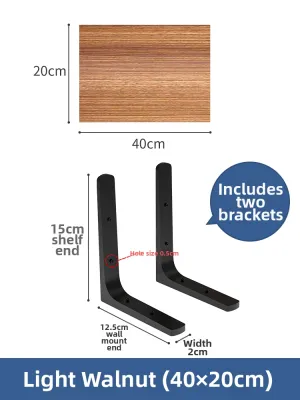
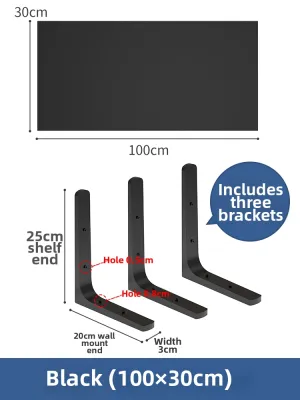
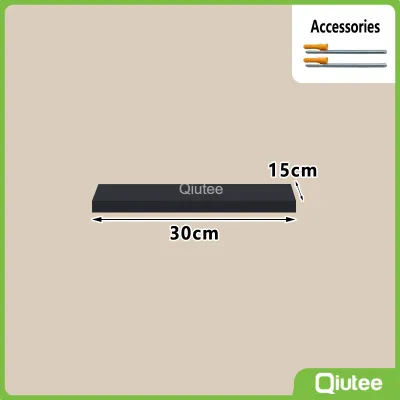
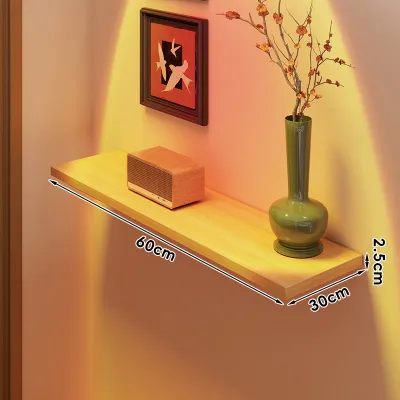
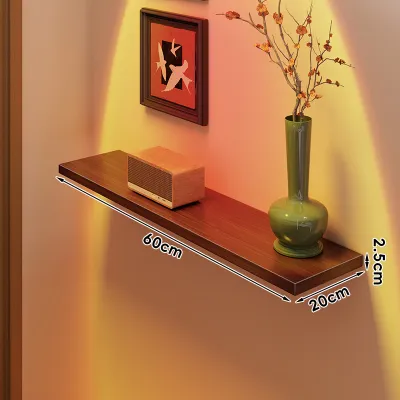
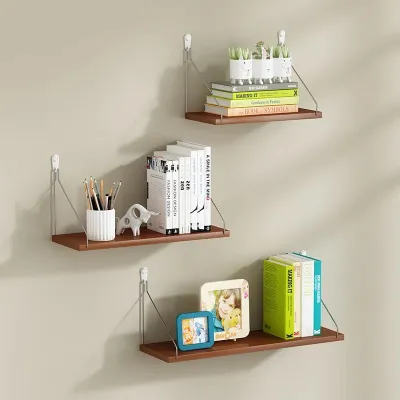
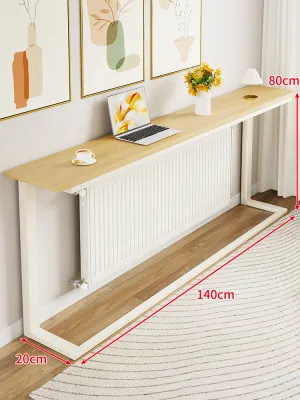
Prices are valid at publication and may change. Please refer to the product page for the latest price.
Finally, establish a realistic budget in ₱ and plan for installation costs. Basic wall shelves can range from under ₱500 for simple engineered wood ledges to over ₱3,000 for solid hardwood or modular metal systems. While DIY installation is common, you must factor in the cost of necessary tools like an electric drill, masonry bits, a spirit level, and a stud finder. If you do not own these tools or feel uncomfortable drilling into your walls, budgeting for professional installation services is a safer and more reliable approach.
Matching Shelf Styles to Your Bedroom Storage Needs
Selecting the right shelf configuration is not just about aesthetics; it directly impacts how efficiently you can organize your bedroom. Different structural designs offer distinct visual weights and storage capacities, allowing you to customize your walls to fit your lifestyle. By understanding the strengths of each style, you can choose a setup that maximizes your vertical space while complementing your bedroom’s interior design.

Floating Shelves for Minimalist Display
Floating shelves feature internal mounting brackets that remain completely hidden inside the shelf body once installed. This design creates a clean, seamless look that is highly favored in modern and minimalist bedroom designs. Because they lack visible supports, these shelves make small bedrooms feel more open and less cluttered by drawing the eye upward without adding visual bulk.
However, the clean aesthetic of floating shelves comes with structural trade-offs. These units are best suited for lightweight items such as small indoor plants, light picture frames, and minimal decorative pieces. Before placing heavier objects on a floating shelf, always check the manufacturer’s specified weight limits and the depth of the internal bracket. Deeper shelves naturally experience more leverage, meaning heavy items placed near the outer edge can cause the shelf to tilt forward or pull away from the wall over time.
Bracket and Ledge Shelves for Books and Decor
For storing heavier items like books, candles, or larger decorative pieces, shelves with visible brackets are the more reliable choice. These brackets, typically made of metal or solid wood, transfer the weight of the shelf and its contents directly to the wall anchors. This structural support significantly reduces the risk of sagging, making them ideal for creating a small bedroom library or holding heavier storage baskets.
Ledge shelves, which feature a flat base and a raised front lip, offer another practical variation for bedroom storage. These are particularly useful for displaying framed art, vinyl records, or children’s books face-out. The front lip acts as a physical barrier, preventing small items, cosmetics, or cylindrical objects like essential oil bottles from sliding off accidentally. This makes ledge shelves an excellent addition near a vanity table or above a study desk.
Corner and Tiered Shelves for Small Spaces
When floor space is limited, corner shelves provide an ingenious way to utilize awkward, underused areas of your bedroom. Standard rectangular shelves can sometimes make a small room feel cramped, but corner units tuck neatly into the intersections of your walls. They are perfect for holding small alarm clocks, charging docks, or nighttime essentials right next to your bed, especially if you do not have room for a traditional nightstand.
Tiered shelves, which feature multiple levels connected by a single frame, offer vertical organization without requiring multiple separate installations. These multi-level units are highly effective for organizing personal care items, skincare products, perfumes, or small daily accessories. By stacking your items vertically, tiered shelves keep your bedroom surfaces clear while keeping your daily routine essentials within arm’s reach.
Evaluating Materials and Finishes for Bedroom Use
The materials and finishes of your bedroom shelves determine not only their visual warmth but also their long-term durability and maintenance requirements. In the Philippines, the tropical climate brings high humidity levels that can severely affect certain furniture materials if they are not properly treated or maintained.
Solid wood shelves, such as those made from mahogany, acacia, or pine, offer natural warmth and unique grain patterns that elevate bedroom aesthetics. While solid wood is highly durable and capable of supporting heavier loads, it is susceptible to expanding and contracting with seasonal humidity changes. To prevent warping or cracking, check product labels to ensure the wood has been properly kiln-dried and sealed with a moisture-resistant varnish or polyurethane finish.
Engineered wood, including Medium-Density Fiberboard (MDF) and particle board, is a popular and budget-friendly alternative to solid wood. These materials are often finished with laminate or veneer sheets to mimic the look of natural wood. However, high humidity can cause engineered wood to swell, bubble, or sag if moisture penetrates the core. When shopping, closely inspect the edge banding and joint quality; seamless, tightly sealed edges are crucial for preventing moisture from entering and compromising the structural integrity of the shelf.
Metal and glass shelves offer a sleek, contemporary look and are highly resistant to humidity-related damage. Metal shelves, particularly those with powder-coated finishes, are incredibly sturdy and easy to wipe clean, though you should inspect them for any chips in the coating that could expose the underlying metal to rust. Glass shelves provide a lightweight, airy feel that works beautifully for displaying delicate items, but they require frequent dusting and must be handled with care to avoid scratches or accidental breakage.
Wall Compatibility and Safe Installation Checks
A wall-mounted shelf is only as secure as the wall it is attached to and the hardware used to mount it. Before you begin drilling, you must identify your bedroom’s wall construction. In many Philippine homes, interior walls are made of solid concrete or concrete hollow blocks, while newer condominiums and renovated spaces often utilize drywall or gypsum board partitions.
For concrete and hollow block walls, you will need a hammer drill, masonry drill bits, and plastic wall plugs (often referred to locally as tox screws) or heavy-duty expansion bolts. Standard wood or drywall screws will not grip concrete and will fail immediately under load. When drilling into concrete hollow blocks, try to align your brackets with the solid sections of the block rather than the hollow cavities to ensure a tighter, more secure grip for your anchors.
If your bedroom walls are made of drywall, you must locate the vertical wooden or metal studs behind the plaster using a stud finder. Mounting your shelf brackets directly into these studs provides the strongest possible support. If you must mount a shelf on a section of drywall where no stud is present, you must use specialized hollow-wall anchors, such as toggle bolts or heavy-duty self-drilling drywall anchors, rather than standard plastic plugs, which can easily pull through the soft gypsum board.
Regardless of your wall type, safety should always be your top priority during installation. Before drilling any holes, use a digital wall scanner or consult your home’s electrical layout to avoid puncturing hidden electrical wiring or water pipes. If you encounter unexpected resistance while drilling, or if you are uncertain about the structural integrity of your wall, stop immediately and consult a qualified professional carpenter or handyman to complete the installation safely.
Building Your Final Shortlist
To narrow down your options from local furniture shops or online marketplaces, start by filtering your choices by exact dimensions. Measure the depth of the shelf carefully; a shelf that protrudes too far into a narrow bedroom walkway can become a constant hazard. Ensure that the length of the shelf fits comfortably within your mapped-out wall space without overlapping electrical outlets or crowding adjacent furniture.
Next, verify the included mounting hardware and installation requirements. Some shelves are sold as complete kits containing all necessary screws, anchors, and brackets, while others require you to purchase mounting hardware separately. Read the product descriptions carefully to see if specialized tools, such as a spirit level or a specific drill bit size, are required for assembly. Choosing a product with clear instructions and complete hardware saves time and prevents frustrating trips to the hardware store.
Finally, review the seller’s return policies and shipping dimensions, especially when ordering online. Large, heavy, or fragile items like glass shelves require careful handling during transit. Check customer reviews for feedback on how securely the seller packages their items to prevent damage during delivery. Understanding the return policy ensures that if a shelf arrives with damaged edge banding, missing hardware, or warped boards, you can easily request a replacement or refund.
Frequently Asked Questions (FAQ)
Can I install wall-mounted shelves in a rented bedroom?
If you live in a rented bedroom, drilling holes into concrete or drywall is often restricted by your lease agreement. For extremely lightweight, specific shelf types—such as small plastic or light wood spice racks used for cosmetics—you may be able to use heavy-duty adhesive strips designed for damage-free hanging. However, you must strictly adhere to the adhesive manufacturer’s weight limits, as overloading these shelves will cause them to fall and potentially damage both your items and the wall paint.
If your landlord permits drilling on the condition that you restore the wall upon moving out, you can install standard wall-mounted shelves. When it is time to vacate the property, remove the shelves and anchors carefully. Fill the remaining drill holes with a high-quality wall putty or spackling compound, smooth it out with a putty knife, and sand it flush once dry. Finally, apply a small touch-up coat of matching wall paint to make the repairs virtually invisible.
How high should I mount shelves above my bed?
Mounting shelves directly above your bed requires careful planning to ensure both safety and comfort. As a general guideline, you should leave at least 60 to 90 centimeters of clearance between the top of your mattress (or your head when sitting upright) and the bottom of the lowest shelf. This generous clearance prevents painful head bumps when you sit up, read, or get in and out of bed.
For safety reasons, you must ensure that any shelf mounted over a sleeping area is anchored exceptionally well into the wall structure. Avoid placing heavy, sharp, or fragile items—such as heavy books, glass vases, or ceramic pots—directly above your head. Instead, use these overhead shelves for lightweight, soft, or shatterproof items like small plush toys, framed canvas prints, or light decorative boxes to minimize the risk of injury in the event of an earthquake or accidental impact.

Community discussion
Share your experience or ask a question. Comments are reviewed before publication.