
Selecting the right wood plank for a bookcase is a balancing act between structural integrity, aesthetic goals, and environmental conditions. The ideal choice depends heavily on what you plan to store, how long the shelves will span, and the climate of the room where the bookcase will stand. In tropical regions like the Philippines, where high humidity is a constant factor, material stability becomes just as critical as load-bearing capacity.
To build a bookcase that stands the test of time, you must evaluate how different materials handle weight without sagging, how they react to moisture, and what kind of effort is required to finish their surfaces. Understanding these characteristics allows you to select the most practical wood plank for your specific woodworking skills and budget.
Core Criteria for Evaluating Bookcase Wood Planks
Load-bearing capacity is the primary engineering challenge of any bookcase. When books are stacked tightly, they exert a continuous downward force that can cause shelves to bow permanently over time. This physical deformation, known as creep, is heavily influenced by the thickness of the wood plank and the distance between vertical supports.
Products mentioned in this guide


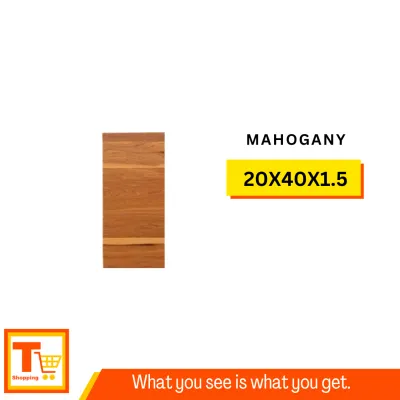
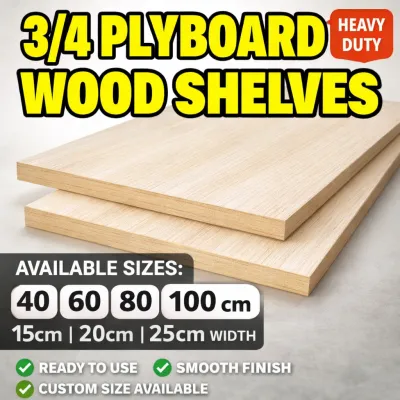
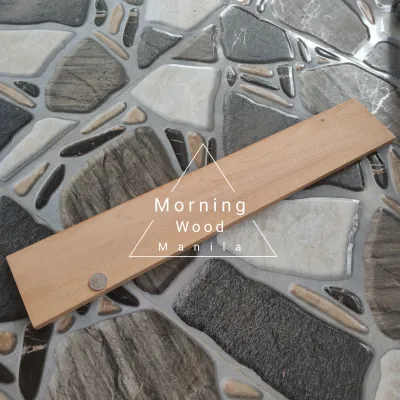
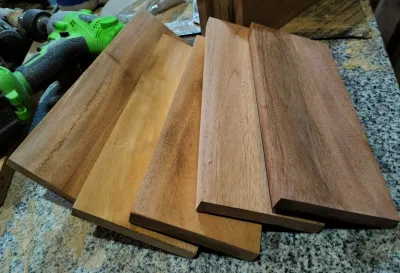
Prices are valid at publication and may change. Please refer to the product page for the latest price.
Moisture and humidity tolerance are vital considerations, particularly in tropical climates. Wood is a natural, hygroscopic material that expands and contracts as relative humidity fluctuates. High moisture levels can weaken certain adhesives used in engineered woods, cause solid wood to warp, or encourage mold growth if the surfaces are not properly sealed.
Finishing requirements and surface durability dictate how well the bookcase handles daily wear and tear. Raw edges of engineered wood planks require edge banding or solid wood trim to prevent moisture intrusion and provide a finished look. The surface must also resist scratches from sliding book covers and heavy decorative objects.
Finally, consider the overall weight, handling, and assembly conditions of the material. Heavy planks like thick MDF or dense hardwoods require robust joinery and secure wall anchoring to prevent tip-over accidents. Before purchasing, verify that the finished dimensions of your bookcase can safely clear doorways, stairwells, or lift access in your building.
Solid Wood for Heavy-Duty and High-End Bookcases
Solid wood planks represent the traditional, premium standard for high-end furniture construction. Hardwoods offer exceptional natural grain patterns and superior structural strength, allowing for longer unsupported shelf spans without noticeable sagging. The inherent density of solid timber provides excellent screw-holding capacity and allows for classic joinery techniques like mortise-and-tenon or dado joints.

However, solid wood is highly sensitive to environmental changes. Without proper kiln-drying and sealing, solid wood planks can warp, cup, or split as they adjust to indoor humidity levels. It is essential to verify with your local supplier that the timber has been correctly treated and seasoned for furniture use.
The weight of solid wood makes handling and assembly a labor-intensive process. Large, built-in bookcases constructed from solid timber are incredibly heavy and difficult to relocate once assembled. This weight also demands that the bookcase be securely anchored to wall studs or masonry to ensure structural safety.
From a financial perspective, solid wood is typically the most significant investment. When planning your project, compare the cost in ₱ per board foot or linear meter at local lumberyards. While the initial expense is higher, the longevity and repairability of solid wood often justify the cost for heirloom-quality furniture.
Plywood for Balanced Stability and Load Capacity
Plywood is widely regarded by professional woodworkers as one of the most versatile and stable materials for building bookcase shelves. Constructed from thin layers of wood veneer glued together in alternating grain directions, plywood possesses remarkable dimensional stability. This cross-grain construction prevents the wood plank from expanding, contracting, or warping, even in highly humid environments.
When selecting plywood, pay close attention to the veneer quality grades, which range from cabinet-grade paintable surfaces to rough utility grades. High-quality plywood features a smooth outer veneer that stains beautifully or accepts paint with minimal preparation. The exposed edges, however, reveal the alternating layers, which must be covered with iron-on veneer edge banding or solid wood trim for a polished appearance.
Plywood offers an excellent weight-to-strength ratio, making it lighter than MDF while maintaining superior load-bearing capacity. It holds screws, nails, and pocket-hole fasteners securely without the risk of splitting or stripping under normal assembly conditions.
Before purchasing, check the supplier labels to ensure you are buying interior-grade plywood with moisture-resistant glues. This classification provides an extra layer of protection against the damp conditions often found in tropical climates, ensuring the layers do not delaminate over time.
MDF for Smooth Painted Finishes and Lighter Loads
Medium-Density Fiberboard (MDF) is a popular engineered wood plank made from compressed wood fibers and resin. Its primary advantage is an ultra-smooth, grain-free surface that is entirely free of knots, voids, or directional grain. This makes MDF the premier choice for bookcases intended for a flawless, high-gloss painted finish.
Despite its smooth appearance, MDF lacks the internal fibrous structure of solid wood or plywood, which limits its structural strength. It is a heavy material that is highly susceptible to sagging under constant loads. Additionally, raw MDF is highly vulnerable to moisture; if water penetrates the surface, the fibers will swell and lose their structural integrity permanently.
To prevent sagging, MDF shelves require strict span limits and frequent vertical supports. Always verify the manufacturer’s load-rating labels and design your bookcase with shorter shelf spans or reinforced support cleats.
Assembly with MDF requires specialized techniques and fasteners. Standard wood screws can easily strip the soft internal fibers or split the edges of the board. Using confirmat screws, dowels, or specialized cam-lock fasteners, along with pre-drilling every hole, is necessary to ensure secure joints.
Particle Board for Budget-Friendly and Low-Stress Shelves
Particle board, or chipboard, is an economical engineered wood plank made from wood chips, sawmill shavings, and synthetic resin. It is commonly sold pre-laminated with melamine or vinyl veneers, offering a wide range of colors and wood-grain patterns that require no additional painting or staining.
While highly cost-effective, particle board has the lowest structural strength of all the common shelving materials. It is highly prone to sagging under the weight of heavy books, making it unsuitable for wide, unsupported shelf spans. The material is also brittle, meaning it can crack or crumble under sudden impacts or excessive loads.
Moisture is the primary enemy of particle board. If the protective laminate or edge banding is chipped or damaged, humidity and liquid spills will quickly cause the core to swell, warp, and disintegrate. Ensuring that all edges are perfectly sealed with intact edge banding is critical to extending the lifespan of the shelf.
Particle board is best reserved for lightweight storage, temporary shelving units, or budget-conscious projects. When planning your build, compare the cost in ₱ of particle board against plywood; while particle board offers immediate savings, the long-term durability of plywood may provide better value over time.
Material Comparison and Decision Framework
To make an informed decision, it is helpful to compare these four wood plank options across their key performance characteristics. The following matrix outlines how each material behaves under typical bookcase conditions:
| Material | Relative Span Limit | Weight | Moisture Resistance | Best Finish Type | Relative Cost |
|---|---|---|---|---|---|
| Solid Wood | Excellent (Long spans) | Heavy | Moderate (Requires sealing) | Stain, Varnish, Oil | High |
| Plywood | Very Good (Medium-Long) | Moderate | High (With MR glue) | Stain, Paint, Veneer | Moderate |
| MDF | Fair (Short spans) | Very Heavy | Low (Must be fully sealed) | Paint, Lacquer | Low to Moderate |
| Particle Board | Poor (Very short spans) | Moderate to Heavy | Very Low (Relies on laminate) | Pre-laminated, Melamine | Low |
Use this simple decision framework to guide your purchase: Choose solid wood if you prioritize premium aesthetics and heavy-duty, long-span capacity. Opt for plywood if you need a balanced, stable, and moisture-resistant material that handles heavy loads reliably. Select MDF if your primary goal is a perfectly smooth, painted finish on shorter shelves. Finally, choose particle board only if you are working within a strict budget in ₱, storing lightweight items, and can guarantee a dry, climate-controlled environment.
Keep in mind that none of these materials will perform well in highly humid areas, such as bathrooms or unventilated basements, without proper protective coatings. Always verify the moisture levels of your room and apply a high-quality sealant or polyurethane finish to protect your investment.
Structural Support and Span Limits for Wood Shelves
Regardless of the wood plank you choose, proper structural support is essential to prevent sagging and ensure the safety of your bookcase. Before cutting your materials, verify the maximum unsupported span recommended by the manufacturer based on the thickness and density of the plank. As a general rule, thinner planks require more frequent vertical supports or shorter spans to maintain their rigidity.
Selecting the right hardware is equally important for shelf stability. Heavy-duty shelf pins, metal brackets, or wooden cleats must be matched to both the shelf material and the expected load. For instance, plywood holds shelf pins securely, whereas MDF may require metal threaded inserts to prevent the holes from wearing out over time.
You can significantly increase the rigidity of any wood plank by applying smart reinforcement techniques. Adding a solid wood face frame or a front edge lip (a vertical strip of wood glued to the front of the shelf) dramatically reduces bending. Similarly, installing a back cleat or securing the shelf to a solid back panel provides continuous support along the rear edge.
For exceptionally heavy loads, oversized built-in units, or complex structural designs, it is wise to consult a professional carpenter. A qualified professional can help calculate exact load capacities, design secure wall-anchoring systems, and ensure your custom bookcase remains safe and stable for years to come.
Frequently Asked Questions (FAQ)
Can I Mix Different Wood Planks in the Same Bookcase?
Yes, mixing different wood planks is an excellent way to optimize your budget, manage the overall weight, and achieve a professional finish. A common approach among furniture builders is to use solid wood or high-quality plywood for the structural outer frame and main load-bearing shelves, while utilizing MDF or thinner plywood for the adjustable shelves and the back panel. This strategy allows you to place the strongest, most warp-resistant materials where they are needed most, while saving money on less visible or lower-stress components.
When mixing materials, it is crucial to match the thicknesses and load ratings of the corresponding parts to maintain structural symmetry. For a cohesive look, ensure that the finishing methods are compatible. For example, if you are painting the entire unit, MDF and plywood can be prepped and painted together to create a seamless, uniform appearance. If you prefer a stained wood look, use matching wood veneers on your engineered panels to align with the natural grain of your solid wood components.

Community discussion
Share your experience or ask a question. Comments are reviewed before publication.