
Finding the right wood shelves for wall installations in a Philippine home office requires balancing aesthetics, structural safety, and environmental durability. In a tropical climate where humidity levels fluctuate significantly, choosing the wrong material or installation method can lead to warped wood, sagging brackets, or damaged walls. Whether you are setting up a dedicated study room in a condominium or organizing a workspace in a provincial home, your shelving must support your workflow without compromising safety.
To make an informed decision, you must evaluate your specific wall type, the weight of the items you plan to store, and the spatial constraints of your room. This guide provides a comprehensive framework to help you select, verify, and safely install wood wall shelves that enhance both the functionality and style of your home office.
How to Evaluate Wood Wall Shelves for Your Workspace
Before browsing online marketplaces or local furniture showrooms, you must establish the physical boundaries of your workspace. Begin by measuring the available wall space with a reliable tape measure. Do not rely on visual estimates, as even a few centimeters of error can cause a shelf to obstruct window clearances, interfere with door swings, or collide with your desk chair. Mark the proposed height and width of the shelves on the wall using painter’s tape to visualize how they will interact with your existing setup.
Products mentioned in this guide


Prices are valid at publication and may change. Please refer to the product page for the latest price.
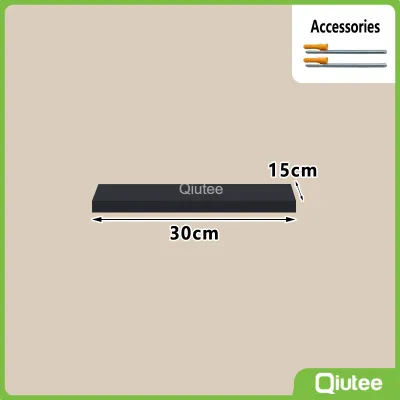
Next, identify your primary storage needs to determine the necessary shelf depth and load capacity. If your goal is to display lightweight decorative items, small indoor plants, or a few reference books, a shallow shelf depth of 15 to 20 centimeters is often sufficient. However, if you need to store heavy binders, reference manuals, or office equipment like a printer, you will require a depth of 30 centimeters or more. Ensure that deeper shelves do not protrude too far into your active workspace, which can make the room feel cramped and restrict your movement.
Finally, consider the visual weight of the shelves and how they impact the perceived size of your home office. Thick, dark solid wood shelves can make a small room feel enclosed, whereas lighter wood tones or thinner profiles preserve an open, airy atmosphere. Balancing the physical dimensions with the visual impact ensures that your shelving solution supports your productivity without overwhelming the room’s design.
Matching Shelf Styles to Home Office Needs
Different home office setups demand different shelving configurations. A minimalist workspace focused on digital tasks has vastly different storage requirements than a research-heavy study filled with physical books and hardware. Selecting the right style involves evaluating the functional trade-offs between clean, hidden-bracket designs and robust, visible-bracket systems.

Your choice should also integrate seamlessly with your existing office furniture and workflow zones. For instance, shelves placed directly above your desk should be easily accessible but styled to prevent visual clutter, while secondary storage shelves on adjacent walls can focus more on high-capacity organization.
Floating and Minimalist Shelves
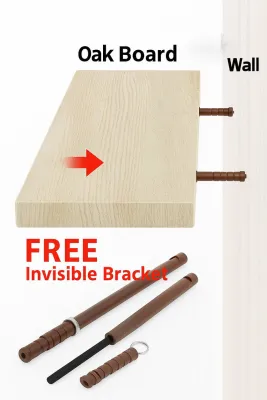
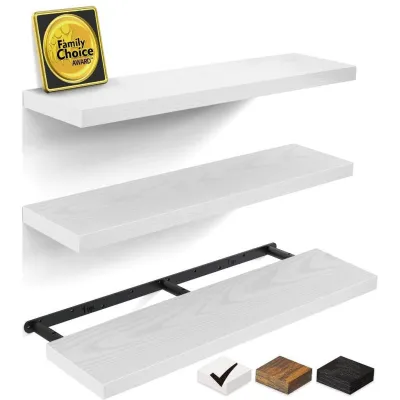
Floating wood shelves feature internal mounting brackets that remain completely hidden inside the shelf body once installed. This design creates a clean, modern aesthetic that maximizes visual space, making it an excellent choice for compact home offices or study corners. Because there are no visible supports, these shelves allow you to utilize the wall space underneath for desk lamps, monitors, or desktop organizers.
However, the minimalist appearance of floating shelves comes with structural trade-offs. Because the shelf relies on internal prongs welded to a metal backplate, the leverage exerted by heavy items is significantly higher than on bracketed shelves. Consequently, floating shelves are best suited for lightweight items, such as framed certificates, small stationery organizers, or a limited selection of books.
To prevent sagging, floating shelves require highly precise installation and a perfectly flat wall surface. Any slight misalignment during the drilling process will cause the shelf to tilt forward, reducing its effective load capacity and causing items to slide off. If you choose this style, ensure your wall can accommodate the deep anchoring required by hidden brackets.
Heavy-Duty Bracket Shelves
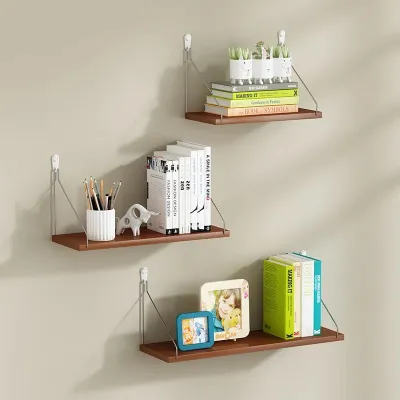
When your home office storage demands include heavy textbooks, multi-volume manuals, or heavy office machinery, visible-bracket shelves are the most reliable option. These systems utilize external brackets made of metal or reinforced wood that mount directly underneath the shelf board. By transferring the downward force of the load directly back into the wall, brackets significantly increase the overall weight capacity of the shelving unit.
Visible brackets also offer greater flexibility in terms of adjustment and customization. Many bracket systems allow you to adjust the height of individual shelves along vertical wall tracks, making it easy to reconfigure your storage as your office needs change. This adaptability is particularly useful if you transition from storing standard files to larger equipment over time.
From an aesthetic perspective, bracket shelves can complement various interior styles. Matte black metal brackets paired with natural wood grain create a popular industrial look, while painted wooden brackets offer a more traditional, built-in appearance. The key is to select brackets that match the structural requirements of your load while coordinating with your office hardware and light fixtures.
Corner and Modular Units
Maximizing the efficiency of a home office often means utilizing awkward or underused spaces, such as corners. Corner wall shelves are specifically designed to fit into 90-degree intersections, turning dead space into functional storage. These units are ideal for holding small office supplies, routers, or decorative items that would otherwise clutter your desktop. However, keep in mind that corner shelves often have limited depth and can be more challenging to align perfectly if your walls are not precisely square.
Modular wall shelf systems offer a highly flexible alternative for growing workspaces. These systems consist of individual shelf components, uprights, and brackets that can be expanded horizontally or vertically over time. If you start with a single shelf, you can easily add matching units as your physical book collection or filing needs expand.
Planning a modular layout requires careful measurement to ensure that the individual pieces align correctly across the wall. You must verify that the wall studs or solid masonry sections are spaced consistently to support the modular uprights. Taking the time to map out a modular configuration beforehand prevents uneven shelving and ensures a cohesive, professional look.
Checking Load Capacity and Material Durability
When selecting wood shelves for wall mounting, you must look beyond aesthetic appeal and verify the structural integrity of the materials. Never guess the load capacity of a shelf based solely on its thickness or visual heft. Always check the manufacturer’s official specifications for the maximum weight rating per shelf and per bracket. Keep in mind that these ratings assume the weight is distributed evenly across the surface; placing a heavy object in the exact center of a long shelf will significantly reduce its safe capacity.
The type of wood used in the shelf construction plays a critical role in its long-term durability and resistance to sagging:
- Solid Wood: Shelves made from solid hardwoods (such as mahogany, tanguile, or acacia) offer exceptional strength and natural beauty. They are highly resistant to bending under heavy loads and can be sanded and refinished if damaged. However, solid wood is sensitive to humidity changes and must be properly sealed to prevent warping.
- Plywood: High-grade plywood, particularly marine plywood, is an excellent choice for humid environments. Its cross-laminated construction provides high dimensional stability, meaning it is less likely to warp or shrink than solid wood. It also holds screws securely and offers excellent load-bearing capacity.
- Engineered Wood: Medium-density fiberboard (MDF) and particleboard are budget-friendly options commonly found in flat-pack furniture. While they offer a smooth, uniform surface, they are significantly heavier and more prone to sagging under continuous loads than solid wood or plywood. If you select engineered wood, inspect the edge banding carefully to ensure no raw fibers are exposed to the air.
In the Philippines, the tropical climate introduces specific challenges for wood furniture. High relative humidity and frequent temperature shifts from air conditioning can cause unsealed wood to absorb moisture, leading to swelling, mold growth, or finish degradation. Inspect the surface treatments of any shelf you consider. Look for polyurethane, lacquer, or specialized wood oils that seal the wood fibers completely. Additionally, if your home office receives direct sunlight, verify that the finish contains UV inhibitors to prevent the wood from fading or cracking over time.
Wall Compatibility and Safe Installation
The safety and stability of your wall shelves depend entirely on how securely they are anchored to your wall. Before purchasing any shelving unit, you must identify the construction material of your office walls. In the Philippines, residential walls are typically made of concrete, concrete hollow blocks (CHB), or plaster-coated masonry. Some modern condominiums and office partitions use drywall (gypsum board) over metal or wooden studs.
Each wall material requires specific tools, drill bits, and anchoring hardware:
- Concrete and Masonry: Mounting shelves on concrete requires a hammer drill, a masonry drill bit, and plastic or metal expansion anchors. These walls offer excellent load-bearing capacity, making them ideal for heavy-duty shelving, provided the anchors are driven deep enough into the solid material.
- Drywall: Drywall cannot support heavy loads on its own. You must locate the vertical studs behind the drywall using a stud finder and mount your shelf brackets directly into them using wood screws. If you must mount a shelf on a hollow section of drywall where no stud is present, you must use specialized hollow-wall anchors, such as toggle bolts or heavy-duty threaded anchors.
Before you begin drilling, it is critical to verify the placement of hidden utilities. Electrical conduits, water pipes, and internet cables are often embedded within walls, especially in high-rise condominiums. Use a multi-scanner or utility detector to map out the area behind the wall. If you are unsure of what lies behind the drilling surface, or if the wall shows signs of cracking, moisture damage, or structural weakness, stop immediately and consult a qualified professional contractor.
Ensure that all mounting hardware matches the specific requirements of your brackets. Using screws that are too short, too thin, or made of soft metal can lead to sudden hardware failure. Always drive screws straight and flush into the anchors; angled screws reduce the holding power of the anchor and can cause the bracket to sit unevenly against the wall.
Sourcing and Pre-Purchase Verification
When shopping for wood shelves for wall mounting, whether through local furniture makers or online marketplaces, thorough pre-purchase verification will save you time and money. Start by cross-checking the exact dimensions provided in the product listing. Pay close attention to the depth of the shelf and the clearance required for the brackets, ensuring they will not interfere with your desk setup, monitor arms, or seating area.
Review the seller’s return policies and warranty terms in detail. Because wooden shelves are heavy and susceptible to damage during transit, ensure the policy explicitly covers shipping damage, warped boards, or missing installation hardware. It is also wise to check if the manufacturer provides clear, step-by-step assembly and installation instructions with the product.
Consider the delivery conditions before finalizing your purchase. Heavy solid wood shelves or pre-assembled modular units may require special handling. Verify if the delivery service will bring the items directly to your door, especially if you live in a multi-story building with lift access restrictions.
Finally, compare the total costs in Philippine Pesos (₱), factoring in shipping fees. Because wood is a dense, heavy material, shipping costs can add a significant premium to the base price of the shelf. Compare these total costs against local custom furniture makers, who may offer solid wood options tailored to your exact dimensions for a comparable overall investment.
Frequently Asked Questions (FAQ)
Can I install wood wall shelves on drywall without studs?
Yes, you can install wood wall shelves on drywall without studs, but you must use specialized hollow-wall anchors such as toggle bolts or heavy-duty steel hollow-wall anchors. Standard plastic plugs will pull out of drywall under minimal weight. When mounting shelves without studs, you must adhere to strict weight limitations, typically keeping the total load under 5 to 10 kilograms depending on the anchor specifications. Always check the anchor packaging for the exact load ratings and ensure they match your drywall thickness. For safety, avoid placing heavy books or expensive equipment on shelves that are not anchored directly to studs.
How do I prevent wooden shelves from sagging over time?
To prevent wooden shelves from sagging, choose materials with high bending resistance, such as solid hardwood or high-grade plywood, and ensure the shelf thickness is appropriate for the span. For standard 1.9-centimeter-thick shelves, brackets should be spaced no more than 60 to 80 centimeters apart. If your shelf span exceeds these guidelines, add a center support bracket to distribute the load. When organizing your home office, place the heaviest items, such as binders and books, directly over or near the bracket supports rather than in the middle of the shelf. Distributing the weight evenly across the entire surface also minimizes localized stress.
Are engineered wood shelves suitable for heavy home office equipment?
Engineered wood shelves, such as those made from MDF or particleboard, are generally not recommended for heavy home office equipment like printers, heavy paper stacks, or large textbook collections. These materials have lower tensile strength than solid wood or plywood, making them highly susceptible to permanent sagging under continuous heavy loads. If you choose to use engineered wood shelves, reserve them for lightweight storage, decorative displays, or small stationery items. If you must place heavier items on them, verify the specific density and ensure the shelf is supported by closely spaced brackets with reinforced metal frames.

Community discussion
Share your experience or ask a question. Comments are reviewed before publication.