
A Lifetime 8ft table is a popular choice for outdoor gatherings, backyard dining, and community events in the Philippines. However, leaving it completely exposed to the elements during the relentless wet season—characterized by torrential rains, high humidity, and sudden tropical storms—requires careful consideration. While these tables are designed with durable materials like high-density polyethylene (HDPE) and powder-coated steel frames, their long-term survival outdoors depends heavily on proactive care, smart placement, and verifying the specific model’s weather-resistance ratings.
Rather than assuming any folding table can withstand months of continuous tropical downpours, homeowners and event organizers must understand the specific environmental stressors at play. Because an 8-foot table has a larger surface area and more structural joints than smaller utility tables, it is naturally more vulnerable to wind, water pooling, and frame stress. By taking practical steps to protect the frame, secure the joints, and maintain the tabletop, you can significantly extend the lifespan of your furniture.
Understanding the Philippine Rainy Season Challenges for Outdoor Furniture
The Philippine rainy season brings a unique combination of environmental stressors that can rapidly degrade outdoor furniture. Unlike mild seasonal showers in temperate climates, the local wet season features prolonged periods of high humidity interspersed with heavy, continuous rainfall. This constant moisture creates a breeding ground for mold, mildew, and algae, which can cling to any textured surface.
Products mentioned in this guide
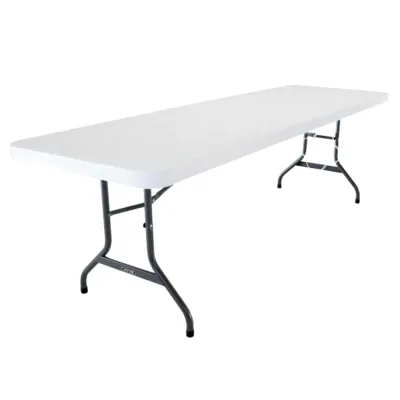
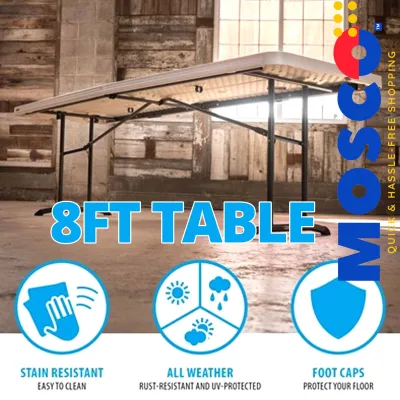
Prices are valid at publication and may change. Please refer to the product page for the latest price.
On a large flat surface like an 8-foot table, water pooling is a significant concern. If the table is not perfectly level, rainwater can collect in the center or along the edges, putting constant pressure on the material and increasing the risk of moisture seeping into the structural joints. Over time, standing water can degrade protective coatings and find its way into the hollow metal legs.
Furthermore, the wet season is often accompanied by strong winds and sudden tropical depressions. An 8-foot table has a substantial surface area, making it highly susceptible to wind uplift. Strong gusts can easily shift, tip, or flip an unsecured table, leading to structural damage, bent legs, or cracked joints.
Debris accumulation is another major factor. Falling leaves, twigs, and dirt from nearby trees often land on the table during storms. When mixed with rainwater, this organic matter forms a damp layer that traps moisture against the tabletop, accelerating the growth of unsightly stains and making deep cleaning much more difficult once the sun returns.
Key Specifications to Check on Your Lifetime 8ft Table
Before deciding to leave your Lifetime 8ft table outdoors, it is essential to verify its specific design limits rather than relying on general assumptions. Start by reviewing the product manual, official tags, or the manufacturer’s website to check for explicit outdoor-use ratings. Not all folding tables are engineered for permanent outdoor exposure, and verifying the brand’s official guidelines is the first step in protecting your purchase.

Examine the tabletop material closely. Most high-quality utility tables utilize high-density polyethylene (HDPE), which is naturally resistant to water absorption. However, you should check the product specifications for UV-inhibitor ratings. In the Philippines, intense sun often immediately follows heavy rain; this rapid cycling between extreme heat and moisture can cause unprotected plastics to warp, fade, or become brittle over time.
Next, inspect the metal frame and leg structures. Look for manufacturer-stated rust-prevention treatments, such as powder coating or galvanization. A high-quality powder-coated finish acts as a barrier, preventing moisture and oxygen from reaching the underlying steel. Check the legs for any scratches, chips, or exposed metal where rust could easily take hold during weeks of high humidity.
Finally, evaluate the joint designs, folding mechanisms, and hardware. The areas where the legs fold and connect to the tabletop are primary water ingress points. Check if the hardware is made of rust-resistant materials or if it features protective caps. If the design allows water to pool inside the hollow legs or around the hinges, moisture can become trapped, leading to internal corrosion that is difficult to detect until structural failure occurs.
Placement and Setup Strategies for Wet Environments
Where and how you position your 8-foot table during the rainy season plays a crucial role in its survival. Always select a level, well-draining surface for setup. Placing the table on grass or soil can cause the legs to sink into the mud, trapping the metal feet in constant moisture and accelerating rust. Opt for concrete patios, tiled areas, or elevated wooden decks where water drains away quickly.
Avoid placing the table directly under trees, roof gutters, or overhanging structures. Trees drop sap, leaves, and acidic organic matter that can stain the tabletop, while roof runoffs concentrate heavy streams of water onto a single spot on the table. This concentrated impact can wear down protective coatings and force water into the joints much faster than natural rainfall would.
Ensure there is adequate clearance around the table to promote natural air circulation. Good airflow is essential for drying out the table’s underside and folding mechanisms after a heavy downpour. Avoid pushing the table flush against solid walls or trapping it in tight, unventilated corners where damp air remains stagnant.
Additionally, consider the table’s overall weight and footprint in relation to seasonal wind gusts. An 8-foot table is relatively long and can act like a sail during high winds. If you must leave it outdoors in an open area, consider anchoring the legs or placing heavy, non-damaging weights near the base to prevent it from tipping over and sustaining structural damage during sudden squalls.
Routine Maintenance and Protection During the Wet Season
A proactive maintenance routine is the most effective way to ensure your table survives the wet months undamaged. Establish a regular cleaning schedule to remove dirt, fallen leaves, and debris from both the tabletop and the folding joints. Allowing organic matter to sit on the surface for extended periods creates a damp microenvironment that encourages mold growth and stains.
Investing in a high-quality, breathable, and waterproof furniture cover is highly recommended. Ensure the cover is specifically sized for an 8-foot table and features secure tie-downs to keep it in place during windy days. A breathable cover is crucial; it prevents external rainwater from reaching the table while allowing any trapped condensation underneath to escape, preventing mold and rust.
After heavy storms, make it a habit to wipe down the table’s surface and frame with a dry microfiber cloth. This simple action accelerates the drying process, prevents water from pooling in crevices, and eliminates the risk of hard water spots or mineral deposits forming as the rainwater evaporates under the tropical sun.
Regularly conduct visual inspections of the entire table structure. Pay close attention to the frame, legs, and folding joints, looking for early signs of oxidation, paint chipping, or joint wear. Catching minor surface rust or coating failures early allows you to address them before they compromise the structural integrity of the table.
When to Move the Table Indoors or Seek Professional Advice
Despite your best efforts, there are times when outdoor exposure exceeds the limits of any utility table. During severe weather alerts, such as typhoons, tropical storms, or extreme flooding warnings, you should immediately move the table indoors or store it in a secure, fully enclosed space. The combination of flying debris, torrential downpours, and extreme wind gusts poses a severe risk of permanent damage or safety hazards.
You must also recognize structural red flags that indicate the table is no longer safe to use. If you notice deep, flaking rust on the frame, compromised folding joints that do not lock securely, or significant warping of the tabletop, stop using the table immediately. These issues compromise the load capacity and stability of the table, making it prone to sudden collapse.
If you encounter conflicting care instructions or if the table requires structural repairs, consult the manufacturer or a qualified furniture professional. Attempting to repair load-bearing joints or applying incompatible rust-treatment chemicals can void your warranty or lead to unsafe usage conditions. Always prioritize safety and manufacturer guidelines when dealing with structural wear.
Frequently Asked Questions (FAQ)
Can I leave the table outside all year round without a cover?
Leaving your table outdoors year-round without a cover is not recommended in the Philippines. Continuous exposure to intense UV rays followed by heavy seasonal rains can accelerate the degradation of both the plastic tabletop and the protective coatings on the metal frame. To protect your investment and maintain the manufacturer’s warranty conditions, always use a fitted, weather-resistant cover when the table is not in use.
How do I clean mold or mildew off the table after the rainy season?
To clean mold or mildew safely, use a mild, manufacturer-approved cleaning solution, such as a mixture of water and mild dish soap. Gently scrub the surface with a soft-bristled brush or sponge to avoid scratching the textured plastic. Avoid using harsh chemicals like undiluted bleach, abrasive scouring pads, or high-pressure washers, as these can permanently damage the tabletop’s protective finish and make it more susceptible to future staining.
Is it safe to use the table if the metal legs show minor surface rust?
Minor surface rust or superficial oxidation on the legs is generally a cosmetic issue and may not immediately affect safety, but it should be addressed promptly. Clean the area and check if the rust is purely on the surface. However, if the rust has penetrated deep into the metal, causing flaking, bubbling, or structural weakness in the joints, stop using the table immediately and consult the manufacturer for repair or replacement options.

Community discussion
Share your experience or ask a question. Comments are reviewed before publication.