
Finding the right center table for a compact living room in the Philippines requires balancing surface utility with clear traffic flow. The ideal dimensions depend directly on your sofa’s scale and the available floor space. This guide walks you through measuring your room, applying proportional rules, and selecting shapes or multi-functional designs that keep a small space feeling open and functional.
In many Philippine homes, the living room serves as a multi-functional hub for family gatherings, entertainment, and relaxation. When space is limited, choosing a center table that is too large can disrupt the flow of the room, making daily movement frustrating. Conversely, a table that is too small might look awkward and fail to provide enough surface area for daily use.
To find the perfect balance, you must look at the relationship between your table, your sofa, and the overall layout of the room. By focusing on precise measurements, clearance zones, and smart design choices, you can select a piece that enhances your living space without overwhelming it.
Products mentioned in this guide
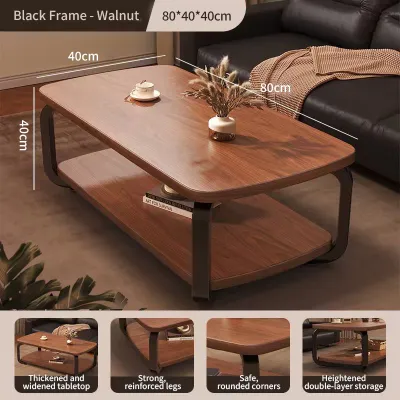
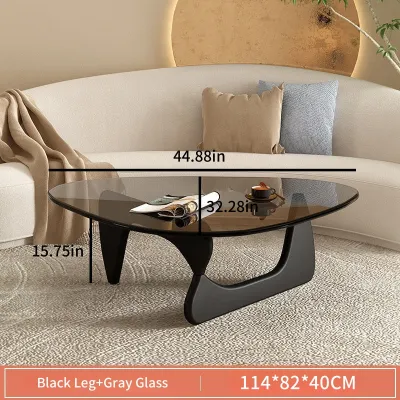
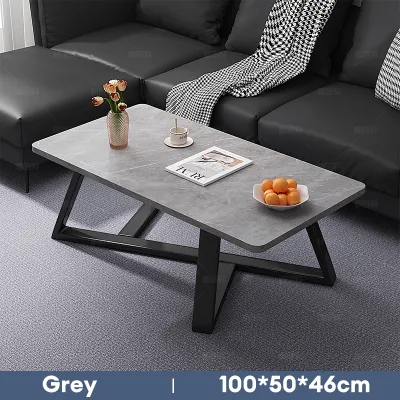
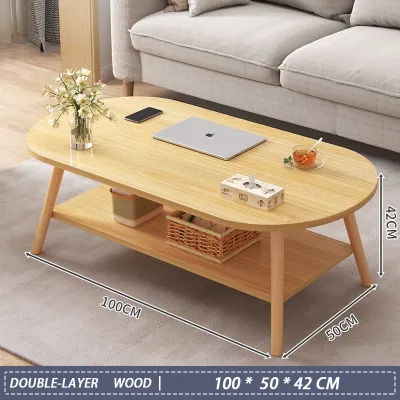
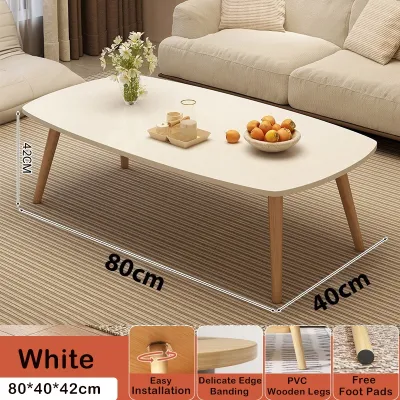

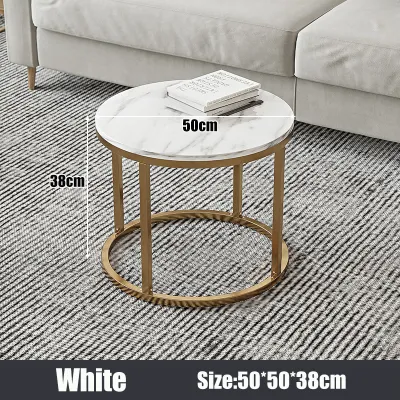
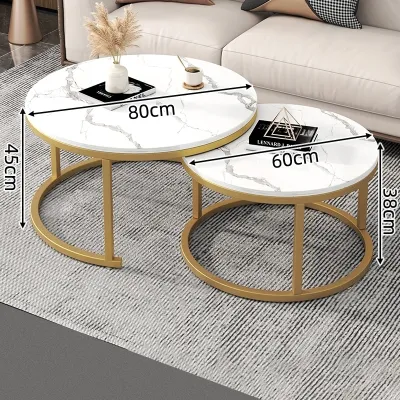
Prices are valid at publication and may change. Please refer to the product page for the latest price.
Measure Your Space and Sofa Proportions
Before browsing online marketplaces or visiting local furniture showrooms, you need to establish the physical limits of your living room. The size of your sofa is the most critical factor in determining the appropriate scale of your center table. A table that is disproportionate to the seating area will make the entire room feel unbalanced.
Start by measuring the total length of your sofa’s seating area, excluding the armrests if they are exceptionally wide. Your center table should ideally be about one-half to two-thirds of this length. For example, if your sofa’s seating section is 180 centimeters long, look for a center table that is between 90 and 120 centimeters in length.
Next, measure the height of your sofa cushions from the floor. This measurement establishes the baseline for your table’s height. A table that is significantly taller than your sofa seat will disrupt sightlines and feel physically intrusive, while one that is too low can be uncomfortable to reach.
Do not forget to map out the surrounding floor space. Measure the distance from the edge of the sofa to other major furniture pieces, such as your TV console, accent chairs, or built-in shelving. You must ensure that there is enough room to walk comfortably and that cabinet doors or drawers can open fully without hitting the table.
In many Philippine urban residences, such as studio or one-bedroom condominiums, the living room is not a completely isolated space. It often shares a floor plan with the dining area or kitchen. Therefore, when mapping your floor space, you must account for the traffic paths leading to these adjacent zones. Ensure your center table does not block the natural walkway from the kitchen to the seating area.
Additionally, consider the placement of floor fans or air conditioning units. If you use a stand fan, you need to leave enough clearance so its oscillation is not blocked by the table or other furniture. Using painter’s tape or flattened cardboard boxes to outline the table on the floor helps you visualize these daily interactions before making a commitment.
Standard Dimensions and Clearance Rules for Compact Rooms
To maintain a comfortable and functional living room, you must adhere to standard ergonomic clearance rules. In a small space, every centimeter counts, and ignoring these guidelines can lead to bumped shins and blocked pathways.

The most important rule is the clearance space between the edge of the center table and the front of the sofa. For comfortable legroom and easy access to seating, aim for a distance of 30 to 45 centimeters. This range provides enough space to sit down and stand up easily while keeping the table within arm’s reach for placing drinks or books.
In the Philippines, it is common for family members or guests to sit on the floor during casual gatherings, using the center table as a low desk or dining surface. If this is a common practice in your household, you may want to adjust your clearance slightly. A clearance of 40 to 45 centimeters provides just enough space for someone to sit comfortably on a floor cushion with their legs tucked under or beside the table.
You also need to consider the clearance between the table and other surrounding objects, such as a television console or a wall. For main walkways, try to maintain a path of at least 60 to 75 centimeters. If your living room is particularly narrow, you may need to compromise slightly, but keeping walkways as clear as possible is essential for a relaxed environment.
Proportional length is another key factor. A center table should never extend beyond the outer edges of your sofa. If you have a sectional sofa with a chaise lounge, the table should not extend past the length of the main seating section, and it should leave ample clearance from the chaise to prevent a trapped feeling.
For height alignment, the top of the center table should sit level with your sofa’s seat cushions, or up to 5 centimeters lower. This alignment creates a clean, horizontal sightline that makes the room feel more spacious. It also ensures that reaching for an item on the table feels natural and ergonomic from a seated position.
Shape and Visual Weight: Maximizing Flow in Tight Spaces
The shape of your center table plays a significant role in how traffic flows through your living room. While rectangular tables are traditional, they are not always the best choice for tight layouts where corners can become physical obstacles.
Round or oval center tables are highly recommended for small living rooms. Because they lack sharp corners, they allow for smoother movement around the seating area, reducing the risk of painful bumps in narrow pathways. Their curved lines also help soften the boxy feel of small rooms, creating a more inviting atmosphere.
Square and rectangular tables can still work if they are scaled correctly, but they require more careful placement. If you choose a rectangular table, ensure it is narrow enough to preserve the necessary clearance on all sides. A slim, elongated design can work well with a standard three-seater sofa in a long, narrow room.
Beyond physical dimensions, the visual weight of the table affects how large your room feels. A solid, dark wood block table will dominate a small space and make it feel cluttered. Instead, look for designs that allow light and air to pass through, such as tables with slender metal legs or open-frame bases.
In tropical climates like the Philippines, high humidity can affect certain furniture materials. When selecting a lightweight, open-frame table, materials like powder-coated metal, treated rattan, or light-colored local hardwoods are excellent choices. These materials resist moisture damage better than cheap particle board while maintaining a light visual footprint.
An open-frame design also makes cleaning much easier. In dusty urban environments, dust can quickly accumulate under and around furniture. A table with high, slender legs allows you to sweep or vacuum underneath without having to lift or slide the heavy piece every time you clean. Glass or clear acrylic tabletops are also excellent options because they do not block your line of sight, making the room feel larger.
Space-Saving and Multi-Functional Center Table Options
When floor space is at a premium, choosing a table that serves multiple purposes or can be easily reconfigured is a smart strategy. Modern furniture designs offer several innovative solutions tailored for compact living.
Nesting tables are an exceptional choice for small Philippine homes. These sets typically consist of two or three tables of graduating sizes that slide completely underneath one another. You can keep them stacked to save space during the day, and then pull them out to expand your surface area when hosting guests or enjoying a family meal.
Another practical option is a lift-top center table. These tables feature a mechanism that allows the tabletop to lift up and forward, bringing the surface closer to you. This is incredibly useful if you frequently use your living room as a home office or a dining area. However, you must ensure there is enough clearance in front of the sofa for the top to lift without hitting your knees.
When evaluating lift-top tables, pay close attention to the quality of the lifting mechanism. In humid environments, metal joints can sometimes rust or become stiff if not properly treated. Look for smooth, high-quality hardware and check the manufacturer’s care instructions to ensure the mechanism remains functional over time.
Storage tables, such as those with built-in drawers, open shelves, or hollow interiors, help keep clutter off the surface. In a small room, keeping remote controls, magazines, and chargers tucked away is essential for maintaining a clean look. Just make sure the storage compartments are easily accessible and do not require moving other furniture to open.
Lightweight or modular designs are also highly functional. A lightweight table can be easily pushed to the side when you need extra floor space for home workouts, play areas, or cleaning. Some modular tables can even be separated and used as side tables next to the sofa when the center space needs to be completely clear.
Common Sizing Mistakes to Avoid
When shopping for a center table, it is easy to get caught up in aesthetics and overlook practical details. Avoiding a few common mistakes can save you from purchasing a piece that does not fit your lifestyle or your home.
One frequent error is choosing a table that is too high for your seating. A tall table can block your view of the television screen and create an awkward, uncomfortable reach. Always measure your sofa’s seat height before shopping, and stick to the rule of keeping the table level with or slightly below the cushions.
Another mistake is ignoring the clearance needed for moving parts. If you choose a table with drawers, cabinet doors, or a lift-top mechanism, calculate the space required when these features are fully extended. Similarly, ensure the table does not interfere with the reclining action of your sofa or the swing radius of nearby doors.
Finally, do not overlook the delivery and assembly path. Many condominium buildings and townhouses in the Philippines have narrow hallways, tight stairwells, and small elevator doors. Before purchasing a large or heavy center table, verify its packaged dimensions to ensure it can be safely transported into your unit. Choosing flat-packed furniture that you assemble inside the room can often solve this issue.
Frequently Asked Questions (FAQ)
Can I use a large center table in a small living room if it has storage?
While a large table with built-in storage might seem like a great way to maximize utility, it can easily overwhelm a compact room. The physical bulk of a large, solid table restricts movement and makes the space feel cramped. It is generally better to choose a smaller center table with open shelving or slender legs, and find alternative storage solutions, such as wall-mounted shelves or a slim console table against the wall.
What is the best center table height for a low-profile sofa?
For a low-profile sofa, the center table should be correspondingly low to maintain proper proportions and ergonomic comfort. Measure the height of your low-profile sofa cushions from the floor, and select a table that is either level with the cushions or up to 5 centimeters lower. Typically, this means looking for tables with a height of 30 to 40 centimeters, which preserves the clean, modern aesthetic of low-profile furniture.

Community discussion
Share your experience or ask a question. Comments are reviewed before publication.