
Selecting the right mattress for a Commander bed in the Philippines requires balancing robust structural support with efficient thermal management. A Commander bed, known for its heavy-duty frame, integrated storage drawers, or solid platform base, places unique demands on a mattress. Because these beds often feature solid wooden or composite platforms rather than open slatted bases, air circulation beneath the mattress is naturally restricted. When combined with the high humidity and elevated temperatures characteristic of the Philippine climate, this setup can easily turn a poorly chosen mattress into a heat trap. To ensure a comfortable night’s sleep, you must understand how different mattress materials—specifically latex, spring systems, and memory foam—interact with tropical heat and humidity.
Understanding Mattress Materials and Heat Retention
The fundamental architecture of a mattress material determines how effectively it sheds body heat and resists the insulating effects of high ambient temperatures. Spring systems, including traditional innersprings and modern pocketed coils, inherently offer the highest level of natural ventilation. The interior of a spring mattress is largely open space, allowing air to circulate freely between the coils with every movement of the sleeper. This continuous air exchange helps dissipate heat and evaporate moisture, preventing the clammy sensation often experienced in humid environments. For a Commander bed with a solid platform base, a spring system helps offset the lack of under-bed ventilation by maximizing airflow within the mattress core itself.
Latex mattresses, whether made from natural, synthetic, or blended latex, offer a different approach to temperature regulation. Natural latex possesses an open-cell molecular structure that does not trap heat as easily as traditional synthetic foams. Additionally, manufacturers mold latex layers with a grid of vertical ventilation channels, commonly referred to as pin-core holes. These holes allow air to flow vertically through the comfort layers when compressed. While latex is denser than a spring system and retains slightly more heat, its high elasticity and open-cell design make it a highly breathable foam option. It provides a supportive, buoyant feel that keeps the sleeper resting on top of the mattress rather than sinking deep into it, which naturally minimizes the surface area of body-to-mattress contact.
Products mentioned in this guide
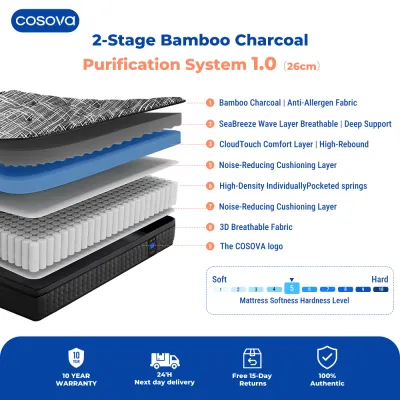
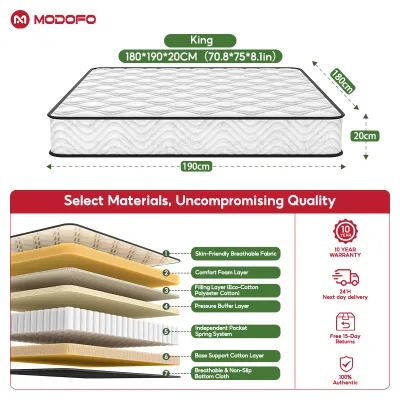
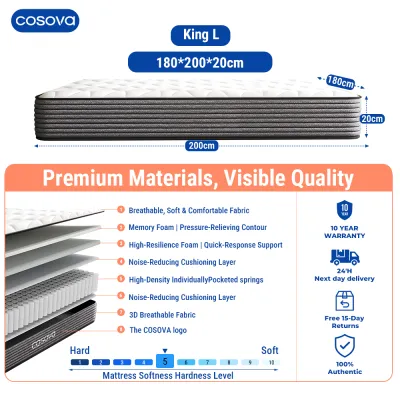
Prices are valid at publication and may change. Please refer to the product page for the latest price.
Memory foam, or viscoelastic polyurethane foam, is historically the most challenging material to use in hot and humid climates. Traditional memory foam relies on body heat to soften and contour to the sleeper’s shape. This close contouring creates a deep cradle that hugs the body, which significantly increases the surface area of contact and traps heat directly against the skin. Furthermore, traditional memory foam has a dense, closed-cell structure that restricts airflow, acting as an insulator rather than a conductor. On a solid-base Commander bed, this heat-retention effect can be amplified, as there is no path for the trapped heat to escape through the bottom of the mattress.
Evaluating Cooling Features for a Humid Climate
To mitigate the heat-trapping tendencies of dense foam layers, mattress manufacturers incorporate specific cooling technologies and design modifications. When evaluating mattresses for a Commander bed, the cover fabric is your first line of defense against tropical heat. Look for breathable, high-performance weaves such as bamboo-derived rayon, Tencel, or specialized cool-to-the-touch synthetic knits. These fabrics are engineered to wick moisture away from the body, facilitating rapid evaporation which is crucial in the humid Philippine climate. A dry sleeping surface feels significantly cooler than one that retains sweat.

Beyond the cover, the comfort layers immediately beneath the fabric play a critical role in thermal regulation. Many modern memory foam and polyurethane foam mattresses feature gel infusions, where cooling gel beads or liquid gel layers are mixed into the foam. These gel particles absorb heat from your body, providing a temporary cooling sensation when you first lie down. However, it is important to verify if the mattress includes aerated foams or open-cell formulations, as gel infusions eventually reach thermal equilibrium with your body heat if there is no airflow to carry the heat away. Advanced designs may also utilize phase-change materials (PCMs) that actively absorb, store, and release heat to maintain a consistent surface temperature.
The base layer construction and edge support also influence how cool a mattress sleeps. In hybrid mattresses, which combine a pocket spring base with foam comfort layers, the perimeter is often reinforced with firmer coils or ventilated foam encasements. Robust edge support prevents the mattress edges from sagging, allowing you to utilize the entire sleeping surface. This is particularly important for Commander beds, where sleepers often sit on the edge of the high platform. Proper edge support ensures you do not sink deeply into the sides, maintaining a flat, well-ventilated sleeping plane and reducing localized heat buildup.
Matching Material to Your Sleep Environment and Habits
Choosing the ideal mattress material is not a one-size-fits-all decision; it depends heavily on your bedroom’s cooling infrastructure and your personal sleep style. By analyzing your daily environment and physical habits, you can select a material combination that works with, rather than against, your body chemistry.
Air-Conditioned vs. Non-Air-Conditioned Rooms
The presence of active air conditioning completely alters how mattress materials behave in a tropical climate. In an air-conditioned bedroom, the ambient temperature and humidity are controlled, allowing memory foam to perform at its best. The cool air keeps the foam from becoming overly soft and mushy, and the active cooling helps dissipate the heat absorbed by the comfort layers. If you sleep with the air conditioner on throughout the night, a high-quality memory foam or hybrid mattress can provide excellent pressure relief without causing excessive overheating.
In contrast, in a non-air-conditioned room relying solely on ceiling fans or open windows, ambient heat and high humidity prevail. Under these conditions, traditional memory foam can become uncomfortably soft, causing you to sink deeper into the mattress and trap more heat. For non-cooled rooms, spring systems or highly aerated natural latex mattresses are highly recommended. These materials do not rely on ambient temperature to maintain their structural integrity, and their superior ventilation properties ensure that any breeze or fan-driven airflow can penetrate the mattress layers to cool your body.
Sleep Position and Heat Contact
Your preferred sleeping position dictates how much of your body remains in direct contact with the mattress surface, directly affecting heat retention. Side sleepers typically sink deeper into the mattress at the shoulders and hips to maintain spinal alignment. This deeper immersion increases the surface area of contact, making them more susceptible to heat trapping in dense foam layers. Side sleepers using a Commander bed should look for mattresses with zoned support or responsive latex comfort layers that cradle the joints without allowing the body to sink into a deep, heat-trapping pocket.
Back and stomach sleepers, on the other hand, distribute their weight more evenly across the mattress surface. They tend to rest on top of the bed rather than sinking into it. For these positions, maintaining a firmer sleeping surface is key to preventing the torso or hips from sagging, which can misalign the spine and create hot spots. A firmer hybrid mattress or a medium-firm latex mattress keeps back and stomach sleepers elevated, maximizing air circulation around the body and utilizing the natural cooling properties of the mattress materials.
How to Verify Specifications Before Buying
Before finalizing your purchase of a mattress for your Commander bed, you must verify several critical specifications to ensure long-term durability and comfort in a tropical environment. First, measure the finished dimensions of your Commander bed frame. Because these frames often feature a recessed platform or a defined wooden lip, the mattress must fit the inner dimensions precisely. A mattress that is even slightly too large will bunch up at the edges, damaging the internal structure, while one that is too small will leave gaps that collect dust and moisture. Additionally, check the load capacity of both the bed frame and the mattress, ensuring the combination can support the weight of the sleepers without compromising stability.
Next, carefully read the manufacturer’s labels and product specifications to confirm the exact material composition. If you are purchasing a latex mattress, verify whether it is 100% natural latex or a synthetic blend, as natural latex generally offers superior breathability and durability in humid conditions. For foam layers, look for certifications regarding chemical emissions and material safety, and check the density ratings to ensure the foam will not degrade rapidly under high humidity. Avoid relying on vague marketing terms like “cooling technology” without checking for concrete details such as gel infusions, open-cell structures, or specific cover fabric compositions.
Warranty terms require close inspection, particularly regarding how the manufacturer handles issues related to the Philippine climate. High humidity can accelerate the softening of polyurethane foams and encourage the growth of mold if the mattress is not properly maintained. Ensure the warranty explicitly covers premature sagging (usually defined as an indentation of a specific depth, such as 1.5 inches or more) and check if the warranty is voided by using the mattress on a solid platform base like that of a Commander bed. Finally, evaluate the total cost in ₱, factoring in delivery fees, assembly conditions, and whether the retailer offers a risk-free trial period with a clear return policy, allowing you to test the mattress’s heat retention in your own home.
Frequently Asked Questions (FAQ)
Does high humidity damage memory foam or latex mattresses?
Yes, persistent high humidity can negatively impact both memory foam and latex mattresses if moisture is allowed to accumulate. Excess moisture can penetrate the comfort layers, leading to the growth of mold, mildew, and dust mites, which compromise both hygiene and material integrity. Because Commander beds often feature solid platform bases that block bottom-up airflow, it is crucial to use a mattress protector that is both waterproof and breathable. To maintain your mattress, regularly rotate it head-to-toe according to the manufacturer’s care instructions, and occasionally strip the bedding on dry, sunny days to let the mattress air out. If possible, use a dehumidifier in the bedroom to keep ambient moisture levels within a safe range.
Can I use a cooling mattress topper on a Commander bed?
You can use a cooling mattress topper on a Commander bed, provided it is compatible with your existing mattress and does not compromise your sleeping posture. When selecting a topper, look for highly breathable materials such as ventilated latex, open-cell gel memory foam, or specialized down-alternative fibers wrapped in moisture-wicking fabric. Ensure the topper is secured firmly to the mattress using elastic corner straps or a non-slip backing to prevent it from shifting on the solid platform frame. Finally, check your base mattress warranty before adding a topper; while a topper does not typically void a warranty, using an incompatible or excessively heavy topper could affect the underlying support layers over time.

Community discussion
Share your experience or ask a question. Comments are reviewed before publication.