
To accommodate a large family of 6 to 10 people in a Filipino household, a folding dining table must serve two distinct roles. It must provide a spacious, stable surface for large family gatherings—such as Sunday lunches, birthday celebrations, and holiday feasts—while easily collapsing into a compact footprint to preserve valuable floor space during daily use. Finding the right balance between spatial efficiency and structural integrity requires looking beyond advertised seating capacities to examine folding mechanisms, spatial clearances, and material durability.
Selecting a table that successfully transitions between these two states involves understanding how different designs perform under regular use. In tropical climates where humidity and temperature fluctuate, the choice of materials and hardware becomes even more critical to prevent warping and joint failure. By focusing on practical measurements, structural stability, and maintenance, you can select a folding dining table that remains safe, functional, and attractive for years to come.
Choosing the Right Folding Mechanism for 6 to 10 Seats
The mechanism that allows a dining table to expand and contract determines both its ease of use and its ultimate stability when fully extended. For tables intended to seat up to 10 people, the mechanism must support a significant span without sagging or wobbling. The three most common designs for large-capacity tables are butterfly extensions, drop-leaf systems, and gateleg configurations, each offering distinct advantages and trade-offs.
Products mentioned in this guide
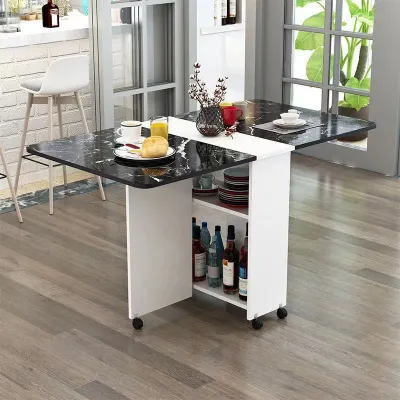
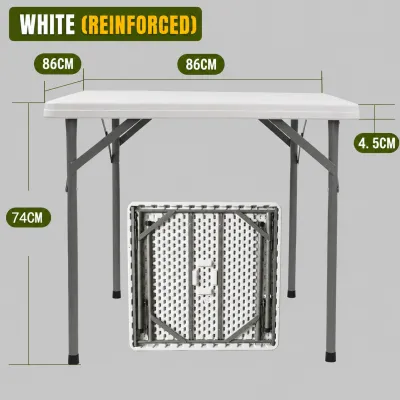
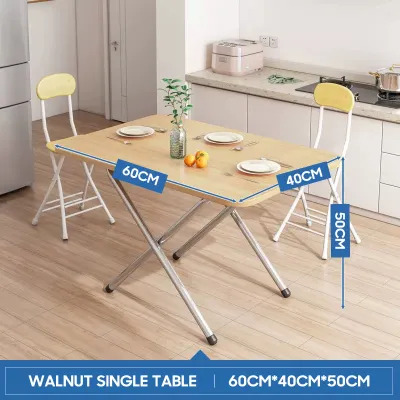
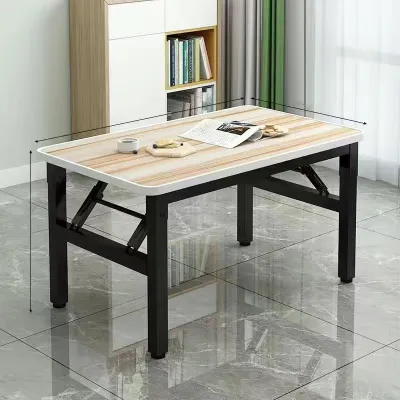
Prices are valid at publication and may change. Please refer to the product page for the latest price.
Butterfly extension tables feature a hidden leaf stored in a compartment beneath the main tabletop. When the table ends are pulled apart, the leaf pivots and unfolds like butterfly wings to fill the center gap. This design is highly favored for formal dining because the extension leaf is protected from dust and light exposure when stored, ensuring the wood or laminate ages evenly with the rest of the table. Because the mechanism relies on internal tracks and hinges, it provides a very flat, seamless dining surface, though it requires smooth, high-quality glides to operate without sticking.
Drop-leaf tables utilize hinged panels on one or both ends of the table that hang vertically when folded and lift up to be supported by pull-out wooden slides or metal brackets. This mechanism is mechanically simple and highly reliable, with fewer moving parts to maintain. However, when the leaves are folded down, they remain visible on the sides of the table, which can limit legroom for those sitting at the ends during daily, smaller meals. Additionally, the support brackets must be robust enough to prevent the outer edges from sloping downward under the weight of heavy serving dishes.
Gateleg tables offer the most dramatic transformation, often folding down to a narrow console table just a few decimeters wide, while expanding to a full-length dining surface. This is achieved by pivoting one or more legs outward like a gate to support the large hinged leaves. While gateleg tables are exceptionally space-efficient, the presence of multiple moving legs can severely restrict knee room and chair placement when the table is fully opened. Guests seated along the sides may find themselves constantly negotiating their leg positioning around the supporting wooden frames.
Leg placement and base configuration play a crucial role in determining actual seating comfort, regardless of the folding mechanism. Standard four-leg tables often limit where chairs can slide in, especially near the corners, which can make seating 10 people feel cramped. Trestle bases or central pedestal designs with extending slides are generally superior for large groups because they eliminate corner legs, allowing chairs to be distributed evenly around the entire perimeter of the table.
Measuring Your Space for Folded and Expanded Footprints
Before purchasing a folding dining table, you must measure your dining area to ensure it can accommodate both the daily folded footprint and the fully expanded layout. A table that comfortably seats 10 people typically requires a fully extended length of 220 to 240 centimeters and a width of at least 90 to 100 centimeters. Failing to account for the surrounding space can result in a dining room that feels congested and difficult to navigate during family gatherings.

To calculate the necessary clearance, allow at least 70 to 90 centimeters of open space behind each chair when it is pulled out from the table. This clearance ensures that guests can sit down and stand up comfortably without bumping into walls, sideboards, or other furniture. For high-traffic areas, such as the pathway between the dining room and the kitchen, try to maintain a clear walkway of at least 90 centimeters even when the table is fully extended and chairs are occupied.
In open-plan living spaces or compact urban condominiums, the everyday folded placement of the table must be carefully planned. When collapsed to its smaller size, the table should sit flush against a wall or serve as a console behind a sofa, ensuring it does not block natural walking paths or emergency exit routes. If the table is kept in the center of the room, verify that it leaves enough space for daily household activities without requiring family members to squeeze past it.
Do not overlook the physical constraints of delivering and moving a large piece of furniture into your home. Measure the width and height of all doorways, hallways, stairwells, and elevator cabins through which the table must pass during delivery. Identify the table’s largest rigid dimension—which is often the main tabletop frame or the non-detachable base—and compare it against these entry points to avoid the frustration of a table that cannot fit into your living space.
Checking Stability and Weight Capacity for Large Spans
A folding dining table must be exceptionally stable to ensure safety when fully extended to its maximum length. Because a table seating 10 people spans a significant distance, any weakness in the center joints or the supporting base can lead to sagging, wobbling, or even structural failure when weight is applied to the outer edges. Inspecting the structural design and hardware is essential before making a decision.
Evaluate the base design to identify potential tip-over risks, particularly when guests lean on the extended leaves. Trestle bases are highly stable for long spans because they distribute the weight across two wide, solid supports connected by a heavy center rail. If you choose a pedestal base, ensure the central column is heavy and features a wide, sprawling foot design that prevents the table from tipping when heavy items are placed on the far ends of the extension leaves.
High-quality hardware is the foundation of a stable folding table. Look for heavy-duty steel locking pins, robust metal alignment clips, and solid support brackets underneath the tabletop. These components lock the extended leaves tightly to the main frame, preventing the seams from separating or shifting during use. Additionally, adjustable leg levelers are highly beneficial, as they allow you to compensate for slightly uneven tiled or wooden floors, eliminating annoying wobbles.
Rather than assuming a table is strong simply because it has a thick tabletop, verify the manufacturer’s stated weight limits and structural warranties. A thick top made of low-density materials can actually add unnecessary dead weight to the frame, putting more stress on the hinges. The true load-bearing capacity comes from the strength of the underlying support rails and the quality of the joinery connecting the legs to the tabletop frame.
Evaluating Tabletop Durability and Joint Maintenance
The tropical climate of the Philippines, characterized by high humidity and seasonal temperature shifts, presents unique challenges for wooden and engineered furniture. High moisture levels in the air can cause solid wood to expand and contract, which may lead to warping, cracking, or misaligned folding seams over time. Therefore, evaluating the surface treatments, edge banding, and joint construction is critical for long-term durability.
When assessing engineered wood tables, such as those made of medium-density fiberboard (MDF) or particleboard, pay close attention to the quality of the edge banding. Cheap or poorly applied edge banding can easily peel when exposed to humidity or accidental liquid spills, allowing moisture to penetrate the core and cause the tabletop to swell and crumble. Look for tables with high-pressure laminate (HPL) surfaces and seamless, moisture-resistant edge seals that protect the underlying material.
For solid wood tables, ensure the timber has been properly kiln-dried and sealed with a high-quality, moisture-resistant finish such as polyurethane or lacquer. This protective barrier minimizes the wood’s absorption of atmospheric moisture, reducing the risk of warping. Additionally, inspect the hinges and folding joints to ensure they are made of corrosion-resistant materials like stainless steel or solid brass, which will not rust or seize up in humid environments.
Maintaining your folding dining table involves simple, regular care to prevent premature wear on the moving parts and surfaces. Avoid placing hot serving dishes directly onto the tabletop; always use heat-resistant trivets or hot pads to protect the finish from heat damage and moisture rings. Wipe up liquid spills immediately, especially condensation from cold beverage pitchers, to prevent water from seeping into the folding seams and loosening the glue joints.
Periodically inspect the underside of the table to check the tightness of all screws, bolts, and hinge mechanisms. The physical action of folding and unfolding the table, combined with the natural movement of the wood, can cause hardware to loosen gradually over time. Keeping a regular schedule to gently tighten these fasteners will prevent unnecessary strain on the joints, ensuring the table remains rigid, safe, and ready for your next large family gathering.
Frequently Asked Questions (FAQ)
Can a folding table safely hold heavy buffet dishes or appliances?
Yes, a high-quality folding table can safely hold heavy buffet dishes and small kitchen appliances, provided you follow proper weight distribution practices. Always place the heaviest items, such as large rice cookers, beverage dispensers, or heavy ceramic serving platters, over the main supported base of the table rather than on the outer edges of the extended leaves. Check the manufacturer’s specified weight capacity for the extended sections, as these areas rely on hinges and support brackets that have lower load limits than the central frame. Distributing the weight evenly across the entire surface prevents excessive stress on the joints and minimizes the risk of sagging or tipping.
How do I prevent the folding joints and hinges from loosening over time?
To prevent folding joints and hinges from loosening, establish a routine maintenance check every three to six months. Gently tighten all connecting screws and bolts underneath the tabletop using the appropriate tools, taking care not to overtighten and strip the wood or metal threads. If the hinges begin to squeak or feel stiff, apply a small amount of dry silicone lubricant, which lubricates the moving parts without attracting dust or grime that can cause wear. Additionally, always lift the table slightly when moving or repositioning it; dragging a fully extended table across the floor puts immense lateral pressure on the legs and folding joints, which can quickly loosen the hardware and damage the structural alignment.

Community discussion
Share your experience or ask a question. Comments are reviewed before publication.