
Hosting large family gatherings in the Philippines is a cherished tradition, but finding space for everyone around the dining table can be a challenge. Whether you are preparing for a Sunday salo-salo, a birthday celebration, or a holiday feast, accommodating six to ten guests often requires a flexible furniture solution. A portable foldable table offers a practical balance, expanding to host a crowd and collapsing into a compact footprint when the festivities end.
To find the right table for your home, you must look beyond simple seating capacity. The chosen table must withstand tropical humidity, fit within your available storage spaces, and remain stable under the weight of heavy serving dishes. By focusing on structural integrity, mechanism types, and practical measurements, you can select a versatile piece of furniture that serves your family for years without cluttering your daily living space.
Key Criteria for Selecting Large-Capacity Foldable Tables
When evaluating a foldable table for a large family, seating capacity must be balanced against the physical dimensions of your dining area. A table designed for six to ten people requires a significant amount of surface area when fully extended. You need to verify that the expanded length allows for comfortable elbow room, typically requiring at least 60 centimeters of width per person. If the table legs are positioned at the outer corners, you will have more flexibility in chair placement, whereas inset legs or trestle bases might limit where guests can comfortably sit.
Products mentioned in this guide
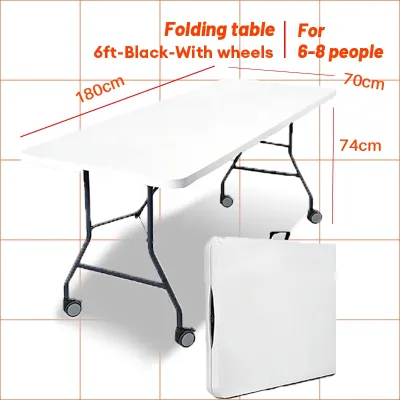
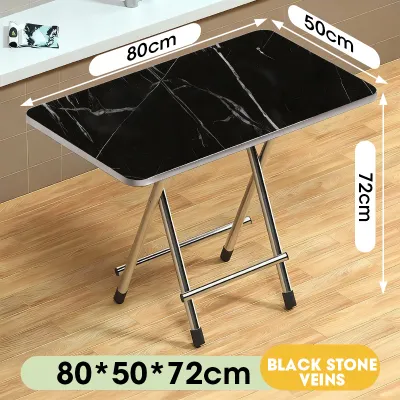
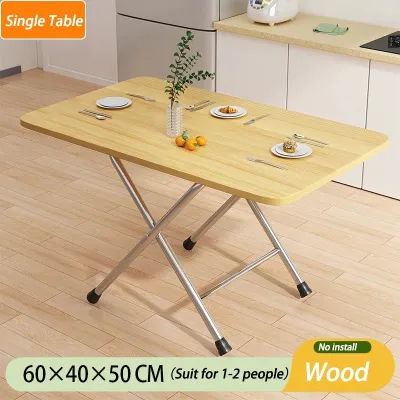
Prices are valid at publication and may change. Please refer to the product page for the latest price.
The folded footprint is just as critical as the expanded size. Before making a purchase, measure the exact dimensions of your intended storage area, whether it is a utility closet, a gap behind a wardrobe, or a dedicated corner in the kitchen. A table that is too bulky when collapsed defeats the purpose of a space-saving design. Look for models that fold flat or compress into a narrow console profile that can double as a side table when not in use.
Material selection directly impacts how well the table handles the demands of busy Filipino households. High humidity levels can cause untreated wood to warp and low-grade metal parts to rust over time. Tabletop surfaces should be resistant to heat, moisture, and scratches, especially when hosting meals with hot serving pots and accidental spills. Engineered wood with a high-quality laminate finish, heavy-duty plastics, or treated hardwoods are excellent options that offer durability and easy cleanup.
Portability features determine how easily you can transition the table from storage to dining mode. A large table capable of seating ten people can be heavy and awkward to carry alone. Look for built-in carrying handles, lightweight yet sturdy frames, or integrated lockable casters that allow you to roll the table into position. If you plan to move the table between different rooms or take it outdoors for backyard gatherings, manageable weight and secure locking mechanisms in the folded position are essential.
Types of Foldable Mechanisms for 6 to 10 Seats
The mechanism that allows a table to expand dictates its overall stability, setup time, and storage shape. Different designs cater to different spatial constraints and usage frequencies. Understanding these mechanisms helps you choose a table that fits your physical space and matches your willingness to assemble and disassemble the setup for every family gathering.

Drop-Leaf and Gateleg Designs
Drop-leaf and gateleg tables are classic space-saving solutions that feature a fixed center section with hinged panels on either side. To expand the table, you lift the hinged leaves and swing out supporting legs—often resembling a gate—from beneath the main frame. This design is highly versatile because it allows you to raise just one leaf for smaller daily meals or both leaves to accommodate a larger crowd of up to eight or ten diners.
When planning for a gateleg table, you must account for the floor clearance required for the swinging legs. The path of the supporting legs must remain clear of rugs, floor transitions, and chair bases during setup. Additionally, because the outer leaves rely on these swing-out supports, you must verify the stability of the hinges and the locking pins that hold the legs in place. Unsupported edges can sag or tip if guests lean heavily on the ends of the table, making robust hardware a necessity for safety.
Expandable Console and Butterfly Leaf Tables
For a more seamless aesthetic, butterfly leaf and expandable console tables offer advanced engineering that hides the extension components when they are not in use. A butterfly leaf table features a split tabletop that slides apart on metal glides, revealing a hinged leaf stored in a compartment beneath the surface. You simply lift and unfold the leaf to fill the gap, creating a continuous, sturdy dining surface that can easily seat eight to ten people.
Expandable console tables take space-saving to the extreme, starting as a narrow hallway console table and extending via heavy-duty telescopic metal rails. You can add multiple individual leaf panels to customize the length of the table based on your guest count. While these tables offer incredible flexibility, they require separate storage space for the extra leaf panels when the table is collapsed. They also require more setup effort and a highly rigid rail system to prevent the center of the table from sagging under the weight of a full family meal.
Space, Stability, and Safety Checks Before Buying
Before finalizing your purchase, conducting a thorough physical assessment of your dining space and the table’s structural specifications is vital to avoid safety hazards. Start by measuring your dining room’s dimensions and comparing them to the table’s fully expanded measurements. You must ensure there is at least 90 centimeters of clearance between the edge of the table and the nearest wall or piece of furniture. This clearance allows family members to pull out their chairs and walk behind seated guests without difficulty. Do not forget to measure your doorways, hallways, and stairwells to guarantee the table can be delivered and moved into your home.
Base and leg stability are paramount when hosting large groups, especially if young children or elderly family members are present. Look for tables with a wide stance and robust cross-bracing between the legs, which minimizes side-to-side wobble. A weighted base or strategically positioned center legs can prevent the table from tipping if someone accidentally leans on the edge while standing up. Avoid tables with flimsy, thin metal legs that flex under pressure, as they are prone to buckling over time.
Inspect the joints, hinges, and locking mechanisms closely. High-quality foldable tables utilize heavy-duty steel or brass hardware rather than plastic connectors, which degrade quickly under tension. Look for safety features such as locking pins, tension latches, or automatic locks that prevent the table from accidentally folding or collapsing during use. Ensure that the folding action is smooth and does not present pinching hazards for your fingers during setup and teardown.
Finally, always verify the manufacturer’s specified weight capacity rather than making assumptions based on the table’s size. A large table might look sturdy, but its actual load limit depends entirely on the strength of its hinges and support rails. Look for explicit weight ratings on the product label or specification sheet. Keep in mind that a full spread of heavy serving dishes, plates, glassware, and the occasional leaning guest can easily add up to a significant amount of weight, requiring a high load capacity for peace of mind.
Building Your Shortlist: Where to Look and What to Verify
When you are ready to shop, navigating online marketplaces and physical showrooms requires a strategic approach to find the greatest value. On major ecommerce platforms, avoid relying solely on generic search terms like “foldable table portable.” Instead, use specific filters to narrow down your options by expanded dimensions, tabletop materials, and folding mechanisms. Carefully read the product descriptions and technical specifications to confirm the table actually accommodates your target capacity of six to ten seats, as some listings use misleading photos.
As you compare different options, look at the total cost in ₱, keeping in mind that shipping fees for oversized, heavy furniture can add a substantial amount to the final price. Some online sellers offer lower base prices but charge high delivery fees due to the weight of the package. Factor these shipping costs into your budget to make an accurate price comparison. Additionally, check if the seller offers home delivery services that include carrying the heavy package up stairs or into your specific room.
If possible, visit physical furniture showrooms to perform hands-on testing. A physical inspection allows you to evaluate the build quality in ways that online photos cannot show. Test the folding mechanism yourself to see if it operates smoothly without sticking or requiring excessive force. Gently shake the table when it is fully extended to check for wobbling or loose joints. Pay close attention to the quality of the finish and the sturdiness of the legs when locked into place.
Before checking out, review the retailer’s return policies and warranty coverage, particularly for moving parts like hinges, slides, and telescopic rails. Folding tables have more failure points than static furniture, making a reliable warranty essential. Verify whether the table arrives fully assembled or requires extensive DIY setup. If assembly is required, check if the package includes all necessary tools and clear instructions, or if you need to hire a professional assembly service to ensure the table is put together safely.
Maintenance and Care for Folding Joints and Surfaces
Proper maintenance is key to ensuring your foldable dining table remains functional and safe for many years of family gatherings. The moving parts of folding tables are susceptible to dust, dirt, and food crumbs, which can accumulate in the hinges, tracks, and telescopic rails. Regularly clean these areas using a soft brush or a vacuum cleaner attachment to remove debris that could jam the mechanism or cause premature wear on the hardware.
Lubrication is essential for keeping metal moving parts operating smoothly, especially in the humid tropical climate of the Philippines, which accelerates friction and rust. Consult the manufacturer’s guidelines to determine the appropriate lubricant for your table’s hardware. A light application of silicone spray or dry lubricant on the hinges and sliding tracks once or twice a year can prevent squeaking and ensure easy folding. Avoid using heavy oils or grease, as they tend to attract dust and create a sticky buildup.
Protecting the tabletop surface preserves both its appearance and structural integrity. Always use heat-resistant trivets, placemats, and coasters under hot serving dishes, warm plates, and cold drinks to prevent heat marks, water rings, and moisture damage. Clean spills immediately with a damp, soft cloth and mild soap, avoiding harsh chemical cleaners or abrasive scrubbing pads that can strip the protective finish. Be particularly careful around the seams and joints of the table, as standing water can seep into these gaps and cause the underlying material to swell or warp.
When the table is not in use, store it in a dry, well-ventilated area away from direct sunlight and extreme moisture. Storing a folding table in a damp utility room or a humid garage can lead to mold growth on wooden surfaces and rust on metal hardware. If you store the table vertically, ensure it is securely positioned and locked so it cannot tip over and cause injury or damage. Covering the folded table with a breathable fabric sheet can protect it from dust and scratches while in storage.
Frequently Asked Questions (FAQ)
How much weight can a typical foldable table support?
The weight capacity of a foldable table varies significantly depending on its structural design, materials, and support mechanisms. While some heavy-duty utility tables can support substantial loads, lightweight portable models or highly extended console tables may have much lower weight limits. To ensure safety, always check the manufacturer’s explicit load rating on the product label or specification sheet before loading the table. When hosting a meal, distribute the weight of heavy serving dishes evenly across the surface and advise guests to avoid leaning heavily on the extended edges or leaves, which are the most vulnerable parts of the structure.
Are portable folding tables stable enough for hot dishes?
The stability of a portable folding table during a meal depends on its base width, leg locking mechanisms, and overall build quality rather than the folding feature itself. High-quality tables with secure locking pins and wide stances are stable enough to hold a full spread of food. However, regardless of the table’s stability, you should always use heat-resistant trivets or hot pads under serving dishes to protect the tabletop finish from heat damage. For maximum safety, place the heaviest serving pots near the center of the table or directly over the main leg supports rather than on the outer extended leaves.

Community discussion
Share your experience or ask a question. Comments are reviewed before publication.