
Finding a sofa bed with a frame that can comfortably accommodate a large family in the Philippines requires balancing daily seating comfort, long-term durability, and spatial efficiency. For households with three to five members, a sofa bed serves as a primary gathering hub by day and a supportive sleeping surface by night. To make a lasting investment, you must look beyond aesthetic appeal and focus on structural frame materials, precise spatial dimensions, and robust conversion mechanisms that can withstand the demands of a busy household in a tropical climate.
Selecting the right furniture piece involves understanding how a sofa bed integrates into your living space and daily routine. Because large families place continuous physical stress on living room furniture, the frame construction and mechanism design dictate whether the piece will last for years or fail after a few months of use. By evaluating your home’s physical layout, verifying material specifications, and matching the sofa bed style to your family’s specific habits, you can secure a highly functional piece that maximizes both comfort and utility.
Key Dimensions and Space Requirements for 3-5 Seaters
Before browsing local furniture showrooms or online catalogs, you must establish the exact physical boundaries of your living room. A sofa bed designed for three to five people requires a substantial footprint, and underestimating the space needed for both seating and sleeping configurations is a common post-purchase regret. You must measure your room with a physical tape measure, mapping out both the closed sofa dimensions and the fully extended bed dimensions on your floor using masking tape.
Products mentioned in this guide
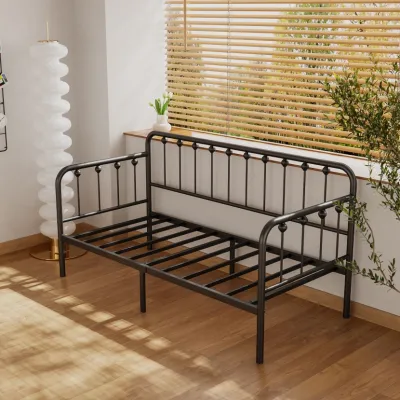
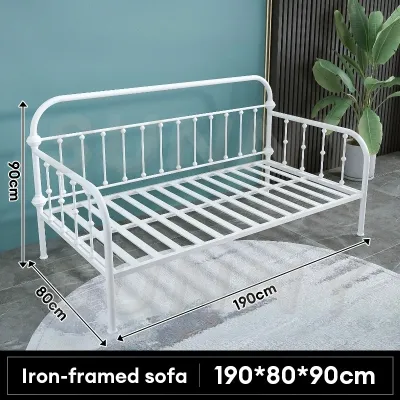
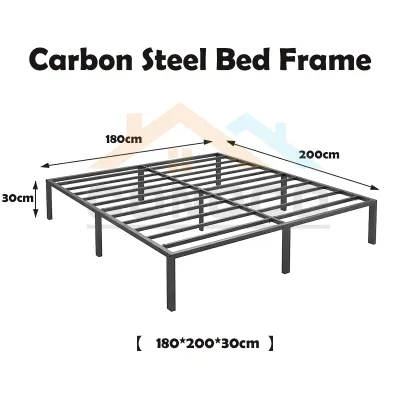
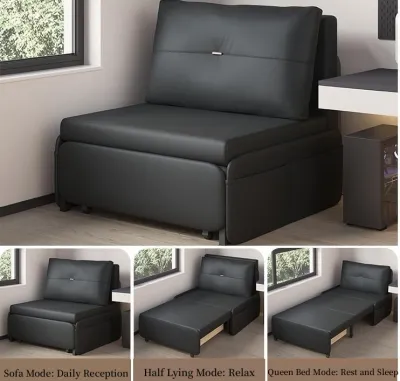
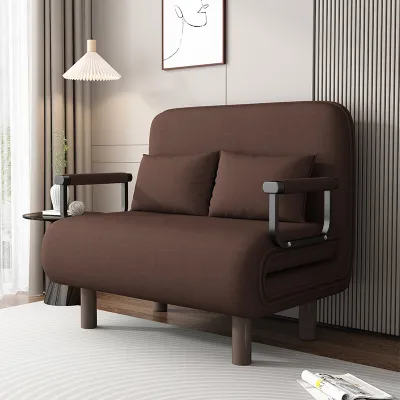
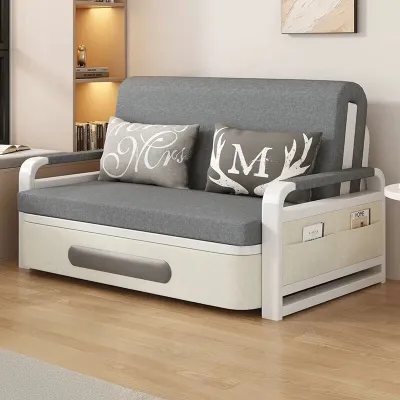
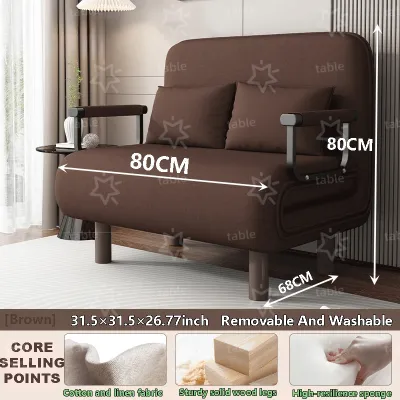
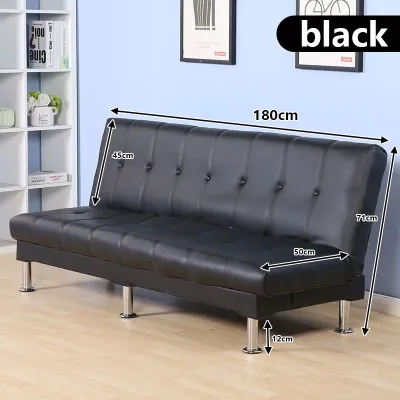
Prices are valid at publication and may change. Please refer to the product page for the latest price.
For a comfortable three-seater sofa bed, the frame width typically ranges from 180 to 210 centimeters. If your family requires seating for four to five people, you will need to look at larger sectional configurations or L-shaped designs, which often extend from 240 to over 300 centimeters in width. The depth of the sofa in its seating configuration is usually between 90 and 100 centimeters, but once the bed mechanism is fully extended, the total depth can reach 200 to 220 centimeters depending on whether it is a pull-out or a fold-down design.
Clearance is another critical factor that directly impacts household safety and traffic flow. When the sofa bed is fully opened, you should maintain a minimum of 60 to 75 centimeters of walking space around all exposed sides of the bed. This ensures that family members can move through the room at night without tripping over the frame or stepping on the mattress. If the extended bed blocks primary pathways to the kitchen, bathroom, or main exit, you may need to consider a more compact layout or a modular design that can be rearranged.
Finally, you must plan the delivery path from the delivery truck to your living room. Many homeowners purchase a large sofa bed only to find that the packaged box cannot clear the condominium elevator, the tight turns of a suburban stairwell, or the front doorway. Measure the height, width, and diagonal clearance of every doorway, hallway corner, and elevator entrance in your building. If your building has strict service elevator dimensions, look for sofa beds that are shipped in flat-pack boxes or modular segments that can be assembled directly inside your living room.
Evaluating Frame Sturdiness and Mechanism Durability
For a large family, the frame is the absolute foundation of the sofa bed’s longevity. Standard sofas only need to support static sitting weight, but a sofa bed frame must support the dynamic weight of multiple people sitting, lounging, and sleeping, as well as the mechanical stress of regular conversion. When evaluating options, prioritize manufacturers that provide detailed material specifications rather than relying on vague marketing terms like “heavy-duty construction.”

In the humid tropical climate of the Philippines, frame material selection is particularly critical. Look for frames constructed from kiln-dried hardwoods such as mahogany, acacia, or gmelina. Kiln-drying removes moisture from the wood, preventing it from warping, cracking, or bowing when exposed to seasonal humidity fluctuations. Alternatively, high-grade, powder-coated reinforced steel frames offer exceptional structural integrity and are highly resistant to rust, making them an excellent choice for coastal areas or homes without continuous air conditioning.
Inspect the joint construction of the frame to determine its overall stability. High-quality frames utilize mortise-and-tenon joints, dowels, and heavy-duty metal screws reinforced with corner blocks. Avoid frames that rely solely on glue, staples, or thin nails, as these fastening methods quickly loosen under the daily impact of children jumping or multiple adults sitting down at once. When testing a sofa bed in a showroom, apply firm downward pressure on the armrests and gently shake the frame; any squeaking, wobbling, or flexing indicates weak joints and poor structural integrity.
Additionally, you must examine the conversion mechanism, which is the most common failure point in low-quality sofa beds. Whether it is a classic pull-out metal trampoline mechanism, a click-clack fold-down system, or a drawer-style slide-out, the moving parts should operate smoothly without grinding, catching, or requiring excessive physical force. Look for heavy-gauge steel tracks and thick tubular steel support legs that lock securely into place when extended. Check that the mechanism features safety locks or tension springs that prevent accidental folding or collapsing while in use.
Mattress and Cushion Considerations for Daily and Guest Use
How your family intends to use the sofa bed dictates the type of mattress and cushion support you should select. If the bed function will be used nightly by a family member, you must prioritize mattress thickness and support. If the bed is reserved primarily for occasional weekend guests, you can place greater emphasis on daily seating comfort and fabric durability.
For frequent or daily sleeping, look for a sofa bed mattress with a minimum thickness of 10 to 15 centimeters. Thinner mattresses, especially those under 8 centimeters, often allow sleepers to feel the metal support bars or wooden slats of the frame underneath, leading to poor sleep quality and physical discomfort. High-density polyurethane foam or pocket spring mattresses provide the best balance of contouring support and durability. Pocket springs are particularly beneficial for couples or multiple children sharing the bed, as they isolate motion transfer and prevent roll-together.
Daily seating comfort depends heavily on the density of the seat cushions. High-resiliency (HR) foam with a density rating of at least 30 kilograms per cubic meter is recommended for high-traffic family living rooms. This grade of foam provides a supportive sit and quickly bounces back to its original shape, preventing the unsightly sagging that often plagues cheap foam cushions after a few months of heavy use. If the cushions are too soft, family members will sink directly onto the hard frame structure beneath, causing discomfort during long movie nights or family gatherings.
Upholstery selection must also account for the local climate and the realities of a busy household. High humidity and warm temperatures make breathable fabrics essential to prevent heat retention and sweating. Natural linen blends and tightly woven cotton canvas offer excellent breathability, though they may require stain-resistant treatments. For families with young children or pets, heavy-duty polyester performance fabrics or high-grade synthetic leathers are highly practical, as they resist spills and can be wiped clean with a damp cloth. Always check the manufacturer’s care labels to ensure the fabric can handle regular spot cleaning, and look for models with fully removable, washable cushion covers to simplify maintenance.
Building Your Shortlist: A Condition-Based Selection Matrix
To narrow down your choices, you can categorize sofa beds into distinct structural configurations. Each design offers specific advantages depending on your living room layout, storage needs, and how often you plan to convert the unit into a bed.
Standard pull-out sofa beds feature a traditional three-seater sofa design where the mattress is folded inside the frame beneath the seat cushions. This style is best suited for formal living rooms or dedicated guest spaces where you want a clean, unified look. Because the mattress is completely separate from the seating surface, it provides a highly consistent sleeping experience. However, these units are exceptionally heavy due to the internal metal mechanism, and they require a completely clear area in front of the sofa to allow for full extension.
Modular sectional sofa beds consist of individual seating units that can be rearranged into different configurations, such as an L-shape, a U-shape, or separate armchairs. This flexibility is ideal for large, open-plan living spaces where you need to customize the seating layout to accommodate different family activities. When a bed is needed, the modules are pushed together and secured with interlocking brackets, or a hidden trundle frame is pulled out from the main section. While highly versatile, modular units require level flooring to prevent the individual sections from sliding apart during the night.
L-shaped sofa beds with integrated storage are highly popular in compact family apartments and townhouses. These designs typically feature a pull-out trundle bed under the main seating section, while the chaise lounge portion lifts up on hydraulic gas struts to reveal a spacious storage compartment. This built-in storage is incredibly useful for keeping extra pillows, heavy blankets, and bedsheets organized and dust-free in humid environments. When selecting an L-shaped model, verify whether the chaise is reversible, allowing you to switch it from the left to the right side if you move to a new home with a different layout.
Regardless of the configuration you choose, pay close attention to the assembly and anchoring requirements. Heavy pull-out frames must sit on a flat, stable surface to prevent the mechanism from warping over time. If you place the sofa bed on a polished tile or hardwood floor, use non-slip rubber pads under the legs to prevent the frame from shifting when family members sit down or when the bed is being extended.
Pre-Purchase Checks and Delivery Logistics
Before finalizing your purchase and paying a deposit, you must perform a series of logistical and administrative checks to ensure a smooth delivery and installation process. Because a large sofa bed is a major financial and physical addition to your home, resolving potential issues beforehand saves significant time and expense.
First, cross-reference the product’s maximum packaged dimensions with your building’s access restrictions. Ask the retailer for the exact dimensions of the shipping boxes, as these are often significantly larger than the assembled sofa itself. If you live in a high-rise condominium, consult with your property management office regarding elevator weight limits, maximum clearance heights, and designated delivery hours. Some buildings require a formal work permit or a tenant clearance form before allowing large furniture deliveries.
Second, clarify the assembly conditions and tool requirements. Many heavy-duty sofa beds arrive partially disassembled to protect the frame and mechanism during transit. Determine whether the retailer provides professional white-glove delivery and assembly services, or if you will need to assemble the unit yourself. If self-assembly is required, ensure you have the necessary tools—such as an Allen wrench set, a screwdriver, or a rubber mallet—and enlist at least one other adult to help lift and align the heavy metal mechanisms safely.
Finally, read the warranty terms and return policies with care. A reputable manufacturer should offer a clear warranty that distinguishes between the structural frame, the mechanical conversion parts, and the fabric upholstery. Frame and mechanism warranties should ideally cover manufacturing defects for several years, while fabric and foam warranties are typically shorter. Be sure to check for specific exclusions, such as damage caused by exceeding the maximum weight capacity, improper assembly, or using unauthorized cleaning chemicals on the upholstery.
Frequently Asked Questions (FAQ)
How much weight can a typical sofa bed frame support?
To find the exact weight limit of a specific sofa bed, you must consult the manufacturer’s official specification sheet or user manual. Generally, a high-quality three-seater sofa bed frame is designed to support a static seating load of approximately 250 to 300 kilograms distributed across the cushions. However, the dynamic sleeping load—the weight the frame can support when configured as a bed—is often lower, typically ranging from 180 to 220 kilograms. Exceeding these stated limits can cause the metal support bars to bend, strip the mechanical gears, or crack the wooden support slats, leading to permanent structural failure.
Is a modular sofa bed better than a single-frame pull-out for large families?
The choice between a modular sofa bed and a single-frame pull-out depends on your living room layout and how often you convert the unit. Modular sofa beds are highly advantageous for large families because they offer flexible seating arrangements, can be easily moved through tight doorways in individual pieces, and often include built-in storage. However, single-frame pull-out sofa beds generally provide a more traditional, flat, and continuous mattress surface, which is superior for long-term sleeping comfort. If you plan to use the bed function frequently, a single-frame pull-out with a dedicated high-density mattress is often the more supportive option, whereas modular designs excel in multi-functional, high-traffic family spaces.

Community discussion
Share your experience or ask a question. Comments are reviewed before publication.