
Selecting a family-size mattress in the Philippines requires balancing comfort, support, and climate adaptability. With tropical heat and high humidity levels lasting throughout the year, the material composition of your bed directly impacts how cool and comfortable your family sleeps. Uratex offers several distinct mattress types—latex, memory foam, and innerspring—each designed with unique structural properties. Finding the right foam bed family size Uratex option involves understanding how these materials behave under the weight of multiple sleepers and how they perform in local environmental conditions.
A family-size bed, typically ranging from Queen to King or custom larger dimensions, must accommodate different sleeping positions, body weights, and movement patterns. While one family member might prefer a soft, contouring surface, another may require firm support to prevent back discomfort. Additionally, co-sleeping with children introduces the challenge of motion transfer, where one person’s movement can disrupt the sleep of everyone else on the bed. By comparing the physical characteristics and performance of latex, memory foam, and innerspring systems, you can make an informed decision that ensures long-term comfort and durability for your household.
Understanding Uratex Mattress Construction and Feel
To make an informed choice, you must first understand how these three mattress types are constructed and how their materials translate to physical feel. Uratex utilizes different manufacturing processes and material formulations to achieve specific comfort profiles, and checking the technical specifications of each model is essential before purchasing.
Products mentioned in this guide
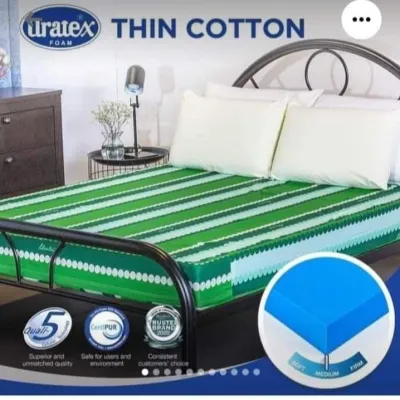
![[ONHAND items] URATEX 3.5 WITH CHINA COVER/URATEX FOAM/ WITH COVER/ 3.5 INCHES/ SINGLE/ DOUBLE/ FAMILY/ QUEEN](https://img.lazcdn.com/g/p/400512f28bb4809b3f5b456fb69c5953.png_400x400q80.png_.webp)
![[SALE] URATEX TRILL REGAL MATTRESS / REGAL MAT / URATEX TRILL / LEGIT URATEX TRILL / SINGLE DOUBLE FAMILY QUEEN](https://img.lazcdn.com/g/p/b54eece0b76072e656f8165e70e7c33e.jpg_400x400q80.jpg_.webp)

Prices are valid at publication and may change. Please refer to the product page for the latest price.
Latex mattresses are highly regarded for their resilient, springy feel. Uratex latex options often feature a blend of natural and synthetic latex or specialized latex-feel polyurethane foam. When evaluating these beds, check the product labels to verify the exact material composition. Natural latex blends offer excellent elasticity and a responsive surface that immediately bounces back when pressure is removed. This prevents the feeling of being “stuck” in the mattress, making it easier to change sleeping positions throughout the night.
Memory foam, or viscoelastic foam, is engineered to respond to body heat and pressure, contouring closely to the shape of your body. When you lie on a memory foam bed, the material slowly compresses and cradles your pressure points, distributing your body weight evenly across the surface. To assess the quality of a memory foam mattress, look at the density specifications on the product sheet. Higher-density foams generally provide deeper contouring and better pressure relief but can feel firmer initially and may take longer to adapt to your movements.
Innerspring mattresses rely on a steel coil support system topped with layers of foam or fiber padding. Uratex innerspring models typically use either interconnected Bonnell coils or pocketed coils. Bonnell coils offer a traditional, highly buoyant feel with uniform pushback, while pocketed coils are individually wrapped in fabric sleeves, allowing them to compress independently. The feel of an innerspring mattress is characterized by a distinct bounce and a solid, structured underlying support system that keeps the body aligned.
When selecting a family-size mattress, the physical dimensions and overall weight of these constructions become critical factors. A solid latex or high-density memory foam mattress in a King size is exceptionally heavy and flexible, making it difficult to lift, rotate, or move through tight spaces. In contrast, an innerspring mattress maintains a rigid, non-flexible structure due to its steel frame, which requires careful planning during delivery and setup to ensure it can navigate doorways and stairwells.
Comparing Comfort, Support, and Climate Adaptability
Evaluating how each material performs under real-world conditions is crucial for ensuring a restful night’s sleep for the entire family. In the Philippines, where high humidity and warm temperatures are constant, climate adaptability must be weighed alongside physical support and motion isolation.

Support and motion isolation are primary concerns for co-sleeping families. Memory foam excels in motion isolation because its viscoelastic structure absorbs energy rather than transferring it. If a child or partner tosses and turns, the movement is localized, allowing others to sleep undisturbed. Latex also offers decent motion isolation, but its natural resilience retains a degree of bounce, meaning some movement may still be felt across a large family bed. Innerspring mattresses with pocketed coils isolate motion effectively because each coil reacts independently to pressure. However, traditional Bonnell coil systems tend to transfer movement across the entire mattress surface, which may not be ideal for light sleepers sharing a bed.
Climate adaptability is a critical factor in tropical environments. Because memory foam reacts to body heat, it naturally tends to retain warmth, which can lead to a sleeping surface that feels uncomfortably hot without proper ventilation. To mitigate this, check the mattress specifications for open-cell foam structures, gel infusions, or specialized breathable covers designed to disperse heat. Latex features a naturally open-cell structure that allows for better passive airflow, making it inherently more breathable than standard memory foam. Innerspring mattresses offer the highest level of airflow because the open spaces between the steel coils allow heat to escape easily, preventing warmth from building up within the core of the bed.
Edge support determines how much of the mattress surface is actually usable. When multiple family members share a bed, sleepers often end up near the edges. If the edges sag or collapse under pressure, it reduces the sleeping area and creates a rolling-off sensation. Innerspring mattresses generally offer superior edge support, often reinforced with thick steel border wires or high-density foam encasements. Latex mattresses provide moderate edge support due to the natural toughness of the material, while standard memory foam mattresses may compress significantly at the perimeter unless they feature a dedicated high-density foam border. Always check the manufacturer’s specifications to verify if edge reinforcement is built into the design.
Managing Durability, Maintenance, and Room Logistics
Owning a large family-size mattress involves long-term maintenance, physical logistics, and understanding how environmental factors affect the lifespan of the materials. Proper care ensures that your investment remains supportive and hygienic for years to come.
Establishing a regular maintenance routine is essential for preserving the structural integrity of your mattress. All three mattress types benefit from being rotated 180 degrees every three to six months to ensure even wear, especially when sleepers of different weights occupy different sides of the bed. In the humid Philippine climate, using a breathable, waterproof mattress protector is highly recommended to shield the foam layers from sweat, moisture, and accidental spills. When cleaning, always refer to the manufacturer’s guidelines; memory foam and latex should never be saturated with water or exposed to direct sunlight, as UV rays and moisture can degrade the physical structure of the foam.
Logistics and setup require careful preparation before the mattress even arrives at your home. A family-size mattress, particularly in Queen or King dimensions, is bulky and heavy. Measure your doorways, stairwells, hallways, and elevator cabins to ensure the delivery team can safely transport the mattress to your bedroom. While some foam and latex mattresses are shipped compressed in a box, making initial transport easier, they quickly expand to their full size and weight. Innerspring mattresses cannot be bent or compressed, meaning you must have clear, unobstructed pathways for delivery.
To gauge the expected lifespan of a mattress without relying on unverified claims, review the manufacturer’s warranty terms. The length of the warranty (such as 5, 10, or 15 years) serves as a practical proxy for durability. Pay close attention to the specific sagging depth threshold outlined in the warranty policy. This threshold defines how deep a permanent indentation must be before the manufacturer considers it a structural defect covered under warranty. A lower threshold often indicates higher confidence in the foam’s resilience over time.
How to Choose the Right Uratex Mattress for Your Family
Selecting the ideal mattress type comes down to matching your family’s specific sleep preferences, room conditions, and physical requirements to the strengths of each material. Use the following conditional framework to guide your final decision.
Choose Latex if: Your family prefers a responsive, buoyant sleeping surface that makes it easy to move and change positions. This material is highly suitable if you prioritize natural material checks, require moderate motion isolation, and prefer a mattress that naturally retains less heat than traditional memory foam. It is an excellent option for active sleepers who dislike the feeling of sinking deep into their bed.
Choose Memory Foam if: You or your family members require maximum pressure relief for joints and muscles, and you prefer a contouring, cradling sensation. This option is ideal if motion isolation is your top priority to prevent sleep disruptions from co-sleeping children or partners. However, ensure your bedroom is well-ventilated or consistently air-conditioned to counteract the material’s natural tendency to retain body heat.
Choose Innerspring if: Your family prefers a traditional, bouncy feel with robust pushback support. This construction is best if you require strong edge support to maximize the usable sleeping area of a family bed or if you frequently sit on the edge of the mattress. It is also the most suitable choice if you sleep hot and want to maximize airflow through the open coil structure of the bed.
Verify First if: Anyone in your household has specific medical conditions, severe allergies, or requires specialized orthopedic support. Always consult the manufacturer’s detailed specification sheets, visit an authorized showroom to test the firmness levels, or consult a qualified medical professional before making a purchase to ensure the mattress meets your health and comfort requirements.
Frequently Asked Questions (FAQ)
Can I use a standard bed frame for a Uratex family size foam mattress?
Yes, but you must verify that the bed frame’s weight capacity and structural design are compatible with your mattress. Foam and latex mattresses are significantly heavier than traditional innerspring beds and require a solid, flat, or closely slatted foundation to prevent sagging. Ensure that the slats are spaced according to the manufacturer’s guidelines (typically no more than 2 to 3 inches apart) to maintain even support and preserve your warranty coverage.
How do I know if a Uratex mattress is genuine and covered by warranty?
To guarantee authenticity and secure warranty protection, always purchase your mattress directly from official brand showrooms, authorized physical dealers, or the brand’s official stores on recognized online marketplaces. Upon delivery, inspect the mattress for official brand holograms, woven labels, and product tags. Ensure you receive the official warranty card, and follow the manufacturer’s instructions to register your purchase online or keep the physical receipt in a safe place.

Community discussion
Share your experience or ask a question. Comments are reviewed before publication.