
In Filipino households, the dining table is more than just a place to eat; it is the heart of the home where extended families gather for Sunday lunches, birthday celebrations, and holiday feasts. However, balancing the spatial demands of a large family with the physical limits of modern Philippine homes—ranging from compact city condominiums to suburban townhouses—presents a unique challenge. An extendable wooden dining table offers a practical solution, allowing you to maintain an open, breathable living space during the week and expand the surface when relatives arrive. Choosing the right table requires a careful look at extension mechanisms, wood construction, and spatial clearances to ensure your investment stands up to both daily life and festive gatherings.
Understanding Extendable Table Mechanisms
To find a table that fits your lifestyle, you must first understand how different extension mechanisms operate and how they impact your daily routine. The choice of mechanism dictates how easily the table transitions from a compact daily setup to a full-sized dining surface capable of hosting up to ten people.
Drop-leaf tables feature hinged sections that hang down along the sides when not in use and lift up to be supported by pull-out brackets. This design is highly efficient for tight spaces, but the leaves remain visible and can sometimes limit legroom for those sitting at the ends. In contrast, a butterfly leaf mechanism utilizes a hinged leaf stored in a hidden compartment directly beneath the tabletop. When you pull the table ends apart, the leaf unfolds like butterfly wings to fill the gap. This self-storing design is exceptionally convenient for Filipino homes because it eliminates the need to find extra closet space for loose table parts, keeping the extra surface protected from tropical dust and humidity when stored.
Products mentioned in this guide
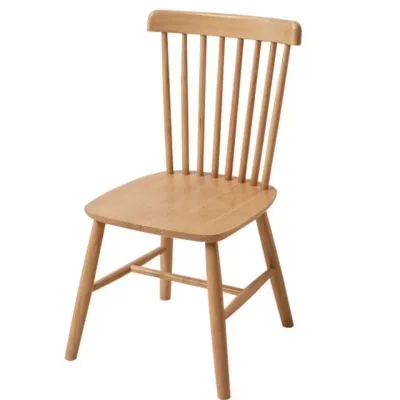
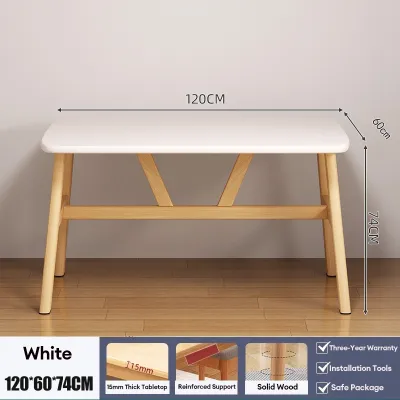
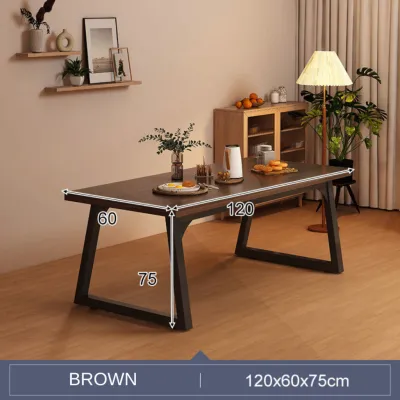
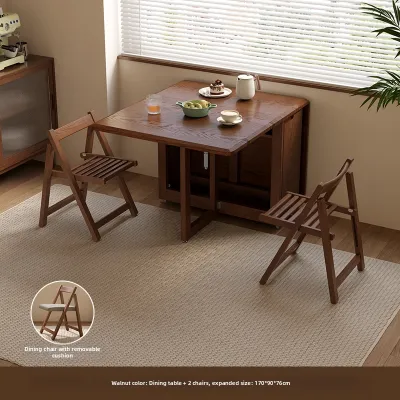
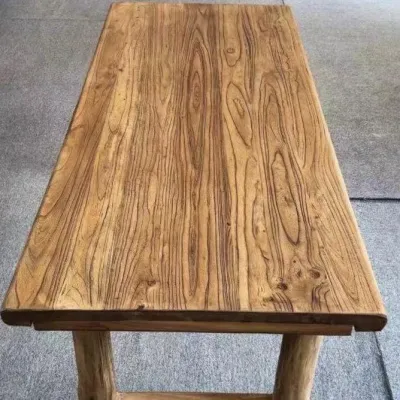
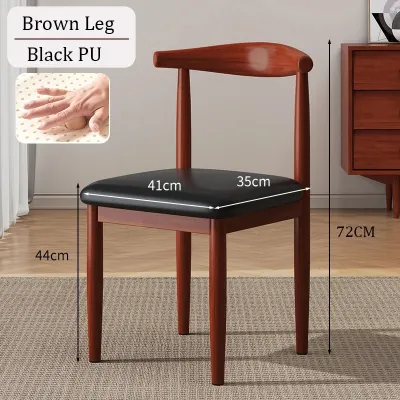
Prices are valid at publication and may change. Please refer to the product page for the latest price.
For maximum stability when fully extended to accommodate eight to ten chairs, tables with removable center leaves are often the preferred choice. These tables split down the middle, allowing you to insert one or more separate wooden panels onto alignment pins and locking clasps. Because the support frame or slide rails extend along with the tabletop, this mechanism provides a highly rigid structure that minimizes sagging in the center. However, you must have a dedicated, dry storage area in your home to keep these loose leaves flat and safe from warping during the humid rainy season.
Some traditional and contemporary wooden tables feature drawer-stored leaves, where the extension panels slide out from drawers integrated into the table ends or sides. While this offers quick setup without lifting heavy panels, it can restrict the vertical clearance under the table apron, potentially making it uncomfortable for taller family members. When evaluating any mechanism, consider whether you prefer the seamless look and structural integrity of removable center leaves or the self-contained convenience of butterfly and drawer-stored designs.
Sizing and Space Planning for 6 to 10 Seats
A successful dining room layout relies on precise measurements rather than visual estimates. When hosting large family gatherings, ensuring that every guest has enough physical space to eat comfortably without bumping elbows is just as important as fitting the table inside the room.

To ensure comfortable dining, plan for a standard width of 60 to 70 centimeters per person along the perimeter of the table. This provides sufficient elbow room for eating and passing dishes. The depth of the individual dining place setting should be at least 35 to 40 centimeters, leaving a central zone of 20 to 30 centimeters for serving platters, rice cookers, and shared dishes. For a table intended to seat six people in its collapsed state and up to ten when fully extended, the minimum length should transition from approximately 150 to 180 centimeters up to 240 to 300 centimeters.
When calculating seating capacity, do not forget to account for the width of your dining chairs. Standard dining chairs range from 45 to 55 centimeters in width, while armchairs used at the head of the table can be wider. Ensure that the table legs are positioned in a way that does not block chairs from sliding fully underneath the tabletop. If the table legs slide outward with the extension, they will remain at the corners, maximizing legroom; if the legs remain stationary in the center, guests must sit around them, which can limit the actual number of usable seats.
A table must fit comfortably within the physical boundaries of your dining room. Measure the distance from the edge of the table to the nearest wall, buffet cabinet, or doorway. You need a minimum clearance of 90 centimeters to allow guests to pull out their chairs and sit down comfortably. To maintain a safe walking path behind seated guests—especially when carrying hot serving dishes from the kitchen—aim for a clearance of 120 centimeters.
Before finalizing any purchase, verify that the fully packaged table can actually reach your dining area. Measure the height and width of all entryways, hallway corners, stairwells, and elevator doors in your building. Large wooden tabletops are often heavy and rigid, making them difficult to maneuver around tight corners or up narrow condominium staircases. Check the manufacturer’s packaging dimensions to confirm that the delivery team can safely transport the components into your home without damaging your walls or the furniture itself.
Evaluating Wood Materials and Structural Stability
The durability of an extendable table depends heavily on its construction materials and structural design. In the Philippines, where seasonal shifts in humidity can cause wood to expand and contract, selecting a stable, well-constructed table is essential for long-term use.
When browsing product specifications, look closely at the material descriptions. Solid wood tables offer classic beauty and can be sanded and refinished if scratched, but they are more susceptible to seasonal movement and warping in humid climates. High-quality veneer over an engineered wood core (such as MDF or plywood) provides excellent dimensional stability, meaning it is less likely to warp or split when humidity levels fluctuate. If you choose a solid wood option, verify that the manufacturer has used kiln-dried timber, which has been treated to reduce moisture content and minimize future warping.
The structural integrity of an extendable table is put to the test when it is fully extended. Inspect the underside of the table to evaluate the apron—the wooden frame supporting the tabletop—and the joinery. Look for reinforced corner blocks, heavy-duty bolts, and mortise-and-tenon joints rather than simple staples or glue. The base design must prevent tipping or sagging; a trestle or pedestal base offers excellent stability and allows for flexible chair placement, while traditional four-legged designs must have robust, thick legs to support the weight of the extended leaves without wobbling.
Because dining tables are subjected to spills, condensation from cold drinks, and hot serving dishes, the surface finish is critical. Check the manufacturer’s specifications for the type of protective coating applied to the wood. Polyurethane, lacquer, or specialized water-resistant sealants help protect the wood grain from moisture penetration and heat marks. Always review the manufacturer’s care instructions, as some finishes require regular oiling or waxing, while others can be cleaned simply with a damp cloth and mild soap.
Never assume a table’s load capacity based on its size or material alone. Always check the product documentation for the maximum weight capacity explicitly specified by the manufacturer. This is particularly important for the extended sections of the table, which lack direct leg support. Overloading these extended leaves with heavy serving platters or leaning on them can strain the sliding mechanisms and cause permanent structural damage.
Condition-Based Selection Framework
To narrow down your choices, match the table’s design and mechanism to your household’s specific spatial conditions and usage patterns. This structured approach ensures you select a table that remains highly functional whether you are hosting a quiet weekday dinner or a festive family reunion.
If your household frequently hosts guests—such as weekly family dinners or regular community gatherings—prioritize convenience and ease of operation. Look for tables equipped with smooth, ball-bearing sliding tracks made of rust-resistant metal. Self-storing butterfly leaves are ideal in this scenario, as they allow a single person to extend the table in under a minute without needing to retrieve heavy panels from a closet or storage room.
For families who only need the maximum seating capacity during major holidays, such as Christmas, New Year, or annual birthdays, structural robustness should take precedence over quick setup. A table with sturdy, removable center leaves and heavy-duty wooden or metal slide rails is highly suitable. While setting up these tables requires a bit more effort and a dedicated storage space for the extra leaves, they offer superior stability and a seamless, traditional aesthetic when fully assembled.
If you live in a compact condominium or townhouse where space is at a premium, look for highly adaptable designs that minimize their footprint when closed. Drop-leaf tables or compact console-to-dining conversions are excellent options. These designs can sit against a wall as a console or a small four-seater table during the week, and then transform into a full-length dining table when pulled into the center of the room for weekend gatherings, maximizing your daily living space.
Pre-Purchase Verification and Assembly Requirements
Purchasing a large, extendable dining table is a significant investment that requires careful logistical planning. Taking the time to verify delivery, assembly, and warranty details before making a payment will help you avoid unexpected complications and ensure a smooth setup.
Because extendable tables feature complex internal tracks and heavy components, professional assembly is highly recommended. When ordering, confirm whether the retailer offers delivery and on-site assembly services. If you plan to assemble the table yourself, review the manufacturer’s instruction manual beforehand to ensure you have the necessary tools, such as a level, hex keys, and a rubber mallet, and that you have at least one other person to help lift and align the heavy wooden panels.
A comprehensive warranty is a strong indicator of a manufacturer’s confidence in their product’s durability. Carefully read the warranty terms to ensure they cover not just the wooden frame, but also the moving parts, sliding mechanisms, hinges, and structural joints. In humid tropical climates, moving parts can experience wear and tear more quickly, making a robust warranty for the extension hardware essential for long-term peace of peace.
Before finalizing your purchase, familiarize yourself with the retailer’s return and exchange policies, particularly regarding large, heavy furniture items. If the table arrives with a manufacturing defect, misaligned extension tracks, or damage sustained during transit, you need to know the exact process for requesting a replacement. Keep in mind that returning large furniture can incur restocking fees or return shipping costs, so verifying these terms beforehand protects your investment.
Frequently Asked Questions (FAQ)
How do I maintain the extension tracks on a wooden table?
To keep your extendable table operating smoothly, regularly inspect and clean the sliding tracks located underneath the tabletop. Use a soft brush or a vacuum cleaner attachment to remove dust, crumbs, and debris that can accumulate in the grooves and cause the mechanism to stick. If the tracks begin to feel stiff, consult the manufacturer’s guidelines for the recommended lubricant. Many manufacturers suggest using a dry silicone spray or a small amount of paraffin wax on wooden slides, as wet lubricants can attract dust and create a sticky buildup over time.
Can I add extra chairs to an extendable table beyond its stated capacity?
While it may be tempting to squeeze in extra guests by placing chairs closer together, you must respect the manufacturer’s stated seating capacity and structural weight limits. Squeezing too many chairs around the table can make dining uncomfortable and restrict legroom, but more importantly, it can overload the unsupported extended sections. Leaning heavily on the outer edges or placing excessive weight on the extended leaves can warp the wooden panels, bend the metal slide rails, or damage the locking mechanisms, compromising the safety and stability of the entire table.

Community discussion
Share your experience or ask a question. Comments are reviewed before publication.