
To support a substantial collection of heavy books, reference manuals, and office equipment like printers or uninterruptible power supplies (UPS), standard floating shelf hardware is simply not enough. True heavy-duty floating shelf brackets must be engineered to withstand significant downward leverage and shear forces. Selecting the right bracket involves evaluating the material thickness, structural design, and wall compatibility to ensure your study room storage remains safe, stable, and level over years of continuous use.
Core Criteria for Choosing Heavy-Duty Floating Shelf Brackets
In a home office or study, a single shelf filled with dense textbooks, binders, and technical equipment can easily accumulate a static load of 30 to 50 kilograms or more. Standard decorative brackets are designed for light ornaments and will quickly sag or fail under this weight. True heavy-duty performance relies on three primary pillars: material thickness, structural design, and the mounting mechanism.
When evaluating options on an online marketplace or at a local hardware store, look past generic marketing terms like “heavy-duty” or “industrial strength.” Instead, focus on verifiable specifications. Check the steel gauge—heavy-duty brackets typically utilize steel that is at least 3 millimeters to 6 millimeters thick. Examine the manufacturer’s rated weight capacity, keeping in mind that these ratings are highly dependent on proper installation into solid structural elements.
Products mentioned in this guide
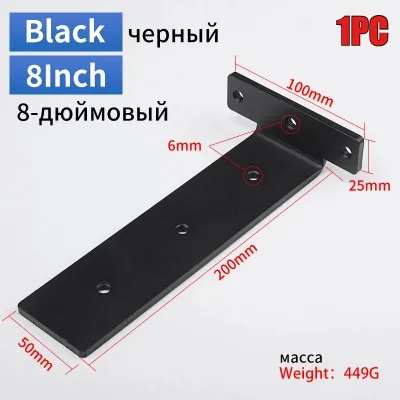
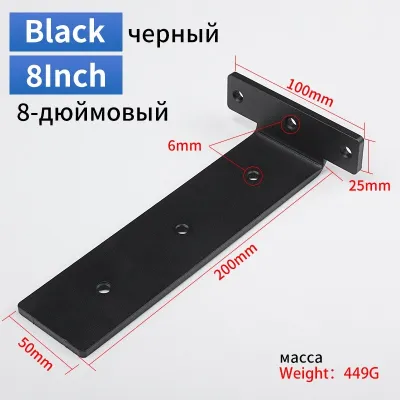
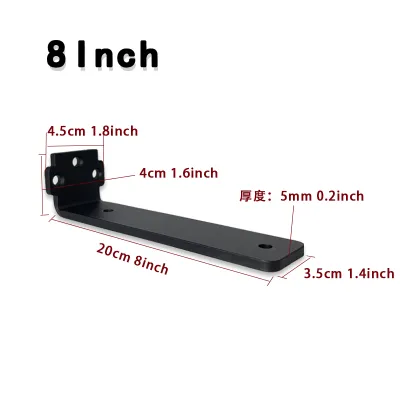
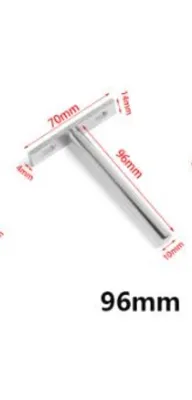
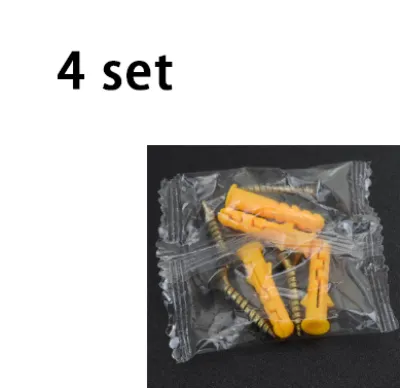
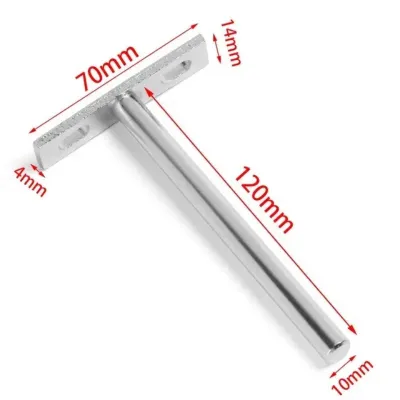
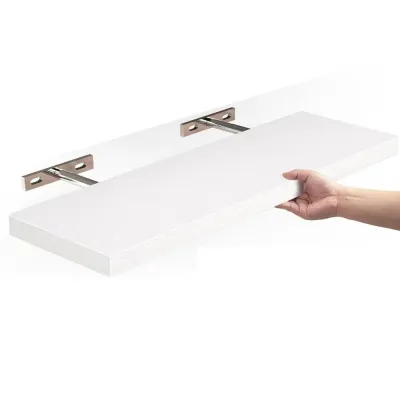
Prices are valid at publication and may change. Please refer to the product page for the latest price.
Additionally, consider the environmental factors of your location. In tropical climates like the Philippines, high humidity can affect both the shelf material and the metal brackets over time. Moisture can cause wood shelf boards to warp or soften, which increases the stress on the bracket joints. Choosing brackets with a high-quality powder-coated or rust-resistant finish is essential to prevent corrosion and maintain structural integrity in humid conditions.
Assessing Wall Types and Load Compatibility
In the Philippines, residential construction varies widely. Many homes and condominium units feature walls made of concrete hollow blocks (CHB) or solid poured concrete, while interior partitions in modern offices and renovated spaces often consist of drywall over light-gauge metal studs or wooden framing. Understanding your specific wall type is the single most critical factor in determining load compatibility.

Concrete and masonry walls offer exceptional compressive strength. When anchoring heavy-duty brackets into concrete, you can utilize metal expansion bolts, sleeve anchors, or heavy-duty masonry screws. These fasteners grip the solid material tightly, allowing the bracket to perform at its maximum rated capacity.
Conversely, drywall and hollow plasterboard partitions have very little inherent structural strength. If you mount a heavy shelf directly onto drywall using plastic expansion plugs or toggle bolts, the leverage exerted by the shelf will eventually pull the anchors straight through the gypsum board. For drywall installations, you must locate the vertical wooden or metal studs behind the wall using a reliable stud finder. Heavy-duty brackets must be fastened directly into the center of these studs using robust lag screws.
If the spacing of your wall studs does not align with your desired bracket placement, you may need to install a solid wood backing board or cleat securely fastened across multiple studs to distribute the load safely. If you are uncertain about the load-bearing capacity of your walls, or if you suspect the presence of hollow zones or deteriorating masonry, it is highly recommended to consult a qualified structural professional or contractor before proceeding with the installation.
Structural Features That Ensure Heavy-Duty Performance
The physics of a floating shelf are unforgiving. Because the shelf projects outward from the wall without vertical support at the front edge, it acts as a lever. Any weight placed on the shelf exerts a rotational force, known as torque, which pulls the top of the bracket away from the wall while pushing the bottom of the bracket into the wall. To resist these forces without bending, heavy-duty brackets must feature superior structural engineering.
Solid steel is the preferred material for heavy-duty applications due to its high tensile strength and rigidity. Standard aluminum or thin-gauge sheet metals are prone to flexing under sustained loads, which leads to unsightly and dangerous shelf sagging.
Look for structural reinforcements that enhance rigidity. For visible L-brackets, a welded gusset—a triangular brace connecting the horizontal and vertical legs—dramatically increases weight capacity by transferring the downward load back toward the wall plate. The quality of the welds is paramount; look for clean, continuous, and thick welds rather than small spot welds.
For concealed or blind floating shelf brackets, the support rods must be exceptionally robust. The rod diameter should ideally be 12 millimeters or larger, and the rod length should extend through at least two-thirds of the shelf’s depth to prevent the wood from sagging or slipping. Additionally, the backplate of a concealed bracket must be thick and wide, featuring multiple screw holes spaced vertically and horizontally to distribute the pulling force across a larger surface area of the wall.
Matching Bracket Designs to Your Study Room Storage
Different bracket designs offer distinct advantages depending on your aesthetic preferences and functional requirements.
Concealed Brackets
Often referred to as blind shelf supports, these brackets consist of a flat metal backplate with solid steel rods extending outward. The shelf board is pre-drilled with matching holes, allowing it to slide over the rods and sit flush against the wall, completely hiding the hardware. This design offers a clean, minimalist aesthetic that is highly desirable in modern study rooms. However, concealed brackets demand precise installation and specific shelf dimensions. The shelf board must be thick enough (typically at least 30 millimeters to 40 millimeters) to accommodate the internal boring without splitting the wood. Additionally, because the support relies entirely on the internal rods, the maximum shelf depth is usually limited to 200 millimeters to 250 millimeters to prevent excessive leverage.
Exposed L-Brackets and Lip Brackets
For maximum load tolerance and easier installation, exposed brackets are the preferred choice. These brackets sit underneath the shelf, providing direct physical support to the bottom of the board. Heavy-duty L-brackets can support much deeper shelves (up to 300 millimeters or more) and are highly forgiving of minor installation imperfections. Lip brackets feature a small upturned lip at the front edge, which secures the shelf board in place and prevents it from sliding forward. This design is ideal for storing heavy, valuable equipment or large binders that might shift over time.
Adjustable Modular Systems
If you anticipate changing your study room layout or adding more books in the future, an adjustable modular system may be the most practical solution. These systems utilize vertical metal tracks (standards) mounted directly to the wall studs, with heavy-duty brackets that slot into the tracks at various heights. While highly versatile, you must ensure that both the tracks and the brackets are rated for heavy-duty storage, and that the vertical tracks are anchored securely along their entire length to prevent the system from pulling away from the wall under a full load.
Installation Guidelines and Safety Boundaries
Proper installation is just as important as selecting the right bracket. Even the strongest steel bracket will fail if it is poorly anchored to the wall.
Preparation and Tools
Before beginning the installation, gather the necessary tools to ensure a precise and secure mount. You will need a high-quality spirit level, a pencil, a tape measure, a drill (a hammer drill is essential for concrete walls), appropriate drill bits (carbide-tipped masonry bits for concrete, or wood bits for studs), and a socket wrench or impact driver to tighten heavy-duty lag screws.
Step-by-Step Mounting
Start by marking the desired height of your shelf on the wall. Use a long spirit level to draw a perfectly horizontal reference line. If installing on drywall, use a stud finder to locate and mark the exact center of the studs along this line. Hold the first bracket against the wall, aligning its mounting holes with your marks, and mark the drill points. Drill pilot holes of the exact diameter recommended by the fastener manufacturer. For concrete walls, insert high-quality nylon wall plugs or metal expansion anchors into the holes. Align the bracket and drive the screws or bolts, ensuring they are tightened securely but not over-tightened to the point of stripping the threads. Repeat the process for the remaining brackets, constantly verifying levelness across all brackets.
Pre-Load and Safety Checks
Once the brackets are securely mounted, conduct a thorough pre-load inspection. Check that there is absolutely no play or movement in the brackets when you apply firm downward pressure by hand. Place the empty shelf board onto the brackets and verify that it sits perfectly flat and level. Gradually add weight to the shelf, starting with lighter items and moving toward heavier books and equipment. Observe the brackets and the wall surface closely during this process. Look for any signs of rod deflection, bracket bending, or wall surface cracking.
Stop Conditions
If at any point during installation or testing you observe the wall surface cracking, screws spinning freely without tightening, or the bracket arms visibly bending under moderate weight, stop immediately. Do not attempt to load the shelf further. These symptoms indicate a structural failure in the wall material, incorrect fastener selection, or overloaded brackets. Remove the weight safely and consult a qualified professional contractor to rectify the mounting before attempting to use the shelf again.
Frequently Asked Questions (FAQ)
Can standard drywall anchors support heavy books?
No, standard plastic expansion anchors or self-drilling drywall anchors are not designed to support the heavy, continuous loads associated with books and office equipment. A floating shelf acts as a lever, multiplying the downward force and pulling outward on the top anchors. Standard drywall anchors will eventually loosen, crack the surrounding gypsum board, and pull out completely, leading to a catastrophic failure. For heavy loads, brackets must be anchored directly into wooden or metal wall studs, or into solid masonry walls.
How thick should the shelf board be for concealed brackets?
For concealed or blind floating shelf brackets, the shelf board should typically be at least 30 millimeters to 40 millimeters thick. This thickness is necessary to accommodate the internal boring required for the support rods (which are often 12 millimeters or larger in diameter) while leaving enough solid wood above and below the hole to maintain structural integrity. Using a shelf board that is too thin increases the risk of the wood splitting or sagging under heavy loads.

Community discussion
Share your experience or ask a question. Comments are reviewed before publication.