
Balancing the cozy reality of modern condo living with the expansive demands of Filipino hospitality is a common design challenge. In many urban homes across the Philippines, the dining area serves as a multi-functional hub for daily family meals, remote work, and school homework. Yet, when Sunday family gatherings, birthdays, or holiday feasts arrive, that same space must suddenly accommodate an extended circle of grandparents, aunts, uncles, and cousins. A standard fixed-size table either crowds the room daily or leaves guests cramped and uncomfortable during celebrations.
Investing in a space saver dining table offers a practical solution to this spatial puzzle. These adaptable furniture pieces collapse into a compact footprint for daily household use, then expand seamlessly to seat six, eight, or even ten people when hosting. Choosing the right model requires looking beyond aesthetics to evaluate how the table functions in both its compact and fully extended states. By understanding your home’s physical limits and the mechanics of different extension systems, you can select a table that preserves your daily living space without compromising your ability to host large, memorable gatherings.
Assessing Your Space and Clearance Requirements
Before browsing designs, you must establish the physical boundaries of your dining area. Grab a tape measure and map out two distinct footprints: the daily configuration for your immediate household and the maximum expanded layout for large gatherings. For daily use, a table seating four people typically requires a footprint of about 120 cm by 80 cm. However, to comfortably seat six to ten people when extended, the table length must stretch to at least 180 cm to 240 cm. Each seated guest requires approximately 60 cm of table width to dine comfortably without bumping elbows, along with sufficient depth for plates, serving dishes, and glassware.
Products mentioned in this guide
![[cod]Foldable Table Wall-mounted Table Dining Table Computer Desk Kitchen Folding Table Space Saver Table](https://img.lazcdn.com/g/p/a8ef9b63e4827ee3ec5098a0d2262b23.jpg_400x400q80.jpg_.webp)
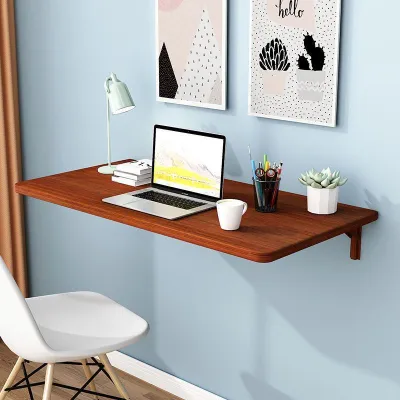
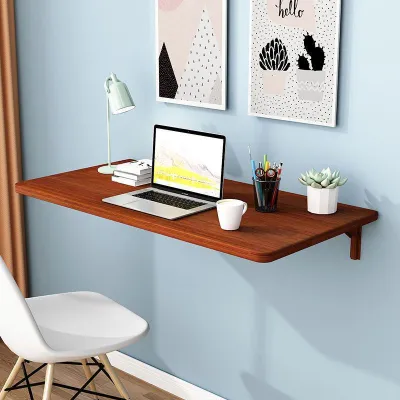
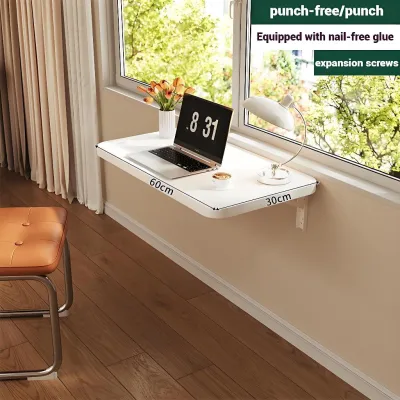
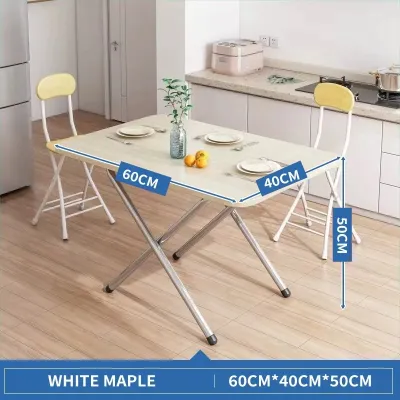
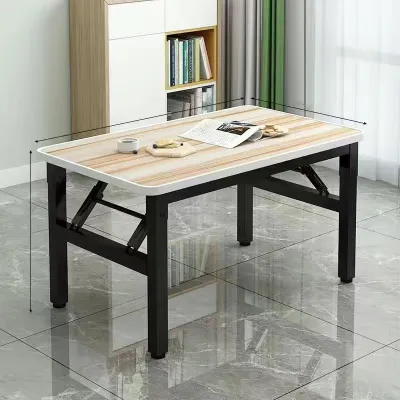
Prices are valid at publication and may change. Please refer to the product page for the latest price.
Calculating table dimensions is only half the equation; you must also account for the clearance space surrounding the table. In compact dining rooms or open-plan condos, walkways must remain passable even when everyone is seated. As a general rule, maintain a clearance of at least 90 cm between the edge of the table and the nearest wall, cabinet, or doorway. This distance allows guests to pull out their chairs and sit down comfortably. If your dining area doubles as a primary thoroughfare to the kitchen or balcony, increase this clearance to 120 cm on the traffic side to prevent bottlenecks during busy family meals.
Another critical but frequently overlooked factor is delivery access. Many high-rise condominiums and townhouse developments in urban centers feature tight stairwells, narrow corridors, and compact passenger elevators. A large, heavy extendable table might fit perfectly in your dining room but prove impossible to transport up to your unit. Before finalizing any purchase, measure the height, width, and diagonal clearance of your building’s elevator doors and interior cabin. Additionally, measure your unit’s front door frame and any tight hallway turns to ensure the delivery team can safely navigate the packaged furniture into your home.
Comparing Extension Mechanisms for Small Spaces
The mechanism that drives your space saver dining table dictates how easily you can transition your room from a quiet sanctuary to a bustling banquet hall. Different mechanisms offer distinct trade-offs in terms of storage, legroom, and ease of use. Understanding these differences helps you choose a system that aligns with your physical space and daily routine.

Drop-leaf and gate-leg tables are classic choices for ultra-compact spaces. These tables feature hinged panels that fold down flat against the sides of the table frame when not in use. In its fully collapsed state, a gate-leg table can measure as little as 20 cm to 30 cm wide, allowing it to double as a hallway console or a slim side table against a wall. When guests arrive, you simply lift the leaves and swing out the supporting legs. While highly space-efficient, gate-leg designs often present a major drawback: the forest of wooden legs underneath can severely restrict knee room and limit where guests can comfortably place their feet when the table is fully expanded.
Butterfly and self-storing leaf mechanisms offer a more seamless and elegant solution for modern homes. A butterfly leaf is split down the middle and folded on a central hinge, allowing it to store flat inside a hidden compartment directly beneath the tabletop. To extend the table, you pull the two main halves apart, lift and unfold the butterfly leaf, and slide the halves back together to lock them in place. Because the extension leaves are stored internally, you do not have to worry about finding extra closet space to store loose table leaves. This internal storage also protects the leaves from warping or gathering dust in humid tropical environments. However, you must inspect the internal cavity regularly to ensure dust or small objects do not jam the folding hinges.
Pull-out or slide-out extensions, often found on modern Scandinavian-style tables, utilize runners to extend the table surface from one or both ends. In some designs, the extension panels slide out from underneath the main tabletop, while in others, the legs slide outward to reveal a gap where loose leaves are inserted. These systems provide a highly stable, continuous dining surface with minimal structural interference underneath, maximizing legroom for your guests. The primary consideration for slide-out systems is the clearance required during the transition process. You must have enough open floor space on either side of the table to fully pull out the runners and insert the leaves without hitting nearby walls or furniture.
When comparing these mechanisms, always consider the physical effort required for operation. If you frequently host spontaneous gatherings, look for smooth, gear-driven metal tracks that allow a single person to extend the table without assistance. Wooden runners can swell and stick in high-humidity regions, requiring two people to pull from opposite ends to open the table. Testing the mechanism’s smoothness and checking for integrated locking latches will ensure your table remains secure and stable in both its open and closed positions.
Evaluating Stability and Materials for Large Gatherings
An extendable table must do more than just fit your space; it must remain rock-solid when fully loaded with heavy serving platters, rice cookers, and pitchers of drinks. The structural integrity of an extended table depends heavily on its base design and the quality of its materials.
The choice between a pedestal base and a traditional four-legged frame significantly impacts both stability and seating capacity. A central pedestal base eliminates corner legs, making it much easier to squeeze in extra chairs or stools for unexpected guests without anyone having to straddle a table leg. However, a pedestal table must have a wide, heavy base plate to prevent tipping when the table is fully extended and guests lean on the outer edges. Conversely, a traditional four-legged table where the legs slide outward to the corners as the table extends offers exceptional stability at the ends, though it limits where you can place chairs along the perimeter.
Before purchasing, review the manufacturer’s specifications for weight capacity, paying close attention to the load limits for the extended sections. Unsupported cantilevered leaves or drop-leaves generally have lower weight capacities than the central portion of the table. If your family gatherings feature buffet-style dining with heavy ceramic serving dishes, hot pots, or large beverage dispensers, distribute the weight evenly across the table. Avoid placing heavy items near the extreme outer edges of extended leaves to prevent structural strain or accidental tipping.
Material selection is crucial for ensuring long-term durability in tropical climates. While solid hardwood tables are highly durable, they are susceptible to moisture-induced expansion and contraction, which can cause wooden extension slides to warp or bind over time. Engineered wood, such as high-density fiberboard (HDF) or marine plywood finished with high-quality wood veneers or high-pressure laminates (HPL), offers excellent dimensional stability in humid conditions. When inspecting these materials, look closely at the edge banding. The edges of the table must be perfectly sealed to prevent moisture from spilled drinks or condensation from cold glasses from seeping into the core material, which can cause swelling and unsightly bubbling.
Building Your Shortlist: Pre-Purchase Verification
With your measurements and mechanism preferences in mind, you can begin curating a shortlist of potential space saver dining tables. Whether shopping online through local furniture retailers or visiting physical showrooms in Metro Manila, a systematic verification process will help you avoid costly purchasing mistakes.
Start by cross-referencing the manufacturer’s detailed product dimensions with your home’s measured clearance limits. Do not rely solely on generic labels like “6-to-8 seater.” Instead, look for the exact length, width, and height measurements in both the collapsed and fully extended states. Compare these figures against your floor plan to ensure you will still have at least 90 cm of clearance around the table when it is fully open. If you plan to use existing dining chairs, measure their seat height and armrest height to confirm they will slide easily underneath the table apron when not in use.
Next, investigate the assembly requirements and the quality of the hardware. Extendable tables feature moving parts that experience repetitive stress, making high-quality hardware essential for longevity. Look for models that utilize heavy-duty metal alignment pins, robust steel runners, and secure locking latches rather than plastic components. If you are purchasing online, read customer reviews to assess the clarity of the assembly instructions and the overall sturdiness of the assembled product. Confirm whether the retailer offers professional assembly services, as proper alignment of the extension tracks is critical for smooth operation.
If possible, visit a physical showroom to test the extension mechanism firsthand. Pull the table apart yourself to evaluate how much physical effort is required and check for any scraping, sticking, or wobbling. If you must purchase online, choose reputable retailers that provide clear, detailed videos demonstrating the extension process. Carefully review the retailer’s return policy and warranty coverage, specifically looking for terms that cover manufacturing defects in the moving parts, hinges, or slide mechanisms.
Finally, align your budget with the complexity of the table’s design and the durability of its materials. While simple drop-leaf tables are often highly affordable, more complex butterfly or gear-driven extension tables require a larger investment due to the precision engineering involved. Expect to allocate a realistic budget, perhaps ranging from ₱15,000 to ₱40,000 or more, for a high-quality, durable extendable table that will withstand years of daily family life and festive weekend gatherings. Investing in robust hardware and moisture-resistant materials now will save you the hassle and expense of replacing a sagging or jammed table in the near future.
Frequently Asked Questions (FAQ)
How much space should I leave between the dining table and the walls?
For comfortable daily use, maintain a minimum clearance of 90 cm between the edges of your dining table and the surrounding walls or nearby furniture. This distance provides enough room for an adult to pull out a chair, sit down, and rise easily without hitting the wall. In tighter condo layouts or multi-purpose living areas where space is exceptionally limited, you can reduce this clearance to 75 cm on non-traffic sides. However, for primary walkways where family members must walk behind seated guests to access the kitchen, bathroom, or entryway, aim for a clearance of 120 cm to ensure smooth, unobstructed foot traffic.
Can an extendable table safely support heavy appliances or buffet setups?
Yes, most high-quality extendable tables can support standard buffet setups, but you must adhere to the manufacturer’s specified weight limits and distribute the load carefully. The central portion of the table, supported directly by the main legs or pedestal, is always the strongest area. When setting up a buffet or placing heavy appliances like electric hot pots, rice cookers, or beverage dispensers, position them over the main support structure rather than on the extended leaves. Avoid placing concentrated, heavy point loads on the outer edges of unsupported drop-leaves or cantilevered extensions, as this can strain the hinges, warp the runners, or cause the table to tip.

Community discussion
Share your experience or ask a question. Comments are reviewed before publication.