
Maximize space in a compact bedroom by selecting a narrow bedside cabinet that balances storage needs with walkway clearance. In many homes in the Philippines, urban bedrooms often feature tight layouts where every centimeter of floor space counts. Choosing the right furniture involves evaluating structural types, checking material resilience against local humidity, and verifying exact dimensions before purchasing. This guide provides a systematic approach to selecting a slim bedside companion that enhances your room’s functionality without creating a cramped environment.
Essential Dimensions and Clearance for Small Bedrooms
To ensure your narrow bedside cabinet is both functional and comfortable to use, you must first assess the relationship between your bed and the surrounding space. Start by measuring the height of your mattress from the floor. Ideally, the top surface of your bedside cabinet should align closely with the top of your mattress, or sit slightly below it. This alignment allows you to reach for items like a glass of water, a phone, or a reading lamp without straining your arm or neck while lying down. If the cabinet is too tall, you risk bumping your elbow; if it is too low, accessing your essentials becomes awkward.
Walkway clearance is another critical factor in small bedroom layouts. You need to maintain a clear path of travel around the bed to prevent tripping hazards, especially in the dark. As a general rule, aim to preserve a comfortable walkway between the edge of the bedside cabinet and the nearest wall or piece of furniture. If your bedroom layout is exceptionally tight, you may need to prioritize an ultra-slim profile that keeps this path completely unobstructed.
Products mentioned in this guide
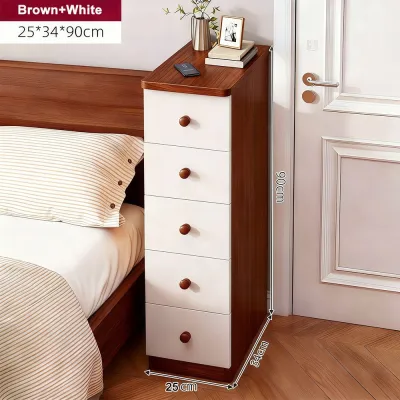
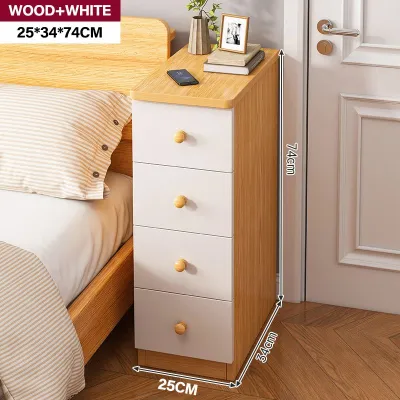
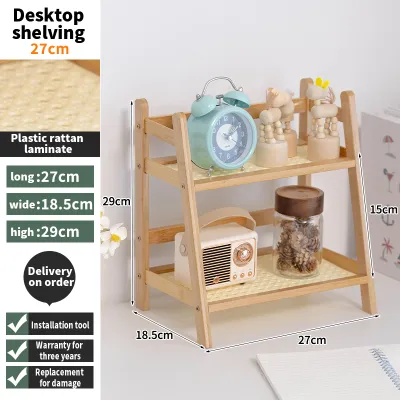
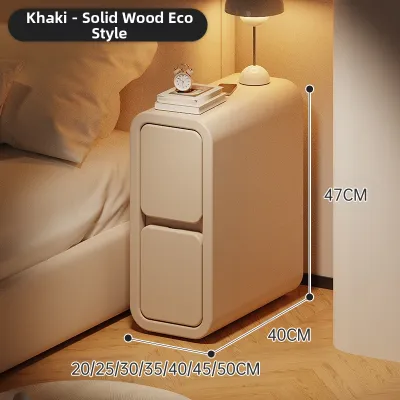
Prices are valid at publication and may change. Please refer to the product page for the latest price.
Finally, calculate the clearance required for moving parts. If you select a cabinet with drawers or a swinging door, measure the distance these components extend when fully opened. Ensure they do not collide with your bed frame, wardrobe doors, or bedroom entryways. If you have a sliding wardrobe nearby, verify that the cabinet does not block the sliding track or prevent you from fully opening the wardrobe doors. Taking these precise measurements beforehand prevents the frustration of owning a piece of furniture that restricts your daily movement.
Space-Saving Bedside Cabinet Types to Consider
When floor space is limited, standard bedside tables are often too bulky. Fortunately, several specialized furniture designs cater specifically to tight spaces, each offering a unique balance of surface area, storage capacity, and visual weight. Understanding how these different form factors address spatial constraints will help you choose the option that most effectively fits your bedroom layout and storage habits.

Slim Drawer Cabinets
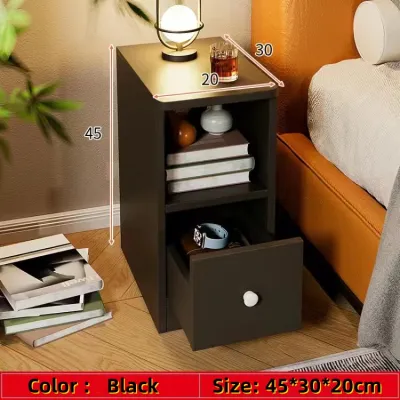
Slim drawer cabinets are the traditional choice for those who prefer enclosed storage to keep bedside clutter hidden from view. These units typically feature a narrow width profile, allowing them to slide into tight gaps between the bed and the wall. Because they are narrow, manufacturers often design them with increased depth or height to maximize storage volume.
However, this design introduces specific trade-offs. A narrow, deep drawer can become difficult to organize, as items stored at the back may be hard to see or reach. Furthermore, tall and narrow units have a higher center of gravity, which can affect overall stability when drawers are fully extended. To mitigate this, look for units with sturdy drawer glides that prevent the drawer from falling out, and check if the manufacturer recommends anchoring the cabinet to the wall. Slim drawer cabinets are highly suitable for storing private items, cables, or personal accessories that you prefer to keep dust-free and out of sight.
C-Shaped and Slide-In Side Tables
C-shaped and slide-in side tables are engineered specifically to minimize floor footprint by utilizing the space beneath or over your bed. The base of a C-shaped table is designed to slide directly under your bed frame, allowing the tabletop to hover over the mattress edge. This makes them a practical option for bedrooms where there is virtually no gap between the side of the bed and the wall.
Before choosing this type, you must verify the clearance beneath your bed frame. Measure the height of the gap between the floor and the bottom of the bed frame to ensure the table’s base can slide underneath smoothly. Additionally, consider the weight capacity of the cantilevered tabletop. Because the surface is supported by a single side arm, these tables are best suited for lightweight items such as a book, a phone, or a small mug. Check the manufacturer’s specifications for weight limits, and inspect the joints and frame material to ensure the table will not sag or tip when you place items on the outer edge.
Floating Wall-Mounted Shelves
Floating wall-mounted shelves offer a zero-footprint alternative that completely frees up your bedroom floor. By eliminating legs and bases, floating shelves create a sense of visual openness, making a small bedroom feel larger and easier to clean. This option is ideal for extremely tight gaps where even the slimmest floor-standing cabinet cannot fit.
However, wall-mounted solutions come with strict installation requirements. You must verify your wall type before mounting a shelf. Concrete, brick, or solid wood walls provide strong support for heavy-duty anchors, whereas drywall or plasterboard requires locating studs or using specialized hollow-wall anchors. If you are renting your home, check your lease agreement for drilling restrictions, as mounting shelves usually requires drilling permanent holes. Additionally, ensure you follow the manufacturer’s installation instructions carefully to prevent the shelf from sagging or pulling away from the wall over time.
Tiered and Nesting Side Tables
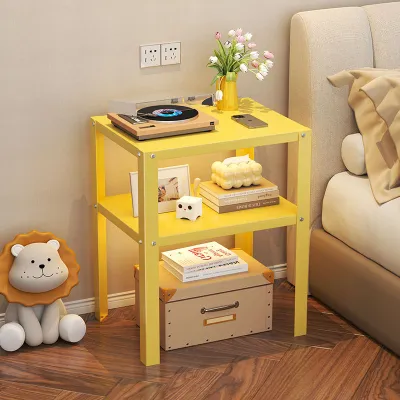
Tiered and nesting side tables utilize vertical space to offer multiple levels of storage without expanding the base footprint. A tiered table typically features two or three open shelves stacked vertically, allowing you to separate items by frequency of use. For example, you can place a reading lamp on the top tier, books on the middle tier, and storage baskets on the bottom tier.
The open design of tiered tables has a low visual weight, meaning they do not block light or make a small room feel closed in. However, open shelving means your items are fully visible, which can look cluttered if not organized neatly. Nesting tables offer a different kind of flexibility; they consist of two or more tables of graduating sizes that slide completely underneath one another. You can keep them nested to save space daily, and slide the smaller table out only when you need extra surface area for a laptop or morning coffee. Ensure the height of the primary table aligns comfortably with your mattress for easy reach.
Material and Stability Checks for Local Conditions
Selecting a narrow bedside cabinet in the Philippines requires careful consideration of local environmental factors, particularly high humidity and tropical temperatures. High moisture levels can cause certain materials to warp, swell, or degrade over time. When browsing options, check the manufacturer’s specifications for moisture-resistant treatments. For engineered wood products like MDF or particleboard, verify that they feature high-quality laminates or protective sealants that shield the core material from humid air.
Stability is another critical safety check, especially for narrow and tall furniture. Because narrow cabinets have a smaller footprint, they are naturally more prone to tipping if bumped or overloaded. Inspect the base design of the cabinet; a wider or heavier base relative to the top helps lower the center of gravity, improving stability. If you plan to place the cabinet on a carpeted surface or an uneven floor, look for units equipped with adjustable leveling feet.
Finally, inspect the surface finishes and edge banding. Bedside tables frequently encounter moisture from condensation on cold water glasses, which can cause cheap veneers to peel or bubble. Look for surfaces with water-resistant coatings, such as melamine or polyurethane finishes, and check that the edge banding is tightly sealed without any visible gaps. Taking the time to verify these material details ensures your cabinet remains durable and visually appealing for years to come.
Pre-Purchase Measurement and Verification Checklist
To avoid delivery day surprises, follow this step-by-step checklist to verify that your chosen narrow bedside cabinet will fit your space and function as intended.
First, measure the exact gap between your bed frame and the wall or adjacent furniture. Do this at multiple points—near the headboard, in the middle, and at the foot of the bed—as walls are rarely perfectly straight. Use the smallest measurement as your maximum width limit.
Second, map out the delivery pathway. Measure the width and height of all doorways, hallways, stairwells, and elevator cabins that the delivery team or shipping box must pass through to reach your bedroom. Even if a cabinet is small when assembled, the shipping box may be significantly larger, especially if it arrives pre-assembled.
Third, check the product specifications for both the assembled dimensions and the shipping package dimensions. Compare these figures against your pathway measurements.
Lastly, review your budget in Philippine Pesos (₱) and compare it against the total cost, including shipping and assembly fees. If the cabinet requires self-assembly, verify if the necessary tools are included in the package or if you will need to provide your own. By systematically checking these details, you can make a confident purchase that fits your home comfortably.
Frequently Asked Questions (FAQ)
Can I use a living room side table as a bedside cabinet?
Yes, you can use a living room side table as a bedside cabinet, provided its height aligns comfortably with your mattress. Many side tables feature slim profiles that work exceptionally well in tight bedroom spaces. However, keep in mind that living room side tables often prioritize open shelving or minimalist designs, which may offer less enclosed storage than traditional bedside cabinets. If you need to store personal items out of sight, look for side tables that include at least one drawer or a lower shelf that can accommodate a storage basket.
What is the ideal height for a narrow bedside cabinet?
The ideal height for a narrow bedside cabinet is generally level with the top of your mattress, or up to five centimeters lower. This height range allows you to easily reach items while lying down without having to stretch upward or lean uncomfortably over the edge of the bed. If you use a thick mattress topper or a low-profile platform bed, measure the total height from the floor to the top of your sleeping surface, and use that measurement as your primary guide when shopping for a cabinet.

Community discussion
Share your experience or ask a question. Comments are reviewed before publication.