
A well-organized home office requires balancing functional storage with aesthetic display, but the “best” display rack organizer depends entirely on your available space, wall structure, and the weight of your items. Rather than searching for a single universal solution, the most effective approach is to match specific rack styles—such as wall-mounted, freestanding, tiered, or rotating units—to your unique study room layout and inventory. This guide will help you assess your spatial constraints, compare the core organizer styles, and verify the necessary safety and structural specifications before making a purchase.
Achieving an efficient workspace is not just about clearing clutter; it is about creating an environment that supports focus and productivity. In many homes, the study room serves multiple purposes, acting as a professional office by day and a personal library or creative studio by night. A carefully selected organizer ensures that your essential reference books, decorative items, and daily tools are both accessible and securely stored, preventing the visual chaos that often leads to mental fatigue.
Assessing Your Home Office Space and Storage Needs
Before browsing online marketplaces or visiting local furniture showrooms, you must conduct a thorough physical assessment of your designated workspace. Begin by measuring the exact floor area where you plan to position the organizer, taking note of nearby baseboards, electrical outlets, light switches, and window frames. It is equally critical to measure the clearance of your doorways, hallways, and stairwells; a large, pre-assembled freestanding unit is of no use if it cannot clear a tight turn in a condominium corridor or a narrow residential staircase.
Products mentioned in this guide
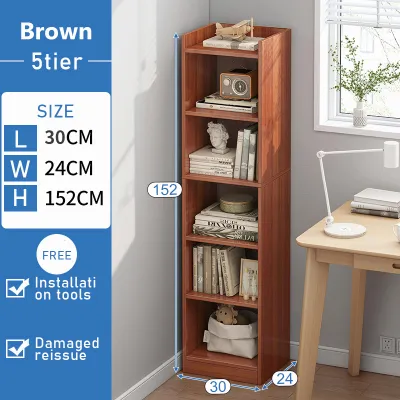
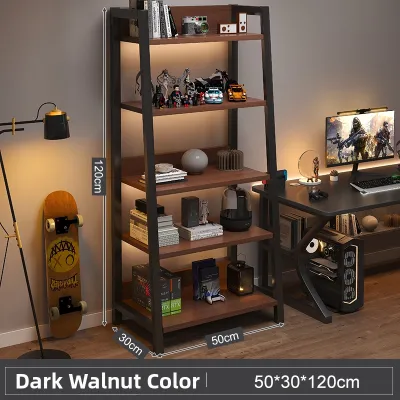

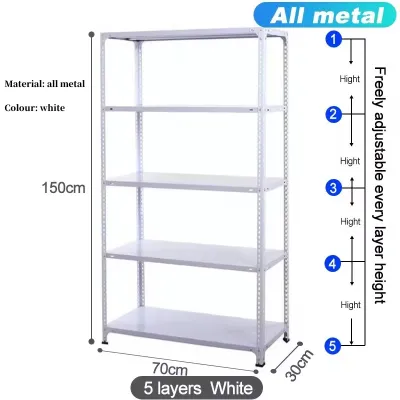
Prices are valid at publication and may change. Please refer to the product page for the latest price.
Next, categorize the items you intend to store or display by their physical characteristics and frequency of use. Heavy reference manuals, thick law or medical textbooks, and bulky binders require deep, rigid shelves that will not sag over time. Conversely, lightweight decorative pieces, small framed photographs, and air-purifying indoor plants can sit on shallower, more delicate platforms. Grouping your inventory this way allows you to calculate the total weight capacity your new organizer must support, preventing structural failures down the road.
Finally, evaluate the structural composition of your walls, as this directly dictates your mounting options. In many tropical regions, including the Philippines, residential walls are commonly constructed from solid concrete, hollow concrete blocks, or plaster-coated masonry. These robust surfaces offer excellent load-bearing potential but require a hammer drill, masonry bits, and expansion anchors for installation. If your home office features gypsum board or drywall partitions, you must locate the underlying wooden or metal studs to secure heavy loads, as standard drywall anchors alone cannot safely support substantial weight.
Comparing Display Rack Organizer Styles
Selecting the right configuration requires balancing the physical footprint of the furniture with its vertical storage capacity. Different styles offer distinct advantages depending on whether you need to preserve valuable floor space, fill an empty corner, or keep active paperwork within arm’s reach on your desktop.

To help you visualize the primary differences, consider how each major style performs across key operational categories:
| Organizer Style | Primary Footprint | Vertical Capacity | Best Suited For |
|---|---|---|---|
| Wall-Mounted | Zero floor space | Low to Moderate | Lightweight decor, small books, and plants |
| Freestanding | Moderate to High | High to Very High | Heavy textbooks, office archives, and equipment |
| Rotating / Corner | Compact | Moderate | High-density small items, unused corners |
| Desktop / Modular | Minimal (on desk) | Low | Active files, daily stationery, and tech accessories |
Wall-Mounted and Floating Shelves
Wall-mounted organizers and floating shelves are the premier choice for compact study rooms where floor space is at a premium. By elevating your books and decorative items, these shelves keep the floor clear, creating an airy, spacious feel in smaller rooms. They are particularly effective for displaying curated items, small potted plants, and lightweight paperbacks that do not require massive structural support.
However, successful installation of wall-mounted units depends entirely on matching the mounting hardware to your specific wall type. When mounting onto concrete or masonry, you must use plastic or metal expansion shields that grip the drilled hole tightly. For drywall installations, securing the brackets directly into the wall studs is the only way to ensure long-term stability; relying solely on plastic self-drilling drywall anchors can lead to catastrophic failure if the shelf is accidentally overloaded.
Furthermore, floating shelves typically feature internal bracket systems that have lower weight limits than traditional visible brackets. If you plan to store heavy binders or multi-volume encyclopedias, avoid minimalist floating designs unless the manufacturer explicitly provides a high, certified load rating. Instead, opt for wall-mounted racks that feature vertical standards and adjustable metal brackets, which distribute the weight more evenly across multiple anchor points.
Freestanding and Tiered Bookcases
When your storage needs involve heavy reference materials, printers, or extensive book collections, freestanding and tiered bookcases are the most reliable option. These units rest directly on the floor, transferring the weight of your items naturally to the ground and providing a level of structural stability that wall-mounted shelves cannot match. They are available in a wide range of heights, from low-profile console styles to towering units that maximize vertical wall space up to the ceiling.
When selecting a freestanding bookcase, pay close attention to the depth of the shelves and the flexibility of their positioning. Fixed-shelf units offer excellent structural rigidity but can limit your ability to store oversized binders or tall storage boxes. Look for models featuring adjustable shelf pins, which allow you to customize the vertical clearance of each tier to match your changing inventory. Additionally, ensure the unit’s depth is sufficient to prevent books from overhanging the front edge, which can disrupt walkways and look untidy.
The stability of a freestanding unit also depends heavily on your flooring material. Polished concrete, ceramic tiles, and hardwood floors provide a solid, level foundation, but slight imperfections can cause tall bookcases to wobble. Many high-quality freestanding organizers feature adjustable leveling feet underneath the base, allowing you to compensate for uneven floors and ensure the unit remains perfectly plumb.
Rotating and Corner Display Racks
Awkward room layouts and tight corners often result in wasted space that could otherwise be used for storage. Corner display racks are specifically engineered to fit snugly into 90-degree intersections, turning dead space into a functional showcase for books or office supplies. These units typically feature a triangular or curved footprint, allowing them to blend seamlessly into the room without obstructing natural traffic paths or chair movement.
Rotating display racks, often referred to as carousel or lazy Susan shelves, offer incredibly high-density storage within a very compact footprint. By rotating 360 degrees, these units allow you to access books, notebooks, and office supplies from all sides without needing to walk around the furniture. This makes them exceptionally useful when positioned next to your desk chair, providing immediate access to a large volume of active reference materials.
Before purchasing a rotating rack, you must verify both its base footprint and the clearance required for it to spin freely. Ensure that the rotating path does not collide with nearby walls, desk edges, or your office chair. Additionally, inspect the quality of the central rotating mechanism and bearing plate; a low-quality bearing can become stiff, noisy, or unstable when the shelves are fully loaded with heavy books.
Desktop and Modular Organizers
For items that you use constantly throughout the workday, desktop and modular organizers provide localized, highly accessible storage. These compact units sit directly on your writing desk or credenza, keeping pens, notebooks, active files, and tech accessories organized and within arm’s reach. By designating a specific home for these daily essentials, you prevent the surface of your desk from becoming cluttered and disorganized.
Modular organizers offer the unique advantage of adaptability, allowing you to stack, expand, or reconfigure the compartments as your workflow changes. Many modular systems consist of interlocking wooden cubes, plastic bins, or metal wire grids that can be arranged horizontally or vertically. This flexibility is ideal for creative professionals or researchers whose storage needs fluctuate depending on the project at hand.
When adding any organizer to your desktop, you must consider the load capacity of the desk itself. Heavy wooden or metal organizers, when filled with paper documents and books, can add significant weight to the center of your desk, potentially causing thin desktop panels to sag. Ensure that the combined weight of the organizer, its contents, and your computer equipment remains well within the safe operating limits specified by your desk manufacturer.
Key Features to Check Before Buying
To ensure your chosen display rack organizer performs reliably over years of daily use, you must look past aesthetic appeal and carefully verify its technical specifications. Start by comparing the exact external dimensions of the unit against your measured home office space. Remember to account for the thickness of baseboards, which can prevent a flat-backed bookcase from sitting flush against the wall, as well as the location of electrical outlets that you may need to access regularly.
Next, examine the manufacturer’s specified weight capacity, looking specifically for the weight limit per individual shelf rather than just the total weight capacity of the entire unit. A bookcase rated for a total of 100 kilograms might only support 15 kilograms per shelf, with the remainder of the capacity concentrated on the bottom base. If you place a heavy stack of books on an upper shelf that exceeds its individual rating, the shelf may bow or crack, even if the overall unit is far from its total weight limit.
Material selection and surface finishes play a critical role in durability, especially in humid tropical environments. If you select an engineered wood product, such as particleboard or medium-density fiberboard (MDF), verify that all exposed edges are sealed with high-quality edge banding. Unsealed edges can absorb moisture from the air, leading to swelling, warping, and the growth of mold. For metal frames, look for powder-coated finishes that provide a robust barrier against rust and scratches.
Finally, review the assembly requirements and the hardware included with the product. High-quality organizers should come with clear, step-by-step instructions and all necessary fasteners, including wall-anchoring safety hardware. Check whether you will need specialized tools, such as a level, a rubber mallet, or a specific drill bit size, to complete the installation successfully.
Installation and Safety Considerations
Proper installation is the single most important factor in ensuring your display rack organizer remains safe and functional. For any freestanding unit that stands taller than one meter, installing an anti-tip kit is an absolute necessity. These kits typically consist of heavy-duty straps or metal brackets that anchor the top of the furniture directly to a wall stud or masonry surface, preventing the unit from tipping forward if someone accidentally pulls on a shelf or if an earthquake occurs.
When installing wall-mounted shelves, never guess where the structural supports are located. In drywall construction, use a reliable stud finder to locate the center of the wooden or metal studs, and secure your mounting brackets directly into them using long wood screws. If you must mount a shelf to a hollow section of drywall, use heavy-duty toggle bolts or steel hollow-wall anchors, and strictly adhere to the reduced weight limits associated with hollow-wall mounting.
If you are mounting onto concrete or brick walls, use a hammer drill to create clean, precise holes of the exact diameter specified by your masonry anchors. Clean out any concrete dust from the hole before inserting the plastic shield or expansion anchor, as leftover dust can prevent the anchor from gripping the masonry securely. Tap the anchor in gently until it sits flush with the wall surface before tightening the bracket screws.
If at any point during the installation process you encounter unexpected resistance, if your drill bit hits a hidden metal plate or pipe, or if the assembled unit feels unstable or unlevel, stop immediately. Do not attempt to force the installation or overload an unstable rack. Consult a qualified professional carpenter or handyman to assess the wall structure and complete the mounting safely.
Frequently Asked Questions (FAQ)
Can I use a display rack organizer for heavy office equipment?
Standard decorative display racks are generally not designed to support the concentrated weight and operational vibrations of heavy office equipment like laser printers, paper shredders, or large uninterruptible power supplies (UPS). Before placing any heavy machinery on a shelf, you must verify the manufacturer’s explicit weight rating for that specific tier. Heavy equipment should always be placed on the lowest shelf of a freestanding unit to keep the center of gravity as low as possible, which significantly improves the overall stability of the furniture and reduces the risk of tipping.
How do I clean and maintain wooden or metal display racks?
To maintain the appearance and structural integrity of your display rack, dust it regularly using a dry or slightly damp microfiber cloth. Avoid using harsh chemical cleaners, abrasive scrubbing pads, or wax polishes that can degrade the protective surface finish or cause metal components to rust. In humid climates, wipe up any liquid spills or condensation from cold drinks immediately to prevent water from penetrating unsealed joints or causing wooden panels to swell. Periodically inspect the unit for loose screws, shelf pins, or rotating mechanisms, and tighten them gently with hand tools to ensure the frame remains rigid and stable.

Community discussion
Share your experience or ask a question. Comments are reviewed before publication.