
To host a gathering of 6 to 10 people in a compact condominium, the most effective solution is a telescopic console-to-dining table or a double-gateleg table with integrated leaf storage. These designs allow you to maintain a minimal daily footprint—often serving as a slim entryway console or a modest two-seat breakfast nook—while expanding to a full-length dining surface when family visits. Balancing daily livability with occasional large-scale hosting requires a careful look at mechanisms, clearance, and structural stability.
Measuring Your Condo Space and Clearance Requirements
Condo living in urban centers like Manila demands strict spatial efficiency. Before purchasing any expandable furniture, you must measure both its daily collapsed footprint and its maximum extended dimensions. A table that expands to seat 10 people can easily reach 2.4 to 3 meters in length. You must map this maximum length onto your dining area to ensure it does not block main thoroughfares or entryways.
Seating comfort depends heavily on clearance. As a rule of thumb, allow at least 60 to 75 centimeters of clearance behind each chair to let guests pull their seats out and sit down comfortably. For active walking paths around the table—especially when serving hot dishes during family gatherings—you need a minimum of 90 centimeters of clear space between the table edge and the nearest wall or furniture piece.
Products mentioned in this guide
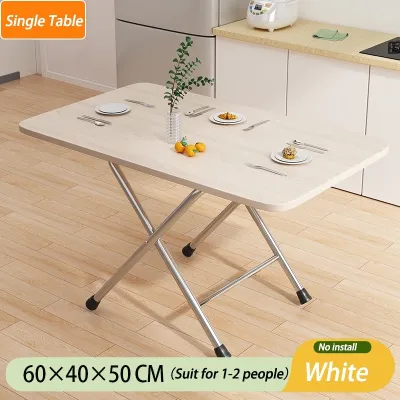
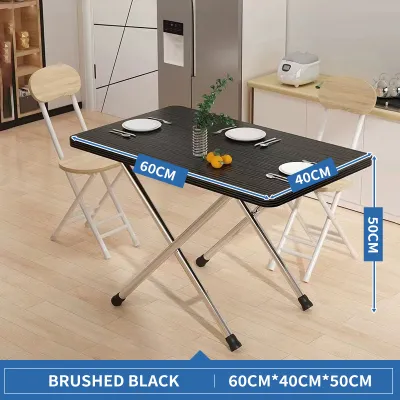
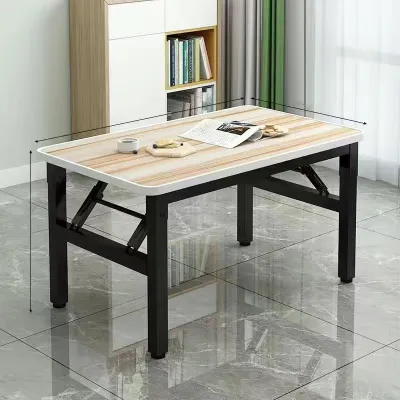
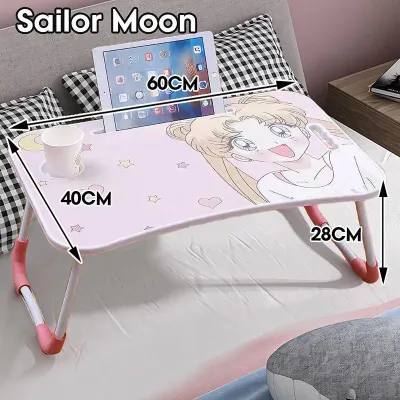
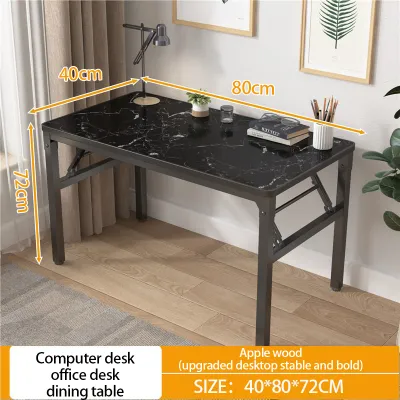
Prices are valid at publication and may change. Please refer to the product page for the latest price.
Do not forget to account for fixed structural obstacles. Many modern condo units feature prominent structural pillars, low-hanging split-type air conditioning units, or sliding doors leading to a balcony. Open these doors and check the swing paths of nearby bedroom or bathroom doors to ensure your fully extended table does not trap guests or block emergency exit routes.
Comparing Table Mechanisms for Small-to-Large Expansion
Choosing the right expansion mechanism determines how easily you can transition your space from a quiet weekday sanctuary to a bustling weekend feast. Drop-leaf and gateleg tables are classic choices. A gateleg table features hinged panels that fold down when not in use, supported by legs that swing out like a gate. While highly space-efficient, gateleg tables often present legroom challenges. When fully extended to seat 8 or 10 people, the multiple support legs underneath can restrict guest knee room and limit where you can comfortably place dining chairs.

Butterfly leaf and hidden leaf extension tables offer a more seamless aesthetic. These tables feature a split top that slides apart on metal tracks to reveal an extension leaf folded underneath or stored separately. Because the extension leaves are integrated or stored internally, you do not need to find extra closet space for them. However, these tables typically only expand by one or two seating sizes—such as from a 4-seater to a 6- or 8-seater—making them less suitable if you need to scale all the way up to 10 guests from a very small starting footprint.
For maximum expansion potential, telescopic track systems and console-to-dining tables are highly effective. These innovative designs start as a slim console table placed against a wall. By pulling the frame outward on heavy-duty aluminum telescopic tracks, you can insert multiple separate leaf panels to extend the table up to 3 meters. This setup can easily accommodate up to 10 diners. The primary trade-off is that you must find a dedicated storage spot, such as a closet or under a bed, for the extra leaf panels when they are not in use.
In contrast, wall-mounted fold-down tables are poorly suited for large gatherings. While excellent for a quick solo breakfast or a two-person workspace, they are structurally limited by the load-bearing capacity of your condo’s walls. They also permanently anchor the dining setup to a single wall, blocking seating on at least one side and making it physically impossible to seat 6 to 10 guests safely.
Checking Stability and Comfort for Fully Extended Tables
A table extended to its maximum length faces significant physical leverage. To ensure guest safety, you must verify the table’s stability and center of gravity when fully open. Look for models that feature central support legs or reinforced steel frames that deploy automatically as the table expands. Without these central supports, weight applied to the far ends of the table—such as a guest leaning forward or a heavy serving tray—can cause the table to bow or tip.
The physical weight of the table also plays a crucial role in stability. Heavy solid wood or thick engineered wood tables are highly stable but can be difficult to move across your condo floor. If you plan to shift the table from the wall to the center of the room for gatherings, check if the unit features locking casters. If it does not, install high-density felt floor protectors under the legs to prevent scratching your laminate, vinyl, or engineered wood flooring during transitions.
Finally, inspect the quality of the edge joints and surface leveling. When the table is fully extended, the seams where the leaves meet must align perfectly. Uneven seams not only look unappealing but can also cause glasses to wobble and spill. Check the locking latches underneath the tabletop; robust toggle latches or alignment pins are essential to pull the leaves tightly together and maintain a flat, continuous dining surface.
Planning Condo Delivery and Assembly Logistics
Before finalizing your purchase, you must plan how the table will physically reach your unit. Many high-rise condominiums have strict physical constraints that can turn delivery day into a logistical headache. Measure the height, width, and depth of your building’s service or passenger elevator. Compare these dimensions, along with the clearance of tight stairwell turns and your own front door frame, against the manufacturer’s packaged box dimensions.
Once inside, you will need a clear, flat area to assemble the table. Expandable tables with complex telescopic tracks or butterfly mechanisms often arrive in large, heavy boxes and require flat assembly on the floor before being flipped upright. Ensure you have enough open floor space to complete this process without damaging your walls or existing furniture.
Additionally, consult your condominium administration’s rules and regulations. Most properties require a formal work permit or delivery gate pass submitted several days in advance. You will also need to reserve the freight elevator and adhere to strict delivery and assembly hours—typically restricted to weekdays between 9:00 AM and 5:00 PM—to avoid disturbing your neighbors with assembly noise.
Frequently Asked Questions (FAQ)
How do I prevent a fully extended folding table from tipping?
To prevent tipping, always verify that all integrated support legs, central pillars, and telescopic track locks are fully engaged and locked into position before setting the table. When serving meals, distribute heavy serving bowls, hot pots, and beverage pitchers near the center of the table or directly over the main support legs rather than at the outer edges. Additionally, ensure the table stands on a completely level floor, and use adjustable leveling feet or non-slip rubber pads to eliminate any wobble.
Can a wall-mounted fold-down table seat 10 people?
No, a wall-mounted fold-down table cannot safely accommodate 10 people. Standard wall brackets and masonry or drywall anchors are not designed to support the immense weight of a 10-person dining setup, which includes the tabletop, heavy dinnerware, and the physical weight of guests leaning on the surface. Furthermore, because one side of the table is permanently fixed to the wall, you lose a significant portion of the usable perimeter, making it impossible to arrange enough chairs. For groups of this size, a freestanding expandable console or a telescopic dining table is a much safer and more practical choice.

Community discussion
Share your experience or ask a question. Comments are reviewed before publication.