
The ideal size for a cabinet organizer storage shelf in a small study space depends on balancing your available floor footprint with your vertical wall clearance and the specific items you need to store. In compact homes, such as urban apartments or shared bedrooms in the Philippines, a shelf with a depth of 25 to 30 centimeters and a width of 40 to 60 centimeters typically provides a practical balance, maximizing storage without obstructing walkways. High humidity and limited ventilation in small rooms mean you must also consider how the shelf’s physical footprint affects airflow and room layout. Choosing the right size requires precise measurements of your physical space, an honest assessment of your storage items, and an understanding of how different configurations fit into tight corners.
Measure Your Study Space Before Buying
Start with the physical footprint. Use a metal tape measure to find the exact width, depth, and height of the designated area. Do not rely on visual estimation, as even a discrepancy of one centimeter can prevent a shelf from fitting into a tight alcove.
Account for architectural obstacles. Measure from the baseboard rather than the bare wall, as baseboards can reduce the usable width by a few centimeters. Note the locations of wall outlets, light switches, window sills, and air conditioning units to ensure the shelf does not block access or airflow.
Products mentioned in this guide
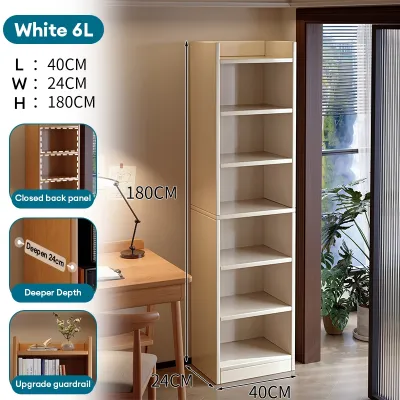
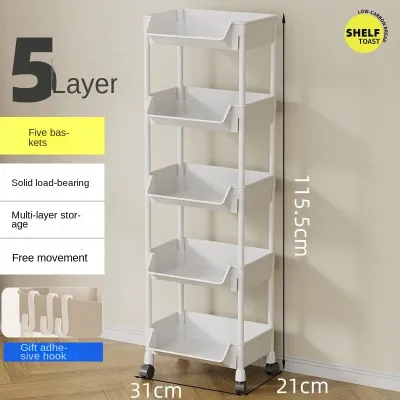
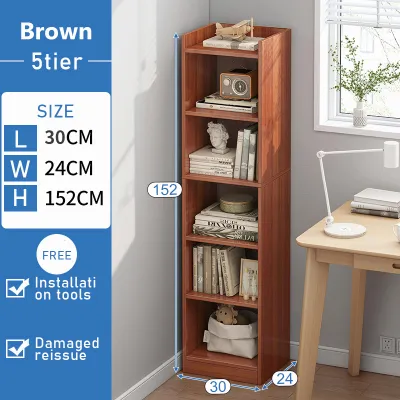
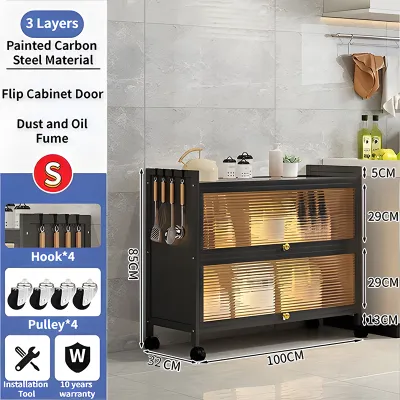
Prices are valid at publication and may change. Please refer to the product page for the latest price.
Factor in clearance for movement. A cabinet organizer storage shelf should not impede daily activities. Measure the space required for door swings, desk drawers, and the full range of motion of your office chair. Leave at least 60 to 70 centimeters of open floor space in front of the shelf for comfortable walking and access.
Verify the delivery and assembly route. Measure the width and height of your front door, hallways, stairwells, and elevator doors. A pre-assembled unit must physically pass through these bottlenecks, while a flat-packed unit requires a clear assembly area on the floor that is larger than the finished dimensions of the shelf itself.
Check the levelness of your floor. In many homes, floors may not be perfectly level. A shelf that is tall and narrow can wobble significantly if placed on an uneven surface. Check the floor level with a spirit level tool, and look for shelves with adjustable leveling feet to compensate for minor floor variations.
Identify your wall construction if you plan to anchor a tall shelf to the wall for safety. Concrete or hollow block walls, common in local residential builds, require masonry drill bits and appropriate wall plugs, whereas drywall partitions require toggle bolts or stud-finding to ensure a secure hold.
Match Shelf Dimensions to Your Storage Needs
Categorize your study materials. Standard textbooks, reference manuals, and A4 binders require different shelf depths and heights. Measure your tallest and deepest items before shopping. For instance, standard novels fit on a 20-centimeter deep shelf, while large binders and storage boxes generally require a depth of 30 centimeters or more.

Evaluate adjustable versus fixed shelves. Fixed compartments offer structural rigidity but limit your storage options if your needs change. Adjustable shelves allow you to customize the vertical spacing, which is highly beneficial in a small study where you must minimize wasted vertical space. Check the manufacturer’s specifications for the increment intervals of the shelf pegs.
Verify weight capacity ratings. Paper is exceptionally heavy when stacked. To prevent sagging, bowing, or structural failure, check the manufacturer’s maximum weight capacity per shelf. Look for reinforced support bars or thicker shelf panels if you plan to store heavy textbooks, printers, or desktop organizers.
Consider the material and local climate. In humid tropical environments, solid wood or engineered wood shelves require proper finishes to resist moisture absorption. Inspect the edges and joints of laminated or veneered shelves to ensure they are completely sealed, which helps prevent swelling over time.
Measure any storage bins or baskets you plan to use. Many people use fabric or plastic bins to organize smaller items on their shelves. If you plan to use these, measure the bins first. A shelf that is even half a centimeter too narrow or shallow will prevent the bins from sliding in smoothly, rendering your organization system ineffective.
Check for cable management features. If you plan to place charging stations or small desk lamps on the shelf, check if the unit has pre-drilled cable routing holes or an open back. Without these, you may have to pull the shelf away from the wall, which wastes valuable floor space in a tight room.
Configurations for Compact and Awkward Layouts
Compare vertical and horizontal designs. Tall, narrow vertical shelves utilize unused wall space and are excellent for tight corners, but they require secure wall anchoring to prevent tipping. Low, wide units can double as a secondary work surface or printer stand, but they consume valuable floor space that might be needed for your chair or legs.
Utilize dead space with specialized designs. Corner shelves can transform an underutilized intersection of walls into a functional storage hub. Alternatively, a small desktop cabinet organizer storage shelf can sit directly on your study table, keeping frequently used pens, notebooks, and reference guides within arm’s reach without taking up any floor space.
Assess mobile and foldable options. Shelves equipped with caster wheels offer flexibility in multi-purpose rooms, allowing you to roll the storage unit out of the way when hosting guests or cleaning. If choosing a mobile unit, verify that at least two wheels have reliable locking mechanisms to maintain stability during use. Foldable shelves are convenient for temporary setups, but you must check their joint mechanisms and load limits carefully, as they are generally less rigid than fixed frames.
Consider modular shelving systems. Modular units allow you to start with a small configuration and add components as your storage needs grow. This is highly practical for students or young professionals who may relocate frequently, as modular pieces are easier to pack, transport, and reconfigure in a new layout.
Common Sizing Mistakes to Avoid
Restricting air circulation around electronics. Placing a shelf too close to a laptop, monitor, or UPS can trap heat, especially in warm tropical climates. Ensure there is a gap of at least 5 to 10 centimeters between the shelf panels and any electronic heat sources to allow hot air to dissipate.
Underestimating assembly space requirements. Many flat-pack cabinet organizer storage shelf units must be assembled lying flat on the floor. If your study space is extremely tight, you may not have enough room to maneuver tools or lift the completed frame into an upright position. Plan to assemble the unit in a larger room, such as a living area, and verify that the fully assembled piece can fit through the study door.
Ignoring visual weight and room balance. A dark, bulky, solid-backed shelf can make a small room feel claustrophobic and cramped, even if the physical dimensions technically fit. To maintain an open and airy feel, consider open-backed shelves, lighter color finishes, or units with slender metal frames that allow light to pass through.
Frequently Asked Questions (FAQ)
How much clearance should I leave around a storage shelf?
Leave a gap of at least 2 to 3 centimeters between the back of the shelf and the wall to prevent moisture buildup and wall scuffing, which is particularly important in humid climates. For side clearance, ensure there is enough space to access wall outlets and clean dust accumulation. If the shelf is placed near a window, leave sufficient clearance so that curtains or blinds can operate freely without getting caught on the corners of the unit.
Can I use a freestanding shelf inside an existing built-in cabinet?
Yes, using a freestanding cabinet organizer storage shelf inside a built-in cabinet is an excellent way to maximize vertical space, but it requires highly precise measurements. Measure the interior width, depth, and height of the built-in cabinet, paying close attention to internal hinges, door lips, and shelf supports that might reduce the actual clearance. Ensure the insert is stable and does not wobble; if the insert is tall or top-heavy, secure it to the interior back wall of the cabinet to prevent it from tipping forward when you pull out items.

Community discussion
Share your experience or ask a question. Comments are reviewed before publication.