
Finding the right size wall mounted folding table for a compact condominium workspace requires balancing your daily work tools with the physical limits of your room. For most studio and one-bedroom condo units in the Philippines, a table measuring 60 to 80 centimeters in width and 40 to 50 centimeters in depth offers the ideal balance. This size comfortably accommodates a standard laptop, a mouse, and a notebook while ensuring that the unit folds down flat without obstructing narrow walkways or entryways.
Assessing Your Condo Space and Clearance Requirements
Condo layouts in urban centers often feature narrow corridors and multi-functional living areas. Before purchasing a wall mounted folding table, you must measure the exact wall segment where you plan to install it. Use a metal tape measure to record the available width and height, keeping a close eye on existing fixtures. Look out for wall outlets, light switches, internet ports, and baseboards that could prevent the table from mounting flush or block access to power once the desk is unfolded.
Next, calculate the swing radius and depth clearance of the table. When the table is fully extended, it will project outward into your living space. You need to ensure there is enough room not only for the table surface itself but also for your office chair and your body. A good rule of thumb is to allow at least 100 to 120 centimeters of clear space from the wall to the back of your chair so you can sit down and stand up comfortably without bumping into other furniture.
Products mentioned in this guide
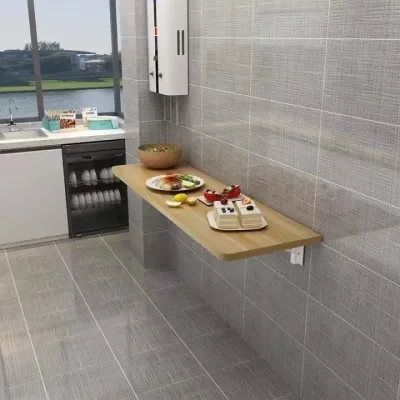
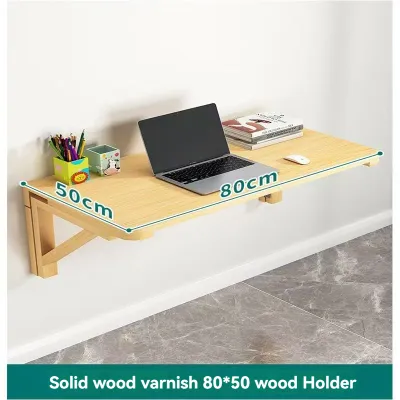
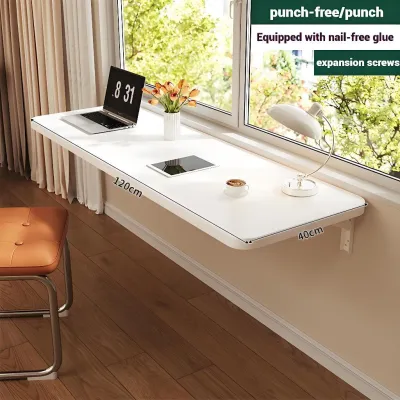
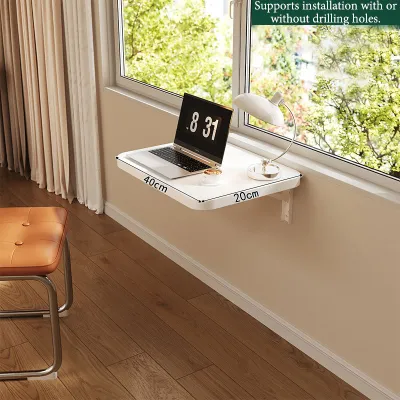
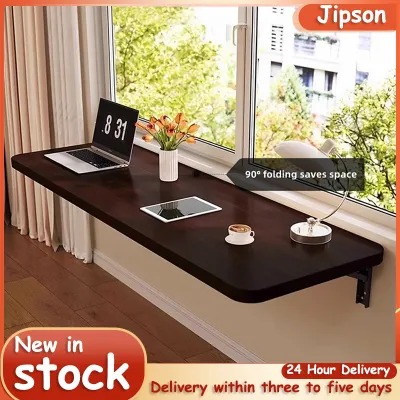
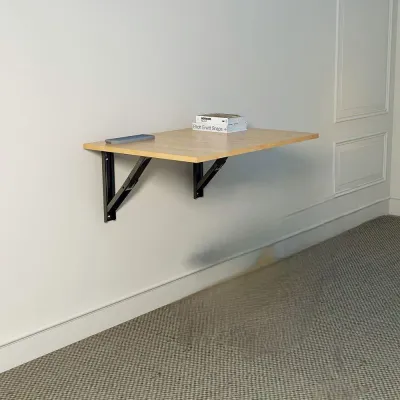
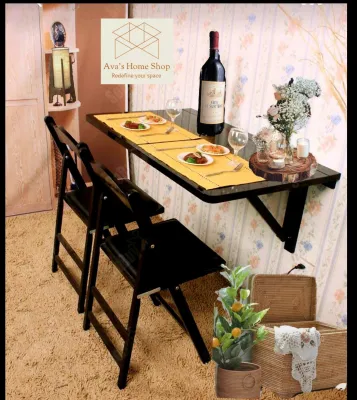
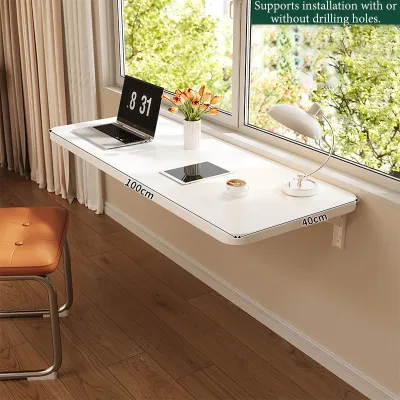
Prices are valid at publication and may change. Please refer to the product page for the latest price.
Finally, consider the flow of foot traffic in your condo. If your workspace is located in a hallway or near a doorway, a folded table must not restrict movement. Measure the width of the pathway when the table is folded flat against the wall. In tight condo layouts, even a protrusion of 5 to 10 centimeters can become a hazard for stubbed toes or snagged clothing, so choosing an ultra-slim folding mechanism is crucial for high-traffic zones.
Matching Table Dimensions to Your Daily Work Needs
Your daily work tools dictate the minimum surface area you need to stay productive. If your work setup consists solely of a slim laptop and a smartphone, a compact table with a depth of 40 centimeters is highly efficient. However, if you use an external monitor, a separate keyboard, and a mouse, you will require a deeper surface of at least 50 to 60 centimeters. This extra depth is essential to keep the monitor at a safe, comfortable viewing distance and prevent eye strain.

Width is another critical factor when organizing your workspace. A 60-centimeter-wide table is perfect for a minimalist setup, but it leaves little room for anything other than your computer. If you regularly refer to printed documents, write in a physical planner, or like to keep a glass of water nearby, look for a width of 80 to 100 centimeters. This size provides enough lateral space to prevent your work area from feeling cluttered and chaotic.
Ergonomics should never be sacrificed for space-saving convenience. Standard desk height typically ranges between 73 and 76 centimeters from the floor, but a wall-mounted table allows you to customize this placement. Sit in your preferred office chair and measure the distance from the floor to your elbows when they are bent at a 90-degree angle. Mounting your table at this exact height ensures a comfortable typing position and reduces strain on your shoulders and neck during long work hours.
Evaluating Folding Mechanisms for Tight Spaces
The type of folding mechanism you choose directly impacts how much space the table occupies when it is not in use. The most common design is the drop-leaf or fold-down mechanism, where the table surface hangs vertically against the wall when closed. This style is incredibly space-efficient because it keeps the tabletop completely out of the way, leaving the floor space beneath it entirely clear.
Alternatively, some tables feature a fold-up design, where the tabletop lifts upward and latches against the wall. These models often incorporate built-in storage shelves, a blackboard, or a mirror on the underside, making them highly multifunctional for small condo units. However, fold-up tables tend to have a thicker profile when closed, often protruding 10 to 15 centimeters from the wall, which may not be suitable for exceptionally narrow passages.
Pay close attention to the hinges and support brackets that facilitate the folding action. Heavy-duty triangular folding brackets made of steel or aluminum are excellent for stability. Look for brackets that feature a smooth locking mechanism that clicks securely into place when extended. Some models include a single-release lever underneath, making it easy to fold the table down with one hand without struggling with stiff or stubborn hinges.
Verifying Installation Safety and Wall Compatibility
A wall-mounted table is only as reliable as the wall it is attached to and the hardware used to secure it. In the Philippines, condo walls are typically constructed from solid concrete, structural concrete columns, or hollow concrete blocks finished with plaster. These solid walls provide excellent support but require a hammer drill, masonry drill bits, and heavy-duty plastic or metal expansion anchors to ensure a secure hold.
If your condo features interior partition walls made of drywall or gypsum board over metal studs, the installation process is entirely different. Drywall alone cannot support the weight of a working desk and the downward pressure of your arms. You must locate the vertical metal studs behind the drywall using a stud finder and screw the mounting brackets directly into them, or use specialized heavy-duty toggle bolts if the stud spacing does not align with your table brackets.
Always verify the manufacturer’s specified weight capacity before placing any equipment on your table. Keep in mind that this weight limit includes not just your laptop and monitor, but also the physical force you exert when leaning on the desk. If you are unsure about your wall type, lack the necessary tools, or find that the installation instructions are unclear, it is best to stop and hire a qualified local handyman to complete the mounting safely.
Common Sizing and Placement Mistakes to Avoid
One of the most frequent mistakes buyers make is overlooking the folded thickness of the table and its brackets. Even if a tabletop is advertised as ultra-thin, the mounting brackets and hinges themselves often add several centimeters of depth when folded. If you fail to account for this extra thickness, the table may obstruct nearby cabinet doors, wardrobe drawers, or entry pathways when closed.
Another common error is mounting the table without considering the height of your specific office chair. If your chair has fixed armrests, they may not fit under the table when you try to slide close to your work. Always measure the height of your chair’s armrests and seat before drilling holes in your wall to ensure you can sit comfortably and tuck the chair away when your workday is over.
Finally, avoid assuming that all ‘compact’ or ‘space-saving’ tables share standard dimensions. Product photos online can be highly deceptive, often making tables look larger or smaller than they actually are. Always check the exact millimeter or centimeter specifications provided by the manufacturer and map them out on your wall using masking tape before making a purchase.
Frequently Asked Questions (FAQ)
Can I install a wall-mounted folding table on drywall?
Yes, you can install a wall-mounted folding table on drywall, but you must take specific precautions to prevent the wall from cracking or collapsing. You should never mount the table directly onto drywall using standard plastic wall plugs. Instead, you must locate the metal or wooden studs behind the drywall and secure the brackets directly into them. If the brackets do not align with the studs, you must use heavy-duty toggle bolts designed for hollow walls, and you should strictly adhere to the manufacturer’s reduced weight limits for drywall installations.
How much space should I leave between the table and the wall when folded?
Most standard folding brackets require a small clearance gap of about 1.5 to 3 centimeters to operate smoothly without scraping against the wall surface. When planning your installation, check for any wall obstructions such as baseboards, decorative moldings, or electrical outlet covers that might protrude. If these elements are in the way, you may need to mount the table slightly higher or use spacer blocks behind the brackets to ensure the tabletop can hang completely flat and vertical when folded.

Community discussion
Share your experience or ask a question. Comments are reviewed before publication.