
Managing the space beneath a kitchen sink is one of the most challenging aspects of home organization, especially in the Philippines. The combination of complex plumbing, high tropical humidity, and the constant risk of minor leaks can quickly turn this dark corner into a cluttered, damp, and underutilized area. Selecting the right under sink cabinet requires balancing structural design with material durability to ensure your storage remains dry, accessible, and free from mold.
By understanding your kitchen’s layout, assessing your specific storage needs, and choosing materials that can withstand local climate conditions, you can transform this awkward space into an efficient storage hub. Whether you are renovating a traditional family kitchen or optimizing a compact condominium layout, a well-planned under-sink setup keeps your daily essentials organized and protects your cabinetry from long-term water damage.
Assessing Your Space and Storage Needs
Before purchasing any under sink cabinet or organizer, you must thoroughly evaluate the physical constraints of the space. The area beneath a kitchen sink is rarely a simple, empty box; it is a utility hub filled with pipes, valves, and drainage systems. Begin by mapping out your existing plumbing configuration, noting the positions of the P-trap, vertical drain pipes, flexible water supply lines, and any installed water filtration systems or grease traps. Grease traps are particularly common in Philippine condominium units to comply with waste management regulations, and their bulky metal or plastic boxes can significantly reduce the usable interior volume of your cabinet.
Products mentioned in this guide
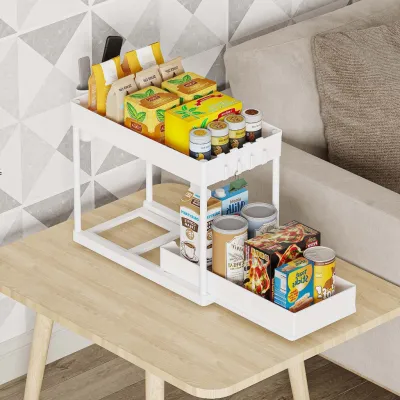
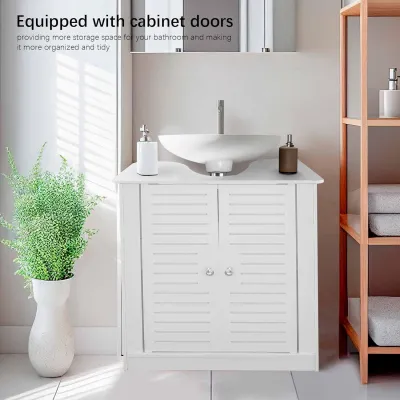
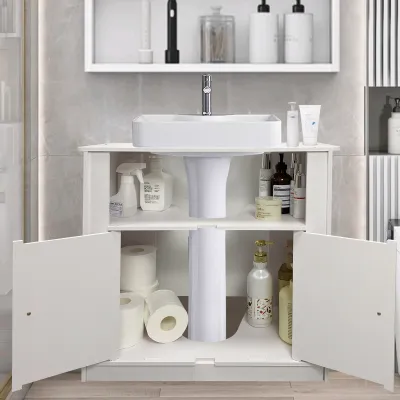
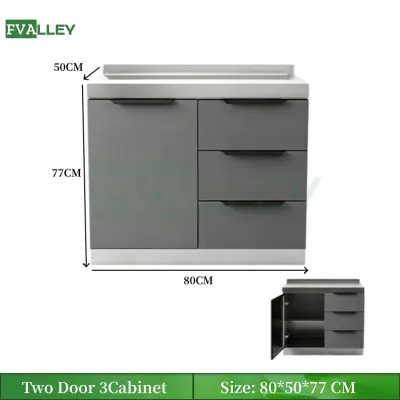
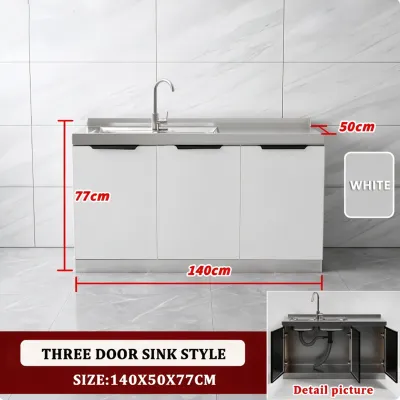
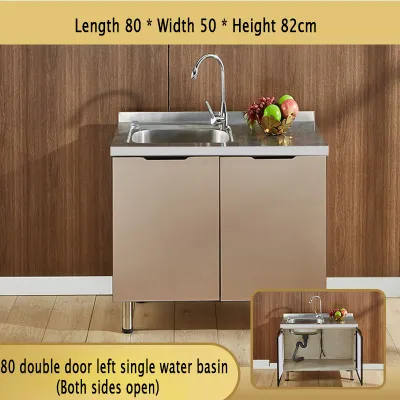
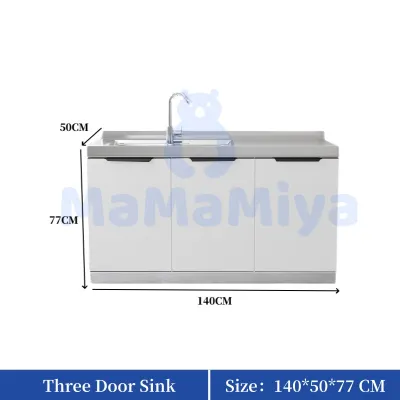
Prices are valid at publication and may change. Please refer to the product page for the latest price.
Kitchen traffic flow and door clearance are equally critical when determining the best cabinet style. In tight galley kitchens or compact studio apartments, traditional swing doors can block walkways and collide with nearby appliances when opened. For these restricted layouts, sliding doors or open-front designs are often more practical. If you have ample floor space in front of the sink, deep drawers or pull-out compartments can provide excellent access, but you must ensure they have a clear path to extend fully without hitting dining tables, kitchen islands, or trash bins.
Finally, categorize the items you plan to store under the sink based on how often you use them and how much they weigh. Daily essentials like dishwashing liquid, sponges, and multi-purpose sprays should be kept in the most accessible zones, while spare cleaning supplies, garbage bags, and pest control items can sit further back. Heavy items, such as large jugs of detergent or gallons of distilled water, must be placed on the cabinet floor or on reinforced shelves to prevent warping, while lightweight items can be organized on upper tiers or hanging racks.
Recommended Cabinet Designs for Different Layouts
Different kitchen layouts and plumbing configurations require distinct cabinet designs to maximize efficiency. There is no single configuration that works for every home, as the position of your sink basin and the complexity of your pipework will dictate what can realistically fit. Choosing the right structural design helps you avoid wasting valuable vertical space and ensures you do not accidentally block access to shut-off valves during plumbing emergencies.

When selecting a design, consider how easily the cabinet can be cleaned and maintained. Because the under-sink area is prone to spills and condensation, the structure should allow you to reach every corner with a wipe or sponge. Below are three of the most common and effective cabinet designs tailored to address specific spatial challenges.
Pull-Out Shelves and Sliding Organizers
Pull-out shelves and sliding organizers are highly effective for deep base cabinets where reaching items in the far back is difficult. Instead of bending down and rummaging through a dark cabinet, these systems allow you to pull the entire contents forward into the light. This design is particularly beneficial for deep, single-basin sink cabinets where the plumbing is concentrated near the rear wall, leaving a large open space in the front.
When planning for pull-out organizers, it is essential to check the weight limits of the slide rails. Heavy-duty, ball-bearing drawer slides are recommended if you plan to store heavy cleaning bottles or water containers. Additionally, you must verify that the track path of the slide rails completely clears the drain pipe, flexible hoses, and any low-hanging plumbing joints. If your plumbing drops down low in the center of the cabinet, you may need to install two narrow, independent sliding racks on either side of the pipe rather than one wide shelf.
U-Shaped or Notched Drawers
U-shaped or notched drawers are custom-engineered storage solutions designed specifically to wrap around existing plumbing. These drawers feature a cutout or recessed section in the middle, allowing the drawer sides to slide forward while the center section safely bypasses the vertical drain pipe and P-trap. This design allows you to maintain a seamless, uniform exterior cabinet facade that matches the rest of your kitchen drawers while still utilizing the awkward space around the pipes.
While highly efficient, the internal usable volume of a U-shaped drawer is strictly limited by the exact position of your sink drain and water valves. Before choosing this option, you must measure the width and depth of your plumbing column to ensure the drawer’s notch is wide and deep enough to clear the pipes without friction. Keep in mind that if you decide to modify your plumbing, install a garbage disposal, or add a water purifier in the future, the existing drawer notch may no longer align, requiring a complete redesign of the drawer box.
Freestanding Under Sink Shelving Units
Freestanding under sink shelving units offer a highly flexible, non-permanent storage solution that is ideal for renters or those who want to avoid drilling into existing cabinetry. These standalone racks typically feature adjustable-height shelves and expandable widths, allowing you to customize the frame to fit your specific cabinet interior. Many models are designed with removable plastic or metal shelf panels, which can be slid out or repositioned to create open gaps where vertical pipes can pass through unimpeded.
To ensure a freestanding unit functions safely, you must take precise internal measurements of your cabinet, including the height of the lowest pipe and the width of the door opening. Look for units made from rust-resistant materials, such as powder-coated steel, stainless steel, or heavy-duty molded plastic, to withstand the humid microclimate under the sink. Ensure the feet of the shelving unit are stable and equipped with non-slip rubber caps to prevent the rack from shifting when you retrieve heavy items.
Evaluating Materials and Moisture Protection
The tropical climate of the Philippines, characterized by high relative humidity and distinct wet seasons, makes material selection the most critical factor in the longevity of your under sink cabinet. Standard engineered wood products, such as low-grade particleboard or medium-density fiberboard (MDF), are highly susceptible to moisture absorption. When exposed to pipe condensation, slow leaks, or high humidity, these materials can swell, warp, lose their structural integrity, and become breeding grounds for mold and wood-boring insects like termites.
If you prefer wood-based cabinetry, verify that the cabinet box is constructed from marine-grade plywood or high-pressure laminates (HPL) designed for wet environments. Marine plywood is bonded with waterproof glue, making it far more resilient against occasional water exposure than standard plywood. Regardless of the core material, pay close attention to the edge banding. The edges of cabinet doors and panels are their most vulnerable points; ensure they are sealed with thick, professionally applied PVC or ABS edge banding to prevent moisture from seeping into the inner layers.
For ultimate moisture protection, alternative materials like solid PVC boards or aluminum cabinets are highly recommended for under-sink areas. PVC and aluminum are completely waterproof, impervious to rust, and cannot be damaged by termites or mold. If you are using wood cabinets, you can protect the interior base by installing factory-applied waterproof liners, heavy-duty silicone drip trays, or adhesive moisture mats. These accessories feature raised edges designed to catch and contain minor leaks, protecting the wood floor of your cabinet from direct water contact.
Measuring and Preparing for Installation
Accurate measurement is the key to a successful under-sink cabinet installation. A fraction of an inch can mean the difference between an organizer that slides smoothly and one that collides with a pipe or prevents the cabinet doors from closing. When measuring, always focus on the internal net dimensions of the cabinet box rather than the external dimensions or the size of the door frame. Measure the absolute width, depth, and height of the interior space, taking note of any structural supports or corner brackets that protrude into the area.
Next, identify and measure all plumbing obstructions. Determine the distance from the cabinet floor to the lowest point of the sink basin, the P-trap, and any horizontal pipe runs. Measure the distance from the back wall to the front of the pipes to establish your maximum usable depth. If you plan to install pull-out organizers or drawers, you must also calculate the clearance space required for the cabinet hinges. Some hinges protrude significantly into the door opening when open, which can block sliding tracks from extending unless you install spacer blocks or choose zero-protrusion hinges.
Finally, verify the load-bearing specifications of your chosen cabinet and the mounting surfaces. If you are installing heavy pull-out drawers or wall-mounted floating cabinets, ensure the mounting screws are anchored into solid wood framing or concrete walls. In many Philippine homes, kitchen walls are constructed from concrete hollow blocks; installing heavy cabinetry on these walls requires appropriate masonry anchors and heavy-duty brackets to prevent the cabinet from sagging or detaching over time. Always test the stability of the cabinet and organizers before loading them with heavy cleaning supplies.
Frequently Asked Questions (FAQ)
Can I install a standard drawer under a kitchen sink?
Standard straight drawers are generally not compatible with the space directly beneath a kitchen sink because they will collide with the sink basin, P-trap, and vertical drain pipes. If you attempt to install a standard drawer, you will likely find that it cannot close fully or will damage your plumbing. Instead, you should use specialized alternatives such as U-shaped drawers that feature a center cutout to bypass the pipes, tilt-out sink front trays for small items like sponges, or false drawer fronts paired with internal pull-out wire baskets that sit neatly on either side of the plumbing column.
How do I prevent mold inside the under sink cabinet?
Preventing mold in a humid environment requires consistent moisture control and adequate ventilation. Start by regularly inspecting your pipes, valves, and hose connections for slow leaks or condensation, which can be wrapped in pipe insulation to prevent dripping. Avoid storing wet sponges, damp rags, or wet scrubbers inside the closed cabinet; allow them to dry completely on the sink rim first. You can also line the cabinet floor with a waterproof silicone mat to catch minor spills, place moisture-absorbing packets or silica gel canisters inside the cabinet, and occasionally leave the cabinet doors open to promote air circulation.
Are tension rod organizers safe for heavy cleaning supplies?
Tension rod organizers are highly convenient for hanging lightweight items, such as plastic spray bottles, by their triggers, which helps free up valuable floor space on the cabinet base. However, they are not designed to support heavy liquid jugs, large detergent bottles, or heavy metal baskets. Before installing a tension rod, check its rated weight capacity and ensure your cabinet walls are structurally sound enough to withstand the outward pressure required to hold the rod in place. Look for tension rods with wide, slip-resistant rubber feet to prevent them from sliding down when loaded.

Community discussion
Share your experience or ask a question. Comments are reviewed before publication.