
Selecting a mattress in the Philippines requires careful consideration of the local climate, where high temperatures and elevated relative humidity persist year-round. When ordering a customized foam Uratex mattress, your choice of foam type directly determines whether your bed remains a cool sanctuary or becomes an uncomfortable heat trap. While standard memory foam is popular for its pressure relief, natural latex and high-resilience (HR) polyurethane foams offer superior breathability and thermal neutrality, making them highly suitable for tropical sleeping conditions.
By customizing your mattress, you gain the unique advantage of selecting and layering these materials to match your specific comfort needs. Rather than accepting a pre-made mattress that may trap heat, a custom build allows you to combine supportive, airflow-friendly base foams with responsive, cooling comfort layers. Understanding how these materials behave under tropical conditions is the first step toward achieving a restful, sweat-free night’s sleep.
How Heat and Humidity Dictate Your Custom Mattress Choice
High ambient temperatures and persistent humidity significantly affect both sleep quality and the physical behavior of mattress foams. During hot tropical nights, the human body needs to shed heat to initiate and maintain deep sleep. Standard synthetic foams often act as thermal insulators, trapping body heat close to your skin and causing your body temperature to rise, which leads to restless tossing and turning.
Products mentioned in this guide
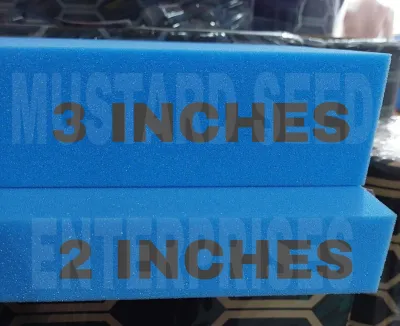


Prices are valid at publication and may change. Please refer to the product page for the latest price.
Furthermore, high relative humidity—which frequently exceeds 80% in the Philippines—means that moisture from sweat and the air can easily become trapped within the mattress core. When moisture accumulates inside a mattress, it accelerates the chemical breakdown of the foam’s polymer chains, leading to premature sagging. It also creates an ideal breeding ground for dust mites, mold, and mildew, which can trigger allergies and ruin the mattress.
To combat these environmental challenges, a custom mattress must be evaluated against three core criteria: continuous airflow promotion, efficient heat dissipation, and resistance to moisture retention. Choosing a customized foam Uratex build allows you to specify the exact foam layers, density, and thickness needed to maximize ventilation. This targeted approach ensures that your mattress remains structurally sound and hygienic throughout the changing tropical seasons.
Comparing Foam Types for Tropical Breathability and Comfort
Different foam materials possess distinct cellular structures that behave differently under heat and pressure. Evaluating these physical properties helps you make an informed decision based on performance rather than marketing claims.

Memory Foam: Contouring vs. Heat Retention
Memory foam, or viscoelastic foam, is highly regarded for its pressure-relieving capabilities, as it contours closely to the shape of your body. However, this close contouring is achieved because the foam reacts to your body heat, softening and wrapping around you. This deep cradle increases the contact area between your skin and the bed, which naturally restricts ambient air circulation around your body.
Traditional memory foam features a dense, closed-cell structure that acts as a barrier to airflow, trapping heat directly beneath you. On humid nights, this heat-trapping effect can quickly create a stifling, warm sleeping surface. The material can also feel softer and more sinking when exposed to high ambient room temperatures, reducing the support it provides.
If you prefer the pressure relief of memory foam for a custom build, you must specifically ask the supplier for advanced formulations. Look for open-cell memory foam, gel-infused variations, or copper-infused designs. These modifications help channel heat away from the body, though they still generally retain more heat than natural latex or high-resilience polyurethane alternatives.
Latex Foam: Natural Breathability and Resilience
Latex foam is highly recommended for tropical climates due to its natural open-cell structure and inherent elasticity. During manufacturing, latex is typically molded with a grid of vertical pinholes, creating a highly ventilated core. This design allows air to pump in and out of the mattress every time you move, preventing heat from accumulating.
Natural latex, harvested from rubber trees, offers superior breathability, bounce, and resistance to mold compared to synthetic latex. Synthetic latex is a more budget-friendly option, but it may degrade slightly faster under high humidity and lacks the same level of natural resilience. Natural latex also provides a responsive, “on-top-of-the-bed” support that keeps your body elevated, maximizing the skin surface exposed to cooling air currents.
For sleepers who prioritize temperature neutrality and want to avoid the sinking feeling of memory foam, latex is a premium choice. Its natural resistance to dust mites and microbes is an added benefit in humid regions, helping to maintain a cleaner, healthier sleeping environment over many years of use.
Polyurethane (HR) Foam: Lightweight and Airflow-Friendly
High-resilience (HR) polyurethane foam is a premium grade of standard polyfoam, characterized by an irregular, open-cell structure. This open network allows air to pass through much more easily than traditional memory foam. HR foam is also lightweight, making the finished custom mattress easier to lift, rotate, and air out during regular maintenance.
In custom mattress configurations, HR polyurethane foam is highly effective as a supportive, breathable core layer. It provides a stable, durable foundation that can be topped with a thinner comfort layer of latex or open-cell memory foam. This layering strategy delivers the pressure relief of a specialty foam while maintaining excellent overall airflow through the base of the bed.
Selecting a high-density grade of HR foam ensures that the mattress resists sagging and maintains its supportive properties under the combined stress of body weight, heat, and humidity. It offers a practical, cost-effective, and climate-appropriate solution for custom bedding projects.
Essential Specifications to Verify Before Ordering Custom Foam
When ordering a customized foam Uratex mattress, you must look beyond material names and verify specific, measurable technical specifications with your fabricator or supplier.
- Foam Density (measured in kg/m³): Request high-density foam for your custom build. For polyurethane foam, look for densities between 28 kg/m³ and 40 kg/m³; for latex, densities typically range from 60 kg/m³ to 80 kg/m³ depending on your preferred firmness. High-density foam resists sagging and structural breakdown, though you must confirm that the high-density formulation features an open-cell structure to ensure breathability.
- Indentation Load Deflection (ILD) or Firmness: ILD measures the force required to compress the foam. Selecting a medium-to-firm ILD (typically 24 to 36 for comfort layers, and higher for support bases) prevents you from sinking too deeply into the mattress. Keeping your body properly aligned and elevated on the surface is crucial for maintaining optimal airflow around your skin.
- Open-Cell Engineering and Cover Fabrics: Do not assume a foam is breathable just because of its material type. Ask the supplier explicitly if the foam has an open-cell structure. Additionally, ensure the custom mattress cover is made from breathable, moisture-wicking fabrics such as bamboo-derived rayon, Tencel, or specialized cooling knits, rather than cheap, heat-trapping polyester.
- Finished Dimensions and Frame Clearance: Measure your bed frame's internal width, length, and depth precisely. When ordering your custom foam, consider subtracting 1 to 2 centimeters from the internal frame dimensions. This small clearance makes the mattress easier to lift and rotate, and it allows air to circulate down the sides of the mattress, preventing moisture from getting trapped against the bed frame.
- Delivery Access and Structural Stability: High-density custom foams can be heavy and difficult to bend. Before finalizing your order, verify that the finished dimensions can easily pass through your doorways, stairwells, or condominium lifts. Ensure your bed frame has the structural stability and load capacity to support the weight of the high-density foam and the sleepers without sagging.
Protecting Your Custom Foam Mattress from Humidity and Mold
Maintaining a custom foam mattress in a tropical climate requires proactive, reversible care steps to prevent mold growth, odor buildup, and material degradation.
First, always use a breathable, waterproof mattress protector. Sweating is the body’s natural cooling mechanism, especially during warm nights. A high-quality protector with a breathable polyurethane membrane blocks sweat and ambient humidity from seeping into the foam core, while still allowing air molecules to circulate so heat is not trapped against your body.
Second, ensure your bed frame supports under-bed airflow. Avoid placing your custom foam mattress directly on the floor or on a solid plywood platform, as these surfaces trap moisture at the bottom of the bed. Instead, use a slatted bed frame with adequate spacing between the slats. This setup allows air to flow underneath the mattress, helping to dissipate heat and prevent condensation from forming at the base.
Third, manage your bedroom’s indoor environment. Keep the room well-ventilated by opening windows on dry days, or run an air conditioner or a dehumidifier during the rainy season to keep indoor relative humidity below 60%. This practice prevents the foam from absorbing excessive moisture from the surrounding air.
Fourth, never expose bare foam to direct sunlight for drying. Ultraviolet (UV) rays and intense heat rapidly degrade both polyurethane and latex, causing the cellular structure to oxidize, turn yellow, and crumble. If the mattress becomes damp, prop it up in a shaded, well-ventilated room and use a floor fan to facilitate indirect air circulation.
Finally, check the manufacturer’s care label or custom order guidelines before applying any liquid spot treatments or cleaning solutions. Excess liquid can easily become trapped inside the core of the foam, leading to internal mold growth that is nearly impossible to resolve. Always address spills immediately by blotting them with a dry, clean cloth.
Frequently Asked Questions (FAQ)
Can I add a cooling topper to a custom Uratex foam mattress?
Yes, adding a breathable topper made of natural latex or specialized cooling fiber can improve surface temperature regulation and moisture wicking. However, a topper will not fundamentally fix the heat retention of a dense, unventilated base foam. Selecting a highly breathable core foam during your initial custom order remains critical for long-term comfort.
Does high humidity shorten the lifespan of foam mattresses?
High humidity and trapped sweat can accelerate the physical breakdown of foam polymers and encourage mold growth if the mattress is poorly maintained. However, the foam itself is not instantly destroyed by humid air. Using a protective cover, ensuring proper ventilation, and choosing high-density or latex foams will effectively mitigate climate-related wear and preserve the mattress’s lifespan.

Community discussion
Share your experience or ask a question. Comments are reviewed before publication.