
Finding the right wardrobe for a compact bedroom in the Philippines requires balancing storage capacity with the physical limits of your floor plan. A small bedroom, often measuring between 9 to 12 square meters, leaves little room for error when placing large furniture. Selecting an appropriate kabenit para sa damit involves analyzing both the physical dimensions of the unit and how its doors interact with the surrounding space.
To make the most of a limited layout, you must evaluate whether a sliding door or a traditional swing door best suits your daily habits and room clearance. While sliding doors save floor space in front of the unit, swing doors offer complete access to your clothes without requiring extra depth for tracks. By measuring your space accurately and choosing the right door mechanism, you can create a highly functional bedroom that feels open and organized.
Assessing Your Bedroom Space and Clearance Requirements
Before purchasing any wardrobe, precise measurements of your designated wall space are essential. Use a steel tape measure to record the wall length, floor-to-ceiling height, and available depth. Be sure to measure at multiple points along the wall, as concrete walls and tiled or wood floors in local homes can often be slightly uneven.
Products mentioned in this guide
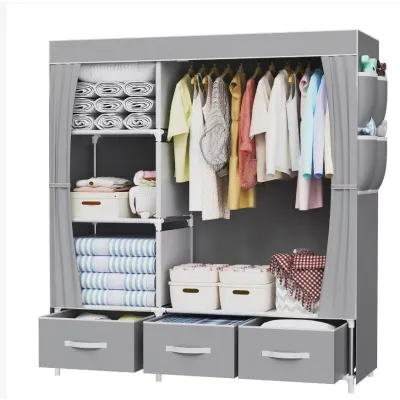
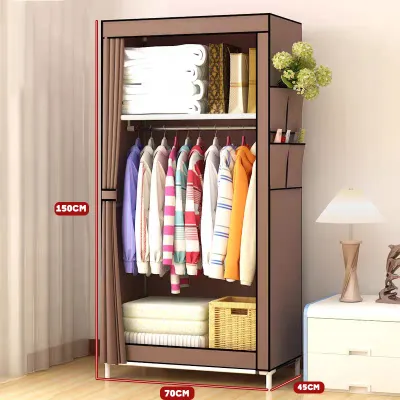
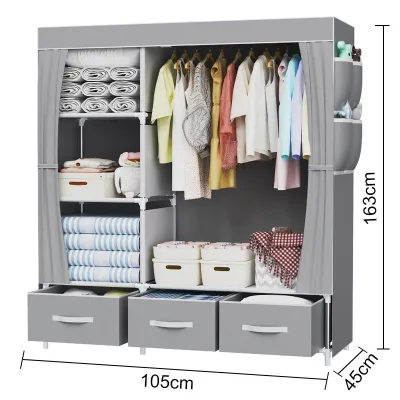
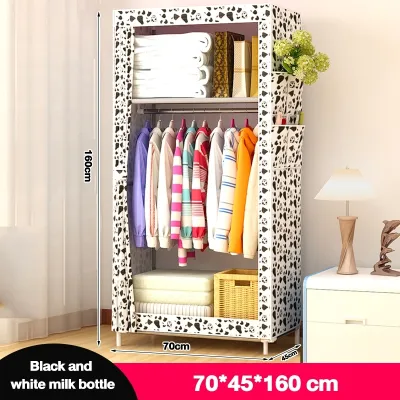
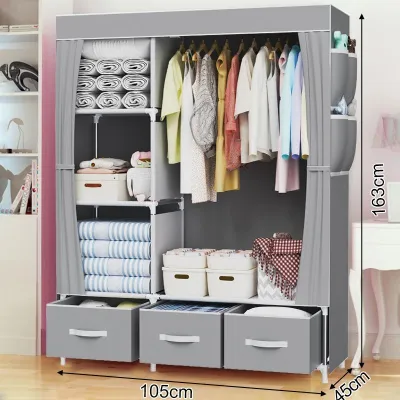
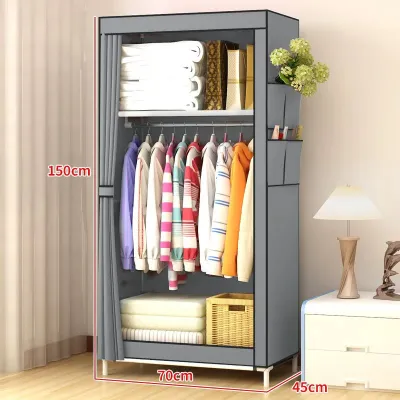
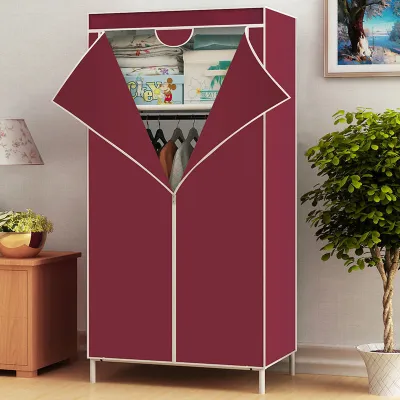
Prices are valid at publication and may change. Please refer to the product page for the latest price.
Remember to subtract the thickness of baseboards, crown moldings, or window trim from your total available wall length. If your wardrobe sits flush against a corner, even a small baseboard can prevent a tight fit, leaving an awkward gap that collects dust and moisture in humid tropical climates.
Walkway clearance is the next critical factor. You need to ensure there is enough space to walk comfortably between the wardrobe and your bed frame. As a general rule, aim for at least 60 centimeters of open walkway space when the wardrobe doors are fully closed.
Finally, map out all fixed obstacles in the room. Take note of the height of wall-mounted air conditioning units, window frames, electrical outlets, and light switches. Placing a tall wardrobe directly under an air conditioner can block airflow or make filter maintenance incredibly difficult, while covering light switches creates daily inconveniences.
Comparing Sliding and Swing Door Wardrobes for Tight Spaces
Choosing between sliding and swing doors is a decision that directly impacts how you use your bedroom floor space. Sliding doors are highly advantageous for rooms where the bed sits close to the wardrobe. Because the doors glide horizontally within the frame, they require zero clearance in front of the unit, allowing you to place other furniture nearby without blocking access.

However, sliding doors come with a notable trade-off regarding internal storage. The sliding track mechanism itself typically requires about 8 to 10 centimeters of depth, which reduces the usable depth inside the wardrobe. Additionally, because one door always overlaps the other, you can never view or access the entire interior of the wardrobe at the same time.
Swing doors, on the other hand, are highly suited for narrower wardrobe frames or angled corner placements. They allow full, unobstructed access to the entire wardrobe interior simultaneously, making it easier to organize your clothes. The main constraint is the swing radius; you must ensure the door can open fully to 90 degrees or more without hitting your bed, nightstand, or bedroom entry door.
Hardware durability and maintenance also differ between the two styles. Sliding door tracks require regular cleaning to prevent dust, lint, and hair from jamming the rollers, which can cause the doors to jump off their tracks. Swing doors rely on hinges that may require occasional tightening but generally have fewer moving parts to maintain over time.
Matching Wardrobe Dimensions to Your Room Layout
Finding the right dimensions for your wardrobe requires balancing your storage needs with the physical limits of your room layout. Standard wardrobe depths usually range from 50 to 60 centimeters. If you plan to hang clothes on standard hangers parallel to the doors, a minimum depth of 55 centimeters is recommended to prevent sleeves from getting caught in the doors.
For exceptionally shallow spaces, you can look for wardrobes designed with pull-out hanging rods where clothes hang perpendicular to the doors. This configuration allows the wardrobe depth to be as shallow as 35 to 40 centimeters, making it a practical choice for narrow hallways or tight bedroom corners.
The width of your wardrobe should align with both your available wall space and the number of users. A single-user wardrobe typically requires a width of at least 80 to 100 centimeters, while a shared wardrobe generally needs 150 to 180 centimeters. If your room has awkward alcoves or structural columns, modular units can be combined to maximize every centimeter of wall space.
To maximize storage without consuming precious floor space, utilize the vertical height of your room. Opt for wardrobes that feature top cabinets or loft storage compartments. When planning a tall wardrobe, always leave a gap of at least 5 to 10 centimeters below the ceiling to allow for proper ventilation and to ensure the unit can be safely assembled and raised during installation.
Maximizing Internal Storage in Compact Wardrobes
An efficient internal layout can double the storage capacity of a compact wardrobe without changing its external dimensions. Start by planning your hanging zones based on the types of clothing you wear. Grouping shorter items like folded trousers, shirts, and folded t-shirts together leaves valuable vertical space directly underneath for a chest of drawers or storage bins.
Incorporating adjustable shelving is highly beneficial for adapting to changing storage needs over time. Pull-out wire baskets are excellent for tropical climates like the Philippines, as they promote airflow and prevent musty odors from developing on folded clothes during high-humidity seasons. Door-mounted organizers or hooks can also be added to swing doors to hold belts, bags, or accessories.
Using uniform, slim hangers is a simple yet highly effective way to save physical space and improve visual clarity inside tight compartments. Bulky wooden or plastic hangers take up unnecessary horizontal rod space. Additionally, organizing seasonal items or bedding in labeled fabric storage boxes on the top shelves keeps the main sections clutter-free and easy to navigate.
Common Sizing and Placement Mistakes to Avoid
One of the most common mistakes when placing a new wardrobe is blocking essential room features. Avoid positioning a tall cabinet where it obstructs natural light from windows or interferes with the airflow of your air conditioning unit. Blocking an AC unit not only reduces cooling efficiency but can also lead to moisture buildup on the wardrobe’s wooden panels.
Always double-check the swing radius of your wardrobe doors against nearby furniture. A wardrobe door that constantly strikes a bedside table or cannot open fully because of the bed frame will quickly become a daily frustration. Ensure there is a clear path for both the wardrobe doors and any adjacent bedroom doors to open without colliding.
Finally, never underestimate the total weight of a fully loaded wardrobe. Ensure your bedroom floor is level and structurally sound enough to support the weight of the furniture filled with clothes and books. For tall, narrow wardrobes, structural anchoring to the wall is highly recommended to prevent tip-over accidents, especially in regions prone to seismic activity.
Frequently Asked Questions (FAQ)
Can I install a sliding door wardrobe in a very narrow room?
Yes, you can install a sliding door wardrobe in a narrow room, provided you have sufficient depth for the sliding track system. Because sliding doors require an extra 8 to 10 centimeters of depth to accommodate the overlapping tracks, the overall depth of the wardrobe will be deeper than a standard swing-door unit. Always check the manufacturer’s technical specifications to ensure the remaining walkway space in your room is comfortable.
How do I fit a wardrobe if my bedroom has a low ceiling?
If your bedroom has a low ceiling, look for freestanding, lower-profile wardrobes rather than floor-to-ceiling built-ins. You can supplement your storage by placing lightweight, standalone storage boxes or open shelving on top of the wardrobe, provided there is enough clearance. Avoid tall, single-unit wardrobes that require being tilted upright during assembly, as they may get stuck against a low ceiling.
Is it better to buy a ready-made or custom-built wardrobe for a small room?
The choice depends on your budget and the layout of your room. Custom-built wardrobes are excellent for maximizing awkward alcoves, sloped ceilings, or irregular corners, but they generally require a higher budget and longer installation times. Ready-made modular wardrobes are more affordable and can be set up quickly, though they may leave small, unused gaps at the sides or top of your room.

Community discussion
Share your experience or ask a question. Comments are reviewed before publication.