
Finding a sofa that comfortably accommodates a large family while navigating tight doorways, narrow hallways, or upper-floor stairs can be a major logistical challenge. A compressed sofa—delivered vacuum-packed in compact boxes—offers an elegant solution to these delivery hurdles. However, selecting a three-to-five-seater or an L-shaped sectional requires balancing the convenience of boxed shipping with the long-term durability needed for a bustling, multi-generational household. To make a smart investment, families must evaluate how these compressed models expand, how their materials withstand tropical humidity, and how their configurations fit into local living spaces.
Choosing the right seating for a large household involves more than just picking a style that looks good in photos. Because compressed furniture relies on specialized packaging technology, understanding the physical characteristics of vacuum-sealed foam and modular frames is essential. By focusing on structural integrity, foam density, and fabric breathability, you can find a compressed sofa that serves as a comfortable, long-lasting gathering hub for your family.
What to Expect from Compressed Sofas in Large Living Rooms
When you purchase a compressed sofa, the foam cushions arrive tightly rolled and vacuum-sealed to reduce their shipping volume. Once you open the plastic packaging, the foam immediately begins to draw in air and expand. While some initial expansion happens within minutes, it typically takes 24 to 72 hours for the cushions to regain their full shape, thickness, and intended firmness. During this expansion period, it is common for the foam to release a slight manufacturing odor, known as off-gassing. In the warm, humid climate of the Philippines, keeping your windows open or running a ceiling fan in the room will help dissipate this odor quickly.
Products mentioned in this guide
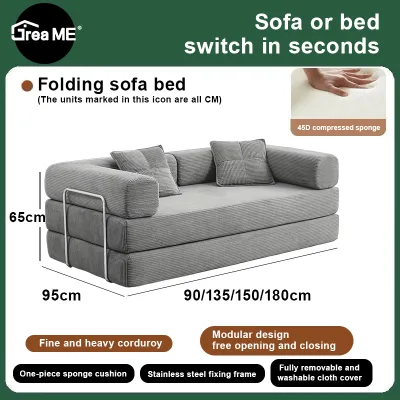
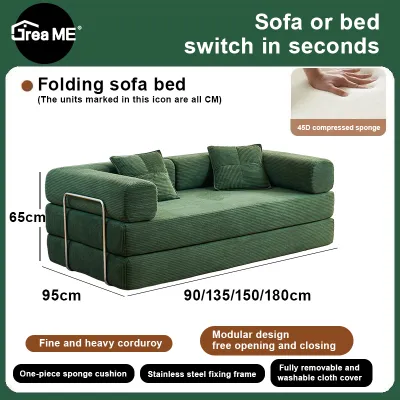
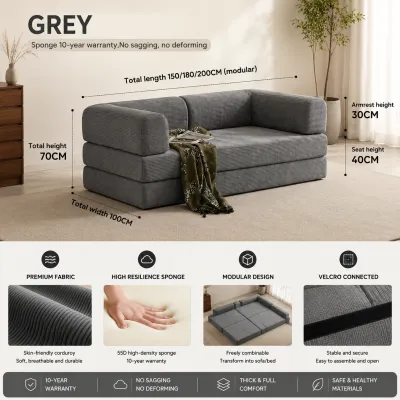
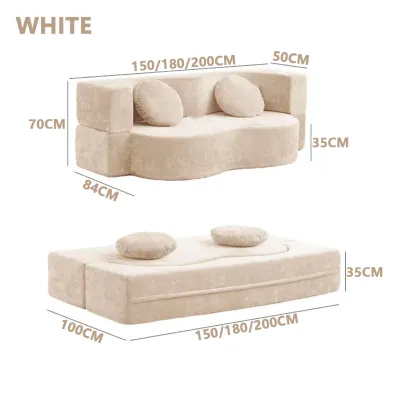
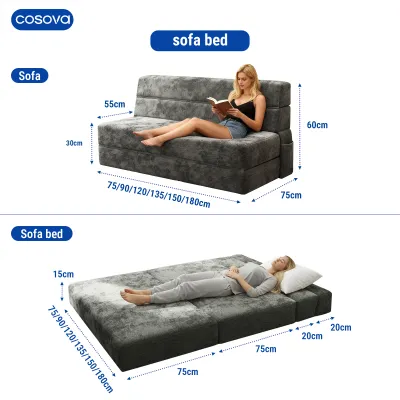
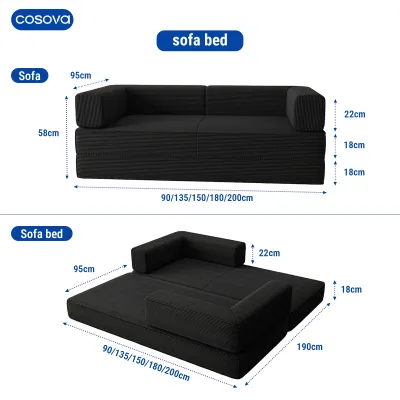
Prices are valid at publication and may change. Please refer to the product page for the latest price.
Weight capacity is a critical consideration for multi-seat compressed sofas, especially when accommodating large families. Because these sofas are shipped in compact boxes, they often feature modular frames or knock-down designs that assemble with bolts and brackets. These connection points bear significant stress when multiple people sit together. Before buying, check the manufacturer’s specifications for the maximum weight limit per seat, and look for designs that distribute weight evenly across multiple support legs rather than relying solely on the outer corners.
Compression packaging also places limits on the types of structural components a sofa can feature. You will rarely find compressed sofas with solid, single-piece wooden frames, as these cannot be folded or vacuum-packed. Instead, most compressed models utilize engineered wood frames that bolt together, or they are constructed entirely of high-density foam blocks without a rigid internal frame. Foam-core modular sofas are highly stable and safe for households with active toddlers, but they sit lower to the ground, which may make them less comfortable for elderly family members who require more knee and back support when standing up.
Sizing and Space Planning for 3-5 Seater Configurations
Before ordering a large three-to-five-seater compressed sofa, accurate floor measurements are essential to prevent your living room from feeling cramped. Map out the proposed footprint of the sofa using masking tape on your floor to visualize how much physical space it will occupy. To maintain a comfortable traffic flow, ensure there is at least 60 to 90 centimeters of walking clearance between the sofa and other furniture, walls, or doorways. This clearance is especially important in busy households where children and grandparents share the same pathways.

Seat depth and backrest height must accommodate the varying physical needs of a multi-generational family. A deep seat (60 centimeters or more) is excellent for lounging and taller family members, but shorter relatives or elderly grandparents may find it difficult to sit upright without extra accent pillows. Look for a balanced seat height of approximately 40 to 45 centimeters from the floor, which allows most users to plant their feet flat on the ground for better lower-back support.
Visual weight is another crucial factor in tropical living spaces. A massive, dark-colored, five-seater sofa can easily overwhelm a moderately sized living room, making the space feel hot and confined. To keep your living area feeling airy and spacious, consider choosing lighter upholstery colors, such as beige, light gray, or soft earth tones. Additionally, selecting a sofa with raised legs rather than a solid base allows air to circulate underneath, which helps keep the room cooler and makes cleaning dust and pet hair much easier.
Evaluating L-Shaped and Modular Compressed Options
L-shaped compressed sectionals are highly effective for maximizing corner spaces or defining distinct zones in open-plan living areas. When choosing an L-shaped layout, you must decide between a left-facing or right-facing chaise. To determine which configuration fits your room, stand directly facing the wall where the sofa will be placed; a left-facing chaise will extend toward you on your left side, while a right-facing chaise will extend on your right. If you anticipate moving houses or rearranging your living room in the future, look for reversible chaise designs that allow you to move the footstool and cushion to either side.
Modular compressed sofas offer excellent flexibility because they consist of individual seat units that can be arranged in various configurations. However, because these pieces are separate, they can slide apart on smooth tiled or polished wood floors when family members sit down. To prevent this, verify that the modular system includes robust connection mechanisms. Look for heavy-duty steel alligator clips or interlocking bracket slides that mount underneath the frames to lock the units securely together.
While modularity allows you to expand your seating as your family grows, it is important to understand the structural limits of these systems. Some modular pieces rely on adjacent units for lateral stability, meaning they cannot function safely as standalone armchairs. If you plan to split your sectional into separate seating arrangements for family gatherings, confirm with the manufacturer’s specifications that each module is fully finished on all sides and structurally independent.
Frame, Foam, and Upholstery Checks for Heavy Daily Use
Because you cannot physically test a compressed sofa before it arrives, you must rely on product specification labels to verify its durability. For the frame, look for kiln-dried hardwood, such as mahogany or gmelina, or reinforced steel components. Kiln-drying removes moisture from the wood, preventing it from warping, cracking, or developing mold in high-humidity environments. Avoid sofas constructed entirely of low-grade, untreated particleboard, which can absorb atmospheric moisture over time and sag under heavy weight.
The quality of the foam determines how well the sofa recovers from its initial compression and resists sagging over years of daily use. Look for high-resiliency (HR) foam or high-density polyurethane foam with a density rating of 30 kg/m³ (kilograms per cubic meter) or higher. Low-density foams may feel incredibly soft during the first few weeks but tend to flatten permanently under the weight of a large family. A multi-layer cushion design, which combines a high-density foam core for support with a softer polyester fiber wrap for comfort, offers the best balance of longevity and coziness.
Upholstery selection is critical for managing the heat and humidity of the tropical climate. Synthetic microfiber blends, tightly woven polyester, and linen-look fabrics are excellent choices because they are highly breathable and resist stretching. If your household includes young children or pets, prioritize fabrics treated with water-resistant coatings or models that feature fully removable, machine-washable slipcovers. Always check the manufacturer’s cleaning codes; fabrics labeled with a “W” can be cleaned with water-based solutions, making them much easier to maintain when spills occur.
Delivery, Unboxing, and Doorway Clearance
Although compressed sofas are designed to fit into tight spaces, you must still measure your home’s entry points to ensure a smooth delivery. Measure the height and width of your front doorframe, the clearance of any tight hallway turns, and the interior dimensions of your building’s elevator if you live in a high-rise condominium. Even though the sofa is compressed, a three-to-five-seater model will often arrive in multiple large, heavy boxes that require at least two people to carry safely.
Unboxing a vacuum-sealed sofa requires caution to avoid damaging the furniture inside. The compressed foam is under significant pressure, and the outer plastic wrap is wrapped tightly against the upholstery. When opening the package, avoid using sharp utility knives or box cutters, which can easily slice through the plastic and cut the fabric underneath. Instead, use a pair of blunt-nosed scissors to carefully cut along the outer edges of the plastic, allowing the foam to draw in air and expand naturally.
Most compressed sofas are designed for straightforward, tool-free assembly, but larger configurations require more time and effort. Before you begin, clear a large area on your living room floor and lay down a clean blanket to protect the fabric from dust and scratches. Check the hardware pack to ensure all bolts, washers, and hex keys are present. Assembling a large sectional is much easier with two people, as one person can hold the heavy foam modules in alignment while the other secures the structural fasteners.
Building Your Shortlist: Criteria for Online Furniture Shopping
When shopping for a compressed sofa on e-commerce platforms, pay close attention to the seller’s return policy. Returning a fully expanded three-to-five-seater sofa is nearly impossible to do using the original packaging, as the foam cannot be re-compressed at home. Look for reputable online retailers that offer a clear return window and provide home-pickup services for oversized furniture returns. Be sure to clarify whether you or the seller will be responsible for return shipping fees, which can be quite costly for bulky items.
Warranty terms provide valuable insight into a manufacturer’s confidence in their product. A reliable compressed sofa should come with a warranty that covers structural frame failures and premature foam degradation for at least one to three years. Read the warranty fine print carefully to understand what constitutes a defect; most manufacturers define premature sagging as a visible indentation of 3.5 centimeters or more when no weight is applied to the cushion.
Finally, cross-reference customer reviews to gauge the real-world performance of the sofa. Filter the reviews to look for feedback from buyers who have owned the sofa for six months or longer. Pay attention to comments regarding how well the cushions maintained their firmness, whether the fabric began to pill or fade, and how helpful the seller’s customer service team was when addressing delivery delays or missing assembly hardware. This practical feedback is often more valuable than initial unboxing impressions.
Frequently Asked Questions (FAQ)
How long does a large compressed sofa take to fully expand?
Most compressed sofas will expand to about 90% of their original shape within the first 24 hours of unboxing. However, it can take up to 72 hours for the internal foam cells to fully recover their structural integrity and reach their final level of firmness. To ensure the foam expands evenly, avoid sitting, lounging, or placing heavy objects on the cushions during the first 24 hours of the recovery process.
Can I return a compressed sofa after it has fully expanded?
Returning a fully expanded sofa to an online retailer can be difficult because the furniture will no longer fit into its original shipping boxes. While some specialized furniture brands offer trial periods and will coordinate a local courier to pick up an expanded sofa, many standard e-commerce sellers require items to be returned in their original packaging. Always read the seller’s return terms and contact their customer support to clarify the return process before making your purchase.
Are L-shaped compressed sofas delivered in one piece or multiple boxes?
L-shaped compressed sectionals are almost always delivered in multiple boxes rather than a single package. This multi-box shipping method distributes the total weight of the sofa, making it much easier to transport the pieces through narrow doorways, up stairwells, or inside elevators. When your shipment arrives, verify the total box count against the delivery receipt to ensure all components of your sectional have been delivered together.

Community discussion
Share your experience or ask a question. Comments are reviewed before publication.