
Quick Answer: Navigating Mattress Choices for Hot and Humid Weather
Selecting the right mattress in the Philippines requires balancing personal comfort with the realities of a tropical climate. High year-round temperatures and intense seasonal humidity mean that a mattress’s internal structure directly impacts how cool and dry you stay throughout the night. When evaluating options like a cosova foam mattress, a latex mattress, or a traditional spring mattress, there is no single option that suits every sleeper.
The ideal choice depends heavily on your specific bedroom conditions, such as whether you use air conditioning, and your personal sensitivity to heat. Spring mattresses generally offer the best baseline airflow due to their open core, making them highly suitable for non-air-conditioned rooms. Latex provides responsive support with moderate, natural breathability through built-in ventilation channels. Foam mattresses, including Cosova models, offer excellent pressure relief and body contouring, but they require specific cooling technologies, breathable cover materials, or consistent climate control to prevent heat retention in tropical environments.
Understanding the Contenders: Cosova Foam Mattress, Latex, and Spring Structures
To make an informed decision, it is essential to understand how these three mattress types are constructed. Each material behaves differently under the physical pressures of sleep and the environmental challenges of heat and moisture.
Products mentioned in this guide
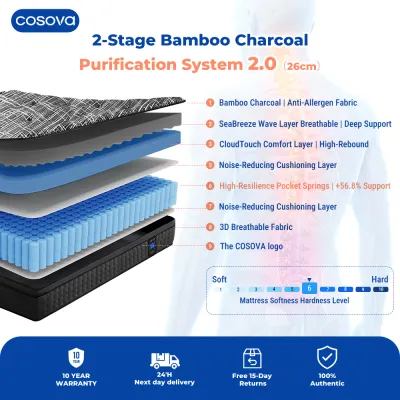
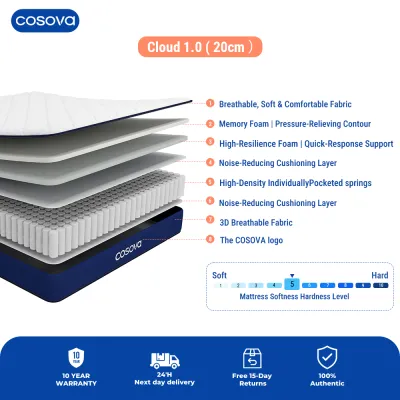
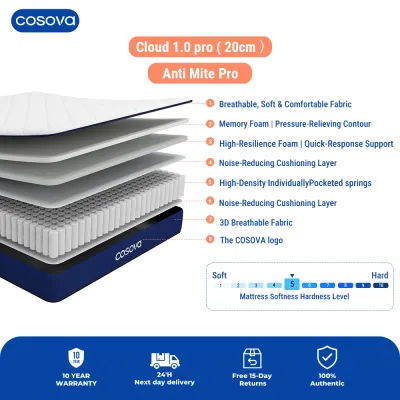
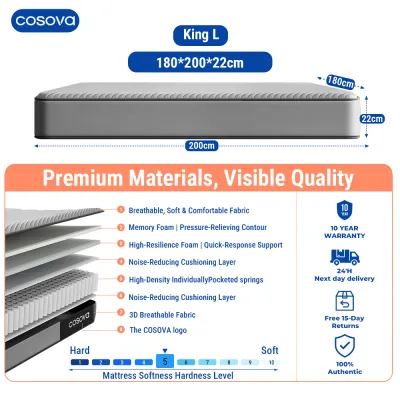
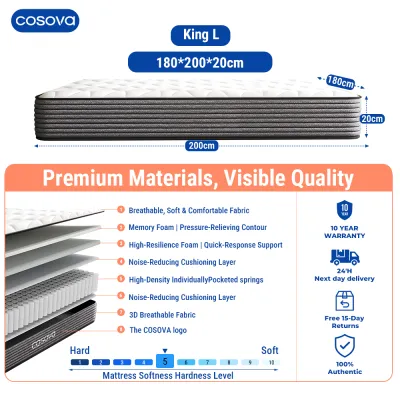
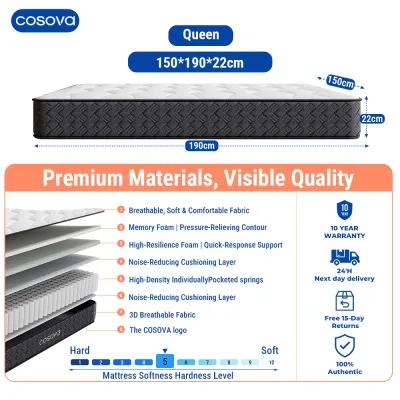
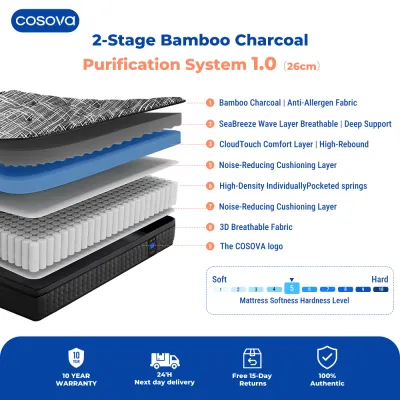
Prices are valid at publication and may change. Please refer to the product page for the latest price.

Cosova Foam Mattresses
A standard cosova foam mattress is typically constructed from polyurethane foam or memory foam layers. These materials are engineered to conform closely to the shape of your body, distributing weight evenly and relieving pressure on the shoulders, hips, and lower back. However, this close conformity increases the contact surface area between your body and the bed, which can restrict airflow and trap body heat.
When shopping, do not rely solely on the brand name or the generic “foam” label. Instead, inspect the product specifications for cooling features designed to mitigate heat retention. Look for gel-infused foams, which are designed to absorb and dissipate initial body heat, or open-cell structures that allow more air to pass through the material compared to traditional closed-cell foams. Additionally, check if the mattress cover is made from breathable, moisture-wicking fabrics such as bamboo-derived rayon or Tencel, which help keep the sleeping surface dry.
Compressed foam mattresses are highly convenient for high-rise condos in Metro Manila where navigating narrow stairwells or small elevator shafts is a challenge during delivery. Before purchasing, check the finished dimensions and ensure your bed frame has appropriate slat spacing—usually no more than three inches apart—to prevent the foam from sagging.
Natural and Synthetic Latex Mattresses
Latex mattresses are made from rubber, which can be harvested naturally from rubber trees or synthesized from petroleum products. Latex is highly responsive, meaning it quickly bounces back when you move, preventing the “sunk-in” feeling associated with memory foam. During the manufacturing process, latex is typically molded with a grid of small vertical holes, known as a pin-core or pinhole structure, which significantly enhances airflow through the mattress.
Before purchasing, verify whether the latex is natural, synthetic, or a blend by checking the manufacturer’s specifications. Natural latex is generally more breathable and durable but carries a higher price tag. You must also check the cover material on the label to ensure it supports moisture-wicking, as a synthetic polyester cover can block the natural ventilation of the latex core.
Additionally, latex is exceptionally heavy. Ensure your bed frame has the load capacity and structural stability to support it, and verify that your doorways and stairwells can accommodate its weight during delivery, as a queen or king-size latex mattress cannot be easily bent or compressed like a foam model.
Innerspring and Pocket Spring Mattresses
Spring mattresses rely on a network of steel coils to provide support. Traditional innerspring systems use interconnected coils, while modern pocket spring systems feature individually pocketed coils that move independently to reduce motion transfer. The primary structural advantage of any spring mattress in a tropical climate is its open core, which consists mostly of empty space, allowing air to circulate freely with every movement you make.
However, the cooling performance of a spring mattress is highly dependent on its top comfort layers. Many modern spring mattresses include thick foam pillow-tops or Euro-tops for added comfort. If these top layers consist of thick, dense, non-breathable foam, they can insulate your body and block the airflow from the spring system below. Always check the thickness and material composition of the comfort layers on the product specification sheet to ensure they do not negate the cooling benefits of the spring base.
Key Comparison Dimensions for Tropical Climates
Evaluating these mattresses requires looking beyond comfort to assess how they perform under the specific environmental pressures of the Philippines, including high heat, persistent humidity, and the risk of structural degradation.
Heat Retention and Breathability
The science of sleep indicates that a drop in core body temperature is necessary to initiate and maintain deep sleep. In a climate where nighttime temperatures regularly stay above 28°C during the dry season, a mattress that retains heat can severely disrupt your sleep cycle. Standard polyurethane foam has a dense, closed-cell structure that acts as an insulator, trapping body heat directly beneath you.
In contrast, spring mattresses facilitate natural convection, allowing warm air to escape and cooler air to enter the mattress core. Latex sits in the middle, offering better breathability than standard foam due to its pinhole design, but less than the open spaces of a spring system. When comparing models, look for independent test results or specific cooling technology claims, such as phase-change materials that actively absorb heat, rather than assuming a mattress is cool based on its material name alone.
Moisture Resistance and Mold Prevention
Relative humidity in the Philippines frequently exceeds 80%, particularly during the rainy season. High humidity, combined with natural nighttime sweating, introduces significant moisture into your sleeping environment. If this moisture becomes trapped inside the mattress, it can lead to the growth of mold, mildew, and dust mites, which pose health risks and degrade the mattress materials.
Spring mattresses excel in moisture management because the continuous airflow through the coil system allows dampness to evaporate quickly. Dense foam and latex mattresses are more susceptible to moisture accumulation, acting like dense sponges if the room lacks proper ventilation. To protect your health and your investment, check the product tags for verified anti-microbial, anti-dust mite, or moisture-resistant treatments, and ensure the mattress is paired with a breathable bed frame that allows air to circulate underneath.
Durability and Sagging in High Humidity
The combination of constant body weight, high ambient heat, and moisture can accelerate the physical breakdown of mattress materials. In foam mattresses, moisture can trigger a chemical process called hydrolysis, which weakens the polyurethane bonds, causing the foam to soften, lose its supportive qualities, and sag prematurely.
To evaluate durability, check the density of the foam, which is measured in kilograms per cubic meter (kg/m³). High-density foams (typically 50 kg/m³ or higher for memory foam, and 30 kg/m³ or higher for support foam) resist moisture-induced breakdown much better than low-density alternatives. For spring mattresses, inspect the steel coil gauge; a lower gauge number (such as 12 or 13) indicates thicker, stronger wire that provides long-term resistance to sagging. Always verify the quality of the edge support and the stability of the joints on your bed frame, as an unstable foundation will cause any mattress to sag regardless of its construction.
Evaluating Price and Long-Term Value
Mattress prices in the Philippines span a wide range, and understanding what you are paying for helps ensure long-term value. Prices generally fall into three broad bands:
- Budget (under ₱10,000): This category consists primarily of thin, low-density foam mattresses and basic open-coil innerspring models. While budget-friendly, these options often lack advanced cooling technologies and are highly susceptible to sagging within a few years under humid conditions.
- Mid-Range (₱10,000 to ₱30,000): This band includes high-quality pocket spring mattresses, advanced foam models like the cosova foam mattress featuring cooling gel infusions, and blended latex options. These mattresses offer a strong balance of structural support, durability, and climate-specific comfort features.
- Premium (above ₱30,000): This tier features all-natural latex mattresses, luxury hybrid models combining pocket springs with thick latex or specialty foam layers, and high-density memory foam with advanced phase-change cooling materials.
To determine the true value of a mattress, calculate its “cost per year” by dividing the retail price by the expected lifespan, which is often indicated by the manufacturer’s warranty period. For example, a ₱25,000 mid-range mattress with a 10-year warranty costs ₱2,500 per year, whereas a cheap ₱8,000 mattress that sags and must be replaced after two years costs ₱4,000 per year. Additionally, factor in potential secondary costs; if you buy a mattress that retains heat, you may need to run your air conditioner longer, increasing your monthly utility bills, or purchase an external cooling topper to make the bed usable.
Decision Framework: Matching Mattress Types to Your Sleep Environment
To finalize your decision, analyze your bedroom environment, physical comfort preferences, and budget against these conditional guidelines.
Choose a cosova foam mattress (or a similar advanced foam mattress) if:
- You sleep in a consistently air-conditioned bedroom where you can control the ambient temperature and humidity.
- You require deep, contouring pressure relief for joint pain, back pain, or side-sleeping, and prefer the sensation of being cradled by your bed.
- The specific model you choose features verified cooling specifications on the label, such as open-cell foam, gel infusions, and a highly breathable cover.
Choose a latex mattress if:
- You prefer a responsive, bouncy sleeping surface that allows you to move easily without feeling stuck.
- You want a durable, naturally breathable mattress and have the budget to invest in a premium, long-lasting product.
- You can verify the natural origin and density of the latex on the manufacturer's label, and your bed frame has the load capacity to support a heavy mattress.
Choose a spring mattress if:
- You sleep in a non-air-conditioned room and rely primarily on electric fans or natural ventilation.
- You are a hot sleeper who prioritizes maximum airflow and needs a mattress core that naturally dissipates body heat.
- You prefer a firmer, more traditional support feel with excellent edge support for sitting on the side of the bed.
Before finalizing any purchase, especially from online retailers, perform several verification checks. Always read the return policy and trial period terms carefully, ensuring you have at least 30 to 100 nights to test the mattress in your home environment. Verify the exact material breakdown of the comfort layers rather than relying on marketing terms. Finally, measure your available space, doorways, stairwells, and elevator dimensions to ensure the mattress can be delivered and assembled safely in your home.
Essential Maintenance for Mattresses in High Humidity
To protect your investment and extend the lifespan of your mattress in the hot and humid Philippine climate, implement a regular maintenance routine.
- Use a breathable, waterproof mattress protector: A high-quality protector is essential to block sweat, skin oils, and ambient humidity from penetrating the mattress core. Look for protectors that pair a waterproof polyurethane backing with a breathable top fabric like bamboo or cotton to prevent heat trapping.
- Air out the mattress regularly: Every few weeks, strip all bed sheets and mattress covers. Allow the mattress to breathe in a well-ventilated room with open windows or a fan running for several hours. This helps dissipate trapped moisture. Avoid exposing foam or latex mattresses to direct, harsh sunlight, as ultraviolet rays can degrade the physical structure of these materials.
- Manage indoor humidity: During the peak of the rainy season, use a dehumidifier or run your air conditioner on "dry" mode to keep indoor relative humidity below 60%. This significantly reduces the risk of mold growth.
- Rotate the mattress systematically: Rotate your mattress 180 degrees every three to six months to ensure even wear and prevent localized sagging where your body weight is concentrated. Always consult the manufacturer's care label for specific rotation guidelines, as some one-sided mattresses should only be rotated, while others can be flipped.
If you notice any signs of mold, dampness, or structural sagging, check the manufacturer’s care instructions immediately. If instructions conflict or are unclear, contact the manufacturer or a qualified professional before applying wet cleaning solutions, which can trap more moisture inside the mattress.
Frequently Asked Questions (FAQ)
Do I need a cooling topper for a foam mattress in the Philippines?
If your foam mattress lacks built-in cooling technologies and you sleep in a room without consistent air conditioning, a breathable cooling topper can help regulate surface temperature. Toppers made of natural latex or gel-infused open-cell foam can improve surface airflow and prevent heat from trapping directly under your body, making the bed more comfortable during hot nights.
How often should I air out my mattress to prevent mold?
You should air out your mattress every few weeks, particularly during the humid rainy season. Strip all linens, open your bedroom windows, and run a fan or dehumidifier for several hours to allow trapped moisture to evaporate. Always check the manufacturer’s care label for specific maintenance and cleaning instructions to protect your warranty.

Community discussion
Share your experience or ask a question. Comments are reviewed before publication.