
For the hot and humid conditions of the Philippines, spring mattresses (specifically pocketed innersprings with breathable comfort layers) and natural latex mattresses generally offer the best airflow and moisture management. Traditional memory foam tends to retain body heat and absorb ambient moisture, making it less suitable unless it is engineered with specific cooling technologies—such as gel-infusion or open-cell structures—and used in a consistently air-conditioned room.
Ultimately, your ideal choice depends on your personal sleep preferences, whether you prefer buoyant, responsive support or contouring pressure relief. Before making a decision, it is highly recommended to verify the exact material composition and cover fabrics directly at the cosova official store to ensure the model aligns with your bedroom environment.
The Tropical Challenge: What the Philippine Climate Demands from Your Bed
Sleeping comfortably in the Philippines requires a bed that can handle the unique demands of a tropical climate. With high year-round temperatures, soaring relative humidity levels, and intense monsoon seasons, the bedroom environment can easily become a trap for heat and moisture. When we sleep, our bodies naturally release heat and sweat. In a humid climate, this moisture cannot evaporate easily, leading to a sticky, uncomfortable sleeping surface and a higher risk of night sweats.
Products mentioned in this guide
Prices are valid at publication and may change. Please refer to the product page for the latest price.
Over time, trapped moisture does more than just disrupt your sleep cycle. It can seep deep into the core of a mattress, creating an ideal breeding ground for mold, mildew, and dust mites. This not only compromises the hygiene of your sleeping area but can also accelerate the degradation of the mattress materials, leading to premature sagging and structural breakdown. Therefore, evaluating a mattress for tropical use requires looking closely at three critical metrics: thermal regulation (how well the mattress dissipates body heat), moisture management (how effectively it resists humidity and prevents mold growth), and long-term physical durability in damp conditions.
Furthermore, a mattress does not operate in isolation. The outer cover fabric and the underlying bed frame play equally vital roles in maintaining a cool, dry sleep environment. A highly breathable core is of little use if it is wrapped in a synthetic, non-breathable cover or placed on a solid platform that blocks all bottom-up airflow. Understanding these environmental realities is the first step in choosing a mattress that keeps you cool and lasts for years.
Cosova Latex Mattresses: Natural Breathability and Moisture Resistance
Natural latex is widely regarded as one of the most resilient and breathable mattress materials available, making it highly suitable for tropical climates. The physical structure of latex is inherently open-cell, and during manufacturing, it is typically molded with a system of vertical pinholes. This pinhole design allows air to flow freely through the mattress, acting as a passive ventilation system that channels heat away from your body as you move.

In addition to its thermal properties, latex possesses natural hypoallergenic qualities that are particularly beneficial in the humid Philippine environment. It is naturally resistant to dust mites, mold, and mildew—organisms that thrive in high humidity. For sleepers who struggle with respiratory allergies or skin sensitivities aggravated by damp weather, a latex core provides a cleaner, healthier sleeping surface without relying on chemical treatments.
However, it is crucial to understand that not all latex mattresses are created equal. The market contains natural latex, synthetic latex, and blended varieties. Synthetic latex is derived from petroleum products and does not share the same level of open-cell breathability or long-term elasticity as natural latex; it also tends to retain more heat. To ensure you are getting the performance you expect, you should check the product specifications at the cosova official store to confirm the exact percentage of natural latex used in the core.
Another factor to consider is the mattress cover. Even the highest quality natural latex core can feel warm if it is encased in a thick, synthetic polyester cover that restricts airflow. Look for covers made from breathable, moisture-wicking fibers such as bamboo-derived rayon, organic cotton, or specialized cooling knits that complement the natural ventilation of the latex beneath.
The ideal sleeper profile for a Cosova latex mattress includes individuals who prefer a responsive, buoyant feel rather than a sinking sensation. It is excellent for those who move frequently during the night, as the material immediately adjusts to body movements without trapping heat, and for anyone seeking a durable, hypoallergenic solution for a humid bedroom.
Cosova Spring Mattresses: Maximum Airflow and Structural Cooling
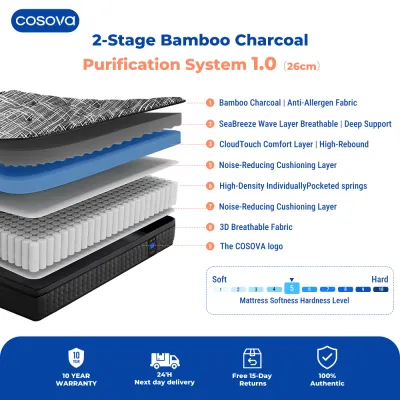
Innerspring and hybrid spring mattresses offer an unmatched structural advantage when it comes to heat dissipation. Unlike solid foam blocks, the core of a spring mattress consists of individual metal coils surrounded by open space. This open structure allows air to circulate freely throughout the entire mattress body, facilitating maximum passive air circulation. As you move during sleep, the bellows-like action of the springs actively pushes warm air out and draws cooler air in.
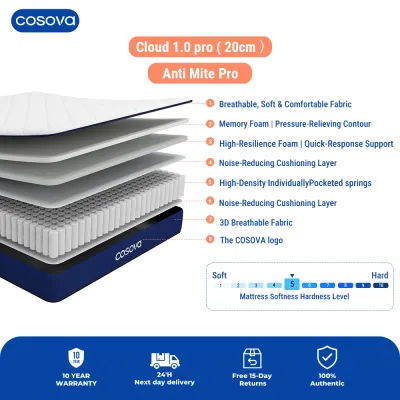
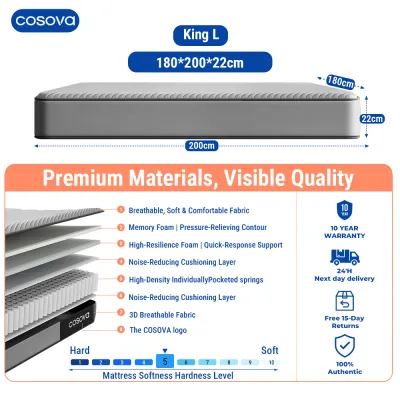
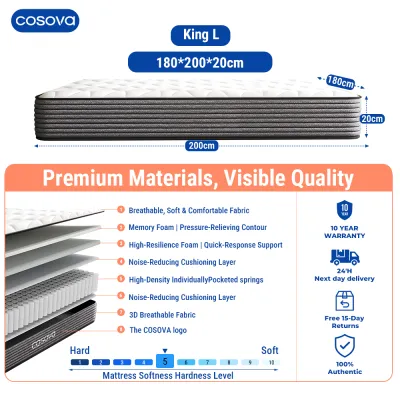
Modern spring mattresses, such as those featuring pocketed coils, are designed to isolate motion while maintaining this high level of breathability. However, the overall thermal performance of a spring mattress depends heavily on its comfort layers. Most contemporary models are “hybrids,” meaning they feature a spring base topped with one or more layers of foam or fiber for cushioning. If this top comfort layer consists of thick, traditional memory foam, it can act as a thermal barrier, trapping heat right against your skin and canceling out the cooling benefits of the spring system below.
When browsing the cosova official store, look for spring models that utilize highly breathable comfort layers. Materials such as natural latex, open-cell high-resilience (HR) foam, or specialized cooling gel-infused fibers in the pillow-top or euro-top are excellent choices. These materials provide the necessary pressure relief while allowing body heat to pass through to the ventilated spring core.
Moisture management is another critical factor. While steel coils do not absorb moisture, high humidity can affect the surrounding fabric layers and internal padding. Over time, trapped moisture can degrade internal foams or cause rust if the coils are not properly coated. It is wise to verify that the mattress uses rust-resistant, pocketed coils and features a moisture-wicking cover to prevent dampness from penetrating the inner layers.
A Cosova spring mattress is ideal for hot sleepers who require maximum airflow to stay cool throughout the night. It is also highly suitable for heavier individuals who need robust support and strong edge support, as well as couples who prefer a traditional, active bounce that makes it easy to change sleeping positions.
Cosova Memory Foam Mattresses: Pressure Relief vs. Heat Retention
Memory foam is celebrated globally for its exceptional pressure relief and motion isolation. However, its physical characteristics present unique challenges in a tropical climate. Traditional memory foam is a dense, viscoelastic material that responds to body heat and weight to contour closely to your shape. Because it hugs the body so tightly, it leaves very little surface area exposed to the air, creating a “hugging” sensation that inherently traps body heat and restricts airflow around the sleeper.
Furthermore, high ambient humidity can alter the physical feel of memory foam. Viscoelastic foam is highly sensitive to temperature and moisture; in hot, humid conditions, it can feel noticeably softer and cause you to sink deeper into the mattress. This deeper sinkage further restricts air circulation, making you feel “stuck” in a warm pocket of foam. Additionally, the dense structure of traditional memory foam can trap moisture from sweat, increasing the risk of mold and odor buildup if the bedroom lacks proper ventilation.
To address these limitations, mattress manufacturers have developed technological workarounds. When shopping at the cosova official store, look for advanced memory foam formulations designed for thermal regulation. These include open-cell memory foam, which has a more porous structure to allow air passage, and gel-infused or copper-infused foams. The infused gel or copper particles help conduct heat away from the body, mitigating the initial warming effect of the foam.
It is important to note that even with these cooling technologies, a memory foam mattress performs best in a controlled environment. In the Philippines, a memory foam mattress is highly recommended for bedrooms equipped with consistent air conditioning and dehumidification. The cool air helps maintain the foam’s structural firmness and prevents the excessive softening that leads to heat trapping.
The ideal sleeper profile for a Cosova memory foam mattress consists of side sleepers who require deep pressure relief for their shoulders and hips, individuals who sleep in air-conditioned rooms, and couples who prioritize absolute motion isolation to prevent waking each other up during the night.
Head-to-Head Comparison: Latex vs. Spring vs. Memory Foam
To help you make an informed decision, we have summarized the physical properties and performance characteristics of these three mattress materials under tropical conditions.
| Material Type | Airflow & Cooling | Moisture & Mold Resistance | Support Feel | Best Tropical Use Case |
|---|---|---|---|---|
| Natural Latex | High (due to open-cell structure and pinholes) | Excellent (naturally hypoallergenic and mold-resistant) | Responsive, buoyant, medium-firm | Non-AC or AC rooms; allergy sufferers who want clean, resilient support |
| Spring / Hybrid | Maximum (due to large open spaces between coils) | Moderate to High (requires breathable comfort layers) | Bouncy, active, strong edge support | Hot sleepers; heavier individuals; rooms with standard ventilation |
| Memory Foam | Low to Moderate (depends on cooling gel or open-cell tech) | Low (dense foam can trap moisture if not ventilated) | Contouring, deep pressure relief, "hugging" | Air-conditioned bedrooms; side sleepers seeking joint pressure relief |
A Conditional Decision Framework for Your Bedroom
To narrow down your choice, consider how your personal sleeping habits align with these specific physical profiles:
- Choose Spring (Hybrid with breathable top) if: You are an exceptionally hot sleeper, do not use air conditioning overnight, and prefer a traditional, highly supportive surface with active bounce and strong edge support.
- Choose Latex if: You want a balanced, medium-firm sleeping surface that naturally resists the humidity-driven buildup of dust mites and mold, provides responsive support without a sinking feeling, and performs well in both air-conditioned and fan-cooled rooms.
- Choose Memory Foam if: You prioritize deep pressure relief for joint pain, sleep primarily in an air-conditioned room that controls ambient humidity, and can verify that the mattress uses open-cell or gel-infused foam to manage heat.
- Verify first if: You are considering a hybrid model. Always check the exact breakdown of the comfort layers on the product page at the cosova official store to ensure the top layers are made of highly breathable materials rather than dense, traditional foam.
Smart Shopping: What to Verify at the Cosova Official Store
When you are ready to make a purchase, navigating the online product pages requires a discerning eye. Marketing terms can sometimes obscure the actual physical specifications of the mattress. To ensure you select a model perfectly suited to the Philippine climate, head to the cosova official store and use this practical verification checklist before checking out:
- Examine the Layer Breakdown: Do not rely solely on the main product title. Scroll down to the detailed specifications or cross-section diagrams. Identify the exact materials used in the top 2 to 3 inches of the mattress. This comfort layer is in direct contact with your body and will dictate the initial heat retention and breathability.
- Inspect the Cover Fabric: The cover is your first line of defense against heat and humidity. Look for breathable, moisture-wicking textiles such as bamboo-derived fibers, organic cotton, or specialized cooling knits. Avoid covers made entirely of heavy, tightly woven synthetic polyester, which can trap heat regardless of the mattress core.
- Check for Safety and Emission Certifications: Look for recognized independent certifications such as CertiPUR-US (for polyurethane foams) or Oeko-Tex Standard 100 (for textiles and latex). While these labels do not guarantee cooling performance, they verify that the materials have been tested for harmful emissions and off-gassing, which is crucial for indoor air quality in closed, air-conditioned rooms.
- Review the Warranty and Foundation Requirements: High humidity can place extra stress on mattress materials, potentially leading to premature sagging if the mattress is not supported correctly. Review the warranty terms regarding sagging depth and moisture damage. Ensure you pair your new mattress with a compatible, supportive foundation (such as a slatted bed frame) that meets the manufacturer's guidelines to keep your warranty valid.
Frequently Asked Questions (FAQ)
How often should I rotate my mattress in a humid climate?
To maintain even wear and prevent localized moisture buildup, it is highly recommended to rotate your mattress 180 degrees every 3 to 6 months. In the high-humidity environment of the Philippines, regular rotation ensures that body weight and moisture are distributed evenly across the surface. Additionally, opening your bedroom windows during dry, sunny days to encourage cross-ventilation helps dissipate any trapped moisture within the mattress layers.
Do I need a specific bed frame to improve mattress airflow?
Yes, the foundation you choose directly impacts the breathability of your mattress. A slatted bed frame, with sturdy slats spaced no more than 2 to 3 inches apart, is highly recommended over a solid platform or placing the mattress directly on the floor. The open spaces between the slats allow air to circulate freely beneath the bed, which is critical for preventing moisture accumulation and mold growth in tropical humidity.

Community discussion
Share your experience or ask a question. Comments are reviewed before publication.