
Quick Answer: Which Cosova Mattress Type is Best for the Philippines?
Selecting a mattress that facilitates efficient temperature regulation is essential for achieving restorative sleep in the tropical climate of the Philippines. For most local households, Cosova spring and latex mattresses emerge as the most suitable options due to their superior structural airflow and natural temperature neutrality. Spring systems utilize open space to allow continuous ventilation, while latex features an open-cell structure and pinhole design that prevents heat from becoming trapped.
Memory foam mattresses can still be a viable option, but only if the specific model is engineered with verified cooling technologies, such as gel infusions or phase-change covers. Because material names alone do not guarantee a cool sleep surface, buyers should always verify the exact specifications, comfort layer thickness, and cover materials of their chosen Cosova model before making a purchase.
How Tropical Heat and Humidity Affect Mattress Materials
The tropical climate of the Philippines, characterized by high ambient temperatures and elevated relative humidity, poses distinct challenges for sleep hygiene and mattress durability. When indoor temperatures remain high overnight, the human body naturally perspires to cool itself down. If a mattress lacks adequate ventilation, this perspiration is absorbed directly into the comfort layers, creating a warm, damp microclimate.
Products mentioned in this guide
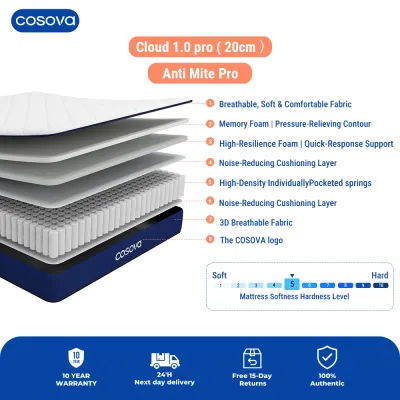
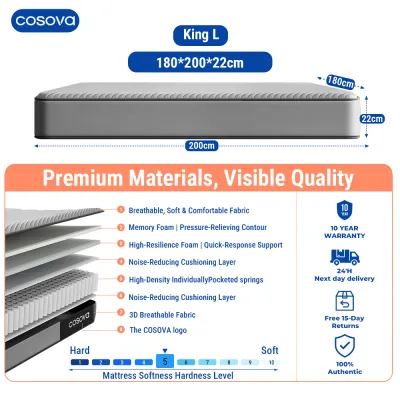
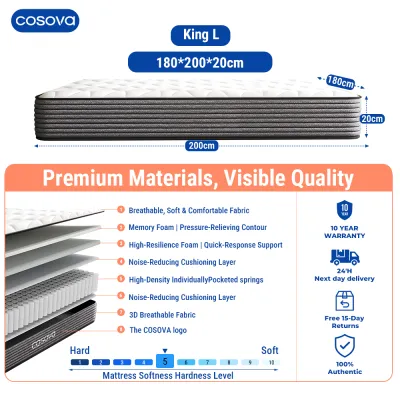
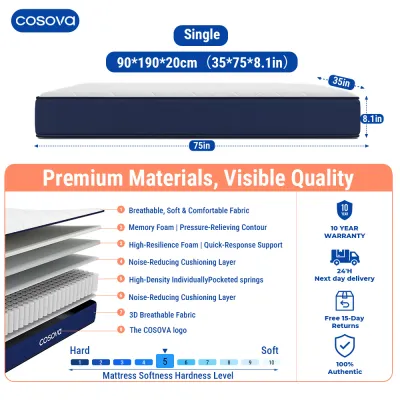
Prices are valid at publication and may change. Please refer to the product page for the latest price.

Over time, high humidity levels can lead to moisture accumulation within the core of the mattress, increasing the risk of mold, mildew, and dust mite infestations. These issues not only compromise indoor air quality and trigger respiratory allergies but can also accelerate the physical breakdown of cushioning foams.
Therefore, prioritizing structural airflow, breathability, and moisture-wicking covers is crucial when selecting a mattress. Sleepers must remember that a material’s name alone does not guarantee resistance to moisture; verifying the manufacturer’s care instructions and the structural design of the mattress is necessary to ensure long-term performance in tropical conditions.
Comparing Cosova Mattress Types: Breathability, Support, and Durability
Evaluating a mattress for a tropical climate requires looking beyond initial comfort to understand how different materials handle heat transfer and humidity. The primary mechanisms of heat dissipation in a mattress are conduction (how heat moves through solid materials) and convection (how air currents carry heat away). Different materials exhibit vastly different thermal conductivities and airflow capacities. By examining latex, spring, and memory foam through the lens of tropical performance, sleepers can identify which construction will maintain a supportive, dry, and cool sleeping surface over years of use.
Cosova Latex Mattresses: Natural Cooling and Resilience
Latex mattresses are highly recommended for tropical climates due to their natural physical properties and structural design. Natural latex is derived from the sap of rubber trees and possesses an open-cell molecular structure that does not trap heat as easily as synthetic polyurethane foams. During manufacturing, latex cores are typically molded with a grid of vertical pinholes, which create open ventilation pathways throughout the mattress. This design allows air to circulate freely, meaning that every movement of the sleeper helps push warm air out of the mattress and draw cooler air in.
Additionally, latex is naturally resistant to dust mites, mold, and mildew, which is a significant advantage in the humid Philippine environment where these allergens thrive. When considering a Cosova latex mattress, it is important to check whether the model uses 100% natural latex or a synthetic blend. Natural latex typically offers superior breathability, elasticity, and durability under high humidity, whereas synthetic blends may degrade more quickly and retain slightly more heat.
Cosova Spring Mattresses: Airflow and Traditional Bounce
Spring mattresses, including traditional innerspring and modern pocket spring systems, are the most breathable mattress type available. The core of a spring mattress consists of steel coils surrounded by open space, which allows air to move completely unrestricted. As a sleeper shifts during the night, the compression and expansion of the coils act like a bellows, actively circulating air and dispersing body heat. This high level of ventilation prevents heat from building up, making spring mattresses highly effective at maintaining a neutral temperature even in rooms without air conditioning.
Furthermore, spring mattresses provide excellent edge support and a responsive bounce, which prevents the sleeper from sinking too deeply and feeling “trapped” in a warm pocket of foam. However, the overall cooling performance of a spring mattress depends heavily on the comfort layers placed on top of the coils. If a hybrid or spring mattress features a thick, dense, unventilated foam comfort layer, it can block the airflow from the coil system below, neutralizing many of the cooling benefits of the spring core.
Cosova Memory Foam Mattresses: Contouring and Heat Retention Risks
Memory foam, or viscoelastic foam, is highly valued for its exceptional pressure relief and motion isolation. It contours closely to the body’s shape, distributing weight evenly and reducing pressure points on the joints, which is highly beneficial for sleepers with chronic pain. However, standard memory foam presents inherent heat retention risks in tropical climates. The dense, closed-cell structure of traditional memory foam tends to trap body heat, and because the material reacts to temperature, it softens and contours more deeply as it warms up. This deep contouring wraps the foam around the sleeper’s body, further restricting airflow and creating a hot, humid sleeping environment.
To make memory foam suitable for the Philippine climate, buyers should look for Cosova models that incorporate advanced cooling technologies. These include gel-infused memory foam, which helps conduct heat away from the body, open-cell polyurethane formulations that facilitate air movement, or covers made from moisture-wicking materials like Tencel. Without these cooling enhancements, standard memory foam mattresses are generally not recommended for hot sleepers unless used in a consistently air-conditioned bedroom.
Feature Comparison Matrix for Hot Sleepers
The following table summarizes how each mattress type performs across key climate-specific dimensions to help you compare your options at a glance:
| Mattress Type | Airflow / Breathability | Heat Retention Risk | Humidity & Mold Resistance | Motion Isolation | Ideal Sleeper Profile | What to Verify on the Product Label |
|---|---|---|---|---|---|---|
| Latex | High (Open-cell + pinholes) | Low | High (Naturally hypoallergenic) | Moderate | Eco-conscious sleepers, allergy sufferers, back pain patients | Confirm 100% natural latex vs. synthetic blend |
| Spring | Very High (Open coil core) | Very Low | Moderate (Depends on comfort layers) | Low to Moderate (Pocket springs isolate better) | Hot sleepers, combination sleepers, traditional feel lovers | Check comfort layer thickness and foam type |
| Memory Foam | Low (Dense, closed-cell) | High | Low (Prone to moisture retention) | High | Side sleepers, couples, joint pain sufferers | Look for gel-infusions, open-cell structure, and cooling covers |
Decision Framework: Choose the Right Cosova Mattress for Your Needs
To finalize your decision, consider how your personal sleeping habits interact with your home environment and the physical properties of each mattress type:
- Choose Cosova Spring if… you prioritize maximum airflow, sleep exceptionally hot, and prefer a traditional responsive feel with robust edge support. This construction is highly suitable for bedrooms that rely on fan cooling rather than continuous air conditioning.
- Choose Cosova Latex if… you want a balance of natural cooling, responsive support, and long-term durability. This option is ideal for eco-conscious buyers and individuals sensitive to allergens, as natural latex naturally resists the mold and dust mites that thrive in humid environments.
- Choose Cosova Memory Foam if… the specific model includes verified cooling technologies, you share a bed and require excellent motion isolation, and you prioritize deep contouring pressure relief over absolute temperature neutrality.
- Verify first if… you have specific physical requirements, such as chronic back pain or specific weight profiles, by checking the firmness ratings and material certifications on the official Cosova product page. Additionally, confirm that your existing bed frame or foundation meets the manufacturer's support requirements, as an improper base can cause sagging and restrict airflow underneath the mattress.
Care and Maintenance Tips for Mattresses in Humid Climates
Maintaining a mattress in a humid climate requires proactive care to prevent moisture buildup and extend the lifespan of the materials. First, always use a breathable, waterproof mattress protector. This layer acts as a barrier against sweat, oils, and accidental spills, preventing them from seeping into the comfort layers while still allowing air to circulate. Second, ensure your bedroom is well-ventilated; using a ceiling fan, air conditioning, or a dehumidifier helps manage indoor relative humidity, which should ideally be kept below 60% to prevent mold growth.
Avoid placing your mattress directly on the floor or on a solid, unventilated platform, as this traps moisture underneath; instead, opt for a slatted bed frame that allows air to flow freely beneath the mattress. Additionally, rotate your mattress 180 degrees every three to six months to ensure even wear and compression.
Before undertaking any deep cleaning, sunning, or stain removal, check the applied product’s label and the treated item’s manufacturer instructions. If instructions conflict, the item is unidentified, or the use is not covered, stop and consult the manufacturer or a qualified professional. Never use harsh chemical solvents, excessive water, or steam cleaners, as deep moisture can trap inside the foam layers and cause permanent structural damage or void your warranty.
Frequently Asked Questions (FAQ)
Does high humidity void the Cosova mattress warranty?
Standard mattress warranties are designed to protect consumers against manufacturing defects, such as significant sagging, structural indentations, or broken coils under normal use. However, these warranties typically exclude damage caused by environmental factors or improper care. In the Philippines, where humidity levels are consistently high, damage resulting from mold, mildew, or water staining is generally classified as environmental neglect rather than a manufacturing defect, meaning it is not covered by the warranty. To protect your investment and maintain warranty validity, it is crucial to use a high-quality, breathable mattress protector and place the mattress on an approved, well-ventilated foundation. Always review the specific warranty documentation provided with your Cosova mattress to understand the exact terms, exclusions, and foundation requirements.

Community discussion
Share your experience or ask a question. Comments are reviewed before publication.