
To comfortably seat 6 to 10 people, you need a dining table that balances individual elbow room with the physical limits of your dining area. For a standard rectangular table, seating 6 people requires a length of at least 150 to 180 centimeters. Expanding that capacity to 8 people demands a length of 200 to 220 centimeters, while a gathering of 10 diners requires a substantial table measuring 240 to 270 centimeters in length. If you prefer a round table, a diameter of 120 to 140 centimeters fits 6 people, whereas a diameter of 150 to 180 centimeters is necessary to accommodate 8 to 10 guests without crowding.
Choosing the right table set involves more than just matching numbers on a manufacturer’s label. In many homes, especially during warm family gatherings or festive weekend meals, the dining table becomes the central hub for shared dishes, conversation, and long hours of sitting. To prevent a cramped dining experience, you must account for individual place settings, the space required for serving platters, and the clearance needed behind each chair so guests can move freely.
Understanding Space Requirements per Diner
To ensure everyone can enjoy their meal without bumping elbows, each diner requires a minimum personal zone of 60 to 75 centimeters of lateral table width. This space allows for a standard place setting, flatware, and natural arm movement while cutting food. If your dining chairs are particularly wide or have armrests, you should lean toward the upper end of this range to prevent guests from feeling squeezed.
Products mentioned in this guide
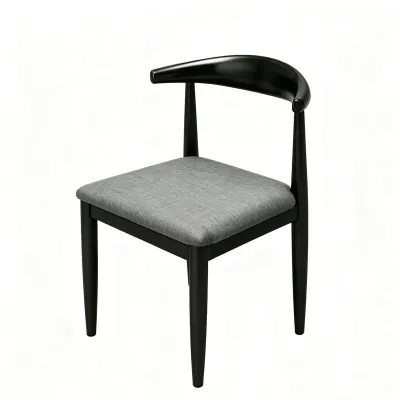
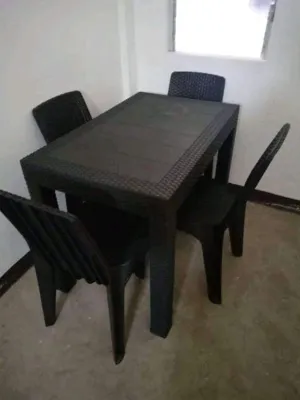
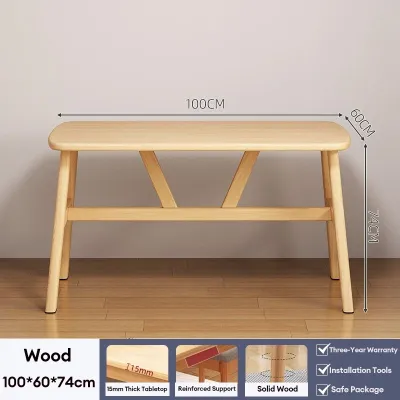
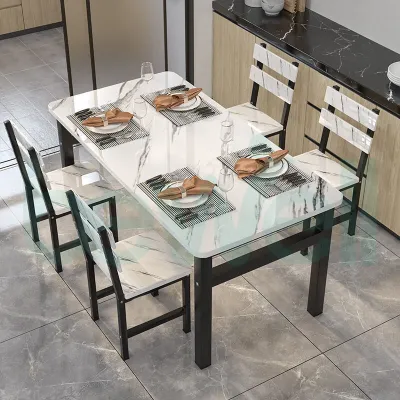
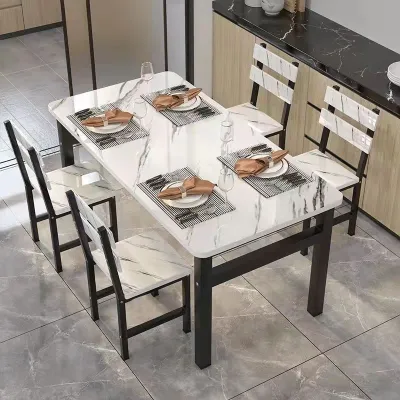
Prices are valid at publication and may change. Please refer to the product page for the latest price.
The depth of the personal dining zone is equally important. Each person needs about 35 to 40 centimeters of depth to accommodate a dinner plate, glassware, and a napkin. When two diners sit directly opposite each other, their combined personal zones occupy roughly 70 to 80 centimeters of the table’s total width.
Any remaining space in the center of the table forms the shared zone. Ideally, this central area should be 20 to 30 centimeters wide to hold serving bowls, water pitchers, or a lazy Susan. In tropical climates where large, family-style platters and shared dishes are central to the dining experience, a table narrower than 90 centimeters can quickly feel cluttered, forcing you to place serving dishes on a separate sideboard or kitchen counter.
Beyond the tabletop itself, you must calculate the physical space required to use the chairs. To allow diners to pull out their chairs and sit down comfortably, maintain a minimum clearance of 90 centimeters from the edge of the table to the nearest wall, cabinet, or doorway. If you want to allow enough space for family members to walk behind seated guests—especially in busy, open-plan layouts—increase this clearance to 110 to 120 centimeters.
Comparing Table Shapes for 6 to 10 Seats
The shape of your dining table plays a major role in how many people you can seat, how easily guests can converse, and how well the furniture fits your room’s proportions. Rectangular tables are the most traditional and efficient choice for seating larger groups of 6 to 10 people. They align naturally with long walls and open-plan living areas, making them easy to position.

For a rectangular table seating 6 people, you can place two chairs on each long side and one at each end. When expanding to 8 or 10 people, you will typically place three to four chairs along the sides and one at each head of the table. Keep in mind that seating guests at the ends requires a wider table—at least 95 to 100 centimeters—so they do not bump knees with those sitting adjacent to them on the sides.
Round and oval tables offer a different set of advantages, particularly for social interaction. Round tables are excellent for fostering conversation because everyone faces the center, creating an intimate atmosphere. A round table with a diameter of 150 centimeters can seat 8 people comfortably, but it requires a large, square room to avoid wasting corner space.
Oval tables combine the soft, flowing edges of a round table with the elongated footprint of a rectangular one. They are highly efficient for seating 8 to 10 people because the rounded corners eliminate sharp edges, allowing you to squeeze in an extra chair when needed. Additionally, the lack of corners makes it easier for people to navigate around the table in tight spaces.
The design of the table base also impacts legroom and seating flexibility. Traditional four-legged tables provide excellent stability but limit where you can place chairs, as the corner legs can block guests’ knees. Pedestal bases or trestle designs support the table from the center, freeing up the corners and sides. This makes it much easier to slide in extra chairs or adjust seating arrangements when hosting larger groups.
Fixed vs. Extendable Table Sets for Flexible Seating
Deciding between a permanently large table and an extendable dining set depends on your daily routine and how often you host guests. A fixed large table is highly stable and always ready for guests, making it a grand centerpiece for a dedicated dining room. However, if you only host large groups occasionally, a permanently large table can dominate your living space and make daily family meals feel distant and impersonal.
An extendable dining table set offers a practical solution for flexible living. You can keep the table compact for daily family use—perhaps at 150 centimeters to seat 6 people—and extend it to 240 centimeters when hosting up to 10 guests. This keeps your dining area open and airy for daily activities while ensuring you are always prepared for special occasions.
Common extension mechanisms include drop-leaf designs, butterfly leaves that fold and store inside the table frame, and removable insert leaves that require separate storage. When choosing an extendable table, check the smoothness of the glides and the alignment of the locking mechanisms. High-quality metal glides ensure that one person can easily open and close the table without assistance.
Structural stability is a critical consideration for extendable tables. Some designs feature legs that remain fixed at the corners while the top expands, which can leave the center vulnerable to sagging if not properly supported. Others have legs that slide outward with the tabletop, providing consistent support but changing the seating dynamics. Ensure the frame feels sturdy when fully extended and does not wobble under pressure.
If you choose a table with removable leaves, consider where you will store them when they are not in use. In humid climates, wooden leaves must be stored flat in a dry, temperature-controlled environment to prevent warping. Wood can expand or contract with seasonal humidity changes, so check that the alignment pins and latches still fit securely during wetter months.
Measuring Your Dining Room for the Perfect Fit
To avoid purchasing a table that makes your dining room feel cramped, you must measure your space carefully before shopping. Start by measuring the length and width of your dining room using a steel tape measure. Note the locations of architectural features such as low-hanging windows, doorways, columns, and built-in cabinets that could restrict movement.
Subtract the required clearance of 90 to 120 centimeters from all sides of your room’s usable dimensions to find your maximum table footprint. For example, if your dining area is 400 centimeters long and 300 centimeters wide, subtracting 90 centimeters of clearance from each side leaves you with a maximum table footprint of 220 centimeters by 120 centimeters. If you have a sideboard or buffet cabinet, measure from the front of that furniture piece rather than the wall.
If your dining area is part of an open-plan living space, use painter’s tape or cardboard boxes to outline the proposed table dimensions on the floor. This physical mockup allows you to walk around the space and experience the actual flow of traffic before making a purchase. It also helps you visualize how the table will look in relation to your sofa, television console, or kitchen island.
Do not forget to factor in the delivery path. A common oversight is purchasing a large, fixed-top table only to find it cannot clear the entryway, tight hallway turns, or stairwells. Measure the height and width of all doorways, elevator cabins, and stair landings along the delivery route. If access is tight, look for tables with removable legs or opt for an extendable model that arrives in smaller, manageable boxes.
Common Sizing Mistakes to Avoid
One of the most frequent mistakes when buying a dining table set is overlooking the height of chair armrests. Dining chairs with armrests often cannot slide fully under the table, especially if the table has a thick apron—the wooden frame directly beneath the tabletop. This can force the chairs to stick out constantly, blocking walkways and reducing the usable space in your room. Always check the clearance between the top of the chair arms and the bottom of the table apron.
Another common error is relying solely on manufacturer “seating capacity” labels. A table labeled “seats 8” might only accommodate that number if you use narrow, armless chairs squeezed tightly together. For comfortable, everyday dining, look at the actual physical dimensions rather than the advertised capacity. Allow for the recommended 60 to 75 centimeters of width per person to ensure a comfortable experience.
Finally, consider the visual weight and physical bulk of the table. A heavy, dark hardwood table with thick legs can make a medium-sized room feel incredibly cramped, even if the physical measurements fit. If your space is limited, consider lighter wood finishes, slender metal legs, or glass tops to maintain a sense of openness and light.
Frequently Asked Questions (FAQ)
Can I seat 10 people at a table designed for 8?
Yes, but it requires careful planning. You can often squeeze 10 people at an 8-person table by using narrower, armless chairs or replacing individual chairs with a dining bench on one side. Benches are highly efficient because they allow children or smaller guests to sit closer together without the physical barrier of individual chair frames. You will also need to utilize the ends of the table, so ensure the table base does not block the legroom of those sitting at the head and foot. Keep serving dishes on a nearby sideboard to maximize table surface area.
What is the best table shape for a narrow dining room?
A long, narrow rectangular table or an oval table is the best choice for a narrow dining room. Look for a table width of 85 to 90 centimeters, which is narrow enough to preserve walkway space on either side while still providing enough room for individual place settings. To maximize space, you can push one side of the table against a wall when not hosting guests, or use a bench that slides completely underneath the table when not in use.

Community discussion
Share your experience or ask a question. Comments are reviewed before publication.