
Sleeping comfortably in the Philippines requires a sleep surface that can handle both high temperatures and intense tropical humidity. Traditional foam mattresses have a reputation for trapping body heat, which often leaves sleepers waking up warm and uncomfortable during humid nights. While standard foam does naturally retain heat due to its dense structure, modern mattress designs incorporate specific cooling features, open-cell technologies, and breathable covers to counteract this issue. Understanding how these materials interact with a tropical climate is key to choosing a mattress that keeps you cool and comfortable.
Why Foam Mattresses Trap Heat in Tropical Climates
To understand why foam mattresses can feel warm, it helps to look at how the material behaves under pressure and warmth. Traditional memory foam is designed to react to your body heat, softening and contouring to your physical shape to provide pressure relief. However, this close contouring creates a deep cradle around your body, which maximizes the contact area between your skin and the bed. Because the foam hugs your body closely, it restricts the natural movement of air across your skin, trapping your body heat directly beneath you.
The dense molecular structure of standard polyurethane or memory foam further compounds this heat retention. Unlike traditional innerspring mattresses, which consist mostly of open space between steel coils, solid foam blocks have very little room for air to circulate. Once your body heat transfers into the core of a standard foam mattress, the heat has no clear pathway to escape, causing the mattress temperature to rise steadily throughout the night.
Products mentioned in this guide
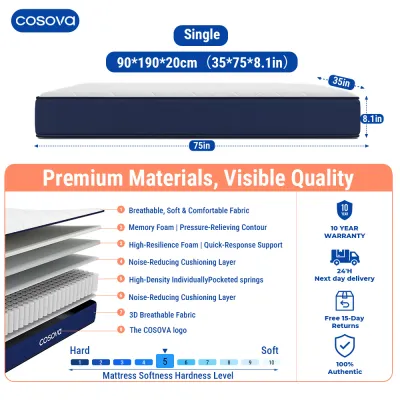
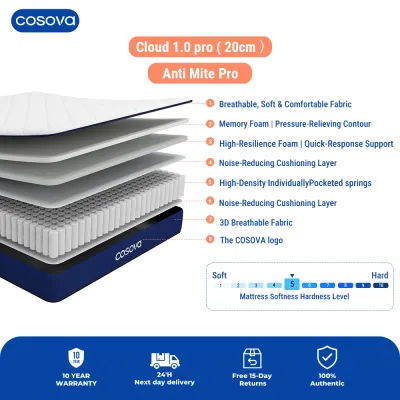
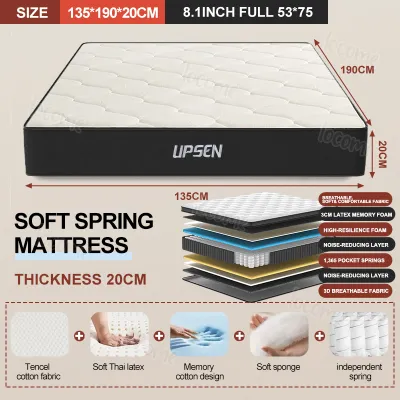
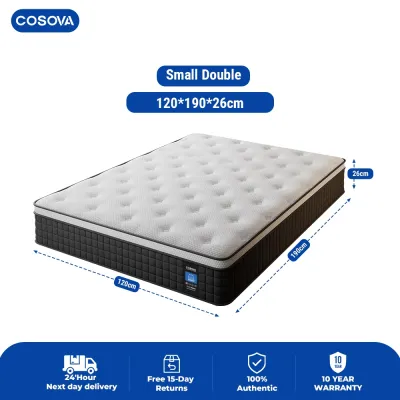
Prices are valid at publication and may change. Please refer to the product page for the latest price.
In the Philippines, this thermal challenge is significantly amplified by high ambient humidity. When the air is saturated with moisture, your body’s primary cooling mechanism—the evaporation of sweat—becomes much less efficient. On a dense foam surface that does not wick moisture away, sweat can pool, creating a humid microclimate between your body and the sheets. This combination of trapped heat and high humidity makes the sleep surface feel much warmer than the actual room temperature.
Furthermore, seasonal shifts in the tropical climate mean that during the hot, dry months or the sticky rainy season, a mattress without adequate ventilation can quickly become uncomfortable. Without active airflow to carry away both heat and moisture, a standard foam mattress acts as an insulator rather than a regulator, making it difficult to achieve deep, restful sleep without relying heavily on air conditioning.
Essential Cooling Features to Look for in Foam Mattresses
When shopping for a foam mattress in a tropical climate, you should look for specific structural modifications designed to enhance ventilation. The most fundamental of these is an open-cell foam structure. Unlike closed-cell foams, which lock air into tiny, isolated pockets, open-cell foams feature interconnected pore networks. This design allows air to pass through the material when you move, acting like a pump that pushes warm air out and draws cooler air in.

Another common feature is the inclusion of cooling infusions within the foam itself, such as gel, copper, or graphite. Gel-infused foams are designed to absorb initial body heat and distribute it more evenly across the mattress surface, delaying the point at which the bed begins to feel warm. While these infusions help manage temperature during the initial hours of sleep, it is important to verify the manufacturer’s specifications to understand the concentration and type of infusion used, as their long-term cooling efficiency depends heavily on the overall breathability of the mattress.
The fabric cover of the mattress plays an equally critical role in temperature regulation, as it is the layer closest to your body. Breathable, moisture-wicking fabrics such as bamboo-derived rayon, Tencel, or specialized cooling yarns are highly effective at pulling sweat away from your skin and allowing it to evaporate quickly. In contrast, synthetic polyester blends tend to trap moisture and heat, neutralizing the benefits of any advanced cooling foams underneath.
Surface profiling is another physical feature that significantly improves airflow. Some foam mattresses feature convoluted layers—often referred to as egg-crate designs—or zoned channels cut directly into the top of the foam. These physical grooves create dedicated air pathways directly beneath the mattress cover, allowing heat to escape laterally rather than building up directly under your body.
How to Evaluate a Cosova Foam Mattress for Temperature Regulation
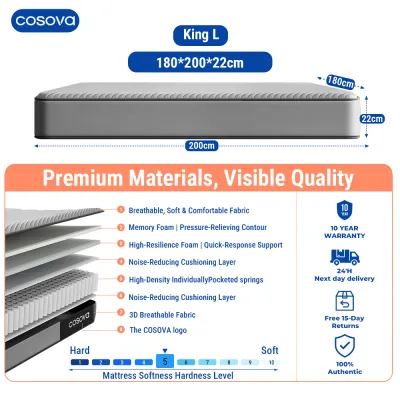
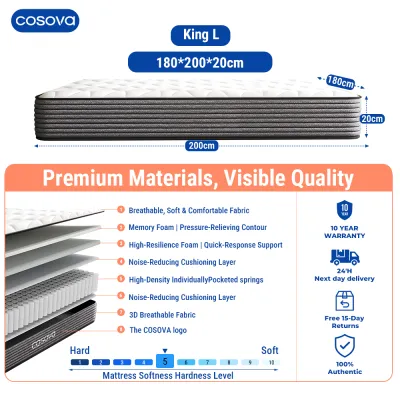
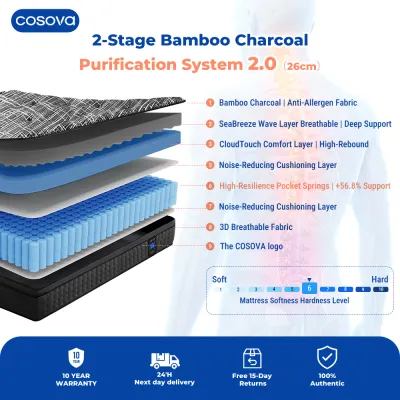
If you are considering a Cosova foam mattress, evaluating its suitability for a tropical climate requires a close look at its specific construction details. Start by examining the product specification sheet, which is typically available on the manufacturer’s website or product packaging. Look for explicit mentions of open-cell foam technology or breathable comfort layers, as these are the primary indicators of how well the mattress will handle heat and humidity.
Pay close attention to the density of the foam layers used in the mattress. While higher-density foams often provide excellent support and durability, they also contain more material mass, which can retain heat more easily if not paired with cooling channels or open-cell structures. Check if the Cosova model you are looking at balances supportive high-density base foam with highly breathable, lower-density or profiled comfort layers on top.
Next, verify the material composition of the mattress cover by checking the physical fabric tags or the manufacturer’s detailed specifications. A high-quality cover made from natural or semi-synthetic fibers like viscose or bamboo is highly desirable for Philippine homes, as these materials naturally handle moisture better than pure polyester. Additionally, check the care instructions to see if the cover is removable and washable, as keeping the cover clean helps maintain its breathability over time.
When evaluating a Cosova foam mattress, also consider the physical dimensions and weight of the mattress in relation to your bedroom access. High-density foam mattresses can be surprisingly heavy and difficult to maneuver through tight doorways, stairwells, or condominium lifts common in urban Philippine residences. Verify the packaged shipping dimensions and ensure you have a clear path for delivery and setup. Additionally, check the manufacturer’s assembly instructions to see if the mattress requires a specific recovery time after unboxing before it reaches its full stability and load capacity.
Finally, compare the different variants and thickness options within the brand’s lineup. Thicker foam mattresses often contain more layers of foam, which can potentially trap more heat if they lack internal ventilation channels. If you tend to sleep very hot, look for models that specifically highlight cooling cover fabrics or convoluted transition layers, and consider how the mattress thickness aligns with your bed frame to ensure adequate overall airflow.
Optimizing Your Bed Setup for Better Airflow and Cooling
Even the most advanced cooling foam mattress requires a supportive environment to perform at its best. Your choice of bedding is the first line of defense against heat buildup. Opt for sheets made from lightweight, natural fibers such as 100% cotton, linen, or bamboo, which allow air to pass through easily and help wick away sweat. Avoid heavy synthetic duvets, thick polyester mattress protectors, or tightly woven microfiber sheets, as these materials act as thermal barriers that trap heat right at the surface.
The foundation supporting your mattress also plays a crucial role in temperature regulation. Placing a foam mattress directly on the floor or on a solid wooden platform blocks air from escaping through the bottom of the bed. Instead, use a sturdy slatted bed frame with gaps between the slats. This setup allows warm air to escape from the underside of the mattress, promoting continuous vertical airflow throughout the night.
When selecting a slatted base, ensure the frame matches the finished dimensions of your mattress to prevent overhang, which can damage the foam edges and compromise edge support. The slats should be spaced closely enough to support the mattress’s load capacity without sagging, yet far enough apart to allow heat to escape. A stable, well-anchored bed frame prevents the mattress from shifting, which helps maintain the integrity of the internal air channels and ensures long-term cooling performance.
Managing your bedroom environment is the final step in ensuring a cool night’s sleep. In the Philippines, using a ceiling fan or a standing fan to circulate air across the bed can dramatically improve the evaporation of moisture from your sheets. If you use air conditioning, setting the unit to a moderate temperature and utilizing a dehumidifier mode can help lower the ambient humidity, making it much easier for your mattress’s cooling features to keep you comfortable.
Frequently Asked Questions (FAQ)
Do mattress toppers help cool down a hot foam mattress?
Yes, a breathable mattress topper can help cool down a hot foam mattress by creating an extra layer of separation between your body and the heat-trapping base foam. Toppers made from open-cell latex, gel-infused memory foam with ventilation holes, or natural wool can significantly improve surface airflow. However, you should avoid dense, solid memory foam toppers without cooling features, as these will likely trap more heat and make your bed feel even warmer.
Is a firm or soft foam mattress cooler to sleep on?
Generally, a firmer foam mattress tends to sleep cooler than a soft one. On a soft mattress, your body sinks deeper into the foam, which increases the surface area in direct contact with the bed and restricts airflow around your body. A firmer mattress keeps you positioned on top of the surface, allowing air to circulate more freely across your skin and reducing the amount of body heat transferred directly into the foam core.

Community discussion
Share your experience or ask a question. Comments are reviewed before publication.