
Deciding on the right desk configuration is critical when setting up a home office. While an L-shaped desk looks impressive and promises abundant workspace, it is not a universal solution. Choosing between an L-shaped, straight, or corner desk requires evaluating your daily tasks, room dimensions, and equipment setup. If you juggle physical paperwork alongside multiple screens, an L-shaped desk is highly beneficial. However, if you work solely on a laptop or have a compact room, a simpler straight or corner desk is often the more practical, space-saving choice.
Assess Your Workspace and Daily Workflow
Before browsing online marketplaces, evaluate the physical space where your desk will sit. Take precise measurements of the designated area, noting the clearance needed for door swings, wardrobe doors, and walkways. In tropical climates like the Philippines, positioning your desk near a window provides excellent natural light, but consider how intense afternoon heat or sudden monsoon downpours might affect your setup. Additionally, locate your wall outlets; a large desk can easily block access to power sources, forcing you to run extension cords that can become tripping hazards.
Next, inventory all the equipment that must live on your desk surface, including monitors, laptops, docking stations, printers, and desk lamps. If your daily tasks require you to keep physical notebooks, reference books, or printed documents open while you type, your surface area requirements will be significantly higher.
Products mentioned in this guide
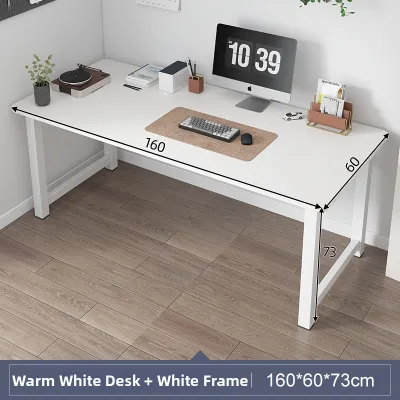
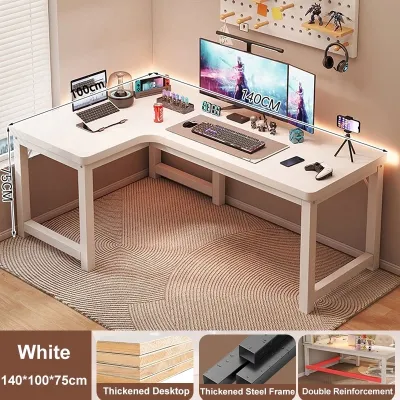
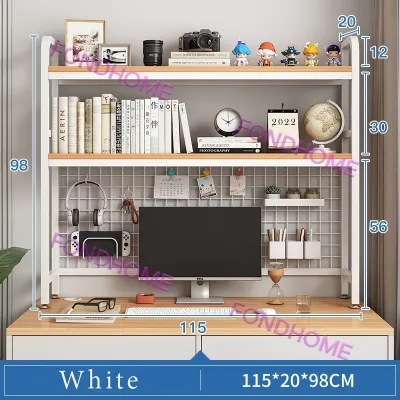
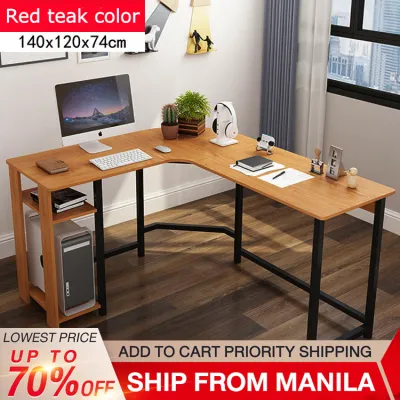
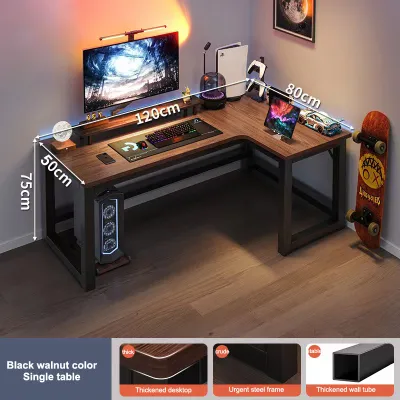
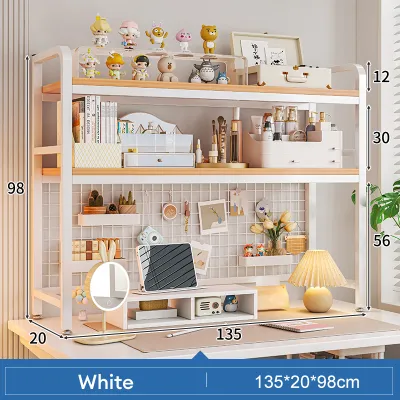
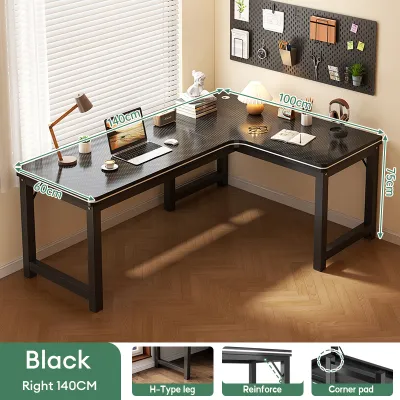
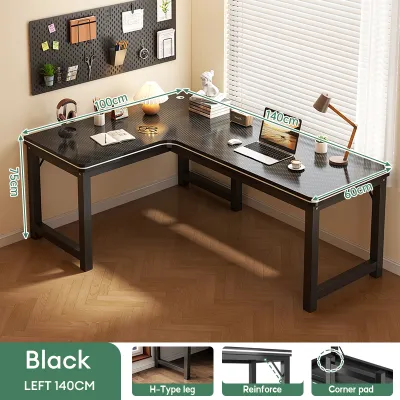
Prices are valid at publication and may change. Please refer to the product page for the latest price.
Finally, analyze your daily workflow patterns. If your job requires you to switch rapidly between typing on a computer and writing by hand, a single linear surface can feel cramped. An L-shaped layout allows you to establish distinct zones for different tasks, letting you transition from digital work to analog tasks with a simple pivot of your office chair.
L-Shaped vs. Straight vs. Corner Desks: Core Differences
A straight desk features a single linear surface that sits flat against a wall. Its simple footprint makes it highly versatile, allowing it to fit easily into narrow bedrooms, living room corners, or dedicated study areas. Because of its straightforward design, it is generally the easiest to assemble, move, and style within any home decor.

A corner desk is specifically engineered to wedge tightly into a 90-degree corner, utilizing a triangular or pentagonal shape. This configuration is a classic space-saver, designed to turn an otherwise useless corner into a functional workstation. However, because the user sits facing directly into the corner, the depth of the desk is concentrated in the center, leaving very little usable surface area on the sides.
An L-shaped desk consists of two perpendicular sections: a main desk and a shorter side section known as a return. This layout bridges two walls, offering a massive amount of surface area within arm’s reach. While it provides a vast workspace, it also occupies a substantial amount of floor space and can visually dominate a room. Assembly is typically much more complex, requiring precise alignment of the two desktop pieces and a sturdy frame to prevent sagging at the joint.
Signs an L-Shaped Desk Is the Right Fit
An L-shaped desk is highly beneficial if you require distinct primary and secondary work zones. If you spend your morning coding on a computer and your afternoon reviewing printed documents, signing paperwork, or sketching, the dual-surface design is incredibly efficient. You can keep your computer setup permanently on the main desk while leaving the return completely clear for offline tasks, eliminating the need to constantly push your keyboard and mouse aside.
This configuration is also the ideal choice for professionals who use multiple large monitors. Placing two or three screens on a standard straight desk can force you to turn your head excessively, leading to neck strain over long hours. The perpendicular return of an L-shaped desk allows you to position your secondary screens at an angle, keeping them within your natural peripheral vision and creating a more immersive, ergonomic viewing experience.
If you have a spacious room with an empty corner, an L-shaped desk is an excellent way to maximize that space. By hugging the walls, it keeps the center of the room open and unobstructed. In humid environments, maintaining an open center space is highly beneficial as it promotes better airflow from electric fans or air conditioning units, keeping your workspace feeling cool and comfortable throughout the day.
When a Straight or Corner Desk Is a Better Alternative
Despite its benefits, an L-shaped desk is not always the practical choice, especially if you are dealing with tight spatial constraints. In narrow rooms, studio apartments, or shared living spaces, the protruding return of an L-shaped desk can easily block walkways and disrupt the flow of traffic. A straight desk with a shallow depth of 50 to 60 centimeters is a much better alternative, keeping the room feeling open and accessible while still providing enough space for a standard laptop setup.
If your daily work is entirely digital and you only use a single laptop or a compact desktop computer, the vast surface area of an L-shaped desk is unnecessary. Without a specific purpose, that extra space will inevitably become a magnet for household clutter, loose papers, and coffee cups. A compact corner desk is a highly practical option for minimalists, allowing you to carve out a dedicated workspace in a tiny alcove without sacrificing valuable floor space.
Budget is another important factor to consider. L-shaped desks are generally more expensive than straight desks of comparable quality due to their complex frames and larger material requirements. If you are working with a limited budget, investing in a high-quality, sturdy straight desk made of durable materials is often a wiser decision than buying a cheap, wobbly L-shaped desk that may sag or warp under the weight of your equipment.
Essential Pre-Purchase Checks for Any Desk Configuration
Before finalizing your purchase, there are several critical checks you must perform to ensure your new desk fits and functions safely. First, verify the exact product dimensions against your measured workspace. Do not rely solely on product photos, which can often make furniture look smaller or larger than it actually is. Use masking tape to outline the desk’s footprint on your floor, and ensure you leave at least 80 to 100 centimeters of clearance behind the desk so your office chair can glide back smoothly without hitting walls or other furniture.
Next, check the manufacturer’s stated weight capacity and structural stability. In high-humidity climates, engineered wood products like particle board can absorb moisture over time, making them more susceptible to sagging under heavy loads. Look for desks with robust steel frames and powder-coated finishes to prevent rust. If you plan to use heavy monitor arms or multiple screens, ensure the desktop material is thick and sturdy enough to handle the concentrated pressure at the clamp point.
Finally, consider the logistics of delivery and assembly. L-shaped desks are often shipped in multiple large, heavy boxes. Make sure these packages can easily navigate your building’s elevator, narrow stairwells, and doorways. If you live in a condo or apartment, check if the desk is reversible, meaning the return can be assembled on either the left or right side. This flexibility is incredibly valuable if you decide to rearrange your room layout in the future.
Frequently Asked Questions (FAQ)
Can I convert two straight desks into an L-shaped setup?
While you can physically place two straight desks perpendicular to each other, it rarely results in a seamless or stable workspace. Matching the exact height of two different desks is incredibly difficult, and even a tiny millimeter-level difference will create an annoying seam that catches your mouse, pens, or paper. Furthermore, placing two standard desks together leaves a double set of legs in the inner corner, which severely restricts your legroom and prevents your office chair from swiveling freely. Without proper structural brackets linking the two frames, the desks can easily drift apart, creating a safety hazard for your expensive equipment.
Is an L-shaped desk better for ergonomics?
An L-shaped desk can significantly improve ergonomics by keeping your primary tools within your immediate reach zone, reducing the need to stretch or lean forward. By placing your main monitor directly in front of you and secondary screens or paperwork on the return, you can transition between tasks with a simple swivel of your chair rather than twisting your spine. However, a desk shape alone does not guarantee ergonomic health. True ergonomics depend on a combination of factors, including adjusting your desk and chair height so your elbows rest at a 90-degree angle, using monitor arms to keep screens at eye level, and maintaining good posture.

Community discussion
Share your experience or ask a question. Comments are reviewed before publication.