
The Herman Miller Sayl does not come with a headrest, and the manufacturer does not offer an official headrest attachment for this specific model. If you are experiencing neck strain or prefer reclining support during your workday, you will need to explore aftermarket alternatives or ergonomic workspace adjustments. This guide helps you determine if a headrest is genuinely necessary for your workflow, how to safely evaluate third-party add-ons, and when it makes more sense to consider a different chair.
For professionals working in warm, tropical climates like the Philippines, the Sayl is highly favored for its breathable, frameless elastomer backrest, which allows for excellent airflow. However, the lack of built-in neck support can be a drawback for those who like to lean back during long calls or brainstorming sessions. Understanding your options and the structural limits of the chair is essential before making any modifications.
Do You Actually Need a Headrest for Your Office Chair?
Before searching for aftermarket accessories, it is helpful to evaluate whether your daily tasks and physical comfort actually require a headrest. Many users assume a headrest is a standard necessity for ergonomic sitting, but its actual utility depends heavily on your primary working posture.
Products mentioned in this guide
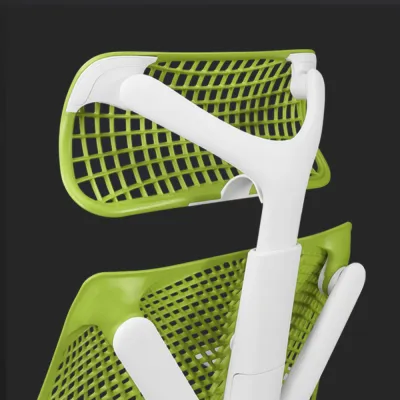
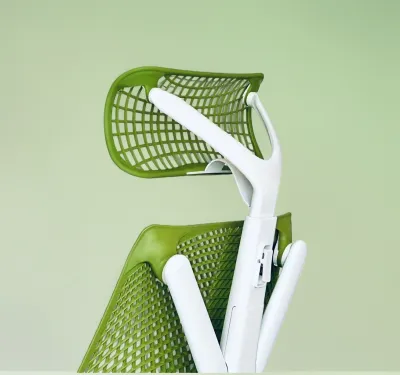
Prices are valid at publication and may change. Please refer to the product page for the latest price.
If your daily routine consists mostly of upright tasks like typing, coding, or writing, your head should naturally balance over your spine without resting against a support. In a proper upright posture, a headrest does not actually touch your head. Headrests are primarily functional when you recline, such as when you are reading documents, taking video calls, or watching presentations. If you rarely recline during the day, you may not need a headrest at all.
It is also important to distinguish between true neck strain and fatigue originating from other areas of your body. Often, neck discomfort is a secondary symptom of poor lower back support or an incorrect seat depth. When your lower back is not properly supported, your pelvis tilts backward, causing your shoulders to round and your head to protrude forward. Addressing these foundational posture issues can often relieve neck tension without the need for a headrest.
Finally, check your overall ergonomic baseline before assuming a headrest is the only solution. Ensure your monitor is positioned so the top of the screen is at eye level, preventing you from constantly looking down. If you work on a laptop, using a laptop stand alongside an external keyboard and mouse can immediately reduce cervical spine stress, making a headrest unnecessary for daily comfort.
Official vs. Third-Party Headrest Options for the Sayl
Herman Miller does not produce an official headrest for the Sayl. The chair was designed with an active-sitting philosophy, where the flexible backrest is intended to support the spine’s natural curve while allowing a full range of motion. The unique, suspension-bridge-inspired elastomer backrest does not have a standard frame structure that easily accommodates a factory-installed headrest.

Because of this design, any headrest you add to a Sayl must come from a third-party manufacturer. Several aftermarket brands design clamp-on headrests specifically shaped to fit the top curve of the Sayl’s backrest. When evaluating these third-party options on online marketplaces, look for models that feature adjustable height and tilt angles so you can customize the support to your height.
When choosing an aftermarket headrest, pay close attention to the clamp mechanism and materials. The clamp should be lined with soft rubber or protective padding to prevent scratching or denting the plastic frame of your chair. Additionally, ensure the clamp does not pinch, stretch, or put excessive pressure on the flexible elastomer suspension material, as this can cause permanent deformation or tearing over time.
Using third-party modifications also carries structural and warranty risks. The Sayl’s backrest is engineered to flex and move with your body. Attaching a rigid, heavy accessory to the top of the frame can alter the chair’s balance, put unintended stress on the frame joints, and potentially void your manufacturer’s warranty if the modification causes physical damage. Always review the warranty terms and installation instructions carefully before proceeding.
Alternative Ways to Improve Neck Support Without a Headrest
If you decide not to risk using a third-party headrest, you can make several adjustments to your workspace and habits to relieve neck strain. These adjustments focus on optimizing your posture and reducing static muscle loading throughout the day.
Start by optimizing your monitor positioning. If your screen is too low, too high, or too far away, your neck muscles must work constantly to keep your eyes focused. Position your primary monitor directly in front of you, about an arm’s length away, with the top third of the screen aligned with your eye level. If you use dual monitors, place them in a way that minimizes repetitive, sharp head turning.
Next, take time to properly tune your Sayl chair. Adjust the tilt tension so that the chair supports your weight smoothly when you lean back, preventing you from dropping back too quickly or having to strain your core to stay upright. Set the seat height so your feet rest flat on the floor with your knees at a 90-degree angle. Adjust the armrests so your elbows are supported, which unloads weight from your shoulders and reduces tension in the trapezius muscles that connect to your neck.
Incorporating movement habits into your workday is also crucial for preventing muscle fatigue. In warm and humid environments, taking regular micro-breaks to stand up, stretch, and hydrate is highly beneficial. Every 30 minutes, take a moment to perform simple neck stretches, such as gently tilting your head side to side or performing gentle chin tucks to reset your cervical alignment and improve blood circulation.
When to Consider a Different Ergonomic Chair Instead
If your daily workflow involves frequent reclining, long virtual meetings, or a physical condition that requires constant, stable neck support, modifying the Sayl with aftermarket parts might not be the most practical solution. In these cases, it is often better to invest in a chair designed from the ground up with an integrated headrest.
Trying to force a headrest onto a chair not designed for one can lead to stability issues, aesthetic mismatches, and potential damage to a premium piece of furniture. A chair with a native, built-in headrest offers cohesive ergonomic support, ensuring that the headrest, backrest, and lumbar support work together seamlessly to maintain proper spinal alignment.
If you decide to look for an alternative, explore ergonomic office chairs that feature fully adjustable, integrated headrests. In the local market, high-quality ergonomic chairs in the ₱3,000 to ₱15,000 price range often include built-in headrests with independent height and angle adjustments. While these chairs may not feature the same designer aesthetic as the Sayl, they can provide the specific physical support your neck and shoulders require.
When shopping for a new chair, prioritize checking the finished dimensions, weight capacity, and adjustment ranges to ensure a proper fit for your body type. If possible, visit a local furniture showroom to test different models in person. Sit in the chair, adjust the headrest to your neck curve, and verify that it supports your head comfortably without pushing your neck forward into an unnatural position.
Frequently Asked Questions (FAQ)
Will adding a third-party headrest void my Herman Miller warranty?
Yes, adding a third-party headrest can potentially void your warranty. Herman Miller’s standard warranty generally does not cover damage caused by unauthorized modifications, aftermarket attachments, or non-original parts. If a clamp-on headrest scratches the frame, cracks the plastic, or tears the elastomer backrest, the manufacturer will likely deny warranty coverage for those specific damaged components. Always consult your local authorized dealer or review the official warranty guidelines before installing any third-party accessories.
Do other Herman Miller chairs come with official headrests?
Most iconic Herman Miller chairs, including the Aeron, Embody, and Sayl, do not come with official, factory-made headrests. The brand’s design philosophy historically emphasizes active, task-oriented sitting, where the body is supported in dynamic postures that do not typically require a headrest. While some newer models or specific collaborative designs may offer different configurations, you should always verify the official product specifications and accessory compatibility lists directly with the manufacturer or an authorized distributor before purchasing.

Community discussion
Share your experience or ask a question. Comments are reviewed before publication.