
Quick Answer: Is Emma Memory Foam Right for a Hot Climate?
Choosing the right mattress in the Philippines requires balancing pressure relief with effective temperature control. Traditional memory foam is notorious for trapping body heat, but modern designs have evolved. If you are considering an Emma memory foam mattress, its suitability for our tropical climate depends heavily on its specific engineering. Emma utilizes open-cell foam structures and breathable covers designed to facilitate airflow, which helps mitigate the heat-trapping tendencies of standard viscoelastic foam.
However, because personal heat sensitivity and bedroom ventilation vary, there is no one-size-fits-all answer. While latex naturally excels at air circulation and innerspring systems offer the highest level of ventilation, Emma’s hybrid and advanced memory foam models aim to bridge the gap. Utilizing the brand’s sleep trial is the most reliable way to determine if the material performs well in your specific home environment.
How the Philippine Climate Impacts Mattress Comfort
Sleeping comfortably in the Philippines presents unique challenges due to the year-round combination of high ambient temperatures and elevated relative humidity. During the peak dry season, indoor temperatures can remain high long into the night, while the wet monsoon season brings heavy humidity that prevents sweat from evaporating efficiently. When your body cannot shed heat through evaporation, you experience that familiar, uncomfortable “sleeping hot” sensation, characterized by a damp, sticky mattress surface.
Products mentioned in this guide
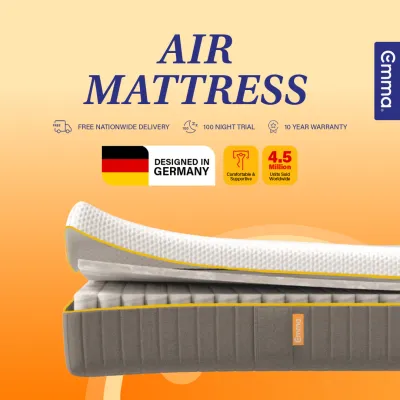
Prices are valid at publication and may change. Please refer to the product page for the latest price.

In a tropical environment, a mattress must do more than just cushion your joints; it must actively manage moisture and heat. If a mattress lacks sufficient breathability, body heat becomes trapped within the top comfort layers, raising the surface temperature. At the same time, sweat and ambient moisture accumulate in the core of the mattress, creating a humid microclimate.
This moisture buildup is not just an issue of nightly discomfort. Over time, persistent high humidity inside a poorly ventilated mattress can accelerate the degradation of polyurethane foams, causing them to soften prematurely and lose their supportive properties. Furthermore, trapped moisture creates an ideal breeding ground for dust mites, mold, and mildew, which can trigger allergies and compromise indoor air quality. Consequently, selecting a mattress with superior airflow and moisture-wicking capabilities is essential for both your sleep quality and the longevity of your investment.
Comparing Mattress Materials for Temperature Regulation
To make an informed decision, it is helpful to understand how different mattress materials handle heat and moisture. The three primary options—memory foam, latex, and innersprings—each interact with the tropical climate in distinct ways. By examining their structural differences, you can determine which material aligns best with your personal sleeping habits, bedroom setup, and cooling requirements.
Memory Foam and Emma's Cooling Designs
Traditional memory foam is highly dense and reacts to body heat to contour closely to your shape. While this provides excellent pressure relief, the close contouring limits the surface area exposed to the air, while the dense cellular structure acts as an insulator, trapping heat directly beneath your body. To counter this inherent limitation, modern mattress manufacturers have engineered alternative foam formulations.
When browsing the emma official store, you will find that their memory foam mattresses do not rely on traditional, closed-cell foam. Instead, they incorporate proprietary open-cell foams, such as Airgocell® or similar breathable foams, which are designed to let air flow more freely through the material. Some models also utilize gel infusions or graphite particles within the foam layers. These additives are engineered to conduct heat away from your body, distributing it through the mattress rather than letting it pool on the surface.
The overall temperature regulation of a memory foam mattress is also heavily influenced by the thickness and density of its top comfort layers. A thicker, softer top layer allows you to sink deeper into the mattress, which increases the contact area and can make you feel warmer, regardless of the cooling technologies used. Conversely, firmer memory foam layers keep you closer to the surface, allowing more ambient air to circulate around your body. Therefore, when evaluating options on the emma official store, consider how your body weight and preferred sleeping position will interact with the foam’s firmness and density.
Latex Mattresses for Breathability
Latex is widely regarded as one of the most breathable comfort materials available. Unlike memory foam, natural latex has an open-cell structure that does not retain heat. Additionally, during the manufacturing process, latex cores are typically molded with a grid of pinholes, which creates built-in channels for air to circulate vertically and horizontally throughout the mattress.
When choosing latex, it is important to distinguish between natural and synthetic varieties. Natural latex, derived from rubber tree sap, offers superior elasticity, durability, and breathability in humid conditions, though it is generally heavier and more expensive. Synthetic latex can mimic some of these properties but may degrade faster when exposed to persistent tropical humidity.
However, even a highly breathable latex core can perform poorly if it is wrapped in a thick, non-breathable quilted cover. If you opt for a latex mattress, ensure the cover is made from breathable, moisture-wicking fibers like Tencel, bamboo, or organic cotton. Without a breathable cover, the natural cooling benefits of the underlying latex will be severely restricted.
Innerspring and Hybrid Mattresses
Innerspring and hybrid mattresses offer the highest level of airflow due to their structural design. The core of these mattresses consists of steel coils, leaving a vast amount of open space inside the mattress. This open structure allows air to move freely, creating a natural chimney effect where warm air is pushed out of the sides and bottom of the mattress as you move, replaced by cooler ambient air.
Hybrid mattresses combine this supportive coil core with top comfort layers made of foam or latex. This design seeks to offer the contouring pressure relief of foam alongside the superior ventilation of an innerspring. However, the overall temperature of a hybrid mattress is still dictated by the materials used in the top comfort layers.
When evaluating a hybrid option, you should verify that the top layers are constructed from breathable, open-cell foams or latex rather than dense, traditional memory foam. If the comfort layers trap heat, the airflow within the coil system underneath will do little to keep the surface cool. Checking the detailed material specifications will help you ensure the hybrid design truly delivers on its promise of a cooler sleep surface.
What to Verify Before Ordering from the Emma Official Store
Purchasing a mattress online in the Philippines requires careful verification to ensure you receive a product suited to your needs. Before finalizing your order on the emma official store, take the time to review the technical specifications of each model. Look closely at the descriptions of the cover material, the specific types of foam used in each layer, and any integrated cooling technologies. This step ensures you are choosing a model specifically engineered for enhanced airflow.
Additionally, consider practical furniture logistics before ordering. Verify the finished dimensions of the mattress against your bed frame, and ensure your home has adequate doorway, hallway, or lift access to accommodate the delivery box. Checking these physical constraints prevents delivery-day complications.
Because comfort and heat retention are highly subjective, the sleep trial is one of the most critical aspects of your purchase. Verify the exact duration of the trial period offered on the emma official store, and carefully read the terms and conditions regarding returns. Pay close attention to the logistics: clarify who handles the pickup of the mattress if you decide to return it, whether there are any return shipping fees, and how long the refund process takes within the Philippines, especially if you live outside Metro Manila.
Finally, ensure you are buying directly from the emma official store or an authorized brand channel. Purchasing from unauthorized third-party sellers or unverified online marketplaces risks voiding your warranty and sleep trial. Authentic products come with manufacturer-backed warranties that protect against premature sagging and material defects, which are crucial safeguards when investing in a high-quality mattress for a humid climate.
Maintaining Your Mattress in High Humidity
Proper maintenance is essential to protect your mattress from the degrading effects of the Philippine climate. First, invest in a high-quality, breathable, and waterproof mattress protector. This layer prevents sweat, oils, and accidental spills from soaking into the foam or latex layers, which can accelerate material breakdown and encourage mold growth. Ensure the protector is explicitly labeled as breathable, as a cheap plastic barrier will trap heat and make your bed feel significantly warmer.
Room ventilation plays a vital role in keeping your mattress dry and cool. Whenever possible, use air conditioning or a dehumidifier to lower the humidity levels in your bedroom, particularly during the wet season. Avoid placing your mattress directly on the floor, as this blocks airflow from the bottom and traps moisture underneath, leading to mold. Instead, elevate the mattress on a supportive slatted bed frame.
Additionally, follow standard care instructions to prolong the life of your mattress. Rotate the mattress 180 degrees every three to six months, as recommended by the manufacturer, to ensure even wear and prevent deep body impressions where moisture can pool. If your mattress features a removable cover, wash it regularly according to the care label to keep the sleep surface hygienic and free of allergens.
Frequently Asked Questions (FAQ)
Does the type of bed frame affect mattress cooling in humid climates?
Yes, the design of your bed frame has a direct impact on how cool your mattress stays. Slatted bed frames, where the wooden or metal slats are spaced a few inches apart, allow air to circulate freely beneath the mattress. This continuous airflow helps dissipate the heat and moisture that naturally migrate downward through the mattress during the night, keeping the entire system drier.
In contrast, solid platform beds or placing your mattress directly on the floor blocks this essential under-mattress ventilation. In a highly humid tropical environment like the Philippines, trapping moisture beneath a heavy mattress can quickly lead to the growth of mold and mildew on both the underside of the mattress and your bedroom floor. For optimal temperature regulation and hygiene, a sturdy, well-spaced slatted frame is highly recommended.

Community discussion
Share your experience or ask a question. Comments are reviewed before publication.